Ok
vip
Age 7.6 Yıl
Peak Tier 4
No content yet
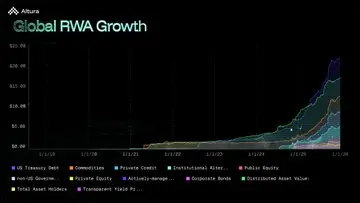
You might think DeFi perpetual contracts are only for longing or shorting cryptocurrencies, but #Ostium wants to broaden the perspective to "real assets + leverage + accessible to ordinary people." This time, it's targeting gold, commodities, currencies, indices—traditional markets—also known as Real-World Assets (RWA) + perpetual contract models.
@OstiumLabs is fundamentally supported by two sets of infrastructure: First, it integrates Chainlink Data Streams as its oracle/market data source, ensuring that on-chain contracts receive real-time, low-latency, and reliable price feeds, laying the
LINK0.39%
USDC0.03%
View Original
post-image
  • Reward
  • Comment
  • Repost
  • Share
Have you noticed that many current NFT platforms look reliable and have high barriers to entry, making it hard to get in unless you’re very careful? But some projects are trying to “popularize” NFTs like ordinary apartments, lowering the threshold so that “ordinary people can move in, participate, and experience it.” I think @spaace_io is one such attempt.
@spaace_io is currently focusing on its “Battle Pass + Quest System”—every time you list, bid, invite friends, or participate in events, it counts as a “Quest completed,” and you automatically accumulate XP. This turns your usual fragmented
View Original
post-image
  • Reward
  • Comment
  • Repost
  • Share
A few days ago, I was thinking about a pretty realistic issue: there are so many social-related projects on-chain, but users’ on-chain presence is still "fragmented personas." You might be very active in one application, but switch to another platform and suddenly you’re just a ghost account, like your personality has been split into several copies. The problem isn’t user inactivity, but that there’s fundamentally no mechanism at the base layer to connect these behaviors.
This is also why I think @spaace_io’s architecture is somewhat forward-looking. It tackles the way data is organized direct
View Original
  • Reward
  • Comment
  • Repost
  • Share
.@alturax This line is now more about doing something deeper and more long-term—fully productizing the asset management process for games, consolidating scattered on-chain items into a standardized, scalable infrastructure.
The focus is no longer on whether NFTs look good, but on how assets are managed, how it scales, and how it updates. Altura’s dynamic contract structure allows for real-time asset state refreshes without interrupting the gaming experience, which is an efficiency boost for teams running multiplayer sync or games with frequently changing in-game logic.
At the same time, it als
ALU1.93%
View Original
post-image
  • Reward
  • Comment
  • Repost
  • Share
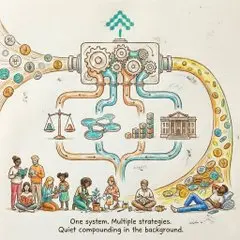
The underlying logic of @Hypercroc_xyz is more about productizing the entire DeFi yield pipeline. Their core modules are the Smart Aggregation Layer and the On-chain Executor, which work together to break down strategies into executable task bundles, reducing slippage and execution delays while improving capital efficiency.
Another relatively underrated component is their Real-time Risk Filter. This module performs on-chain risk scans before a strategy is triggered, checking parameters such as pool depth, asset volatility, and block congestion. This ensures that yields are generated within a c
View Original
post-image
  • Reward
  • 2
  • 2
  • Share
GateUser-43178b11vip:
The basic logic of @Hypercroc_xyz is more like turning the entire series of DeFi yield pipelines into a product. The core modules they use are the Smart Aggregation Layer and On-chain Executor. Both work together to break strategies into executable task packages, reducing slippage and
View More
.@MultichainZ_'s approach is relatively pragmatic. It abstracts away the most complicated parts of cross-chain operations—asset transfer, permission verification, and settlement consistency—using its self-developed ChainZ Core Middleware. For developers, this lowers the barrier to entry; for institutions, it reduces operational costs.
One aspect that is rarely mentioned is its Multi-Asset Collateral Model. This mechanism allows users to combine assets from different chains into a single collateral basket, resulting in higher risk diversification and more flexible borrowing limits. This structu
View Original
post-image
  • Reward
  • Comment
  • Repost
  • Share
The industry has been pursuing a "smarter on-chain experience," but most projects get stuck on non-standardized data, models that are hard to integrate, and business applications that simply can't be implemented. @bluwhaleai takes the opposite approach, focusing on building foundational capabilities that turn on-chain data into something like an enterprise database, capable of running business logic directly.
Its network node system isn't designed for hype, but to compress real-time states from different chains into a unified structure, allowing AI to understand asset changes, trading patterns
BLUAI1.7%
View Original
post-image
  • Reward
  • 1
  • Repost
  • Share
GateUser-0a71a141vip:
disgusting shitcoin
.@soneium's position is quite unique. Unlike traditional public chains that emphasize performance parameters, it focuses more on making the underlying logic of the chain a "sustainable power supply system," ensuring stable power for any application running on the network. This design philosophy is clearly reflected in its use of the OP Stack: it's modular, has a clear architecture, low maintenance costs, and can seamlessly upgrade in the future.
If you consider blockchain as a computing platform, #Soneium is working to separate computation and settlement even more cleanly. Rollups handle inten
OP-0.41%
ETH2.99%
View Original
post-image
  • Reward
  • Comment
  • Repost
  • Share
The most interesting thing about Veera isn’t how many features it offers, but how it’s quietly changing the relationship between users and the blockchain.
In the past, interacting with blockchains meant switching wallets, changing RPCs, or hopping between different dApps. The process was like navigating a maze.
@On_Veera’s approach is more about dismantling the maze entirely, allowing users to go straight to their destination.
Its recent upgrades are even bolder. For example, it’s moved multi-chain access into a “background logic layer,” so users no longer need to understand the differences be
View Original
  • Reward
  • Comment
  • Repost
  • Share
Social is not about making an app; it’s about building structure. Without structure, even the most beautiful product is a disposable item.
This is also why I find @spaace_io somewhat interesting. Its focus has never been “creating a viral hit,” but rather reorganizing the underlying logic. For example, its Relational Intent Protocol simply allows applications to understand “what the user wants to do,” rather than just seeing “the user clicked a button.” In the on-chain world, this “intent layer” design is crucial, because on-chain actions themselves are too crude, and apps can only guess at us
View Original
post-image
  • Reward
  • Comment
  • Repost
  • Share
The biggest problem in the on-chain world right now isn’t a “lack of applications,” but rather a severe information flow disconnect. Your interactions in Project A and your activities in Protocol B are completely unaligned, as if the same person is living in different parallel universes. Developers wanting to create social features have no choice but to rebuild relationship structures from scratch, wasting resources and fragmenting the user experience.
@spaace_io aims to solve this awkward “multi-universe non-recognition” issue. Its key breakthrough is decomposing social behaviors into a reusa
View Original
  • Reward
  • Comment
  • Repost
  • Share
  • Trending TopicsView More
  • Pin
Trade Crypto Anywhere Anytime
qrCode
Scan to download Gate App
Community
  • 简体中文
  • English
  • Tiếng Việt
  • 繁體中文
  • Español
  • Русский
  • Français (Afrique)
  • Português (Portugal)
  • Bahasa Indonesia
  • 日本語
  • بالعربية
  • Українська
  • Português (Brasil)