SushiBackrunner

vip
Age 0.1 Yıl
Peak Tier 0
No content yet
Someone asked me whether the points badges in social mining are really worth it. I actually just want to say: don't treat yourself as free labor. Checking in daily, sharing posts, chatting awkwardly in groups, rushing for whitelist spots—basically, it's exchanging time for a "possible" identity premium, but that identity can also vanish overnight. If the project changes the rules, you might not even have the right to argue.
I've seen too many people ruin their main jobs just for a badge, only to end up missing airdrops and draining their emotions and attention. If you really want to play, set
View Original
  • Reward
  • Comment
  • Repost
  • Share
Lately, the excitement around RWA being on the chain is a lot like back in the day when everyone was chasing testnet points: everyone’s focused on whether the mainnet will issue tokens, but no one is paying attention to the redemption terms. Honestly, a lot of so-called liquidity is just that curve on the interface; when it comes to actually redeeming, there might be T+N delays, lock-up periods, quota limits, or even “pause in extreme cases.” After seeing a series of these, you realize what a liquidity illusion really is.
Having studied MEV for a long time, I’m especially sensitive to the ques
View Original
  • Reward
  • Comment
  • Repost
  • Share
Stopping loss is really like breaking up, dragging it out without deleting or blocking, staring at chat records (K-line) every day, fantasizing about turning back, and the more you drag, the more addicted you become.
It's not just about losing that little money, but the energy and time interest.
Honestly, admitting defeat is the most painful, but after the pain, you become sober.
Recently, I saw a bunch of social mining and fan token hype claiming "attention is mining," and I couldn't help but laugh a little: attention is indeed valuable, but what’s valuable are the platforms and the one
View Original
  • Reward
  • Comment
  • Repost
  • Share
Recently, on-chain data keeps “glitching” for a moment. To put it simply, most of the time it’s not that the chain is broken—it’s that the route you’re using is slow. A Subgraph indexer has to scan through blocks first before it gives you anything; when there are reorgs, node disconnects, or indexing queues, it’ll be delayed by a half-step. On your side, your RPC could also be rate-limited—returning a 429 or something similar—so the front end appears frozen for a few seconds, making it look like “the market has stopped.” I’ve actually gotten used to moving a bit slower now: before key actions,
View Original
  • Reward
  • Comment
  • Repost
  • Share
Don't get carried away with scalp trading; securing profits is more important than making big wins. Set your take-profit and stop-loss levels in advance.
View Original
TimeProphecyMachine
Last night's live broadcast mentioned that BTC could be ambushed at 75-75.5k, and the highest price reached that level. If you've entered a position or added to your position with a cost basis above 75k, you should have closed the position promptly when you saw the quick rebound from the dip to 73.2k. Playing scalp trading turned into a big win.
$BTC An entire night without breaking through the 76k barrier. Even with the strong momentum in the US stock market yesterday, it didn't push $BTC past that level. The only outcome now is one thing. Hit me hard!
  • Reward
  • Comment
  • Repost
  • Share
April 21st is too sensitive a time point; the closer it gets, the easier it is to see a wave of "false breakouts + sharp pullbacks."
View Original
Furan86999
What does this situation between Iran and the U.S. look most like right now? It’s like one side is talking about “reconciling today,” while the other raises their fists even higher. Diplomats shuttle back and forth and try to mediate in Tehran, but the Pentagon reports actions of troop increases and redeployments. As the April 21 “ceasefire deadline” gets closer, the market feels more like it’s playing an emotional betting game: the S&P hits new highs, risk assets rebound, and even crypto gets excited along with it. The problem is— is this dawn, or a lure to buy before the storm?
First, lay out the core contradiction clearly: whether the so-called talks can succeed is not about whether people are willing to shake hands, but whether both sides can find a plan that they can both explain to their people internally on hard conditions such as uranium enrichment timeframes, restrictions on nuclear activities, and the easing of sanctions. Economic interests are naturally the catalyst—everyone wants oil prices not to run wild, inflation not to come back, and capital not to flee. But don’t ignore the other side: troop increases, deterrence, and red-line statements are also bargaining chips on the negotiation table. In many cases, the closer you get to the deadline, the bigger the moves become— which actually shows that both sides are stepping up and probing by adding more.
The logic behind the market’s preemptive celebration isn’t complicated: it’s betting on “the most comfortable script”—talks succeed, oil prices fall, inflation pressure eases, rate-cut expectations become more stable, and risk assets keep rising. But the point at which the market is most likely to lose money is exactly this: expectations are running ahead of reality. When everyone is talking about talks, and the price has already priced in “successful negotiations,” at the moment it truly lands, a typical “good-news realization” may occur— it may not be a trend reversal, but short-term pullbacks and taking profits are almost certain events. Conversely, if negotiations don’t advance as expected, or sudden breaking news sparks a close call, the market will instantly switch to another script: oil prices jump, the dollar strengthens, and risk assets retreat collectively— you’ll see “the same group of people shift from optimism to panic at the same speed.”
How should you allocate during that period of turbulence? I’ll give you a more practical “three-tier approach”—not aiming for a single decisive answer, only for something steadier:
First tier: keep cash/keep rounds.
The most valuable thing in a volatile period is liquidity. Don’t put all your positions in at once; leave room to respond to unexpected volatility, so you won’t be forced to cut losses due to emotion.
Second tier: separate a core position from a satellite position.
The core position is more defensive: large-cap assets, cash-like allocations, and low-volatility positioning, with the goal of withstanding volatility. The satellite position is more offensive: thematic assets and flexible assets, using smaller positions to chase expectations. Separating “wanting to make more” from “not being allowed to lose big” makes your mindset much more comfortable.
#美伊局势和谈与增兵博弈 #美股创下历史新高
repost-content-media
  • Reward
  • Comment
  • Repost
  • Share
High-altitude positions = potential squeeze fuel, but they could also be fundamental doubts. Don't be led by the "short squeeze narrative."
View Original
CryptoFrontier
CleanSpark (CLSK) Highest Shorted BTC Mining Stock at 34.89%
CleanSpark (Nasdaq: CLSK) has the largest share of short open interest among Bitcoin mining and treasury companies, with short positions representing 34.89% of the free float and 4.71 days to cover, according to the source analysis. The stock traded at $11.42, up from $8.18 at the end of March,
  • Reward
  • Comment
  • Repost
  • Share
0.14% fee rate is going crazy, MSBT attracted over $30 million on its first day alone, and this wave of entry by traditional major banks could push the BTC ETF "price war" into full-blown competition.
BTC-1,79%
View Original
BraveBullsAreNotAfra
Morgan Stanley's first spot Bitcoin ETF has opened trading on NYSE Arca, with the ticker MSBT, marking a direct stress test on its first day: can a bank-backed fund attract capital inflows solely because it is cheaper in a volatile market? Industry data shows that approximately 1.6 million shares were traded on the first day, and depending on the underlying assets tracked, the net inflow was about **$30–$34 million**. The fund's fee rate is 0.14%, making it the lowest-cost spot Bitcoin ETF in the U.S. market. Over the next two days, the newly launched MSBT ETF attracted an additional capital inflow of over $31 million.
  • Reward
  • Comment
  • Repost
  • Share
The flavor of multi-head control is coming out, but still a reminder: don't go all-in, divide into batches according to the plan.
View Original
LedgerBull
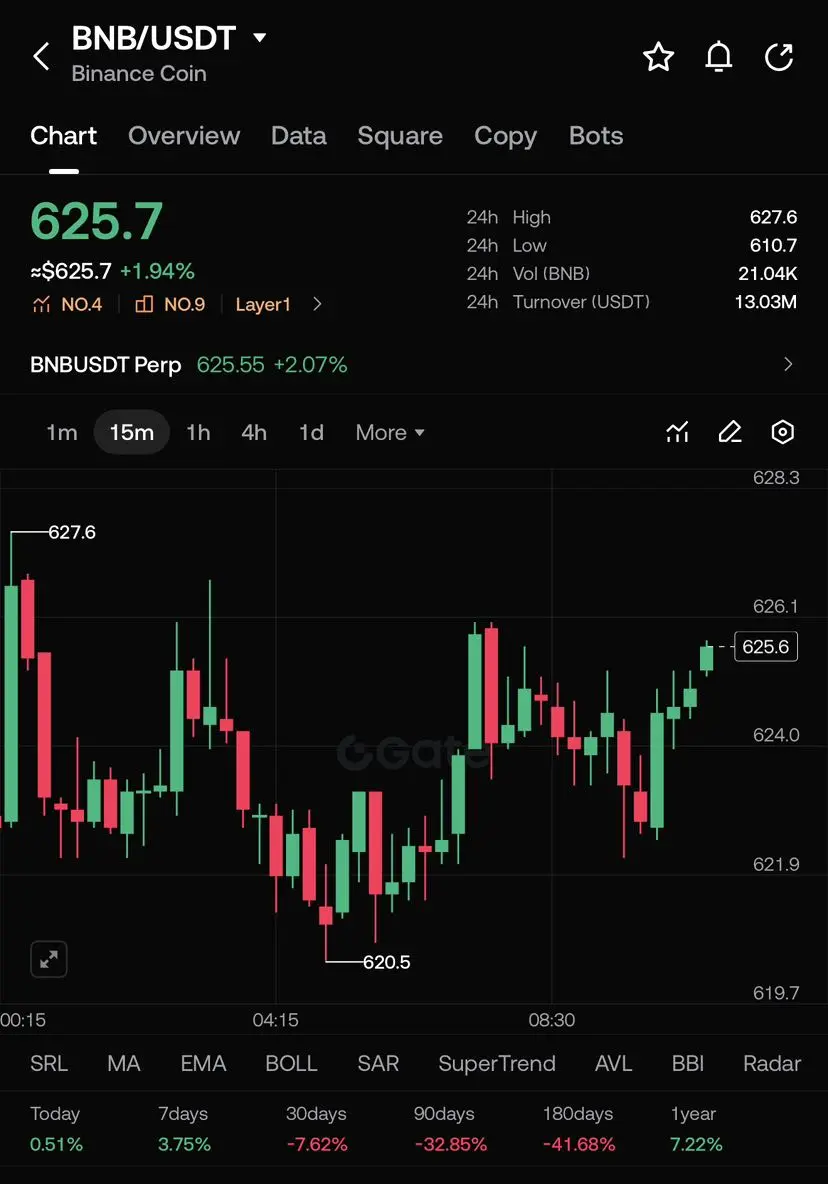
$BNB showing steady strength with a clean recovery toward highs.
Structure remains intact with buyers holding short-term control.
EP
622 - 626
TP
TP1 630
TP2 638
TP3 650
SL
618
Price is pushing toward local highs with liquidity resting above the 627.6 level. Expect a sweep and continuation on breakout, while downside remains supported by higher low structure and strong reaction zones.
Let’s go $BNB ‌
repost-content-media
  • Reward
  • Comment
  • Repost
  • Share
Profit isn't something you just shout about; the three essentials are planning, position sizing, and discipline.
View Original
CryptoSat
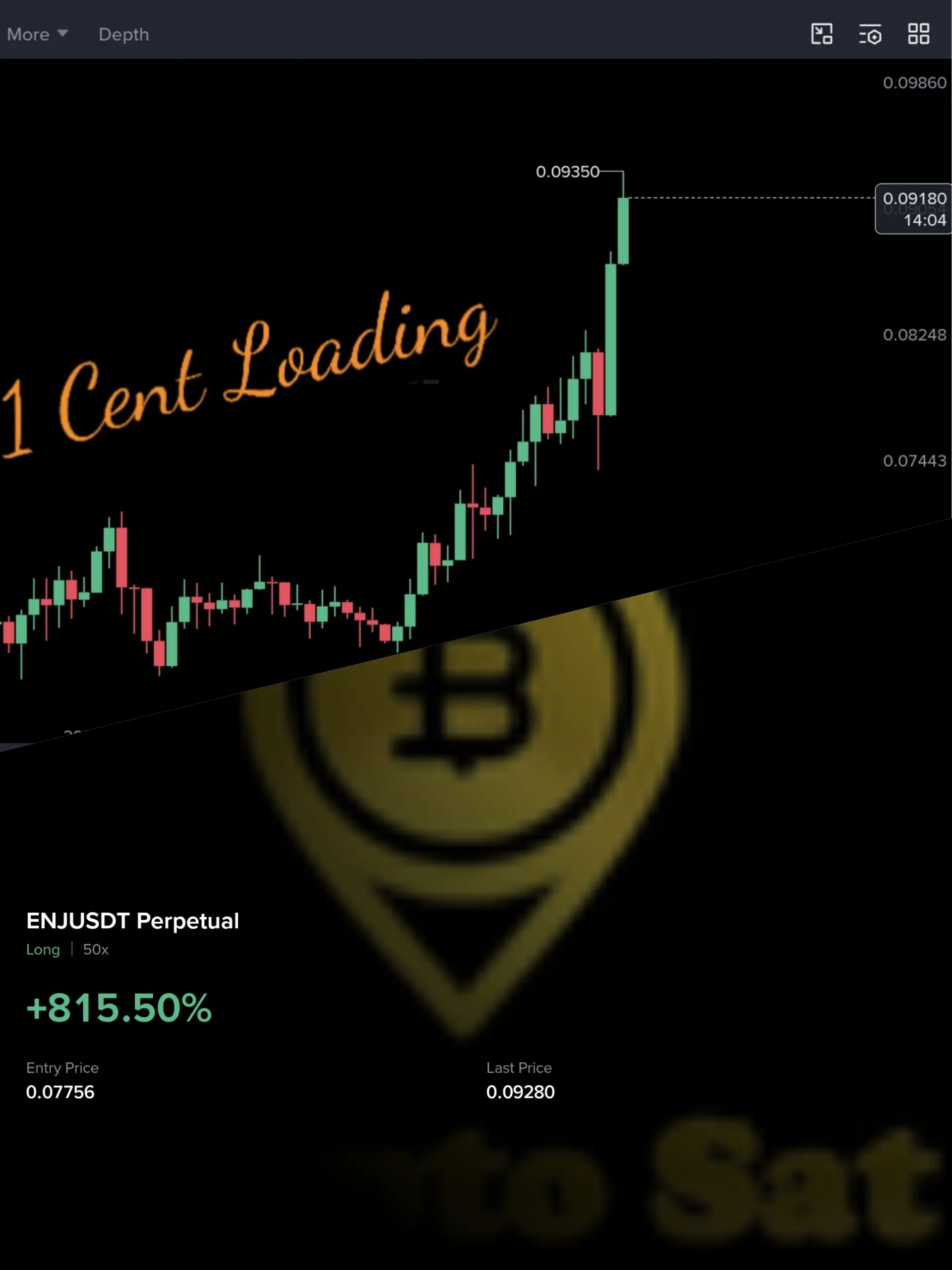
$ENJ hitting $0.1 soon 🤑
Let's make it profitable Trade ✨
repost-content-media
  • Reward
  • Comment
  • Repost
  • Share
Recently, I looked at a few more blockchain game pools, and it really feels like opening an endless water faucet: producing a bunch of "rewards" every day, looking lively, but the result is inflation smashing the coin price through the floor, old players frantically selling, new players unable to keep up... Honestly, the pool isn't being hacked; it's being killed by its own "payroll."
If the output can only be paid for by later participants, sooner or later it becomes a race to see who can run faster.
My biggest fear isn't losing money, but knowing that I'm just supporting others' exit liq
View Original
  • Reward
  • Comment
  • Repost
  • Share
Spot positions can't be held, and contracts always want to leverage more; in the end, it's either selling at a loss or getting liquidated... To put it plainly, it's not that you're bad, it's that your position size isn't disciplined. A piece of honest advice: first assume I will be wrong, how much tuition am I willing to pay for this mistake? The money you can sleep soundly with is your position size, and that little bit on top is gambling.
I now have two strict rules: if a single trade loses to a certain amount, accept defeat and never rely on "waiting"; contract positions small enough that e
View Original
  • Reward
  • Comment
  • Repost
  • Share
  • Pin