Pheonixprincess

vip
Age 1.2 Yıl
Peak Tier 5
No content yet
Pin
#GatePreIPOsLaunchesWithSpaceX
Gate Pre-IPO Launch: Redefining Private Markets Through Tokenized Price Discovery and Synthetic Equity Infrastructure
The introduction of Gate.io’s Pre-IPO trading framework, anchored by the debut of the SPCX (SpaceX) synthetic contract, represents a structural shift in how private market assets are accessed, priced, and traded. This is not simply a product launch — it is the emergence of a new financial layer where pre-IPO equity narratives become continuously tradable macro instruments.
By introducing a USDT-settled derivative tied to pre-IPO valuation benchma
post-image
  • Reward
  • 16
  • Repost
  • Share
Ryakpanda:
Just charge and you're done 👊
View More
RIP 4-YEAR CYCLE? BITCOIN LIQUIDATION BLOODBATH & THE NEW MARKET
1.286 views
2026-04-17 13:09
  • Reward
  • 4
  • Repost
  • Share
ShainingMoon:
To The Moon 🌕
View More
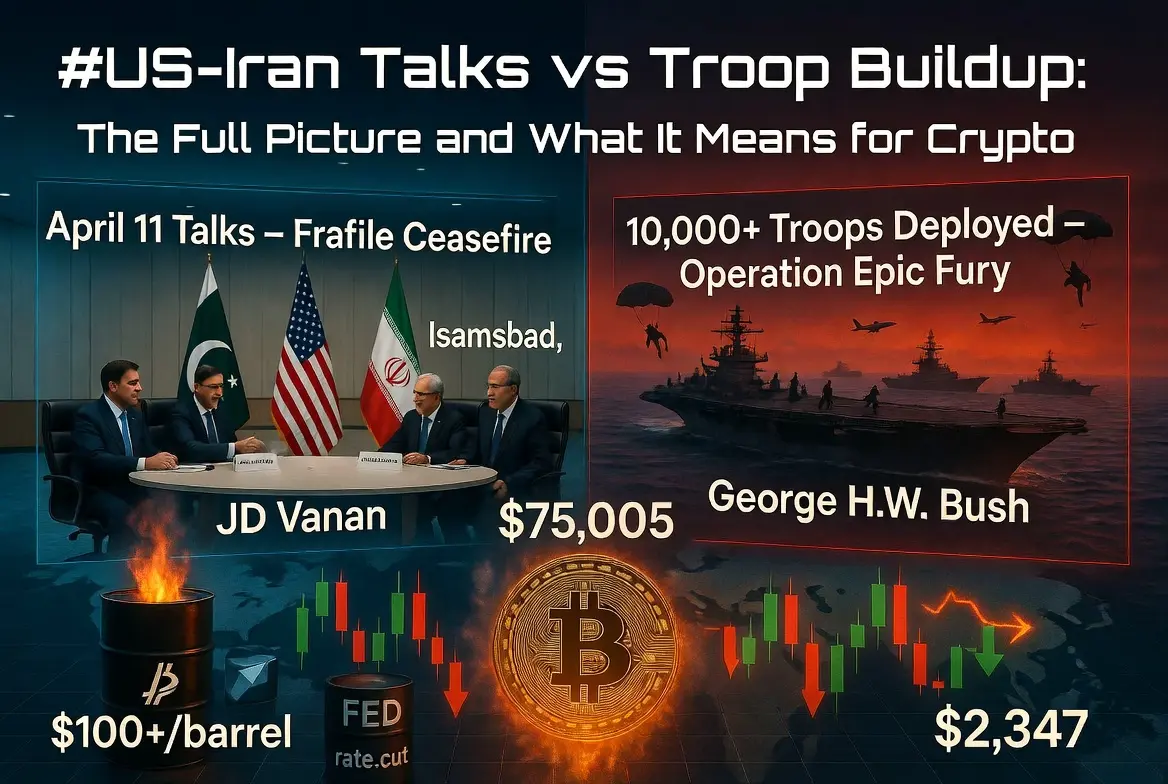
#US-IranTalksVSTroopBuildup
1 — Background: What Exactly Is Happening?
In late February 2026, the United States launched military operations against Iran — codenamed Operation Epic Fury — marking the beginning of a direct armed conflict that shook global markets to their core. Since that moment, two parallel tracks have been running simultaneously, and understanding both is essential before we discuss crypto.
Track A: The Diplomatic Track (Talking)
In early April 2026, the US and Iran agreed to a fragile two-week ceasefire after President Trump set a hard deadline.
On April 11, 2026, US Vice
HighAmbition
#US-IranTalksVSTroopBuildup
1 — Background: What Exactly Is Happening?
In late February 2026, the United States launched military operations against Iran — codenamed Operation Epic Fury — marking the beginning of a direct armed conflict that shook global markets to their core. Since that moment, two parallel tracks have been running simultaneously, and understanding both is essential before we discuss crypto.
Track A: The Diplomatic Track (Talking)
In early April 2026, the US and Iran agreed to a fragile two-week ceasefire after President Trump set a hard deadline.
On April 11, 2026, US Vice President JD Vance flew to Islamabad, Pakistan for direct three-party talks (US, Iran, Pakistan as mediator).
The talks ran for a marathon session but failed to produce an agreement.
The core sticking point: the US demanded Iran commit to never seeking nuclear weapons and abandon enrichment capabilities. Iran refused, calling the US terms unacceptable.
Iran's wish list was much broader — it wanted sanctions relief, recognition of sovereignty over the Strait of Hormuz, and a region-wide ceasefire covering Lebanon, Yemen, and beyond.
A second round of talks was being considered as of April 14, with "significant progress" reported by some US officials as recently as this week (April 15-17).
Track B: The Military Track (Building Up)
While diplomacy was ongoing, the Pentagon was simultaneously deploying thousands of additional troops to the region.
The US deployed 82nd Airborne Division soldiers, the USS Tripoli carrying 3,500 Marines, and the USS George H.W. Bush naval carrier group.
As of April 15, the US is reportedly preparing 10,000+ additional troops for the Middle East — the largest such buildup since the Iraq War era.
Another 4,200 troops via the Boxer Amphibious Ready Group are expected by end of April 2026.
The US is also enforcing a maritime blockade against Iran while negotiating — applying maximum economic and military pressure simultaneously.
Part 2 — The "Fog of War" Doctrine Explained
This dual-track strategy is a classic coercive diplomacy playbook, sometimes called the "Fog of War" strategy:
Step 1 — Apply Maximum Pressure
Deploy troops, warships, and economic sanctions to make the cost of non-compliance extremely high. Iran must feel that not agreeing is more dangerous than agreeing.
Step 2 — Keep the Door Open
Maintain a diplomatic channel so the opponent has a face-saving exit. Without a negotiated off-ramp, the adversary has no incentive to back down.
Step 3 — Create Uncertainty
Neither side knows whether the other will blink first. Iran does not know if the US will strike again. The US does not know if Iran will resume nuclear enrichment. This uncertainty keeps both sides at the table.
Step 4 — Time as Leverage
Every day the blockade continues, Iranian oil exports shrink and the economy deteriorates. Every day US troops remain deployed, the cost to American taxpayers rises. Both sides are racing against their own domestic pressures.
Part 3 — Where the Market Stands Right Now
Before discussing where the crypto market could go, here is the current snapshot (as of April 17, 2026):
Asset Current Price 24h Change 30d Change
BTC $75,005 +0.26% +7.27%
ETH $2,347 -0.55% +9.79%
Key market context from news data:
Since the Iran conflict began in late February, BTC has been rangebound between $60,000 and $75,000 — unable to break out decisively in either direction.
When the ceasefire was announced on April 7, BTC jumped sharply and squeezed $427 million in short positions.
When the Islamabad talks collapsed on April 11, BTC dropped from $73,000 back to $70,000 within hours.
BTC is currently at $75,005 — near the top of its war range — as traders price in a possible second round of talks producing results.
Part 4 — How This Situation Directly Impacts Crypto: Step by Step
Step 1 — Risk Appetite Is the Master Switch
Crypto is treated as a risk-on asset by institutional investors. When geopolitical fear rises (war escalation, failed talks, troop surges), institutional money flows out of BTC, ETH, and risk assets into gold, US Treasuries, and the dollar. When fear subsides (ceasefire hopes, framework deal), money rotates back into risk assets — and crypto benefits first because it is the most liquid 24/7 market.
Practical implication: Every headline about the Iran conflict moves crypto more directly and faster than equity markets, because crypto never closes.
Step 2 — Oil Price Is the Transmission Mechanism
The Strait of Hormuz handles approximately 20% of global oil trade. The US blockade of Iranian oil + the threat of Hormuz disruptions has kept oil prices elevated above $100/barrel since March 2026.
High oil means:
Higher inflation globally
Central banks (especially the Fed) are reluctant to cut interest rates
The Fed has effectively priced out all rate cuts for 2026 because of Iran-war inflation
High rates = less liquidity = less speculative capital available for crypto
Practical implication: Even if you are bullish on BTC, the oil-rate linkage is acting as a ceiling on how far any crypto rally can go right now.
Step 3 — Federal Reserve Is Frozen
This is one of the most under-discussed impacts. Before the Iran conflict, markets were pricing in multiple Fed rate cuts in 2026. After the conflict began, those expectations were entirely wiped out — the Fed's PCE inflation forecast has been revised to 2.7% for 2026, and Chair Powell explicitly said the Fed will wait to see how the Iran war affects inflation before making any moves.
Practical implication: The single most powerful liquidity catalyst for a crypto bull run — rate cuts — is being held hostage by the Iran situation. A peace deal would almost immediately revive rate-cut expectations, which would be enormously bullish for BTC.
Step 4 — Sentiment Volatility Creates Trading Opportunities But Not Trend
The pattern so far has been clear:
Ceasefire news = BTC +3% to +5% spike, short squeeze
Talks failure = BTC -2% to -4% drop, fear returns
Troop buildup news = modest downward pressure, but not panic
This means the market is not trending; it is oscillating inside a war range ($60,000-$75,000), reacting to diplomatic headlines. This is a news-driven, not fundamentals-driven market environment.
Step 5 — Regulatory Tailwind Is a Secondary Catalyst
Analysts have noted that the US Clarity Act, a major piece of crypto regulation, is expected to pass in late April 2026. This could unlock a wave of institutional capital regardless of the Iran outcome. If a peace deal coincides with the Clarity Act passage, the combined effect would be unusually powerful.
Part 5 — Scenario Analysis: Where Can the Market Go?
Scenario A: A Formal Peace Deal / Extended Ceasefire is Reached
If the second round of talks (which appears to be in progress as of this week) produces a framework agreement:
Oil drops below $100/barrel — inflation pressure eases
Fed rate cut expectations come back — markets price in 1-2 cuts for late 2026
Risk-on sentiment returns — institutional money re-enters equities and crypto
BTC's immediate resistance at $75,000-$76,000 breaks convincingly
Analyst targets of $80,000+ become realistic within weeks of the deal
ETH, which has been suppressed at -$2,300, could rally toward $2,800-$3,000
Altcoins typically rally harder than BTC in a genuine risk-on environment (10%-30% moves are common in this scenario)
Bull case price milestone: BTC targeting $85,000-$90,000 over 60-90 days if a lasting deal is confirmed and the Fed signals even one rate cut.
Scenario B: Talks Continue Without Resolution (Current State)
BTC stays trapped in the $68,000-$76,000 range
Every positive headline = brief pump, every negative headline = brief dump
Traders can play the swings, but no sustained trend either way
Oil stays elevated, Fed stays on hold
The Clarity Act passage alone might give a $3,000-$5,000 upside nudge to BTC
This is the base case as of April 17, 2026
Scenario C: Talks Collapse and Conflict Escalates
If the ceasefire breaks down completely and US strikes resume, or if Iran moves to close the Strait of Hormuz:
Oil spikes to $115-$130/barrel
Global recession fears intensify
BTC tests the lower end of its war range — $60,000 support becomes critical
A break below $60,000 could trigger a drop toward $52,000-$55,000
This scenario is the bear case, but currently not the market's primary expectation
Part 6 — Key Levels to Watch Right Now
BTC:
Immediate resistance: $75,500 - $76,000 (ceasefire high)
Strong support: $68,000 - $70,000 (post-failed-talks floor)
War range floor: $60,000 (do not want to see a close below this)
Bull breakout target: $80,000+ (requires confirmed deal)
Macro indicators to monitor alongside crypto:
WTI Crude Oil: watch for a sustained drop below $95/barrel (peace signal)
Fed Funds Futures: any repricing of rate cuts = bullish for BTC
US 10-Year Treasury Yield: falling yield = risk-on = crypto positive
Part 7 — The Bottom Line
The #US-IranTalksVSTroopBuildup situation is, in one sentence, a pressure cooker with a diplomatic release valve — and the crypto market is sitting directly on the lid.
The mechanics are straightforward:
1. Peace deal confirmed → oil falls → Fed loosens → liquidity returns → BTC breaks $80,000
2. Stalemate continues → BTC oscillates in war range → trade the swings, not the trend
3. Conflict escalates → BTC tests $60,000 → risk management becomes the priority
Right now, BTC at $75,005 is pricing in cautious optimism that talks will resume and eventually produce something. The market is not pricing in a full peace deal yet, which means the upside from a confirmed agreement is still significant and largely unrealized.
The most important variable is not the number of troops deployed — it is whether the second round of talks produces a workable framework on nuclear enrichment. That single data point will determine which scenario plays out.
repost-content-media
  • Reward
  • 7
  • Repost
  • Share
ShainingMoon:
To The Moon 🌕
View More
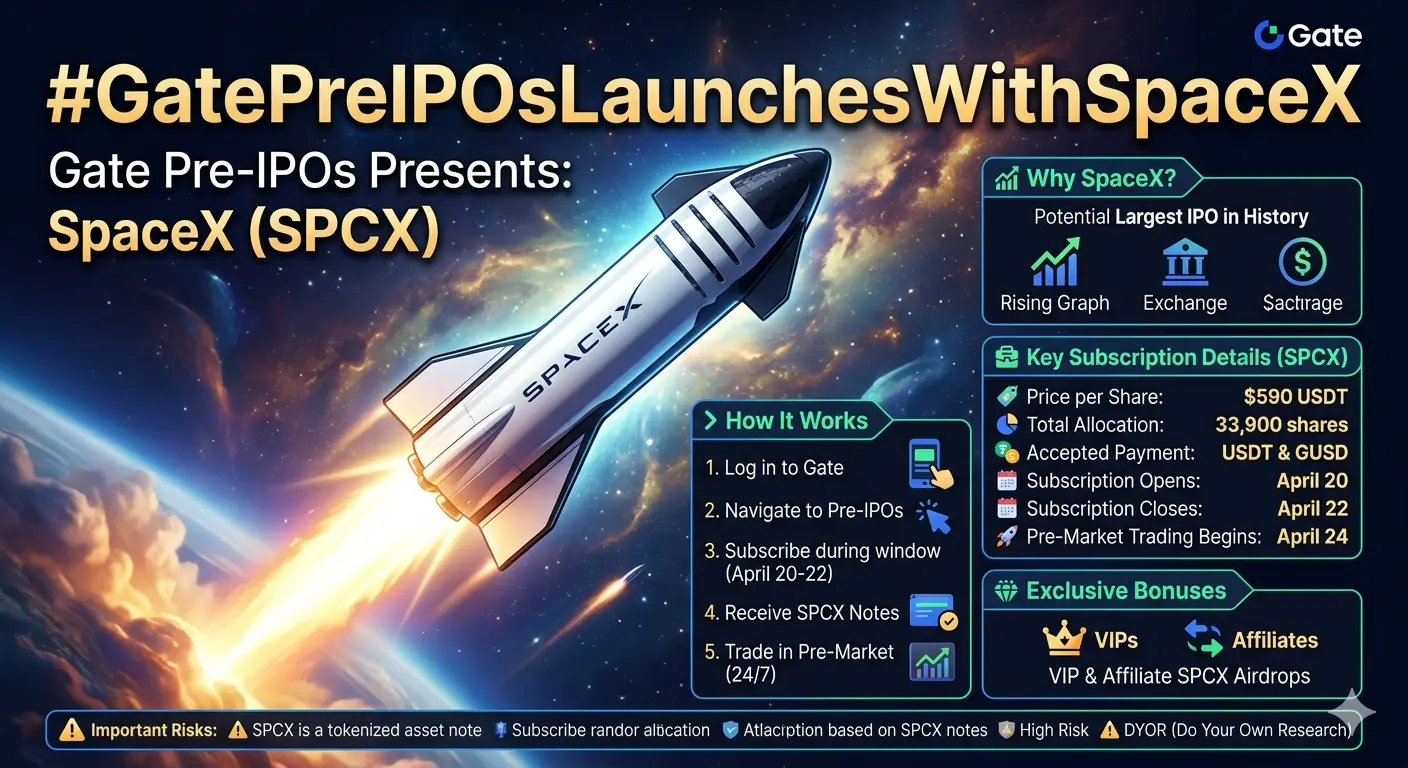
#GatePreIPOsLaunchesWithSpaceX
What Is Gate Pre-IPOs?
Gate has introduced a brand-new product category called **Pre-IPOs** — a digital subscription framework that allows everyday retail users to gain exposure to private, high-value companies **before they list on traditional stock exchanges**. It is designed to remove the traditional barriers of pre-IPO investing, such as large capital requirements, geographic restrictions, and complex brokerage account setups. The inaugural project under this framework is none other than **SpaceX**, one of the most anticipated IPOs in modern financial histor
GUSD0,02%
XAI2,3%
HighAmbition
#GatePreIPOsLaunchesWithSpaceX
What Is Gate Pre-IPOs?
Gate has introduced a brand-new product category called **Pre-IPOs** — a digital subscription framework that allows everyday retail users to gain exposure to private, high-value companies **before they list on traditional stock exchanges**. It is designed to remove the traditional barriers of pre-IPO investing, such as large capital requirements, geographic restrictions, and complex brokerage account setups. The inaugural project under this framework is none other than **SpaceX**, one of the most anticipated IPOs in modern financial history.
Why SpaceX? The IPO Backdrop
SpaceX — Elon Musk's rocket, satellite and AI conglomerate (now merged with xAI) — is targeting what could become **the largest IPO in history**, with a reported valuation target of up to **$2 trillion** and a fundraise goal of approximately **$75 billion**. According to Reuters and Bloomberg (April 2026), SpaceX is planning an **early June roadshow**, with a notable emphasis on retail investor participation. CFO Bret Johnsen reportedly stated: "Retail is going to be a critical part of this and a bigger part than any IPO in history." Gate timed its Pre-IPOs product launch to align directly with this historic momentum.
Core Subscription Details
| Item | Detail |
|---|---|
| **Token Symbol** | SPCX |
| **Price per Share** | $590 USDT |
| **Total Allocation** | 33,900 shares |
| **Implied Market Cap** | Based on $590/share pricing |
| **Minimum Entry** | -$100 USDT equivalent |
| **Accepted Payment** | USDT or GUSD |
| **Subscription Opens** | April 20, 2026 — 10:00 AM UTC |
| **Subscription Closes** | April 22, 2026 |
| **Distribution Deadline** | Before April 22, 22:00 (UTC+8) |
| **Pre-Market Trading Begins** | April 24, 18:00 (UTC+8) |
| **Unlock Status** | 100% unlocked upon distribution |
How Does It Work — Step by Step
1. **Sign up or log in** to your Gate account via the app or gate.com.
2. Navigate to the **Pre-IPOs section** (visible on the homepage or under financial products).
3. **View the subscription page** — project details, rules, and pricing are all listed there.
4. **Subscribe during the open window** (April 20–22). It is first-come, first-served with a fixed total allocation of 33,900 shares.
5. After the subscription period closes, **SPCX asset notes/certificates are distributed** — fully unlocked.
6. **Pre-market trading begins April 24**, allowing holders to trade SPCX on Gate's platform 7 days a week, 24 hours a day.
7. Users can **exit in two ways** before the lock-up period: through the exclusive Pre-IPOs page at real-time market value, or through the pre-market order book at a price of their choosing.
VIP and Affiliate Bonuses
Gate launched a **VIP-exclusive airdrop event** alongside the subscription:
- **VIP 5 and above** users are eligible to receive **free SPCX rewards** as additional airdrops.
- **Super agents / top affiliates** also qualify for bonus SPCX distribution.
- This adds an additional incentive layer on top of the regular subscription for high-tier users.
Market Sentiment and Buzz
The hashtag caught significant traction on X (Twitter) for several reasons:
- **Polymarket prediction market** shows odds at **-48% for SpaceX achieving a valuation above $2 trillion**, with over $1.37 million in trading volume on that question alone — reflecting just how seriously the market is taking this IPO.
- Community discussion broadly framed this as Gate **bridging the gap between crypto-native users and traditional financial markets (TradFi)**, without the friction of opening a traditional brokerage account.
- Gate's messaging positioned SPCX as "the first of many top-tier global pre-IPO opportunities," signaling this is the beginning of a broader TradFi expansion on the platform.
- Many users highlighted the **low entry barrier** ($100 minimum) compared to traditional pre-IPO placements, which are typically reserved for institutional or accredited investors.
Important Risks to Understand (DYOR)
The community — and Gate itself — have flagged key risks that every participant should weigh:
- **SPCX is not actual SpaceX equity.** It is a tokenized asset note/certificate representing economic exposure to SpaceX's pre-IPO value — not direct ownership of SpaceX shares.
- **Pre-IPO investing is inherently speculative.** The IPO may be delayed, repriced, or the company's valuation may shift significantly between now and the listing date.
- **Liquidity relies on Gate's pre-market.** The exit mechanism is tied to Gate's internal pre-market trading, not a regulated exchange.
- **No guaranteed returns.** If SpaceX lists below the $590 reference price, SPCX holders would face a paper loss.
- This product is **high-risk and suitable only for those who understand speculative digital assets**.
Strategic Significance for Gate
This launch is more than just a single product drop. It signals Gate's directional expansion:
- **Multi-asset platform ambition**: Gate is clearly positioning itself beyond crypto into equities-adjacent instruments.
- **Democratizing private market access**: Pre-IPOs remove the "accredited investor only" wall that has historically excluded retail participants from early-stage company value creation.
- **First-mover advantage**: Being the first major crypto exchange to offer a SpaceX pre-IPO product — timed precisely as SpaceX builds its real-world IPO roadshow — is a calculated strategic move.
- **GUSD integration**: The acceptance of Gate's own stablecoin GUSD in the subscription also deepens its native stablecoin utility.
SUMMARY
**#GatePreIPOsLaunchesWithSpaceX** represents a genuine milestone — the convergence of the crypto world and what may be the **biggest IPO ever attempted**. Gate is giving retail users a seat at a table that was historically reserved for institutional money. The subscription window is tight (April 20–22), the allocation is fixed at 33,900 shares at $590 each, and pre-market trading opens April 24. The opportunity is real — but so are the risks. Tokenized pre-IPO notes are speculative instruments, and anyone participating should do so with full awareness of both the upside and the downside.
.
repost-content-media
  • Reward
  • 8
  • Repost
  • Share
ShainingMoon:
To The Moon 🌕
View More
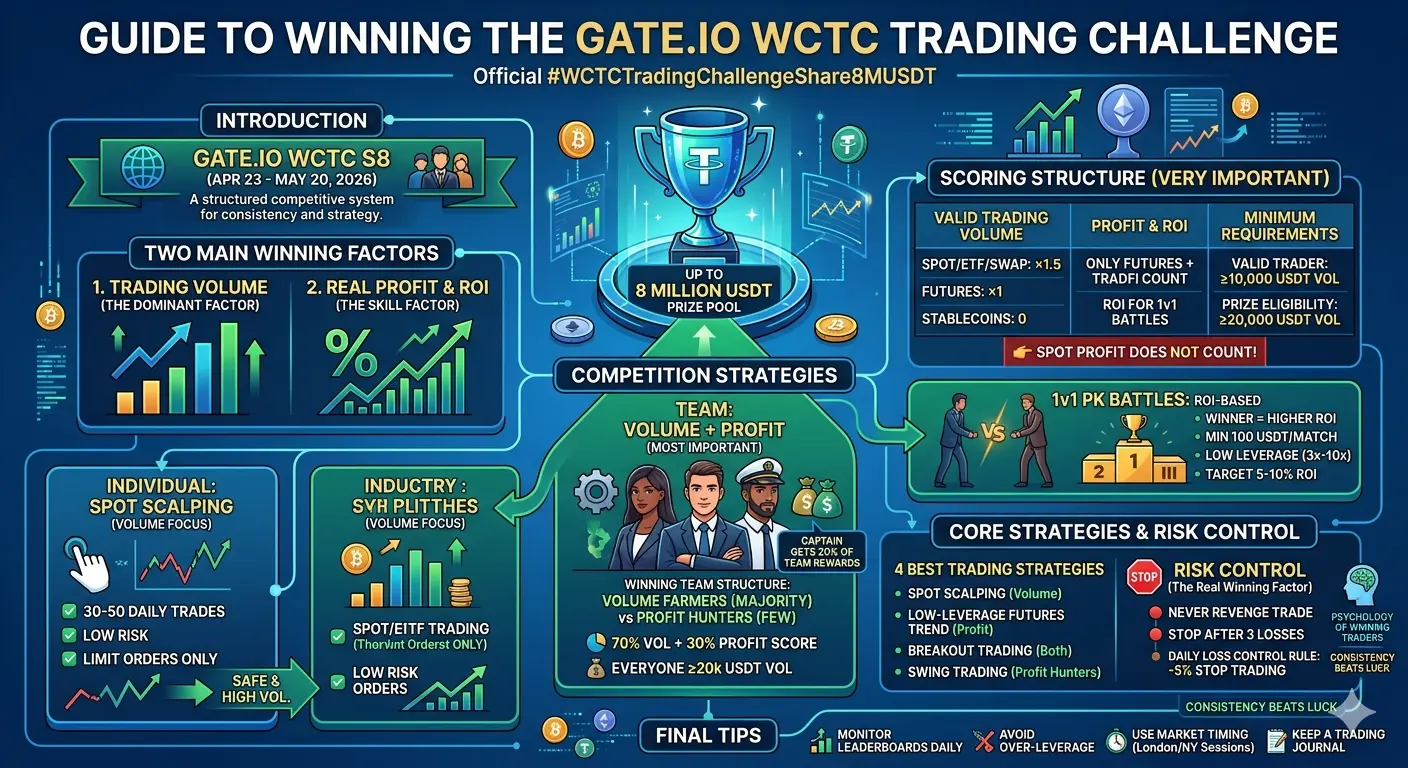
#WCTCTradingChallengeShare8MUSDT
The #WCTCTradingChallengeShare8MUSDT is the official community hashtag for Gate.io World Crypto Trading Competition Season 8 (WCTC S8), a global trading event hosted by Gate.io. It runs from April 23 to May 20, 2026, and features a massive up to 8 million USDT prize pool shared among traders worldwide.
This is not just a simple trading contest. It is a structured competitive system where traders earn points based on volume, profit, ROI performance, and team coordination. The event is designed to reward consistency, strategy, and discipline, not just risky gamb
BTC2,61%
ETH2,86%
SOL-0,74%
USDC-0,02%
HighAmbition
#WCTCTradingChallengeShare8MUSDT
The #WCTCTradingChallengeShare8MUSDT is the official community hashtag for Gate.io World Crypto Trading Competition Season 8 (WCTC S8), a global trading event hosted by Gate.io. It runs from April 23 to May 20, 2026, and features a massive up to 8 million USDT prize pool shared among traders worldwide.
This is not just a simple trading contest. It is a structured competitive system where traders earn points based on volume, profit, ROI performance, and team coordination. The event is designed to reward consistency, strategy, and discipline, not just risky gambling or random trades.
Participants can compete in:
Individual rankings
Team competitions
1v1 PvP trading battles
Each format has its own scoring logic, which makes understanding the rules extremely important before trading.
Core Idea of WCTC Season 8 — Two Main Winning Factors
Almost everything in this competition comes down to two core pillars:
1. Trading Volume (The Dominant Factor)
Volume determines the majority of rankings and rewards.
2. Real Profit & ROI (The Skill Factor)
Used mainly for:
Team profit ranking (30% weight)
1v1 PK battles
Futures and TradFi performance scoring
This creates a dual system:
Volume = participation strength
Profit = trading skill strength
Winning requires balancing both depending on your role.
Official Scoring Structure (Very Important)
Understanding scoring is the foundation of success:
Valid Trading Volume Rules
Spot / ETF / Flash Swap: ×1.5 multiplier
Futures: ×1 multiplier
TradFi: ×0.1 multiplier
Stablecoin pairs (USDT/USDC) = 0 volume
👉 Key Insight:
Spot trading is the most efficient way to increase rankings due to the 1.5× multiplier.
Profit & ROI Rules
Only Futures + TradFi profit counts
Spot trading profit does NOT count toward profit ranking
ROI is used mainly for 1v1 battles
Minimum Requirements
Valid trader: ≥10,000 USDT volume
Prize eligibility: ≥20,000 USDT volume
PK battles: ≥100 USDT per match
Individual Competition Strategy — Pure Volume Focus
Individual ranking is all about maximizing volume efficiently with low risk.
Best Strategy: Spot Scalping
The most effective method:
Trade BTC/USDT, ETH/USDT, SOL/USDT
Use small price movements (0.2%–0.5%)
Execute multiple trades daily
Avoid high leverage completely
Why this works
Spot trading gives 1.5× volume boost
Low risk compared to futures
Easy to scale frequency
Example Daily Plan
With a $5,000–$10,000 account:
30–50 quick round-trip trades daily
Focus on London + New York sessions
Avoid weekends (low liquidity)
Use limit orders only
👉 Result: You can easily reach 20,000+ USDT daily volume safely if consistent.
Risk Control Rules
Never risk more than 1–2% per trade
Avoid chasing pumps
Stop trading after hitting daily loss limit
Team Competition Strategy — The Most Important Section
Team competition makes up the largest prize pool (up to 3.6M USDT).
Team Scoring Breakdown
70% volume contribution
30% profit contribution
Captain receives 20% of total team rewards
Winning Team Structure
Successful teams divide roles:
1. Volume Farmers (Majority)
Focus only on spot scalping
Generate consistent trading volume
Low risk, high frequency trades
2. Profit Hunters (1–2 members)
Use futures trading (3×–5× leverage max)
Focus on trends and breakouts
Responsible for team profitability
Team Strategy Rules
Everyone must hit ≥20k USDT volume
Maintain positive futures profit for eligibility
Trade only high-liquidity pairs
Share a clear group plan daily
Advanced Team Tip
Teams that coordinate around:
BTC volatility sessions
ETH trend cycles
Major market news events
tend to outperform random trading groups significantly.
1v1 PK Battles — ROI-Based Competition
This is the most skill-focused section of WCTC.
How PK Battles Work
Minimum 100 USDT per match
Winner = higher ROI
Short-term trading battles
Best PK Strategy
Use low leverage (3×–10× max)
Trade only 1–2 assets
Focus on clean setups:
Breakouts
Trend continuation
Support/resistance bounces
Winning Approach
Target 5%–10% ROI per match
Avoid overtrading
Always use stop-loss
Even small consistent gains can win most battles.
Best Trading Strategies for WCTC S8
1. Spot Scalping (Volume Engine)
Best for: Individual + team volume
Risk: Low
Strength: High frequency + 1.5× multiplier
2. Low-Leverage Futures Trend Trading
Best for: Profit + PK battles
Risk: Medium
Strength: Strong directional moves
3. Breakout Trading
Best for: All formats
Strategy: Enter on volume-confirmed breakouts
Risk: Medium
Strength: Captures large moves quickly
4. Swing Trading
Best for: Profit hunters
Strategy: Hold positions 1–3 days
Risk: Low–Medium
Strength: Stable ROI generation
Risk Management — The Real Winning Factor
Most traders fail not because of strategy, but because of emotions.
Essential Rules:
Never revenge trade
Stop after 3 consecutive losses
Do not increase size after wins
Cut losses quickly
Protect capital first, profits second
Daily Loss Control Rule
If daily loss reaches -5%:
Stop trading immediately for the day
This prevents emotional breakdown cycles.
Psychology of Winning Traders
Winning traders in WCTC behave differently:
Treat competition like a marathon
Avoid emotional decisions
Focus on consistency, not big wins
Track performance daily
Stick to simple systems
Discipline always beats complexity.
Advanced Participation Tips
1. Monitor Leaderboards Daily
If in top ranks → reduce risk, focus on volume
If behind → increase structured futures activity
2. Avoid Over-Leverage
High leverage may:
Increase liquidation risk
Reduce consistency
Break team scoring eligibility
3. Use Market Timing
Best trading sessions:
London session
New York session
Worst:
Weekend low liquidity
4. Keep a Trading Journal
Track:
Entry reason
Exit reason
Outcome
Mistakes
This improves performance over time.
Common Mistakes Traders Make
Overtrading futures for volume
Ignoring stop-loss rules
Chasing volatile pumps
Mixing strategy roles in team
Trading without a plan
Simple Daily Routine for WCTC Success
Morning:
Check BTC/ETH trend
Plan volume targets
Midday:
Execute spot scalping trades
Monitor liquidity sessions
Evening:
Futures trading (if assigned role)
Review performance
Final Thoughts — How Winners Are Made
The #WCTCTradingChallengeShare8MUSDT is not about luck or gambling. It is a structured competition built around:
Smart volume generation
Controlled risk trading
Role-based team coordination
Consistent execution
Winning Formula:
Volume + Discipline + Simple Strategy + Risk Control
Individual traders succeed through spot scalping discipline.
Teams succeed through structured role division.
PK winners succeed through clean low-leverage setups.
Conclusion
WCTC Season 8 is a real opportunity for traders who can stay disciplined and follow rules instead of emotions. The prize pool is large, but competition is also intense
Success does not come from complexity—it comes from:
Repeating a simple plan
Managing risk
Staying consistent every single day
Trade responsibly, follow your strategy, and focus on long-term execution rather than short-term excitement.
repost-content-media
  • Reward
  • 3
  • Repost
  • Share
ShainingMoon:
To The Moon 🌕
View More
War Ending Soon? U.S.–Iran Deal Could Trigger the Next Global Ra
444 views
2026-04-16 17:08
  • Reward
  • 11
  • Repost
  • Share
Miss_1903:
2026 GOGOGO 👊
View More
Tethers 97K BTC & BlackRocks Huge Withdrawal Is the Market About
933 views
2026-04-16 05:47
  • Reward
  • 8
  • Repost
  • Share
Ryakpanda:
Just charge forward and finish it 👊
View More
#US-IranTalksVSTroopBuildup
Background How We Got Here
The current US Iran standoff did not emerge overnight. It is rooted in a chain of escalations stretching back through 2025 and into early 2026. The Trump administration declared in February 2026 that Iran had restarted its nuclear programme and was developing missiles with range sufficient to strike US interests and allies across the region. This served as the stated justification for a dramatic buildup of American military assets in the Middle East culminating in what reports indicate was a coordinated US Israel military operation agains
post-image
  • Reward
  • 14
  • Repost
  • Share
Ryakpanda:
Just charge it 👊
View More
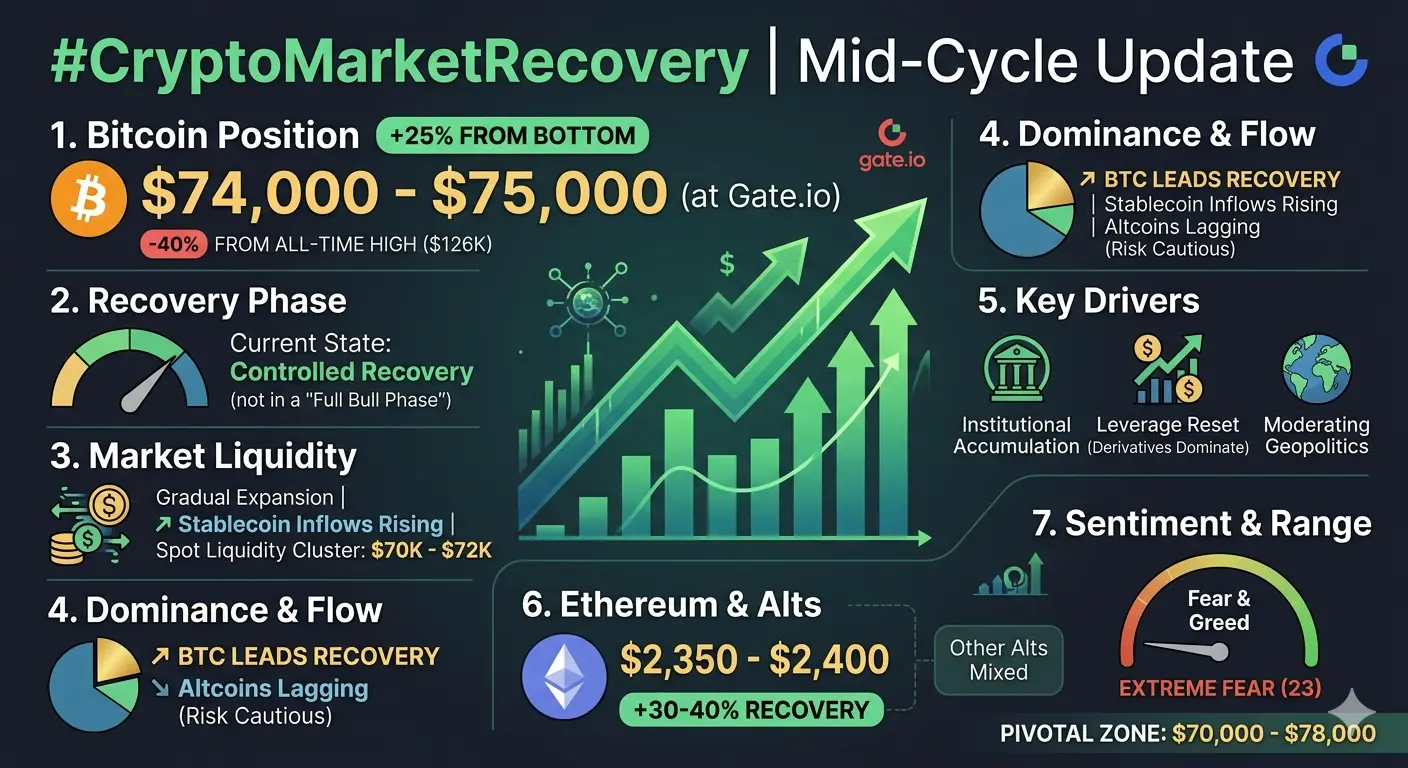
#CryptoMarketRecovery
The Setup From Mini Crypto Winter to Cautious Thaw
Tom Lee described the recent phase as a mini crypto winter during Paris Blockchain Week 2026 and believes it may already be over. The shift was not driven by fundamentals but by easing geopolitical tension between the United States and Iran along with a weaker dollar and improving liquidity. This helped Bitcoin move above 75000 dollars for the first time since early February.
However sentiment remains weak. The fear and greed index is still at 23 which reflects extreme fear. Prices are recovering but market psychology ha
BTC2,61%
ETH2,86%
post-image
  • Reward
  • 12
  • Repost
  • Share
Ryakpanda:
Just charge forward and finish it 👊
View More
#GatePreIPOsLaunchesWithSpaceX
The gates to space are officially open.
Gate has officially launched its Pre IPOs trading program and the first project is SpaceX. One of the most anticipated IPOs in modern financial history with reports suggesting a valuation between 1.75 trillion and over 2 trillion dollars and a potential listing as early as June 2026.
For years access to companies like SpaceX before IPO was limited to private equity networks institutional deal rooms and ultra high net worth investors. Retail investors were left watching while the biggest gains happened long before public li
GUSD0,02%
post-image
  • Reward
  • 12
  • Repost
  • Share
Ryakpanda:
Just charge forward and finish it 👊
View More
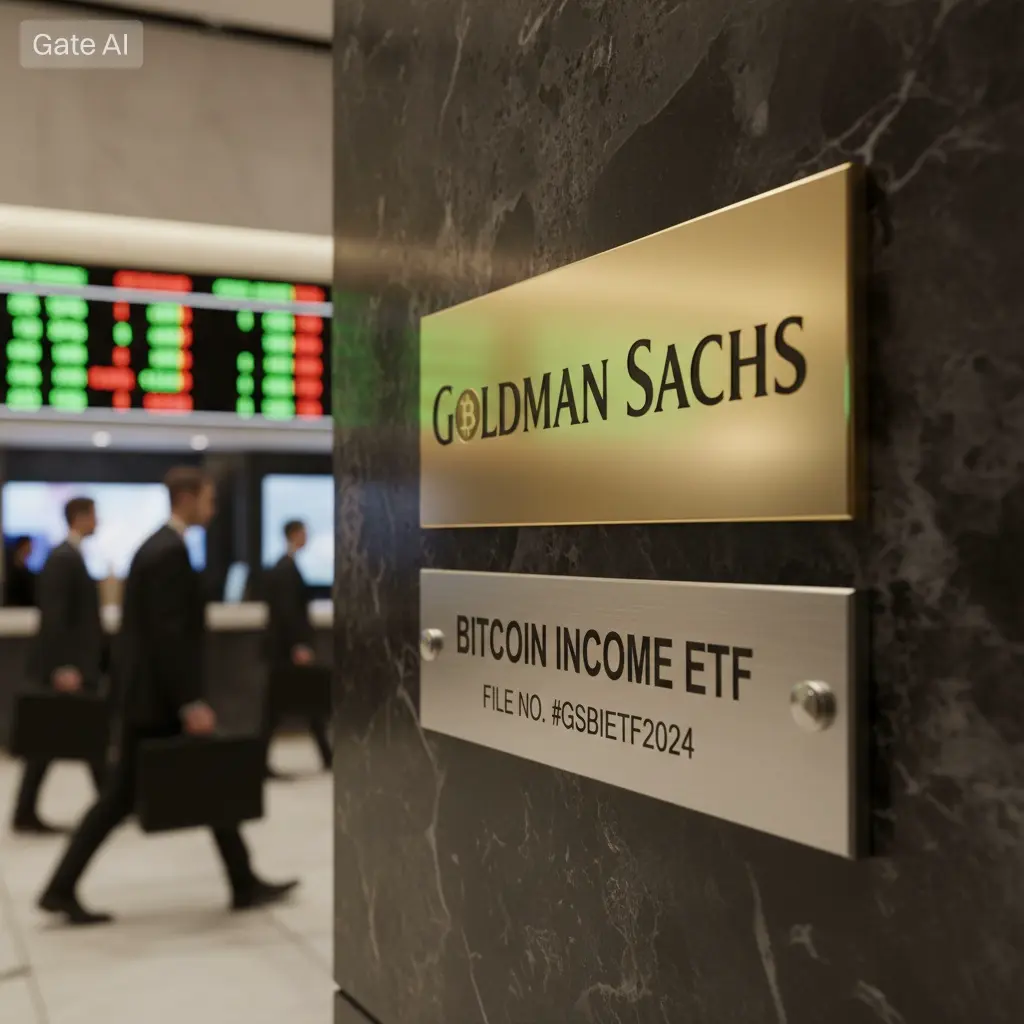
#GoldmanSachsFilesBitcoinIncomeETF
Goldman Sachs has taken a decisive step into crypto, signaling that Bitcoin is no longer a fringe asset but a core component of modern portfolio construction. On April 14, 2026, the firm filed a preliminary prospectus with the U.S. SEC for its Bitcoin Premium Income ETF — a product designed not just for exposure, but for consistent yield generation.
This move comes amid an intensifying institutional race, with firms like Morgan Stanley and BlackRock already pushing aggressively into Bitcoin ETFs. Goldman’s $2 billion acquisition of Innovator Capital Manageme
BTC2,61%
HighAmbition
#GoldmanSachsFilesBitcoinIncomeETF
Goldman Sachs has taken a decisive step into crypto, signaling that Bitcoin is no longer a fringe asset but a core component of modern portfolio construction. On April 14, 2026, the firm filed a preliminary prospectus with the U.S. SEC for its Bitcoin Premium Income ETF — a product designed not just for exposure, but for consistent yield generation.
This move comes amid an intensifying institutional race, with firms like Morgan Stanley and BlackRock already pushing aggressively into Bitcoin ETFs. Goldman’s $2 billion acquisition of Innovator Capital Management adds a critical edge — bringing deep expertise in options-based income strategies, which is the backbone of this ETF.
1. What Exactly Is the Goldman Sachs Bitcoin Premium Income ETF?
This is not a traditional spot ETF. It’s a hybrid income-focused structure built for investors who want Bitcoin exposure without relying purely on price appreciation.
Key mechanics:
Minimum 80% allocation to spot Bitcoin ETPs (like IBIT, FBTC)
No direct BTC custody — reduces operational and regulatory friction
Uses covered call strategy on 40%–100% of exposure
Generates premium income, distributed regularly to investors
Up to 25% routed via Cayman subsidiary (CFC structure) for tax optimization
Expected launch: June–July 2026 (pending SEC approval)
👉 In simple terms:
This ETF transforms Bitcoin from a growth-only asset into a yield-producing instrument.
2. How the Covered Call Strategy Actually Works
This is the engine of the product — and where most retail investors misunderstand the trade-off.
Step-by-step:
ETF gains Bitcoin exposure via spot ETPs
Goldman sells call options on that exposure
Market participants buy those calls → Goldman earns instant premium
That premium is paid out as income to investors
✔ Works best in:
Sideways markets
Slow uptrends
Mild volatility environments
❌ Underperforms in:
Explosive bull runs (upside gets capped)
👉 Key Insight:
This ETF is essentially monetizing volatility, not just holding Bitcoin.
3. Market Impact on Bitcoin — Short-Term vs Medium-Term
Short-Term (Pre-Launch Phase)
Strong signal effect → institutional validation increases confidence
Adds liquidity to BTC options market
Likely compresses implied volatility (IV) over time
No direct BTC buying → impact is sentiment-driven, not structural yet
Medium-Term (Post-Launch)
Continuous inflows → indirect demand for Bitcoin via ETPs
Supply tightening effect as ETF holdings grow
Covered call selling may:
Reduce extreme upside spikes
Create more controlled price expansion cycles
👉 Net Effect:
Not a “pump catalyst,” but a stability + maturity catalyst
4. Current Bitcoin Market Context (April 2026)
Bitcoin is currently in a recovery and consolidation phase:
Price range: $74K–$75K
90-day performance: ~21% drawdown recovery phase
Market structure:
Higher lows forming
Resistance near $78K–$80K
Institutional flows remain positive but not aggressive
👉 Interpretation:
Perfect environment for an income ETF — not overheated, not capitulated
5. Price Forecast & Realistic Scenarios
Short-Term (Pre-Launch)
Range: $72K – $82K
Likely behavior: consolidation + event-driven spikes
ETF approval = 5–10% sentiment boost
Medium-Term (Q3–Q4 2026)
Base Case:
$90K – $100K
→ steady ETF inflows + macro stability
Bull Case:
$110K – $130K
→ rate cuts + dollar weakness + ETF competition
Extreme Bull:
$150K+
→ sovereign adoption + retail re-entry
Bear Case:
$65K – $68K
→ macro shock or regulatory delays
👉 Key Reality Check:
2026 is shaping into an institution-driven cycle, not purely retail-driven like 2021.
6. Practical Trading Strategies
Strategy A — Long-Term (Low Risk)
DCA in $72K–$75K range
Focus: accumulation before ETF launch
Time horizon: 3–6 months+
Strategy B — Range Trading (Medium Risk)
Buy: $72K–$73.5K
Sell: $78K–$80K
Breakout add: above $80K → target $88K–$92K
Stop-loss: below $69.5K
Strategy C — Event-Driven (Higher Risk)
Position before SEC window (May–June)
Hedge on approval day
Expect “buy rumor, sell news” volatility
👉 Pro Insight:
Options traders may benefit the most — IV compression + premium strategies
7. What to Watch Closely
SEC approval timeline (~75 days review cycle)
Competition from BlackRock’s income ETF
Weekly ETF inflows (IBIT, FBTC)
Bitcoin options implied volatility trends
Macro factors:
Interest rates
Dollar strength
Global liquidity
Final Verdict — Honest Take
This is not a hype product — it’s a structural evolution of Bitcoin in traditional finance.
Goldman Sachs is effectively:
Turning Bitcoin into an income-generating asset
Making it more attractive to conservative capital
Expanding its role beyond “digital gold”
👉 Long-Term Impact: Bullish (Structural)
👉 Short-Term Impact: Neutral to mildly positive
At current levels (~$74K–$75K), the setup offers a balanced risk/reward, especially with a clear catalyst window ahead.
Bottom Line:
This ETF won’t send Bitcoin to the moon overnight — but it quietly strengthens the foundation for the next major leg up.
repost-content-media
  • Reward
  • 9
  • Repost
  • Share
ChuDevil:
Chong Chong GT 🚀
View More
#BTCMarketAnalysis
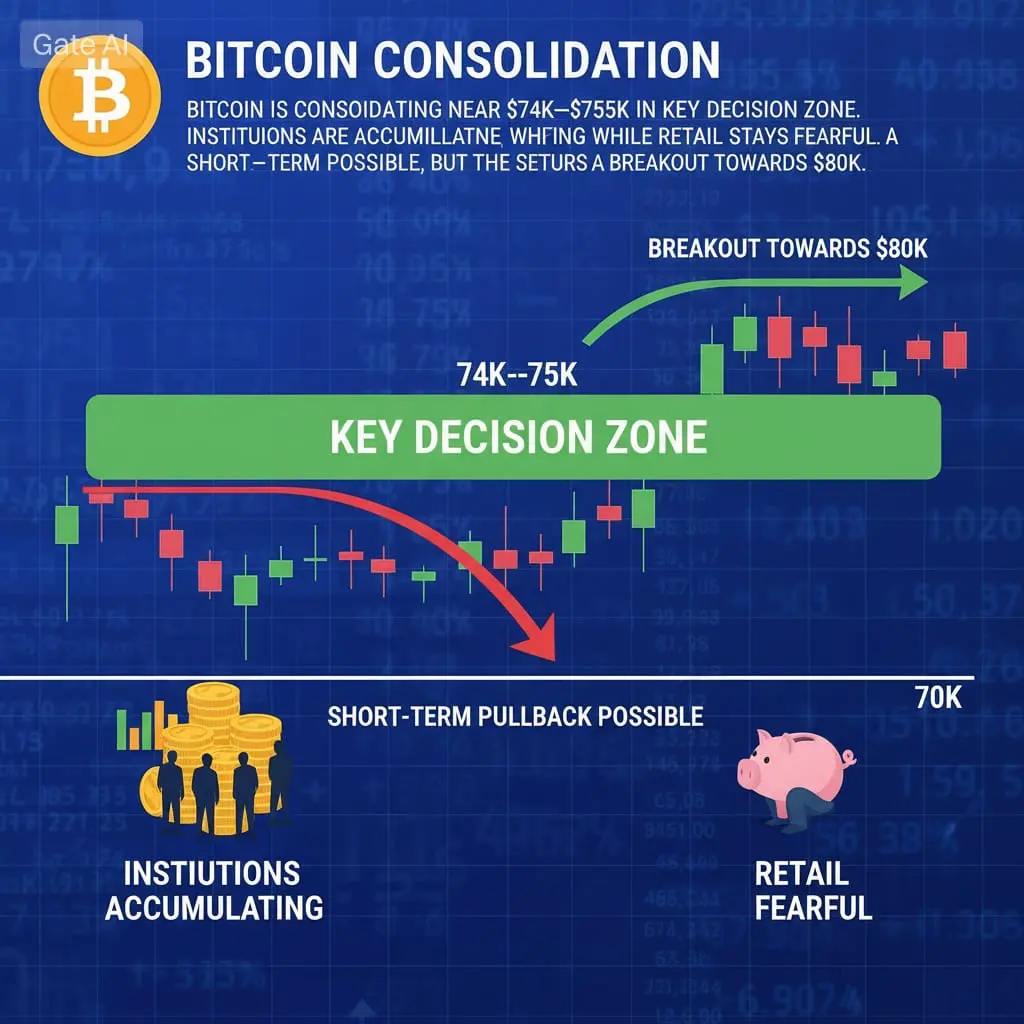
Bitcoin is currently trading around $74.5K, locked in a tight consolidation range between $74K–$75K.
This is not random sideways action — this is a decision zone.
Institutions are quietly accumulating
Retail remains hesitant and underexposed
Volatility is compressing → expansion coming soon
Historically, these compression phases precede explosive moves — direction depends on liquidity triggers.
Liquidity Map & Order Flow (New Advanced Section)
This is where things get interesting.
Major liquidity clusters:
Above: $76K–$77K (stop hunts + breakout traders)
Below: $72K–$73K (l
BTC2,61%
ADX2,71%
MMT6,84%
HighAmbition
#BTCMarketAnalysis
Bitcoin is currently trading around $74.5K, locked in a tight consolidation range between $74K–$75K.
This is not random sideways action — this is a decision zone.
Institutions are quietly accumulating
Retail remains hesitant and underexposed
Volatility is compressing → expansion coming soon
Historically, these compression phases precede explosive moves — direction depends on liquidity triggers.
Liquidity Map & Order Flow (New Advanced Section)
This is where things get interesting.
Major liquidity clusters:
Above: $76K–$77K (stop hunts + breakout traders)
Below: $72K–$73K (late longs + weak hands)
Market makers typically: ➡️ Sweep liquidity first
➡️ Then move in the real direction
Implication: A fake move (either side) is highly likely before the real trend begins.
Technical Structure — Multi-Layer Confirmation
Short-Term Momentum (Bullish, but fragile)
Moving averages fully aligned (MA7 > MA30 > MA120)
ADX above 40 → strong trend strength
Volume confirms buying interest
However, momentum is losing efficiency — price is rising, but with slower follow-through.
Critical Warning Signals (Expanded)
Head & Shoulders Pattern
Neckline: ~$73,500
Breakdown = fast move to $71K–$72K liquidity zone
Overbought Conditions
CCI above 100
Williams %R near extremes
Parabolic SAR (Daily)
Still above price → trend not fully confirmed bullish on higher timeframe
Key Pivot Level
20-Day MA (~$74.7K) = immediate trend control
Volatility Compression Insight (New Section)
Bollinger Bands tightening on 4H and Daily → volatility squeeze forming
This typically leads to: ➡️ 5%–10% expansion move within days
The only question is direction — and that will be decided by liquidity + macro catalysts.
On-Chain Intelligence — Smart Money Behavior
The blockchain tells a very clear story:
60%+ BTC unmoved for 1 year
Exchange reserves declining → reduced sell pressure
Realized price far below current → strong profit cushion
Hash rate near ATH → network confidence extremely high
New Insight: Whale Wallet Behavior
Large wallets (1K+ BTC):
Net accumulation trend continues
No panic distribution seen
➡️ Translation: Smart money is not exiting — they are positioning
Institutional Flow Tracker (Enhanced)
Aggressive Accumulators:
MicroStrategy
Massive BTC absorption strategy
Effectively removing supply from circulation
BlackRock & Fidelity Investments
Consistent ETF inflows
Buying dips, not chasing pumps
Sell-Side Pressure:
Bhutan
Gradual distribution → manageable but persistent
➡️ Net effect: Demand > Supply (structurally bullish)
Market Psychology — The Real Edge
Current sentiment is the biggest clue:
Fear Index: Extreme Fear (~23)
Social activity: declining sharply
Retail participation: low
This creates a classic setup:
“When retail is afraid and inactive, institutions accumulate.”
New Psychological Layer
We are in a “Disbelief Phase” of the cycle:
Price rising slowly
Majority expecting a drop
Market climbing the “wall of worry”
This phase historically transitions into: ➡️ Acceleration phase (fast upside moves)
Macro Overlay — The Hidden Driver
Crypto is no longer isolated.
Key correlations:
BTC ↔ Nasdaq (risk-on behavior)
BTC ↔ Gold (store of value narrative)
Critical Catalysts:
Federal Reserve policy shifts
Inflation data surprises
Global liquidity expansion
➡️ A single dovish signal can trigger breakout above $76K instantly
Regulatory Expansion — Pakistan Angle (Enhanced)
The legalization narrative is underestimated.
Opens new retail + institutional demand
Enables local exchange growth
Bridges global liquidity access
But Reality Check:
Regulatory clarity still evolving
Taxation framework not fully defined
Banking integration remains a friction point
➡️ Net effect: Long-term bullish, short-term neutral
BTC Dominance & Altcoin Rotation (Deeper Insight)
BTC dominance holding strong (~58–60%)
No full alt-season yet
What Happens Next:
BTC breaks $76K → dominance rises → alts lag
BTC consolidates → capital rotates → alts outperform
Key Insight:
Alt-season doesn’t start when BTC pumps —
It starts when BTC stabilizes after pumping.
Risk Matrix (New Section — Professional Upgrade)
Bullish Risks (Upside Drivers):
ETF inflow acceleration
Institutional FOMO
Macro easing
Bearish Risks (Downside Triggers):
Head & Shoulders breakdown
Sudden macro shock
Regulatory uncertainty (global)
Neutral Risks:
Prolonged sideways → trader exhaustion
Price Scenarios (Refined with Market Logic)
Bull Case (55%)
Break $76K → momentum ignition
Target: $80K–$85K
Base Case (30%)
Range-bound liquidity build
$72K–$77K
Bear Case (15%)
Liquidity sweep below $73K
Quick dip → recovery likely
Execution Strategy (Sharpened)
For Smart Buyers:
Avoid emotional entries at resistance
Accumulate at liquidity zones ($72.5K–$73.5K)
For Traders:
Trade the range until breakout
Expect fakeouts before real move
For Long-Term Holders:
Structure unchanged → bullish
Focus on accumulation, not noise
Next 7–10 Days — What Actually Matters
$76K breakout with volume
$73K breakdown confirmation
ETF flow consistency
Institutional buying updates
Macro headlines (especially Fed tone)
Final Verdict — Elevated Perspective
Bitcoin is not weak — it is coiling.
Supply is tightening
Institutions are accumulating
Retail is absent
Volatility is compressing
This combination historically leads to: ➡️ Explosive upside expansion
Most Probable Path:
Short-term pullback or fake breakdown
Liquidity sweep
Strong breakout toward $80K+
Closing Insight (New Addition)
The market right now is not rewarding speed —
It is rewarding patience and positioning.
Those chasing momentum will likely get trapped.
Those waiting for structure will likely win.
Bottom Line:
Bitcoin is in a pre-expansion phase.
The move hasn’t started yet — but the setup is almost complete.
repost-content-media
  • Reward
  • 10
  • Repost
  • Share
Yusfirah:
To The Moon 🌕
View More
#CryptoMarketRecovery
1. Market Overview — What Is Happening Right Now
The cryptocurrency market is currently undergoing a mid-cycle recovery phase following a significant macro-driven correction that reshaped global risk appetite across digital assets. Bitcoin, which previously experienced a deep liquidation phase that dragged prices down toward approximately $60,000 in February 2026, has now recovered and is trading in the $74,000 to $75,000 range on Gate.io. This recovery represents an approximate gain of 24% to 25% from the cycle bottom, indicating that buyers have
HighAmbition
#CryptoMarketRecovery
1. Market Overview — What Is Happening Right Now
The cryptocurrency market is currently undergoing a mid-cycle recovery phase following a significant macro-driven correction that reshaped global risk appetite across digital assets. Bitcoin, which previously experienced a deep liquidation phase that dragged prices down toward approximately $60,000 in February 2026, has now recovered and is trading in the $74,000 to $75,000 range on Gate.io. This recovery represents an approximate gain of 24% to 25% from the cycle bottom, indicating that buyers have gradually returned to the market after excessive leverage was flushed out.
However, despite this recovery, the broader structure still reflects a market that is approximately 40% below its all-time high of $126,000. This positioning clearly confirms that the current environment is not a full bullish continuation phase but rather a controlled recovery stage where liquidity is rebuilding, confidence is returning slowly, and institutional participation is shaping directional stability rather than explosive expansion.
2. Bitcoin Market Structure — Full Cycle Mapping
Bitcoin’s current cycle structure reflects a complete expansion-to-correction-to-recovery sequence that is typical of high-volatility macro assets. The cycle peak was formed in October 2025 at approximately $126,000, after which the market entered a structured breakdown phase that moved progressively through $110,000, then $90,000, and eventually into the $70,000 region as liquidity conditions tightened and leveraged positions were systematically unwound.
The final capitulation phase occurred in February 2026 when Bitcoin printed a cycle bottom near $60,000. Following this low, the market transitioned into a recovery phase where early stabilization began around $66,000 to $67,000, representing an initial rebound of roughly 10%. As accumulation strengthened, Bitcoin established a broader equilibrium zone between $69,000 and $71,000, reflecting a 15% to 18% recovery structure. The next major expansion impulse pushed the market above $76,000, marking a recovery of approximately 27% from the bottom, while the current trading zone around $74,000 to $75,000 indicates a sustained but still incomplete recovery cycle.
This structure confirms that Bitcoin is no longer in panic or liquidation mode but has also not yet entered a confirmed expansion-driven bull phase.
3. Liquidity Conditions — Market Capital Flow Dynamics
Liquidity in the current market is transitioning from compression to gradual expansion rather than entering a rapid inflow cycle. Stablecoin inflows across the ecosystem have begun to rise steadily, indicating that sidelined capital is slowly re-entering risk exposure. At the same time, exchange outflows suggest that long-term participants are continuing to accumulate and store assets off-exchange, which is typically a sign of confidence in medium-term price stability.
Within the $70,000 to $75,000 range, spot liquidity has improved significantly, creating a stabilizing price corridor where buyers and sellers are more balanced. Beneath the $72,000 level, buy-side liquidity clusters are forming, suggesting that the market has developed a defensive accumulation base. Above $75,000 to $80,000, however, sell-side pressure remains present, indicating that profit-taking activity will likely increase if price approaches upper resistance zones.
Overall, liquidity is not yet in an expansionary phase capable of producing parabolic price movement, but it is strong enough to support a slow and controlled upward recovery structure.
4. Volume Behavior — Participation Quality Analysis
Volume behavior across the current cycle reflects a healthy but cautious participation environment. The highest volume activity was observed during the liquidation phase when Bitcoin collapsed from $80,000 toward $60,000, indicating forced deleveraging and panic-driven exits from the market. Since the recovery began, volume has returned in a more stable and measured form, without signs of excessive speculative acceleration.
Importantly, there has been no appearance of blow-off volume spikes, which confirms that the market is not currently in an overheated speculative cycle. Instead, derivatives markets continue to dominate trading activity, which suggests that professional and institutional participants still control directional flow more than retail-driven momentum.
This type of volume structure typically aligns with accumulation phases rather than distribution or euphoric expansion cycles.
5. Capital Flow Rotation — BTC-Led Recovery Structure
The broader crypto market capitalization has recovered approximately 20% to 30% from its cycle lows, reflecting a gradual return of capital after aggressive outflows during the correction phase. However, this recovery has not been evenly distributed across all assets. Bitcoin dominance remains structurally strong, indicating that capital is concentrating first in Bitcoin before rotating into higher-risk altcoins.
This confirms a BTC-led recovery environment, where Bitcoin acts as the primary liquidity magnet while altcoins remain in a lagging recovery structure. Historically, such phases occur before broader market expansion cycles but require sustained liquidity inflows before full altseason conditions emerge.
6. Core Drivers Behind Recovery
The recovery in Bitcoin and the broader crypto market is being driven by multiple structural forces rather than a single catalyst. Liquidity stabilization is one of the primary drivers, as stablecoin inflows and reduced exchange reserves indicate that capital is gradually returning to the system.
Institutional accumulation has also played a key role, particularly through structured exposure and long-term positioning strategies that continued even during the market downturn. This behavior has created a strong price foundation in the $60,000 to $70,000 region, preventing deeper structural breakdowns.
Additionally, geopolitical uncertainty has shown signs of moderation, which has improved overall risk sentiment across global markets. The derivatives market has also undergone a significant leverage reset, removing excess speculative positioning and reducing the likelihood of cascading liquidation events. On-chain data further supports the recovery narrative, with a large portion of Bitcoin supply remaining dormant for extended periods, indicating that long-term holders are not participating in sell pressure.
7. Ethereum and Altcoin Structure
Ethereum has demonstrated a stronger percentage recovery from its lows compared to many mid-cap assets, rising from approximately $1,500–$1,800 to around $2,350–$2,400. This represents a recovery of roughly 30% to 40%, although Ethereum continues to underperform Bitcoin structurally in terms of dominance and leadership.
Altcoins overall remain in a mixed recovery state. Large-cap assets are showing relative strength, while mid-cap and small-cap assets continue to struggle with liquidity constraints and weaker capital inflows. This confirms that the market is still in an early recovery phase where risk appetite has not yet fully expanded beyond core assets.
8. Market Sentiment — Psychological Structure
Market sentiment remains firmly within the Extreme Fear zone, with readings around 23 on the Fear and Greed Index. Retail participation is cautious and inconsistent, reflecting uncertainty about whether the recovery is sustainable or temporary. Institutional participants, however, are gradually increasing exposure, while traders remain divided between continuation expectations and macro-driven caution.
Historically, Extreme Fear conditions often correspond with accumulation phases rather than distribution phases, particularly when supported by improving liquidity conditions and stabilizing price structure.
9. Key Market Levels — Gate.io Reference
Bitcoin maintains strong structural support between $70,000 and $72,000, with mid-range resistance forming around $75,000 to $76,500. A confirmed breakout above $80,000 on a sustained weekly close would signal a transition toward a more aggressive expansion phase. Conversely, a breakdown below $69,000 would indicate weakening accumulation strength and a potential return to deeper liquidity zones.
Ethereum holds support around $2,200, with resistance forming near $2,400 and a broader breakout structure between $2,600 and $2,800.
10. Market Scenarios — Probabilistic Structure
In a bullish continuation scenario, sustained ETF inflows and liquidity expansion could push Bitcoin toward the $85,000 to $100,000 range, confirming a new expansion phase. In a neutral scenario, the market is likely to remain range-bound between $70,000 and $78,000, consolidating gains and building structural strength for future movement. In a bearish scenario, rejection at resistance levels could lead to a retest of the $65,000 to $69,000 liquidity zone before stabilization resumes.
11. Macro Environment — External Pressure System
Global macro conditions remain in a transitional phase. Interest rates are still elevated, although expectations of future easing cycles are gradually forming. The US dollar is showing signs of stabilization rather than aggressive strength, while risk assets are slowly regaining capital inflows. However, the macro environment is not yet fully supportive of aggressive expansion cycles, which limits upside acceleration in crypto markets for now.
12. Structural Market Conclusion
The current crypto market environment represents a controlled recovery phase characterized by rebuilding liquidity, gradual institutional accumulation, and stabilizing macro conditions. Price action is moving upward in a structured manner, volume remains stable without speculative overheating, and liquidity is slowly returning to the system.
Bitcoin has recovered approximately 25% from its cycle low but remains significantly below its all-time high, placing the market in a critical transitional zone where the next major move will likely determine whether a broader expansion phase begins or whether consolidation continues.
Above $80,000, the market structure shifts toward bullish expansion dynamics. Below $70,000, deeper correction risks re-emerge. The current range therefore represents a pivotal accumulation and decision-making zone for the next macro cycle phase.
13. Risk Framework
Despite improving structure, the market remains highly sensitive to external shocks. Geopolitical events, sudden liquidity shifts, or rapid changes in institutional flow can quickly alter market direction. ETF inflows and macro conditions remain key variables that can either reinforce recovery or trigger renewed volatility. As a result, disciplined risk management and position sizing remain essential in the current environment.
repost-content-media
  • Reward
  • 8
  • Repost
  • Share
ChuDevil:
Go all in 🤑
View More
#FoxPartnersWithKalshi
What Is This Deal?
Fox Corporation (parent of Fox News, Fox Business, Fox Weather) and Kalshi — the largest regulated prediction market in the U.S. — officially announced a sponsored integration partnership on April 7, 2026.
Kalshi's real-time prediction market data will now be embedded directly into Fox's editorial and streaming content.
Where Will Kalshi Data Appear?
The integration covers four Fox platforms:
Fox News Channel — flagship cable news
Fox Business Network — financial and markets coverage
Fox Weather — dedicated weather channel
Fox One — Fox's fast-growing
post-image
  • Reward
  • 10
  • Repost
  • Share
ChuDevil:
Go all-in 🤑
View More
#GoldmanSachsFilesBitcoinIncomeETF
Goldman Sachs has filed for a new Bitcoin Premium Income ETF, and this is a big shift in how institutions are using crypto.
What’s Different?
This is not a normal Bitcoin ETF.
Instead of just tracking Bitcoin price, it focuses on earning income from Bitcoin volatility.
👉 In simple words:
They want to make regular income, not just rely on price going up.
How It Works
• Around 80% investment in Bitcoin-related ETFs
• Uses options trading (covered calls)
• Earns money by selling call options and collecting premiums
This means:
✔ Sideways market → More income
BTC2,61%
post-image
post-image
  • Reward
  • 6
  • Repost
  • Share
ShainingMoon:
To The Moon 🌕
View More
Bull Bear Balance Restored Is a Directional Move Imminent
872 views
2026-04-15 16:08
  • Reward
  • 2
  • Repost
  • Share
ShainingMoon:
To The Moon 🌕
View More
The transition from Dr. Han's personal choice to an industry builder is actually a microcosm of the entire cryptocurrency industry.
From the early days of being ignored to gradually becoming mainstream today, the most important aspect of the process is continuous validation and constant correction. Staying calm in good times and persisting in investment during tough times are what have brought us to where we are today.
We are also moving along the same track, connecting assets, liquidity, and innovation, seeking more solid structural opportunities, and continuing to refine our core infrastruct
KevinLee
The transition from Dr. Han's personal choice to an industry builder is actually a microcosm of the entire cryptocurrency industry.
From the early days of being ignored to gradually becoming mainstream today, the most important aspect of the process is continuous validation and constant correction. Staying calm in good times and persisting in investment during tough times are what have brought us to where we are today.
We are also moving along the same track, connecting assets, liquidity, and innovation, seeking more solid structural opportunities, and continuing to refine our core infrastructure capabilities and global compliance. Together, we are walking this less crowded but more meaningful path.
  • Reward
  • 4
  • Repost
  • Share
ShainingMoon:
To The Moon 🌕
View More
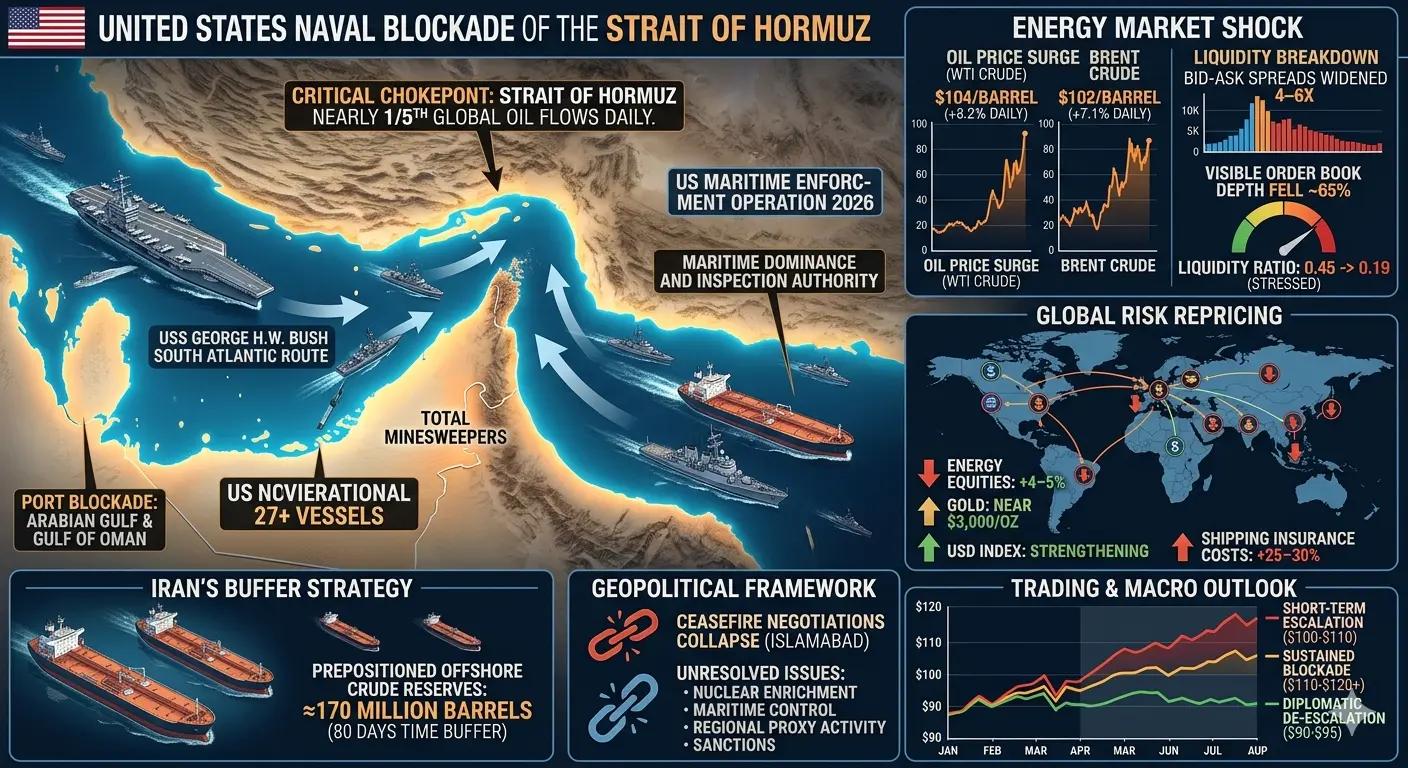
#USBlocksStraitofHormuz
US Blockade of the Strait of Hormuz
Strategic Shock, Energy Market Disruption, and Global Financial Repricing
The reported initiation of a U.S. naval blockade of Iranian ports and maritime access points under U.S. Central Command Maritime Enforcement Operation 2026 marks one of the most significant escalations in global energy geopolitics in recent years. Triggered by the collapse of high-level ceasefire negotiations in Islamabad, the operation signals a shift from diplomatic containment to direct maritime economic pressure.
At the center of this crisis lies the Strait
post-image
  • Reward
  • 4
  • Repost
  • Share
ShainingMoon:
To The Moon 🌕
View More
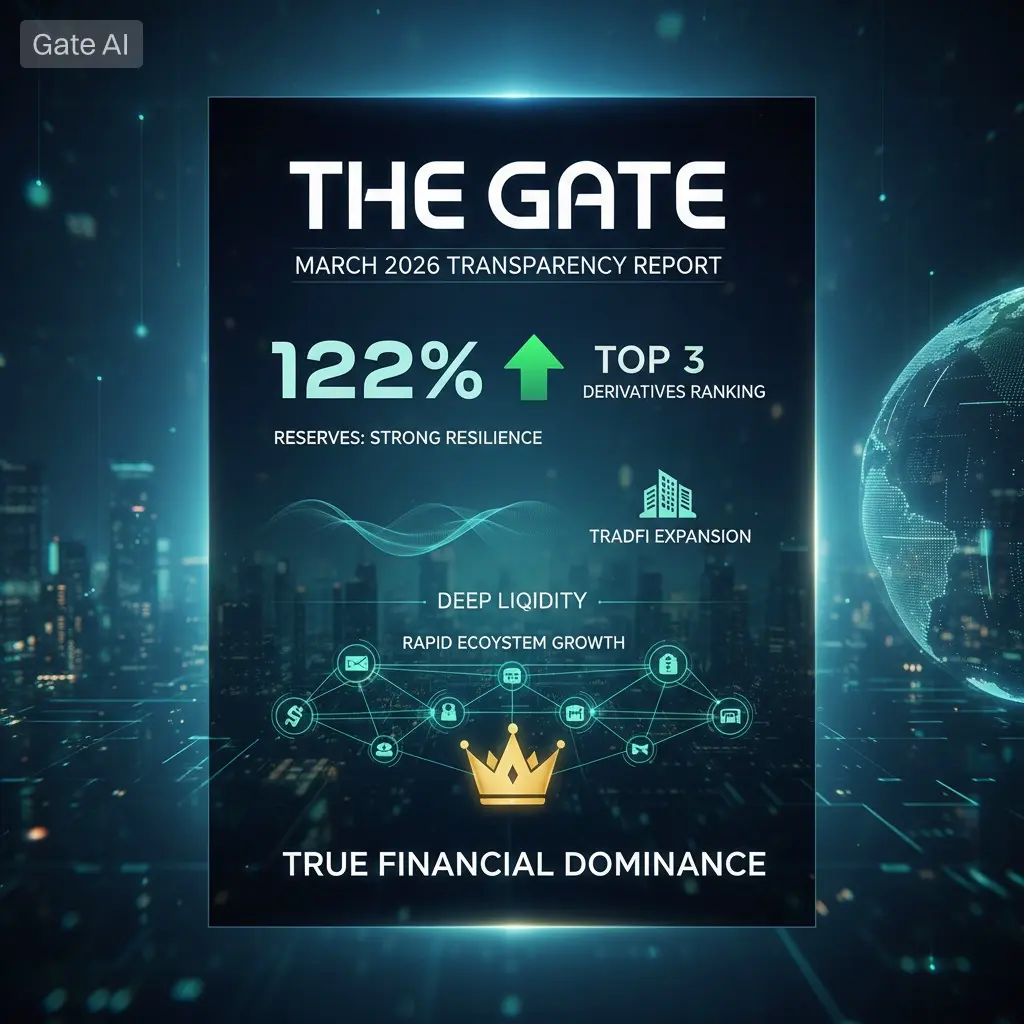
#GateMarchTransparencyReport
Gate March 2026 Transparency Report
A New Standard in Resilience, Liquidity, and Integrated Finance
The March 2026 Transparency Report from Gate.io is not just a routine update — it marks a clear transition into a multi-vertical financial powerhouse. What we are witnessing is the evolution of a platform that goes far beyond crypto trading, positioning itself as a fully integrated financial super-app bridging digital assets, derivatives, and traditional markets.
Capital Strength & Proof of Reserves: Trust Built on Data
Security remains the foundation.
122% total re
BTC2,61%
ETH2,86%
GT2,1%
post-image
  • Reward
  • 7
  • Repost
  • Share
ShainingMoon:
To The Moon 🌕
View More
  • Pin