0G Labs ($0G), a decentralized AI infrastructure protocol backed by $290 million in investment, has officially launched the 0G Apollo Accelerator program. The 10-week program, with a total funding of up to $20 million, was developed in collaboration with former Stanford blockchain members to fund and expand the first wave of revenue-generating AI applications on decentralized infrastructure.
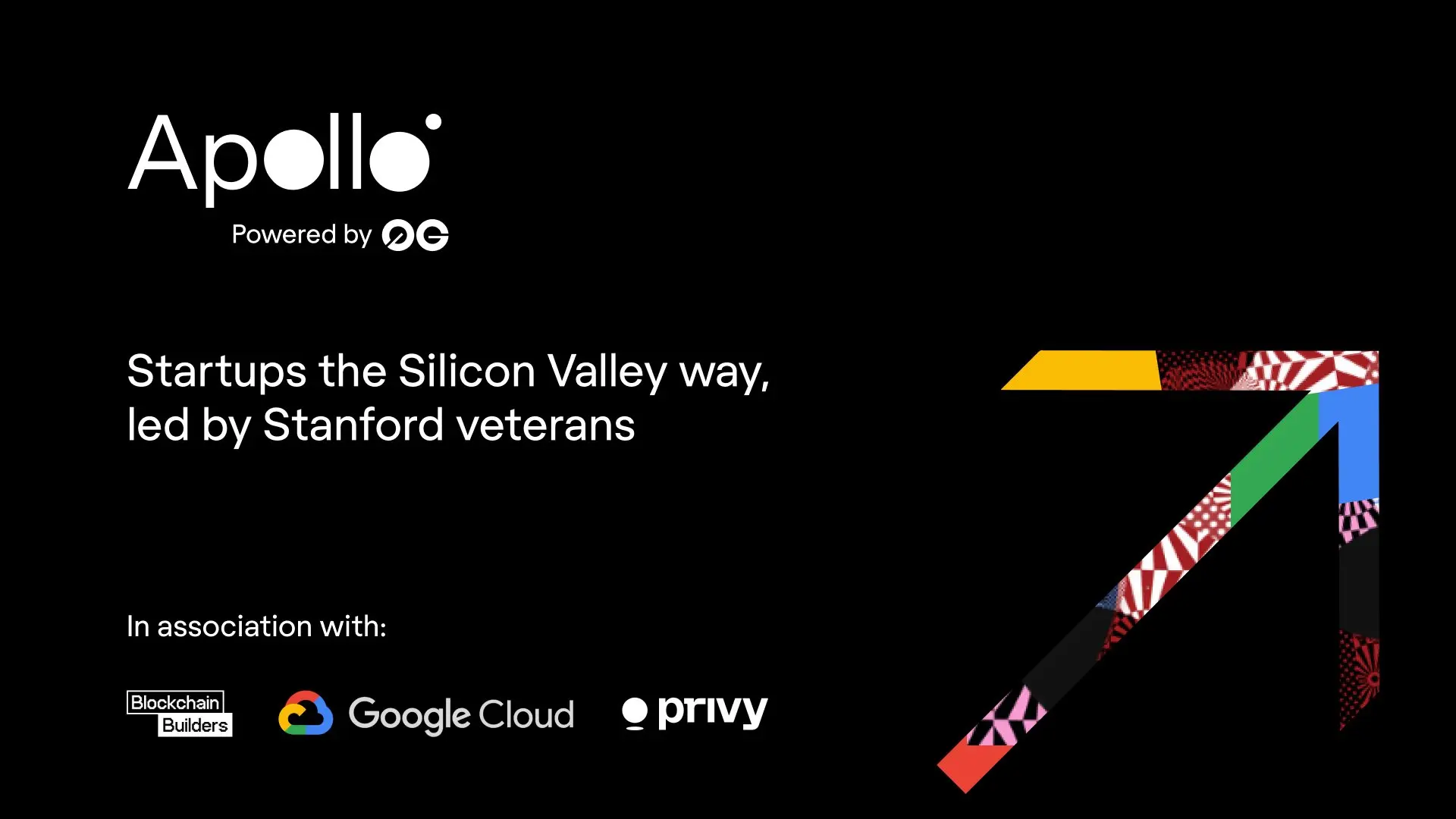
Only 10 spots are available worldwide. Each selected team will receive:
- Up to $2 million in funding per project
- $200,000 Google Cloud credits per team
- Exclusive access to Privy Wallet for developers (currently owned by Stripe)
- 1:1 mentorship from Stanford professors, 0G protocol engineers, Google team members, and leading investors
- Plus many other strategic support
The program targets founders developing in areas such as AI Agents, on-chain data marketplaces, DeFi combined with AI, cross-chain infrastructure, gaming/NFTs, and decentralized content.
Interested teams can apply at apollo.0g.ai. Spots are very limited.
Disclaimer: The information on this page may come from third parties and does not represent the views or opinions of Gate. The content displayed on this page is for reference only and does not constitute any financial, investment, or legal advice. Gate does not guarantee the accuracy or completeness of the information and shall not be liable for any losses arising from the use of this information. Virtual asset investments carry high risks and are subject to significant price volatility. You may lose all of your invested principal. Please fully understand the relevant risks and make prudent decisions based on your own financial situation and risk tolerance. For details, please refer to
Disclaimer.
Related Articles
The Solana Foundation launches STRIDE and SIRN: A 24/7 security monitoring agreement with TVL exceeding $10 million
Solana Foundation is launching a security upgrade program for the DeFi ecosystem, including the STRIDE structured assessment and the SIRN incident response network. The assessment framework is open and transparent; protocols with TVL over $10 million can receive round-the-clock monitoring, and protocols with over $100 million can also receive formal verification funding. The foundation emphasizes that these resources are meant to improve security, not to replace protocols’ responsibility for security.
ChainNewsAbmedia43m ago
The Fabric Foundation releases a plan for building robot economic infrastructure, covering four core pillars
OpenMind’s Fabric Foundation has announced that it is building the infrastructure for a robot economy, focusing on four main pillars: robotic financing, agent payments, data flywheels, and a behavioral framework for robots. The goal is to improve the sustainability and safety of the robotics industry.
GateNews57m ago
Grayscale: Quantum computing or early breakthroughs are accelerating—preparing for post-quantum encryption is urgent.
Grayscale research director said that technical breakthroughs in quantum computing could introduce uncertainty, so public blockchains need to accelerate the deployment of post-quantum cryptography. A Google paper highlights the time sensitivity of quantum risk, specifically noting that if quantum computers reach a certain number of logical qubits, they will threaten existing encryption systems. Solana and the XRP Ledger have already begun experimental deployments of post-quantum cryptography technology. While Bitcoin has lower technical risk, challenges still exist at the governance level.
MarketWhisper1h ago
MegaETH releases an investor memo, and in April it will roll out new products and TGE milestones
High-performance Layer 2 protocol MegaETH recently released an investor memo, outlining on-chain progress and updates to the Mafia ecosystem, and clearly set out a KPI-based token generation event plan. GMX, through its deployment on MegaETH, delivers real-time trading experiences with performance close to that of a centralized exchange, further narrowing the performance gap between DeFi and CEX. The team commits to driving stablecoin adoption and the growth of functional applications through accountability mechanisms, and expects to achieve major progress in April.
MarketWhisper1h ago
Polygon Giugliano upgrade takes effect on April 8, nodes act immediately
Polygon Foundation announced that the Giugliano hard fork will be launched on April 8, bringing improvements such as faster transaction confirmations, greater fee transparency, and new RPC interfaces. Node operators must upgrade to the corresponding version before the specified block height to avoid losing synchronized connections with the mainnet. At the same time, Polygon has also introduced a private mempool feature to enhance transaction privacy.
MarketWhisper3h ago
Solana ecosystem DEX aggregator Titan launches on-chain router DART
Solana ecosystem DEX aggregator Titan launched the on-chain router DART on April 7. By dynamically allocating trading volume to the best liquidity sources in real time, it reduces trading costs; tests show costs are below 0.02%. In the future, it will expand to more trading pairs, and the DART API will enter the beta testing phase.
GateNews3h ago


