An unidentified entity has quietly accumulated approximately 100 million LINK — nearly 10% of the total supply — through a network of 48 wallets exhibiting almost identical transaction behaviors, according to an on-chain data analyst on X.
This discovery is drawing significant attention in the digital asset community, not only because of the enormous scale but also due to the sophisticated strategy of accumulation, enough to avoid causing notable price fluctuations over several months.
Network of 48 wallets with matching transaction patterns
Analysis of the top 100 LINK wallets reveals an unusual group: each wallet holds about 2 million LINK and almost no other assets.
Initially, fewer than 10 wallets with these characteristics were identified, but further investigation showed a total of 48 wallets with:
- Nearly identical LINK balances
- Creation dates concentrated from August to November 2025
- Purchase flows originating from the same Coinbase hot wallet
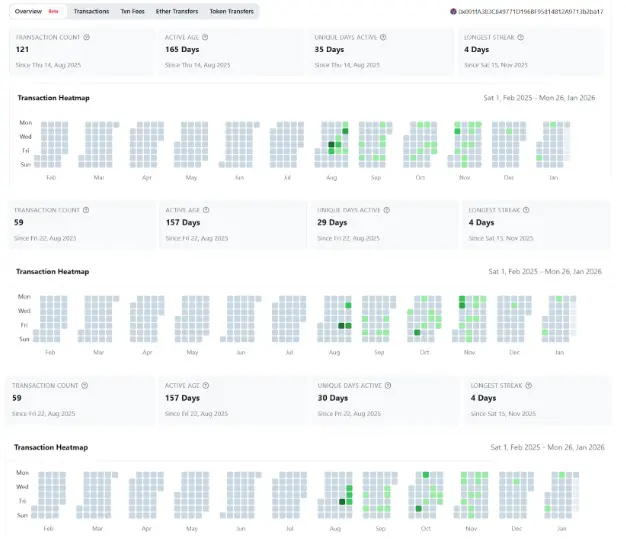
More importantly, heatmap transaction charts show these wallets buy LINK with similar volumes on the same days. Despite minor differences early on, all wallets then follow the same monthly accumulation rhythm — a strong indicator that they are controlled by the same entity.
The total estimated amount of LINK accumulated is around 100 million tokens, occurring from August 2025 to January 2026.
Why isn’t the LINK price surging?
Typically, a single entity acquiring an amount equivalent to 10% of the supply would cause significant price volatility. However, in this case, LINK’s price did not react with a sudden spike.
The reason is believed to be that the accumulation strategy was designed to be “invisible”: using anonymous wallets, splitting transactions into smaller parts, and buying during high-liquidity market phases.
The critical period coincided with the market crash on 10/10/2025, when infrastructure issues and a wave of sell-offs caused liquidity to spike. Subsequently, exchanges gradually offloaded their inventory in October and November, creating an environment where a large buyer could absorb supply without pushing prices up.
Notably, 39 of the 48 wallets were created during these two highest liquidity months.
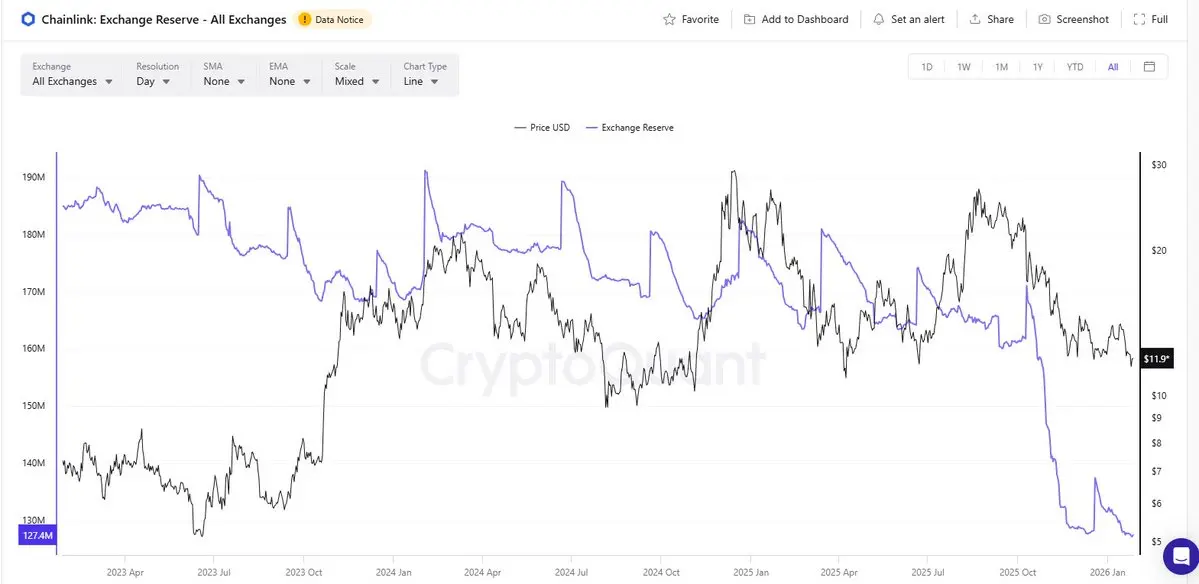
Cash flow data shows that LINK holdings on exchanges dropped sharply during October–November 2025. This decline nearly perfectly coincides with the appearance of new wallets beginning to accumulate, each gathering about 2 million LINK.
This pattern supports the hypothesis that a significant portion of the supply was withdrawn from exchanges to be held long-term.
Suspected entities
The scale and sophistication of this accumulation campaign make it almost impossible to be a retail investor. 100 million LINK is worth over $1 billion — a figure beyond the capacity of most individuals, especially when investing in a single asset.
Several hypotheses are often discussed:
Chainlink Labs
This is unlikely. Chainlink Labs controls about 300 million LINK from the non-circulating supply, which is publicly labeled and accounted for. These wallets are known and align with future issuance plans.
Additionally, Chainlink announced a program to buy $1 million worth of LINK weekly. It would be contradictory to promote this initiative while secretly accumulating nearly $1 billion worth of LINK over six months.
However, the accumulation started on 11/8/2025 — just four days after announcing the Chainlink Reserve — possibly signaling long-term confidence to external organizations.
BlackRock
This is a more plausible hypothesis. With $14 trillion in assets under management, BlackRock has repeatedly emphasized tokenization as the future of financial markets. Their BUIDL fund, now exceeding $3 billion, heavily relies on Chainlink services like CCIP, Proof of Reserves, and price data.
A reserve of 100 million LINK would give a strategic position in the tokenization infrastructure. Compared to BlackRock’s scale, this allocation is small but strategically significant. Secret accumulation makes sense, as publicly revealing a large position before establishing it could drive prices up.
JPMorgan
This is also a noteworthy possibility. With trillions in assets and a rapidly expanding blockchain division (Kinexys, formerly Onyx), JPMorgan is one of the most active traditional banks in asset tokenization and cross-chain finance.
Their initiatives involving tokenized funds, fund flows, and blockchain payments in 2025 depend heavily on Chainlink services like CCIP, Chainlink Runtime Environment, and oracles.
Holding 100 million LINK would give them a strategic position in oracle infrastructure and cross-chain interaction, connecting JPMorgan’s private network with public blockchains. At their scale, this is a small but strategically meaningful allocation for priority access, staking yields, and reducing dependency risks as tokenized assets grow into trillions of dollars.
Interestingly, around the crash date of 10/10, suspicions arose. Just days prior, JPMorgan issued a bearish report on crypto-related stocks amid geopolitical tensions. While the main cause of the crash was external factors, this chain of events fuels speculation that major organizations may have exploited the volatility to accumulate quietly.
Financial infrastructure organizations (DTCC, SWIFT)
Less likely. These organizations typically do not hold strategic token reserves. More importantly, it would be highly unusual for DTCC or SWIFT to accept an unidentified entity controlling 10% of LINK if Chainlink becomes a core infrastructure component in the future. Such centralization poses significant systemic risks — something these organizations are extremely sensitive to.
However, a notable detail is that all 48 wallets were created between August and November 2025, with the last wallet created on 11/20/2025 — just two days before SWIFT’s rollout of the new ISO 20022 standard, an initiative directly related to Chainlink.
This coincidence in timing doesn’t prove causality, but it’s hard to ignore. If LINK is expected to play a key role in financial messaging, payments, or system interactions in the future, securing a large reserve before this milestone would be a strategic move.
A super-rich individual
This is highly unlikely. 100 million LINK is worth over $1 billion. Few individuals could deploy such capital, and even fewer would dedicate all to a single digital asset without a clear strategic or operational purpose.
Analysis suggests it is almost certainly a large organization. Accumulating 10% of the LINK supply without causing price fluctuations requires deep market expertise and organizational execution capacity.
The increased buying during high liquidity after the 10/10 crash strongly indicates an institutional buyer. They understand that high liquidity allows more frequent purchases without pushing prices up. This coordinated behavior exceeds what a typical retail investor could do.
It’s also notable that the total accumulation is nearly exactly 100 million LINK — precisely 1/10 of the total supply. This deliberate scale indicates calculated planning, not random accumulation, reflecting a long-term strategic vision.
No one would buy 100 million LINK just for short-term speculation. This suggests expectations for real-world use cases of the token in the future. The entity appears to be preparing for an economy where core financial infrastructure operates on Chainlink, securing reserves early on.
Long-term strategic signals
The total accumulation of nearly exactly 100 million LINK — about 1/10 of the total supply — indicates a deliberate, planned scale rather than random buying.
Analysts believe this could be a preparatory step for future LINK use cases in financial infrastructure, rather than mere price speculation.
If a major organization is behind this, it could trigger a wave of other institutions seeking to accumulate LINK. However, replicating such a covert, long-term accumulation strategy with favorable liquidity would be very challenging.
Opportunities and risks
While the long-term outlook may be positive, a single entity controlling up to 10% of the supply raises concerns about centralization risks. The potential market impact will largely depend on their intended holdings and future use strategies for these LINK.
The true identity of this “whale” remains unknown. But the event of a large, organized supply accumulation has become one of the most notable on-chain patterns in LINK’s history.
Thach Sanh


