Spot gold surged strongly today, breaking through the $4,700 per ounce level and hitting a new all-time high. Amid escalating US-Europe trade tensions and ongoing geopolitical risks, safe-haven demand has sharply increased. At the same time, the Polish central bank officially approved a plan to purchase up to 150 tons of gold, further strengthening the global central bank gold-buying wave.
(Previous context: Can precious metals still be bought in 2026? Analyzing why gold has become the best target for the “Trump trade” during the US midterm election year)
(Additional background: Is gold about to explode? HSBC forecasts: Gold will surge to $5,000 in the first half of 2026)
Gold hits a new historical high! On January 20, 2026, spot gold briefly surged past $4,700 per ounce, reaching over $4,740, with an intraday increase of about 1.5%. Market risk aversion sentiment has clearly intensified.
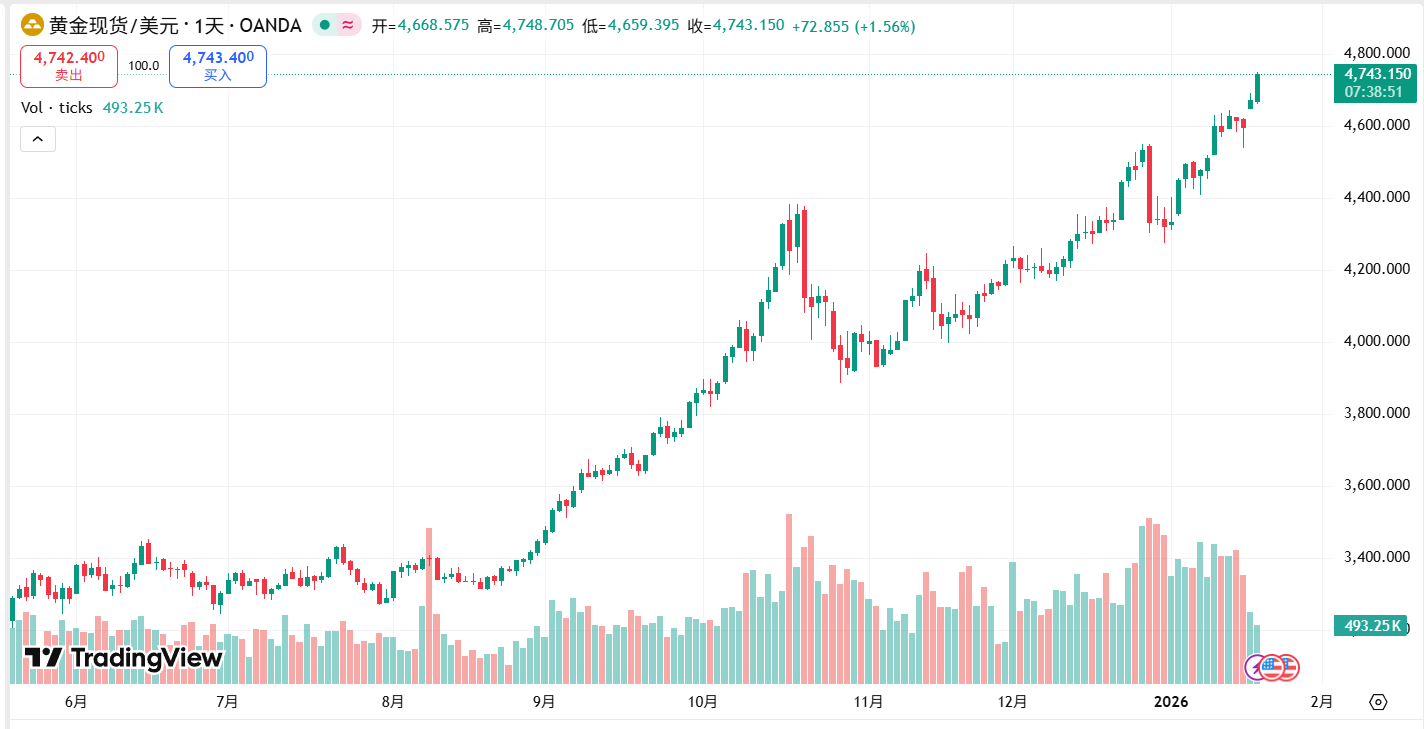
Multiple Factors Driving Gold Prices
This wave of gold price increase is due to multiple overlapping effects:
- Geopolitical and trade tensions: Escalating trade friction between the US and the EU, including high tariff statements, have shifted the market toward traditional safe-haven assets.
- Support from the global macro environment: Since 2025, gold has risen over 60-70%, continuing its strength into 2026; central bank gold purchases, dollar policy uncertainties, and inflation expectations have all driven capital into gold.
- Technical bullish momentum: Breaking above $4,700 has attracted more chasing-buyers, with short-term bullish sentiment strongly prevailing.
Polish Central Bank Reiterates Large-Scale Gold Purchases
According to Bloomberg, the National Bank of Poland (NBP) has officially approved a plan to purchase up to 150 tons of gold, increasing its gold reserves from about 550 tons to approximately 700 tons, ranking among the top 10 countries globally in gold reserves. NBP Governor Adam Glapiński stated that this move aims to strengthen “national financial security” and raise the proportion of gold in total reserves to 30%.
It is worth noting that Poland has been actively increasing its gold holdings in recent years, with reserves rising from about 230 tons since 2022 to the current level. In 2025, net purchases totaled approximately 95-100 tons, ranking first worldwide. The 150-ton gold purchase plan accounts for about 10-15% of global central bank annual gold purchases, which could prompt other emerging or Central European countries to follow suit in the short term, further amplifying safe-haven demand.

Disclaimer: The information on this page may come from third parties and does not represent the views or opinions of Gate. The content displayed on this page is for reference only and does not constitute any financial, investment, or legal advice. Gate does not guarantee the accuracy or completeness of the information and shall not be liable for any losses arising from the use of this information. Virtual asset investments carry high risks and are subject to significant price volatility. You may lose all of your invested principal. Please fully understand the relevant risks and make prudent decisions based on your own financial situation and risk tolerance. For details, please refer to
Disclaimer.


