
Fitch Ratings on Monday classified Bitcoin-backed securities as “speculative grade” high risk. Bitcoin price volatility can rapidly erode collateral, triggering margin calls and forced liquidations. MicroStrategy holds nearly 688,000 BTC and expands holdings through convertible bonds, with credit and Bitcoin prices deeply linked. Fitch mentioned the 2022 wave of bankruptcies of BlockFi and Celsius as warnings but believes spot ETFs might suppress volatility.
Why does Fitch rate Bitcoin securities as speculative grade?
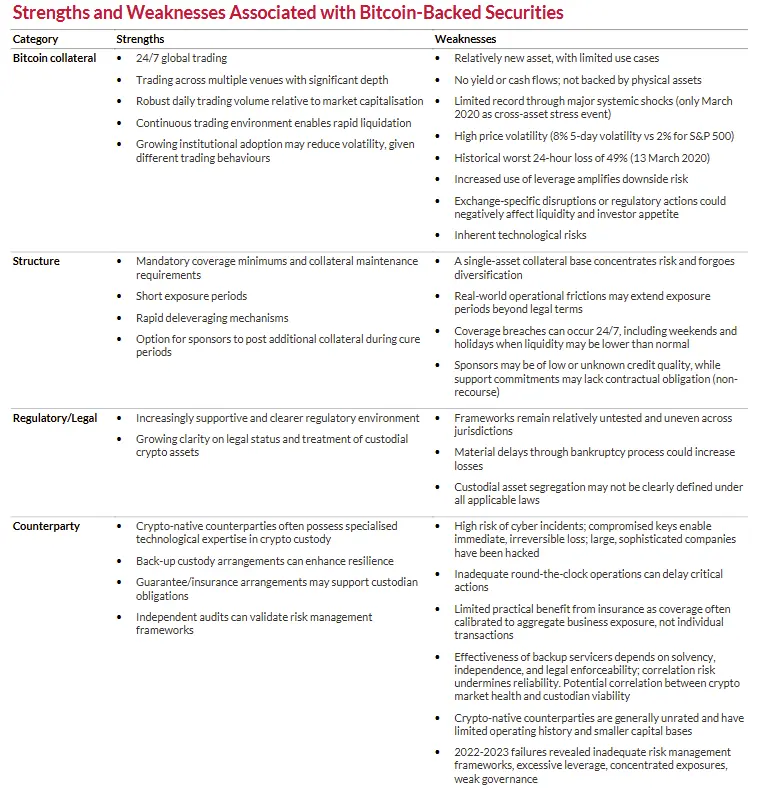
(Source: Fitch Ratings)
Credit rating agency Fitch Ratings points out that securities backed by Bitcoin carry high risks. This warning could complicate the expansion of crypto-related credit products among institutional investors. As one of the three major US credit rating agencies, Fitch’s assessments play a key role in evaluating new financial instruments by banks, asset managers, and other institutions.
Fitch’s Monday assessment states that Bitcoin-backed securities—typically involving pooling Bitcoin or issuing assets related to Bitcoin, and using these assets as collateral for debt—pose “higher risks” that are “consistent with speculative-grade credit.” The agency indicates these features may place such products in the speculative category, associated with weaker credit quality and higher potential losses.
Speculative Grade in credit ratings is BB+ and below, commonly called “junk bonds.” This rating implies significantly higher default risk than investment-grade bonds, requiring investors to demand higher yields to compensate. For Bitcoin-backed securities, being rated as speculative greatly limits potential buyers, as many institutional investors’ policies prohibit holding speculative-grade assets.
Fitch highlights Bitcoin’s “inherent” price volatility and the counterparty risks embedded in these structures. The agency also references the wave of crypto lender failures during the 2022-2023 economic downturn, likely referring to BlockFi and Celsius, as cautionary examples illustrating how collateral-backed models can rapidly collapse under market stress.
Three reasons Fitch classifies Bitcoin securities as speculative grade
Price volatility risk: Bitcoin daily swings can exceed 10%, rapidly eroding collateral value
Collateral ratio collapse: Price drops trigger margin calls and forced liquidations, quickly amplifying losses
Historical warnings: BlockFi and Celsius failures prove such models are unsustainable under extreme market conditions
Fitch states: “Bitcoin’s price volatility is a major risk factor,” warning that breaching collateral levels can quickly erode collateral value and turn losses into reality. The collateral ratio is the ratio of Bitcoin collateral to the debt issued against it. Sharp price declines can cause this ratio to fall below the required threshold, triggering margin calls and forced liquidations.
MicroStrategy’s 688,000 BTC credit time bomb
For publicly traded companies holding large amounts of digital assets, Bitcoin’s importance in credit ratings is increasingly evident, especially for those issuing convertible notes or secured debt. A prominent example is MicroStrategy, led by Michael Saylor, which has accumulated nearly 688,000 Bitcoin.
The company has expanded its Bitcoin holdings through multiple financings, including issuing convertible bonds, secured debt, and equity, providing funding for its strategy. As a result, MicroStrategy’s balance sheet and credit profile are now closely tied to Bitcoin market prices. This highly concentrated asset allocation makes MicroStrategy a typical case for Fitch’s warning.
When Bitcoin prices fall, MicroStrategy’s asset value shrinks, but its debt remains unchanged. If Bitcoin drops significantly, the company could face default risk or be forced to sell Bitcoin at low prices to repay debt. This structural risk exemplifies Fitch’s concern about “rapid collateral erosion.” More critically, holders of MicroStrategy’s convertible bonds might choose not to convert to equity during a price decline, demanding cash instead, further stressing the company’s liquidity.
Fitch’s warning could negatively impact MicroStrategy’s stock and bond prices. Institutional investors rely heavily on the opinions of the three major rating agencies; if Fitch downgrades MicroStrategy’s bonds to speculative grade, a sell-off could ensue. Additionally, some funds’ investment policies prohibit holding speculative-grade bonds, so a downgrade might force these funds to sell MicroStrategy bonds.
However, it’s important to note that Fitch’s warning seems more focused on credit and securitized instruments whose repayment directly depends on the value of underlying collateral. The assessment does not mention spot Bitcoin ETFs, which are structured more like equity investment funds rather than credit products. In fact, Fitch suggests that ETF adoption could help “diversify the holder base,” potentially “mitigating” Bitcoin’s market pressure during downturns.
Will the 2022 wave of bankruptcies repeat? Fitch’s historical warning
Fitch specifically references the crypto lender failures during the 2022-2023 downturn, serving as a prime example of Bitcoin-backed securities risks. BlockFi and Celsius operated on similar models: accepting user crypto deposits and using these as collateral for loans or investments. During the 2021 bull market, this model worked well, with both companies reaching valuations in the billions.
But when the 2022 bear market hit, Bitcoin plunged from $69,000 to $16,000, a drop of over 75%. This sharp decline rapidly eroded collateral values, causing many loans’ collateral ratios to fall below safe levels. BlockFi and Celsius were forced to add collateral or liquidate positions, but in a liquidity-starved environment, these actions only pushed prices lower, creating a death spiral. Ultimately, both filed for bankruptcy after failing to meet withdrawal demands.
This latest assessment follows Fitch’s warning issued last month, when it cautioned US banks about the risks of holding large amounts of digital assets. Fitch pointed out that banks actively involved in crypto-related activities could face reputational, liquidity, and compliance risks. This continuous warning indicates Fitch’s cautious or even wary stance on Bitcoin’s integration into traditional finance.
Fitch’s warnings could become self-fulfilling. When a major rating agency publicly states that certain assets are high risk, institutional investors may avoid them, reducing demand and liquidity, and potentially triggering actual risk events. This market psychology effect is common in credit markets.
Disclaimer: The information on this page may come from third parties and does not represent the views or opinions of Gate. The content displayed on this page is for reference only and does not constitute any financial, investment, or legal advice. Gate does not guarantee the accuracy or completeness of the information and shall not be liable for any losses arising from the use of this information. Virtual asset investments carry high risks and are subject to significant price volatility. You may lose all of your invested principal. Please fully understand the relevant risks and make prudent decisions based on your own financial situation and risk tolerance. For details, please refer to
Disclaimer.


