As quantum computing advances from labs to practical applications, the crypto industry is heating up debates over “post-quantum” preparedness—especially for Bitcoin. Core developers, investors, and project leads increasingly agree: the threat is real, but a complete protocol-level migration could take 5 to 10 years.
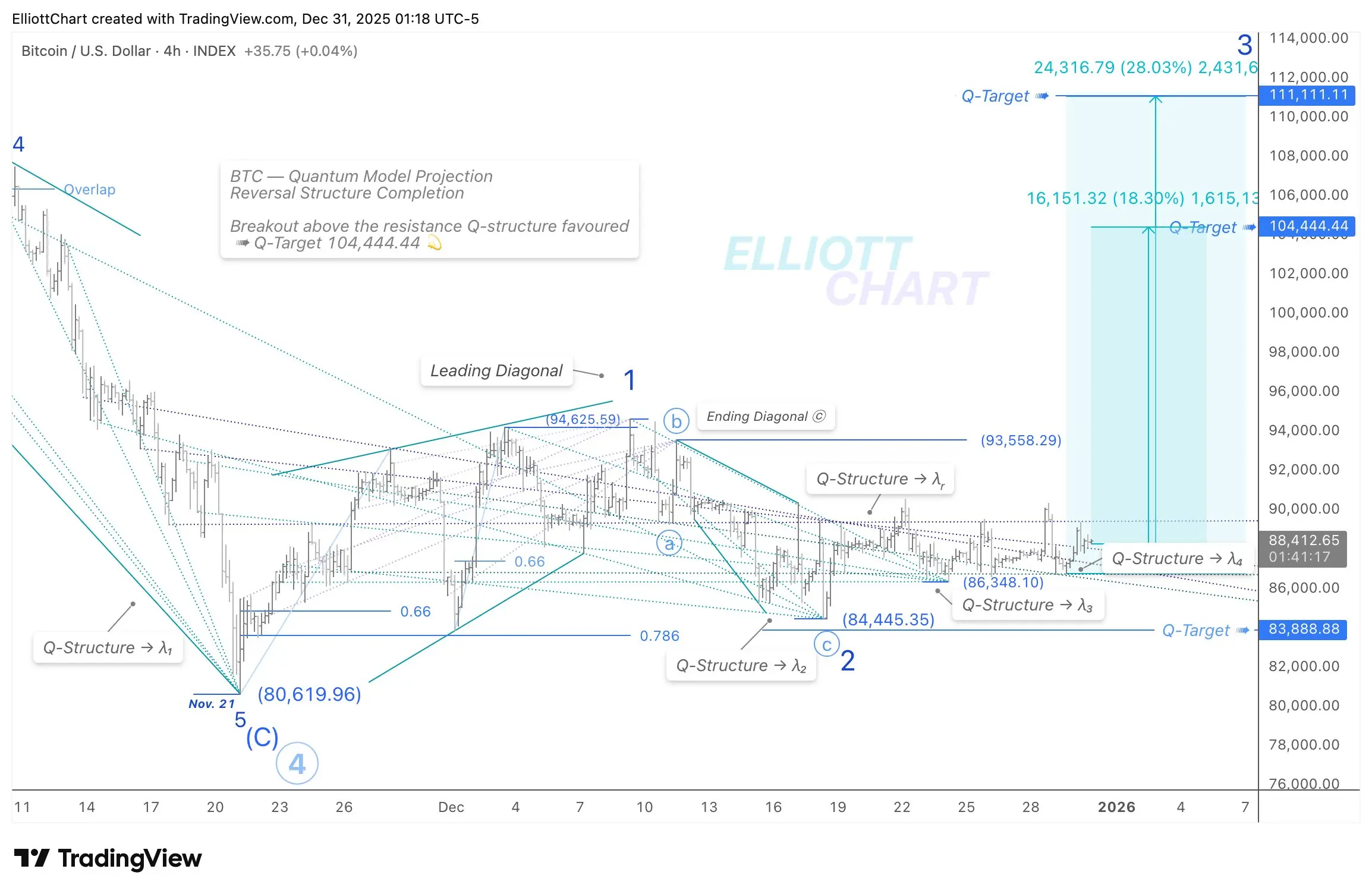
(Sources: TradingView)
Bitcoin’s Quantum Vulnerability: Real but Not Imminent
Bitcoin core developer and Casa co-founder Jameson Lopp estimates a full shift to quantum-resistant cryptography would require 5–10 years due to the network’s decentralized nature.
Any change to signature schemes demands massive coordination among global nodes and miners—making rushed upgrades risky.
Lopp aligns with Blockstream CEO Adam Back’s view that current quantum machines pose no immediate threat. However, he stresses proactive planning remains essential as capabilities evolve.
Diverging Views Within the Bitcoin Community
Opinions vary sharply. Bitcoin maximalists caution against premature changes that could destabilize the network.
Venture and institutional players are already factoring quantum risk into valuations.
Capriole founder Charles Edwards warns Bitcoin could drop below $50,000 by 2028 without quantum readiness, urging adoption of BIP-360 for quantum-resistant signatures.
JAN3 CEO Samson Mow remains skeptical, noting today’s quantum systems can’t even factor small numbers effectively—let alone break elliptic curve cryptography without specialized breakthroughs.
Performance Trade-Offs in Post-Quantum Cryptography
Cardano founder Charles Hoskinson highlights existing post-quantum tools (NIST standards released in 2024) but emphasizes implementation timing.
Quantum-resistant algorithms often reduce performance 10x and increase proof sizes significantly—effectively slashing blockchain throughput.
Hoskinson compares the choice between hash-based and lattice-based cryptography to historical format wars (Blu-ray vs. HD DVD), predicting market forces will eventually decide the winner.
Industry Preparations and Broader Timeline
Google and IBM continue pushing quantum milestones, bringing “Q-Day”—the point where current encryption breaks—closer. Estimates suggest over $7.1 trillion in Bitcoin wallet value could be exposed.
DARPA targets 2033 for assessing large-scale practical quantum computing.
Projects like Solana are already testing resilience with partners like Project Eleven.
Outlook: A Long-Term Engineering Challenge
The consensus: quantum threats will arrive eventually, but Bitcoin’s full post-quantum transition remains a multi-year effort requiring coordination, technical trade-offs, and community consensus.
Short-term confidence holds, but forward planning is critical to avoid future disruption in an evolving technological landscape.
Disclaimer: The information on this page may come from third parties and does not represent the views or opinions of Gate. The content displayed on this page is for reference only and does not constitute any financial, investment, or legal advice. Gate does not guarantee the accuracy or completeness of the information and shall not be liable for any losses arising from the use of this information. Virtual asset investments carry high risks and are subject to significant price volatility. You may lose all of your invested principal. Please fully understand the relevant risks and make prudent decisions based on your own financial situation and risk tolerance. For details, please refer to
Disclaimer.
Related Articles
Quantum-Safe Bitcoin Proposal Claims Protection Without a Network Fork
The article discusses a proposal for "Quantum-Safe Bitcoin," which allows users to secure transactions against potential quantum attacks without altering Bitcoin's core protocol. The design fits within existing scripting rules, enabling security-conscious individuals to act independently without necessitating network-wide consensus or political disputes over upgrades.
CryptoNewsFlash5m ago
Morgan Stanley’s BTC ETF Debuts With $62M Inflows & Rate Cut
Morgan Stanley launched its spot Bitcoin ETF, MSBT, on NYSE Arca, achieving strong trading volumes and low fees. This marks a significant step for traditional finance in crypto exposure, leveraging the bank's vast wealth management network despite market volatility.
DailyCoin6m ago
Miners brace for changing economics ahead of 2028 Bitcoin halving
Bitcoin’s fifth halving is slated for April 2028, and the mining sector is entering that cycle with far tighter margins than in 2024. A mix of higher input costs, strained energy markets and increasingly explicit regulatory expectations are reshaping how miners operate, finance, and plan for the
CryptoBreaking35m ago
BTC Breaks Through $74,000: In-Depth Analysis — Middle East Tensions Ease, Short Squeezes, and Market Structure Reshaping
BTC breaks through $74,000, reaching the highest level since the outbreak of the Iran war; short sellers are liquidated in a single day totaling $427 million. How did expectations for U.S.-Iran negotiations trigger this round of gains?
GateInstantTrends1h ago
Foundry Launches Zcash Mining Pool Alongside Industry-Leading Bitcoin Pool
Foundry Digital launched its Zcash mining pool, capturing 29% of the network's hashrate shortly after its announcement. They also introduced Zcashinfo.com, a block explorer for transaction tracking, further enhancing infrastructure for the Zcash ecosystem.
Decrypt1h ago


