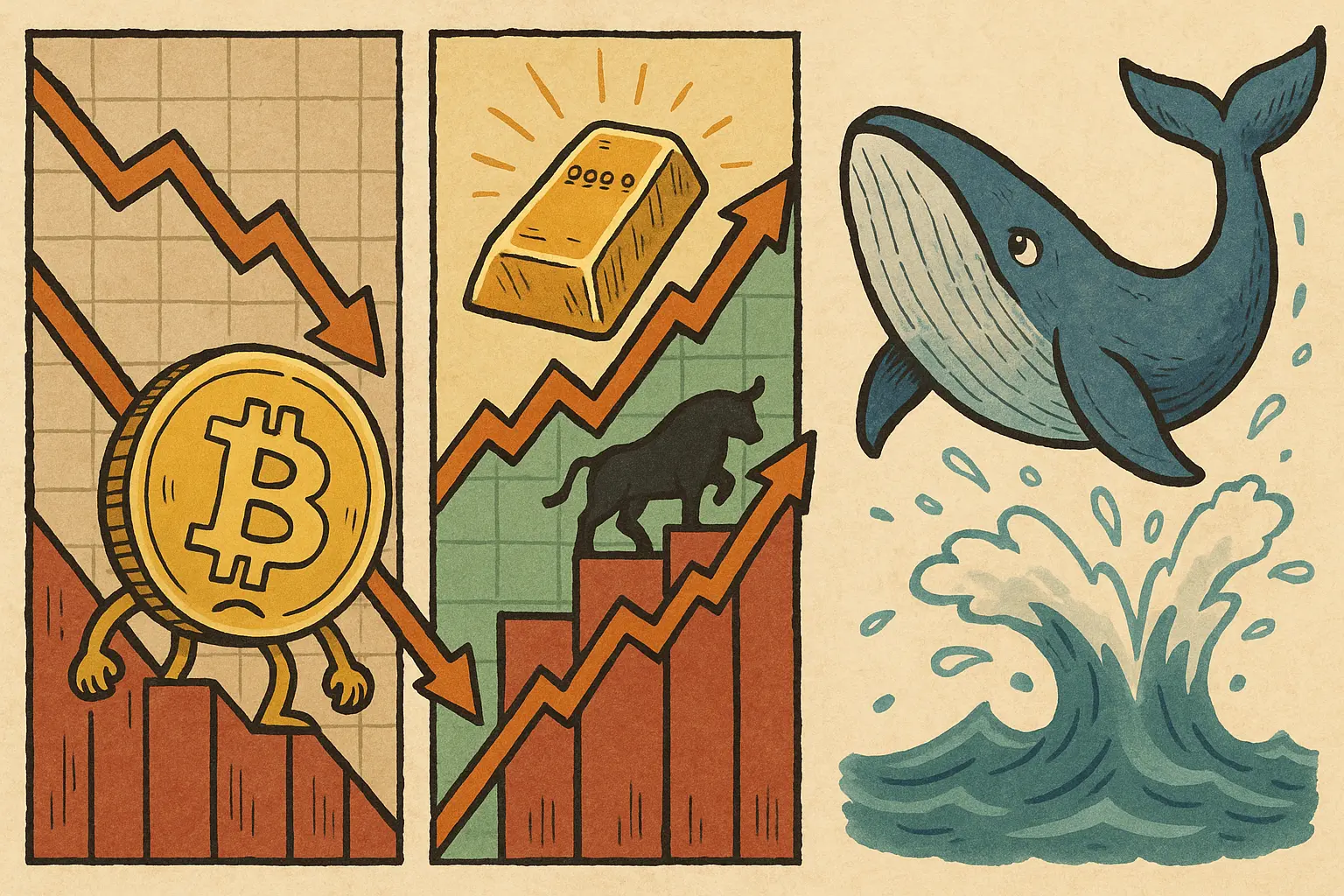
Since early November, gold has risen 9%, the US stock market has increased 1%, but Bitcoin has fallen 20% to $88,000. Santiment points out that cryptocurrencies are expected to catch up by 2026. Long-term holders have stopped selling, active addresses have increased by 5.51%, but trading volume has decreased by 30%. A former BitForex CEO states that funds have shifted from gold to cryptocurrencies, and the market is in the “late cycle positioning.”
Whale accumulation stagnation is the main reason Bitcoin lags behind
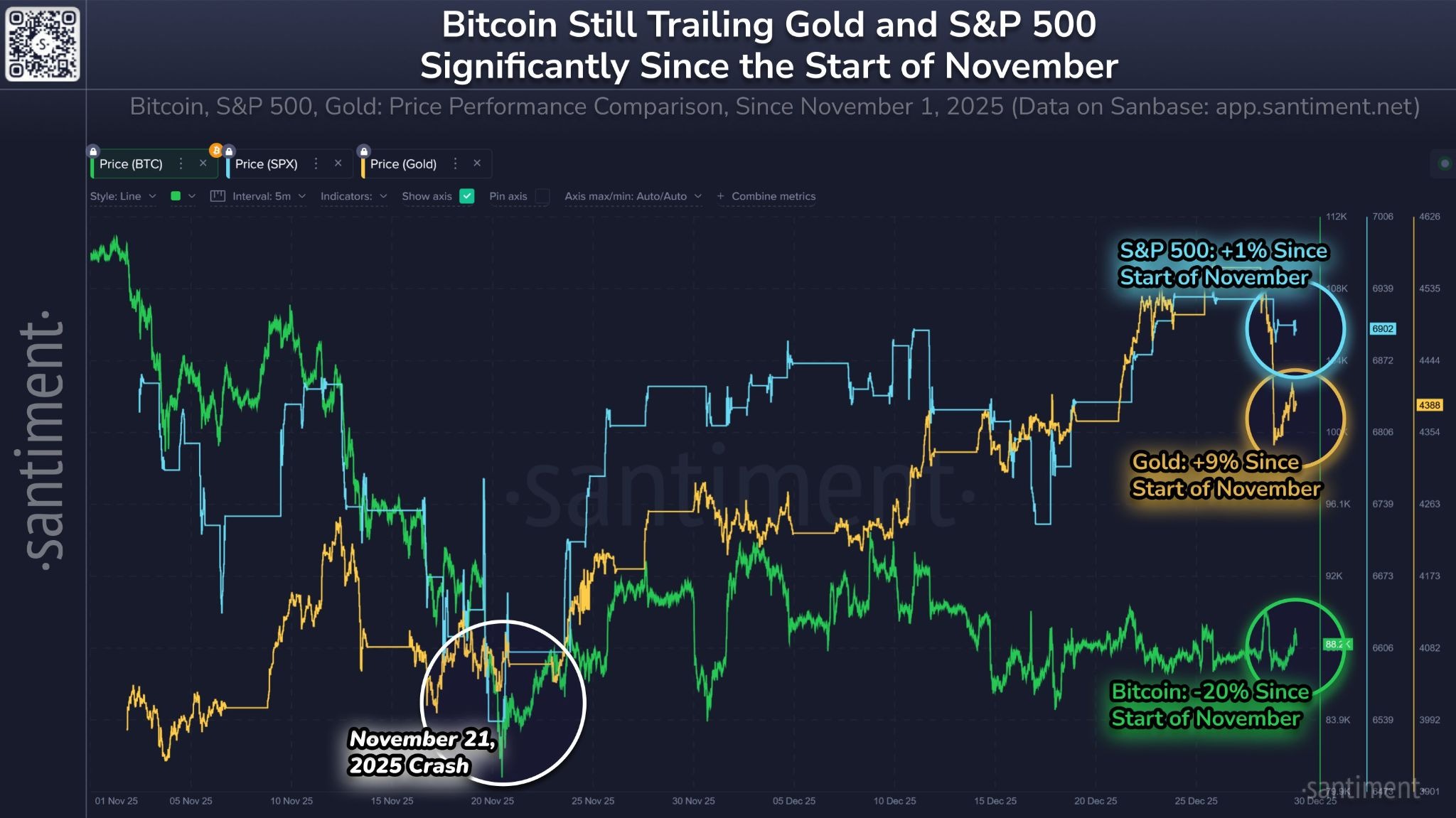
(Source: Santiment)
Santiment analysts posted on X platform that the correlation between Bitcoin and gold and US stocks remains lagging, but cryptocurrencies still have a chance to catch up by 2026. They suggest that large holders buying cryptocurrencies again could be the first sign of market recovery, as whales slowed their accumulation pace in the second half of 2025.
“In the second half of 2025, small investors actively accumulated stocks, while large investors remained relatively stable, and after reaching a historical high in October, they started selling.” Generally, large investors and whales are considered market movers; their trading influences market behavior, liquidity, and investor psychology.
“Historically, the best conditions for transitioning from a bear market to a bull market are when large holders accumulate funds while retail investors sell,” added Santiment analysts. Long-term Bitcoin holders have also stopped selling; this is the first time since mid-July, when they reduced holdings from 14.8 million coins to 14.3 million coins in December, that they have ceased selling cryptocurrencies.
This shift in whale behavior is significant. When Bitcoin hit a record high in October 2025, it was also when whales began reducing their holdings. After prices retreat from highs, whales prefer to wait rather than buy the dip, leading to a lack of strong buying support for Bitcoin. Now, with long-term holders stopping selling, it may indicate that the market is forming a new supply-demand balance. If whales shift from waiting to actively accumulating, it could provide a key driver for Bitcoin’s rebound.
Signs of capital flowing back from gold to cryptocurrencies emerge
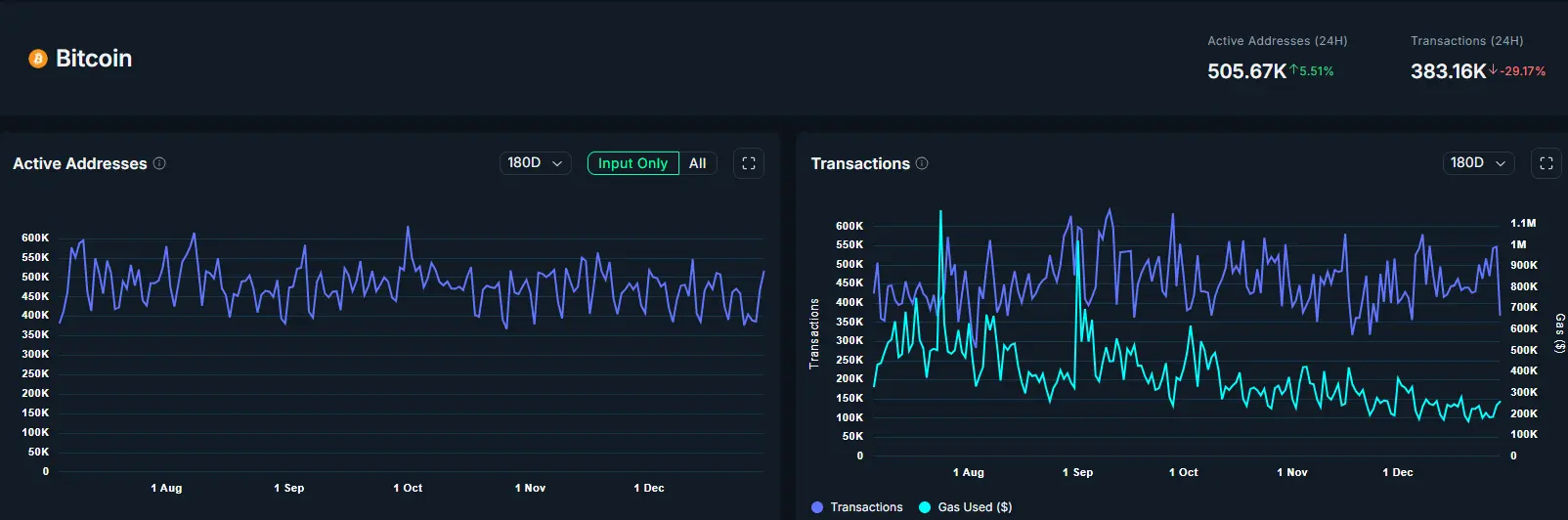
(Source: Nansen)
Former BitForex CEO Garrett Jin speculates that traders have started shifting from other sectors into the cryptocurrency space. Data from on-chain analysis platform Nansen shows that active Bitcoin addresses increased by 5.51% in the past 24 hours, while trading volume decreased by nearly 30%. This combination of rising active addresses but declining trading volume is often interpreted as accumulation signals: more participants are building positions, but each trade is smaller, indicating phased buying rather than large-scale speculation.
Gold analyst said, “The short squeeze in precious metals has ended as expected. Funds are starting to flow into the cryptocurrency market.” In response to a user’s question about whether traders investing in gold will also buy cryptocurrencies, he added, “The funds are the same. Always buy low and sell high.” The logic behind this capital rotation is that after gold surges significantly in the short term, some profit-taking funds seek undervalued assets, and Bitcoin’s 20% decline fits this characteristic.
Performance comparison of the three major assets since November
Gold: Up 9%, benefiting from safe-haven demand and a weakening dollar
S&P 500: Up 1%, supported by tech stocks but with limited overall gains
Bitcoin: Down 20%, retracing from its all-time high to $88,000
This performance disparity reflects market capital allocation among different asset classes. Early November marked the retracement after Bitcoin’s all-time high, while gold gained favor due to geopolitical risks and inflation concerns. However, after a short-term 9% rise, gold may face overbought pressure on technicals, creating conditions for capital rotation.
From a macro allocation perspective, gold and Bitcoin are often viewed as “safe-haven assets,” but their driving factors differ. Gold benefits from uncertainties in the traditional financial system and central bank purchases, while Bitcoin benefits from loose monetary policies and institutional adoption. When gold’s gains become excessive, some funds seeking higher beta may shift into Bitcoin.
Late cycle positioning and the turning point in 2026
Investor and market analyst CyrilXBT states that the market is in a “typical late cycle positioning, about to shift.” He notes, “When liquidity changes, Bitcoin breaks structural volatility: gold cools down, Bitcoin leads the rally, Ethereum follows, and other cryptocurrencies eventually awaken. The market always precedes the narrative. Be patient. This phase is meant to test market confidence.”
This “late cycle positioning” judgment is based on historical patterns in the crypto market. Each bull cycle features a phase where Bitcoin retraces after reaching new highs, market sentiment shifts from greed to fear, retail investors sell off, and whales wait. This phase is often called a “cleansing period,” used to eliminate weak hands and prepare for the next rally. If the current phase indeed is late cycle, 2026 could usher in a new upward cycle.
Bitcoin’s retracement from a high of $110,000 to $88,000, a 20% drop, is not uncommon in bull markets. During the 2021 bull run, Bitcoin experienced multiple 20% to 30% corrections, each time bottoming out and reaching new highs afterward. The key is whether this correction has sufficiently released selling pressure and whether whales and institutional funds are ready to re-enter.
Technically, around $88,000 may be a critical support zone. If this support holds and whales resume accumulation, Bitcoin could rebound above $100,000 in the first quarter of 2026. Conversely, if it breaks below $85,000, it may test deeper support levels around $80,000.
Disclaimer: The information on this page may come from third parties and does not represent the views or opinions of Gate. The content displayed on this page is for reference only and does not constitute any financial, investment, or legal advice. Gate does not guarantee the accuracy or completeness of the information and shall not be liable for any losses arising from the use of this information. Virtual asset investments carry high risks and are subject to significant price volatility. You may lose all of your invested principal. Please fully understand the relevant risks and make prudent decisions based on your own financial situation and risk tolerance. For details, please refer to
Disclaimer.


