#AAVE换币风波 50 million dollars, one transaction, $36,000 received — Aave's March nightmare doesn't end here
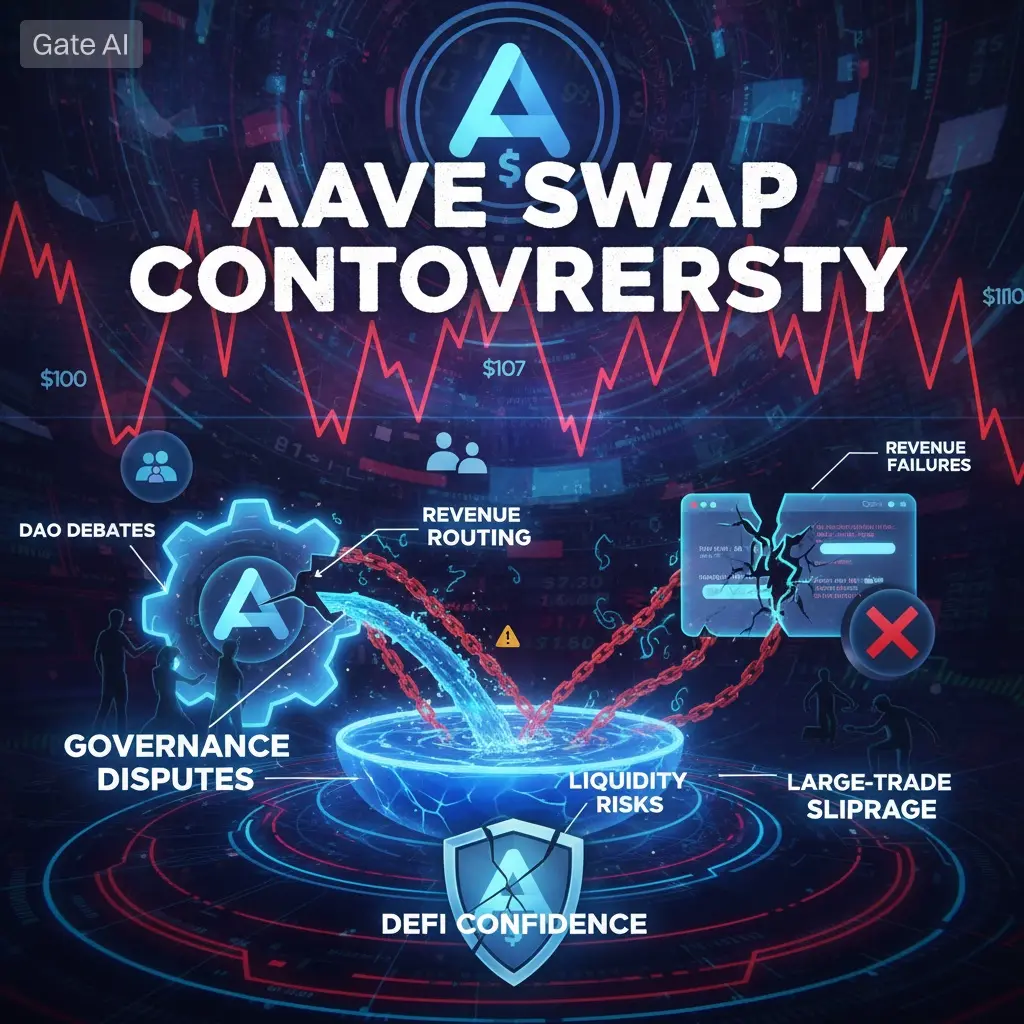
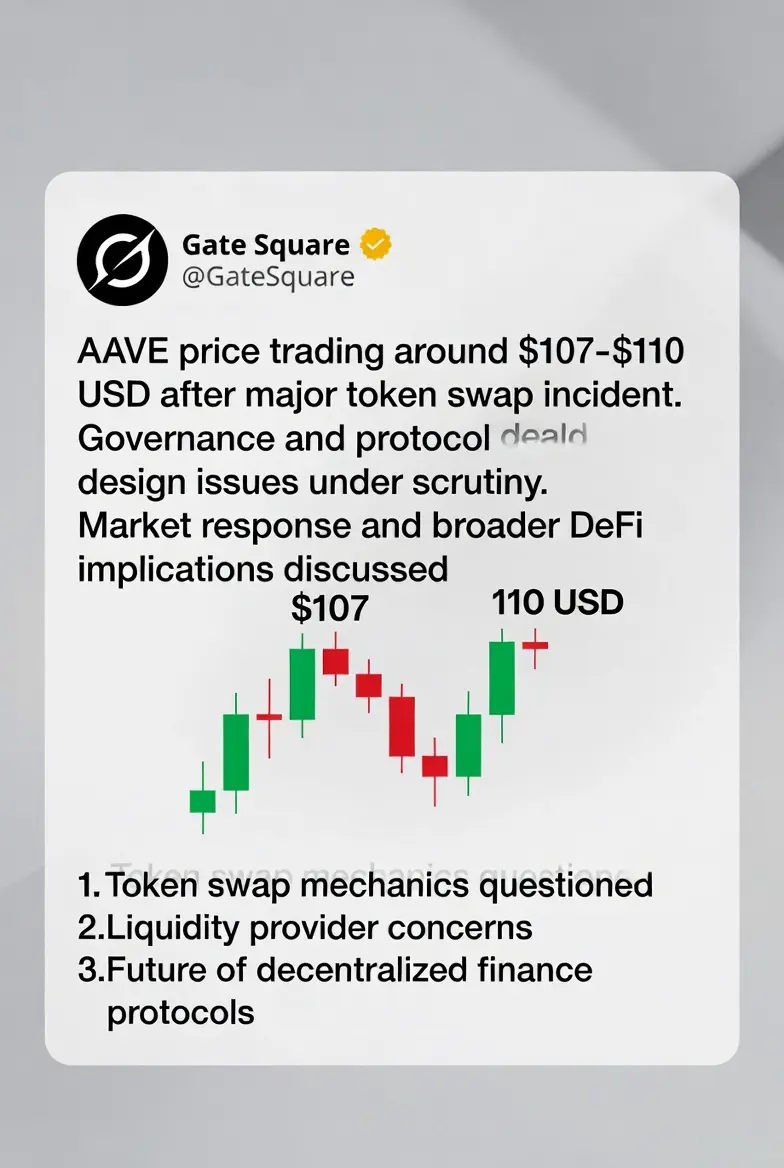
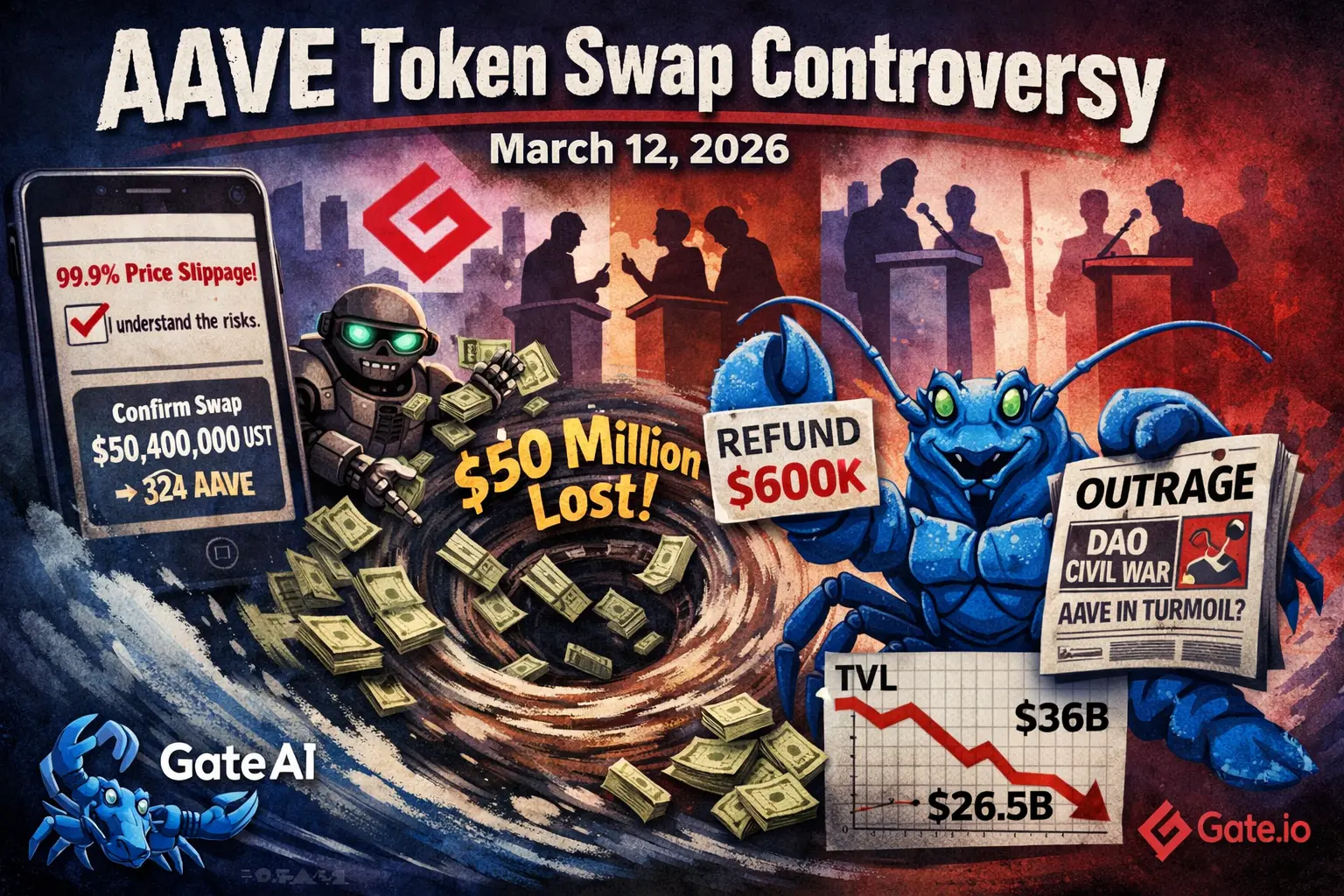
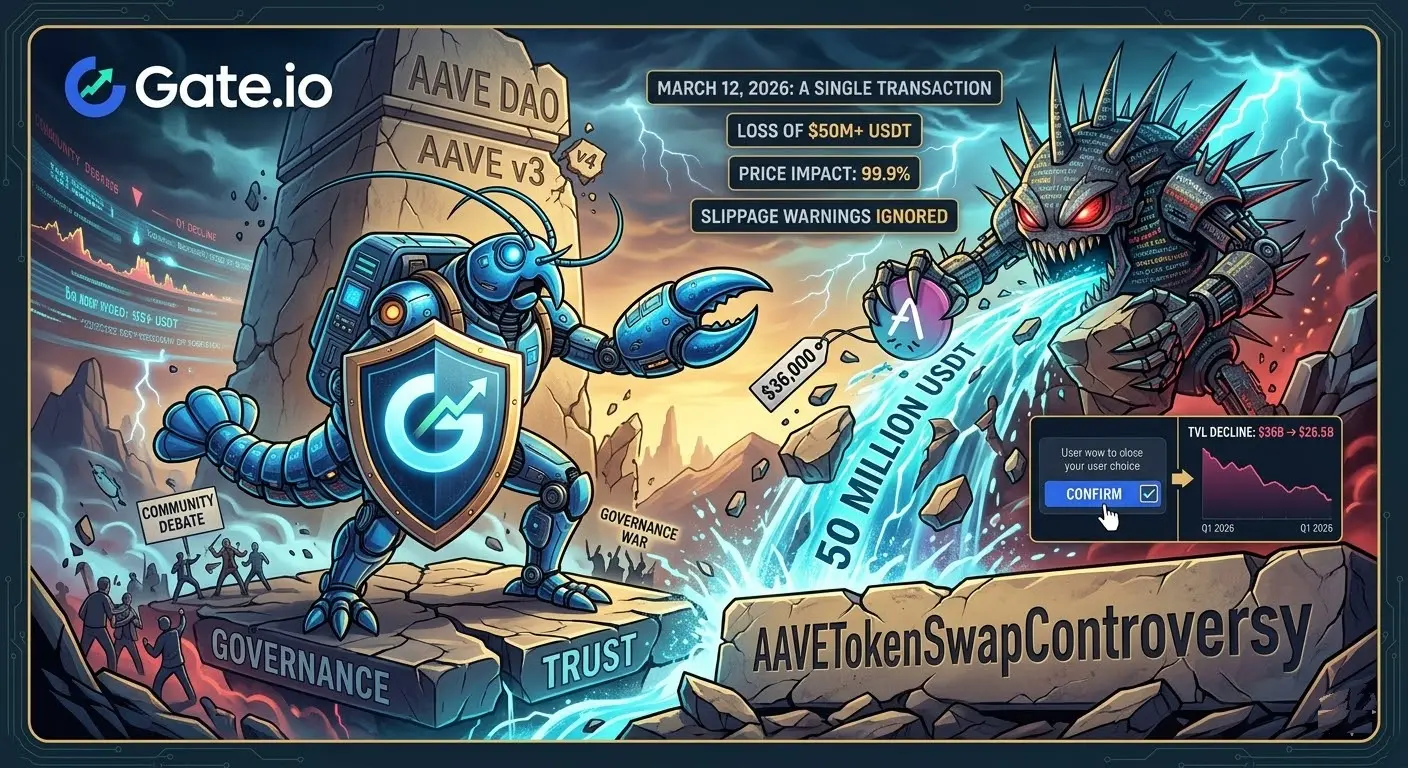
On March 12, someone used $50.4 million USDT to swap for AAVE tokens on the Aave interface. Final amount received: 324 AAVE, worth approximately $36,000. One transaction, 99.93% evaporated. Not a hacker attack, not a contract vulnerability, not even a rug pull. The protocol's response: the system is operating as designed. But this is just the latest chapter of Aave's March nightmare.
Over the past 12 days, DeFi's largest lending protocol has experienced four consecutive incidents. $26.5 billion TVL, cumulative lending just breaking $100 billion. Then the chain of failures began.
What happened with that $50 million transaction
Let me clarify the flow first.
A user initiated an action on the official Aave interface, swapping aEthUSDT (yield-bearing USDT on Aave) for aEthAAVE. The interface integrated CoW Swap for routing, with the final order directed to SushiSwap for execution.
The problem: a single order of $50.4 million far exceeded the on-chain liquidity available for AAVE. Imagine taking $50 million in cash to a small-cap market with only a few million in daily trading volume to sweep up purchases. You'd push the price to the moon yourself, paying more for each token than the last. This is slippage.
A slippage warning appeared on the Aave interface, requiring user confirmation. The user checked the box.
Then MEV robots arrived. On-chain profit distribution data:
• User received: 324 AAVE, approximately $36,000
• CoW Swap fees: approximately $619,000
• MEV robot: approximately $9.9 million
• Block builder: approximately $34 million
The block builder took the largest slice. This isn't a bug; it's the normal operation of Ethereum's MEV ecosystem. It's just that no one usually demonstrates it with $50 million.
Aave founder Stani Kulechov said on X that the team would contact the trader and refund approximately $600,000 in fees that Aave collected.
$600,000 refunded for a $50 million loss.
12 days of consecutive failures
If just one transaction went wrong, that would be the user's issue. But looking at the timeline, Aave's March has been a disaster film.
March 1: Aave Labs proposed the "Aave Will Win" budget plan, requesting the DAO allocate $51 million USDC plus 75,000 AAVE tokens. The vote barely passed. ACI founder Marc Zeller publicly accused Aave Labs of self-voting and excessive voting power concentration, with independent oversight being merely ceremonial.
March 3: ACI announced its exit from the Aave ecosystem within four months. ACI was one of the most active forces in Aave's governance system, handling proposal advancement, community coordination, and risk assessment.
Even worse, BGD Labs also announced its departure in April. BGD Labs developed Aave V3, the main version currently supporting $26.5 billion TVL. Two core contributors departing simultaneously, with criticism pointing to the same issue: Aave Labs had too much concentrated power in governance.
Stani's response was "the DAO is not dead, but needs to evolve," advocating for simplified governance and improved efficiency. Sounds reasonable. But critics interpret it as: using "efficiency" as a pretext to reclaim power.
March 10: The oracle failed. Aave's CAPO system had a configuration error, with snapshot ratios and timestamps inconsistent, causing wstETH to be undervalued by 2.85%. In a lending protocol, 2.85% is enough to push healthy positions below the liquidation line. Approximately 34 user positions were wrongly liquidated, totaling $27 million. Chaos Labs fixed it that day and refunded 345 ETH. But this was an error in Aave's own risk management tool, not a third party's fault.
Then came March 12's $50 million transaction.
Governance, development, oracle, trading interface. In 12 days, four layers, all had problems.
Looking ahead
Stani said the DAO needs to evolve.
What's the direction?
If "evolution" means Aave Labs gaining more control and reducing community checks, that's going from decentralization back to centralization. A protocol managing $26.5 billion in assets taking this path could have costs greater than low governance efficiency.
If "evolution" means establishing a more professional framework, such as an independent security committee, binding contributor agreements, and more transparent budget audits, then the direction is right. But it requires time, and Aave is shortest on time right now.
V4 is still under audit. Core teams are departing. The oracle just failed. Users just lost $50 million.
Aave as a protocol won't collapse; the technical foundation and market position are solid. But if the governance problem doesn't find a new balance in the next two or three months, token prices will face continued pressure. The protocol can survive technical failures, can survive user mistakes, but what it can't survive is core teams no longer trusting each other.
On March 12, someone used $50.4 million USDT to swap for AAVE tokens on the Aave interface. Final amount received: 324 AAVE, worth approximately $36,000. One transaction, 99.93% evaporated. Not a hacker attack, not a contract vulnerability, not even a rug pull. The protocol's response: the system is operating as designed. But this is just the latest chapter of Aave's March nightmare.
Over the past 12 days, DeFi's largest lending protocol has experienced four consecutive incidents. $26.5 billion TVL, cumulative lending just breaking $100 billion. Then the chain of failures began.
What happened with that $50 million transaction
Let me clarify the flow first.
A user initiated an action on the official Aave interface, swapping aEthUSDT (yield-bearing USDT on Aave) for aEthAAVE. The interface integrated CoW Swap for routing, with the final order directed to SushiSwap for execution.
The problem: a single order of $50.4 million far exceeded the on-chain liquidity available for AAVE. Imagine taking $50 million in cash to a small-cap market with only a few million in daily trading volume to sweep up purchases. You'd push the price to the moon yourself, paying more for each token than the last. This is slippage.
A slippage warning appeared on the Aave interface, requiring user confirmation. The user checked the box.
Then MEV robots arrived. On-chain profit distribution data:
• User received: 324 AAVE, approximately $36,000
• CoW Swap fees: approximately $619,000
• MEV robot: approximately $9.9 million
• Block builder: approximately $34 million
The block builder took the largest slice. This isn't a bug; it's the normal operation of Ethereum's MEV ecosystem. It's just that no one usually demonstrates it with $50 million.
Aave founder Stani Kulechov said on X that the team would contact the trader and refund approximately $600,000 in fees that Aave collected.
$600,000 refunded for a $50 million loss.
12 days of consecutive failures
If just one transaction went wrong, that would be the user's issue. But looking at the timeline, Aave's March has been a disaster film.
March 1: Aave Labs proposed the "Aave Will Win" budget plan, requesting the DAO allocate $51 million USDC plus 75,000 AAVE tokens. The vote barely passed. ACI founder Marc Zeller publicly accused Aave Labs of self-voting and excessive voting power concentration, with independent oversight being merely ceremonial.
March 3: ACI announced its exit from the Aave ecosystem within four months. ACI was one of the most active forces in Aave's governance system, handling proposal advancement, community coordination, and risk assessment.
Even worse, BGD Labs also announced its departure in April. BGD Labs developed Aave V3, the main version currently supporting $26.5 billion TVL. Two core contributors departing simultaneously, with criticism pointing to the same issue: Aave Labs had too much concentrated power in governance.
Stani's response was "the DAO is not dead, but needs to evolve," advocating for simplified governance and improved efficiency. Sounds reasonable. But critics interpret it as: using "efficiency" as a pretext to reclaim power.
March 10: The oracle failed. Aave's CAPO system had a configuration error, with snapshot ratios and timestamps inconsistent, causing wstETH to be undervalued by 2.85%. In a lending protocol, 2.85% is enough to push healthy positions below the liquidation line. Approximately 34 user positions were wrongly liquidated, totaling $27 million. Chaos Labs fixed it that day and refunded 345 ETH. But this was an error in Aave's own risk management tool, not a third party's fault.
Then came March 12's $50 million transaction.
Governance, development, oracle, trading interface. In 12 days, four layers, all had problems.
Looking ahead
Stani said the DAO needs to evolve.
What's the direction?
If "evolution" means Aave Labs gaining more control and reducing community checks, that's going from decentralization back to centralization. A protocol managing $26.5 billion in assets taking this path could have costs greater than low governance efficiency.
If "evolution" means establishing a more professional framework, such as an independent security committee, binding contributor agreements, and more transparent budget audits, then the direction is right. But it requires time, and Aave is shortest on time right now.
V4 is still under audit. Core teams are departing. The oracle just failed. Users just lost $50 million.
Aave as a protocol won't collapse; the technical foundation and market position are solid. But if the governance problem doesn't find a new balance in the next two or three months, token prices will face continued pressure. The protocol can survive technical failures, can survive user mistakes, but what it can't survive is core teams no longer trusting each other.