What is PYTH: A Comprehensive Guide to the High-Performance Oracle Network for DeFi Applications

9-16-2025, 1:02:53 AM
Altcoins
Blockchain
Crypto Ecosystem
DeFi
Solana
Article Rating : 4.1
0 ratings
Discover the transformative impact of Pyth Network in the DeFi sector. The article explores Pyth's development, technical architecture, and its crucial role in delivering real-time financial data across blockchain networks. It addresses challenges such as data reliability and regulatory scrutiny, making it valuable for developers, DeFi enthusiasts, and investors. Structured logically, it covers Pyth’s history, operations, market performance, and community engagement, while highlighting strategic partnerships and future roadmap. Understand how Pyth redefines oracle services and become part of its innovative ecosystem on Gate.

What is PYTH: A Comprehensive Guide to the High-Performance Oracle Network for DeFi Applications

Pyth Network's Positioning and Significance

In 2021, the Pyth Network Foundation launched Pyth Network (PYTH), aiming to solve the challenge of accessing high-quality, real-time financial market data in the blockchain space.

As a decentralized oracle network, Pyth Network plays a crucial role in the DeFi and blockchain sectors by providing reliable and timely price feeds.

As of 2025, Pyth Network has become a leading oracle solution in the crypto industry, with 313,290 holders and an active developer community. This article will delve into its technical architecture, market performance, and future potential.

Origin and Development History

Background

Pyth Network was created by the Pyth Network Foundation in 2021 to address the need for accurate and real-time financial data in blockchain applications.

It emerged during the DeFi boom and the growing demand for reliable oracle services, aiming to provide high-fidelity, low-latency price feeds to various blockchain networks.

Pyth Network's launch brought new possibilities for DeFi protocols, traders, and blockchain developers seeking reliable market data.

Key Milestones

  • 2021: Mainnet launch on Solana, achieving sub-second price updates for various asset classes.
  • 2022: Expanded to multiple blockchains, introducing cross-chain interoperability for price feeds.
  • 2023: Adopted by major DeFi protocols, pushing the price to approach its all-time high of $1.1552.
  • 2024: Ecosystem explosion, with the number of integrated applications surpassing 500.

With support from the Pyth Network Foundation and its growing community, Pyth Network continues to enhance its technology, security, and real-world applications.

How Does Pyth Network Work?

Decentralized Control

Pyth Network operates on a decentralized network of nodes spread across the globe, free from control by any single entity or government.

These nodes collaborate to validate and publish price data, ensuring system transparency and attack resistance, thereby empowering users and enhancing network resilience.

Blockchain Core

Pyth Network's data is published on multiple blockchains, creating a public, tamper-resistant record of price feeds.

Price updates are frequent and can be verified by anyone, establishing trust without intermediaries.

The network leverages the Solana blockchain as its primary infrastructure, benefiting from high throughput and low latency.

Ensuring Fairness

Pyth Network employs a unique consensus mechanism that combines off-chain price aggregation with on-chain validation.

Data providers contribute price feeds, which are then aggregated and published on-chain. The network incentivizes accurate reporting through a reputation system and potential slashing mechanisms.

Its innovative approach allows for sub-second price updates and high accuracy.

Secure Transactions

Pyth Network uses cryptographic techniques to secure its operations:

  • Private keys are used by data providers to sign their price submissions
  • Public keys are used to verify the authenticity of submitted data

This mechanism ensures data integrity and allows for pseudo-anonymous participation by data providers.

Additional security features include confidence intervals for price feeds and outlier detection mechanisms.

PYTH's Market Performance

Circulation Overview

As of September 16, 2025, PYTH has a circulating supply of 5,749,983,517.610784 tokens, with a total supply of 10,000,000,000.

Price Fluctuations

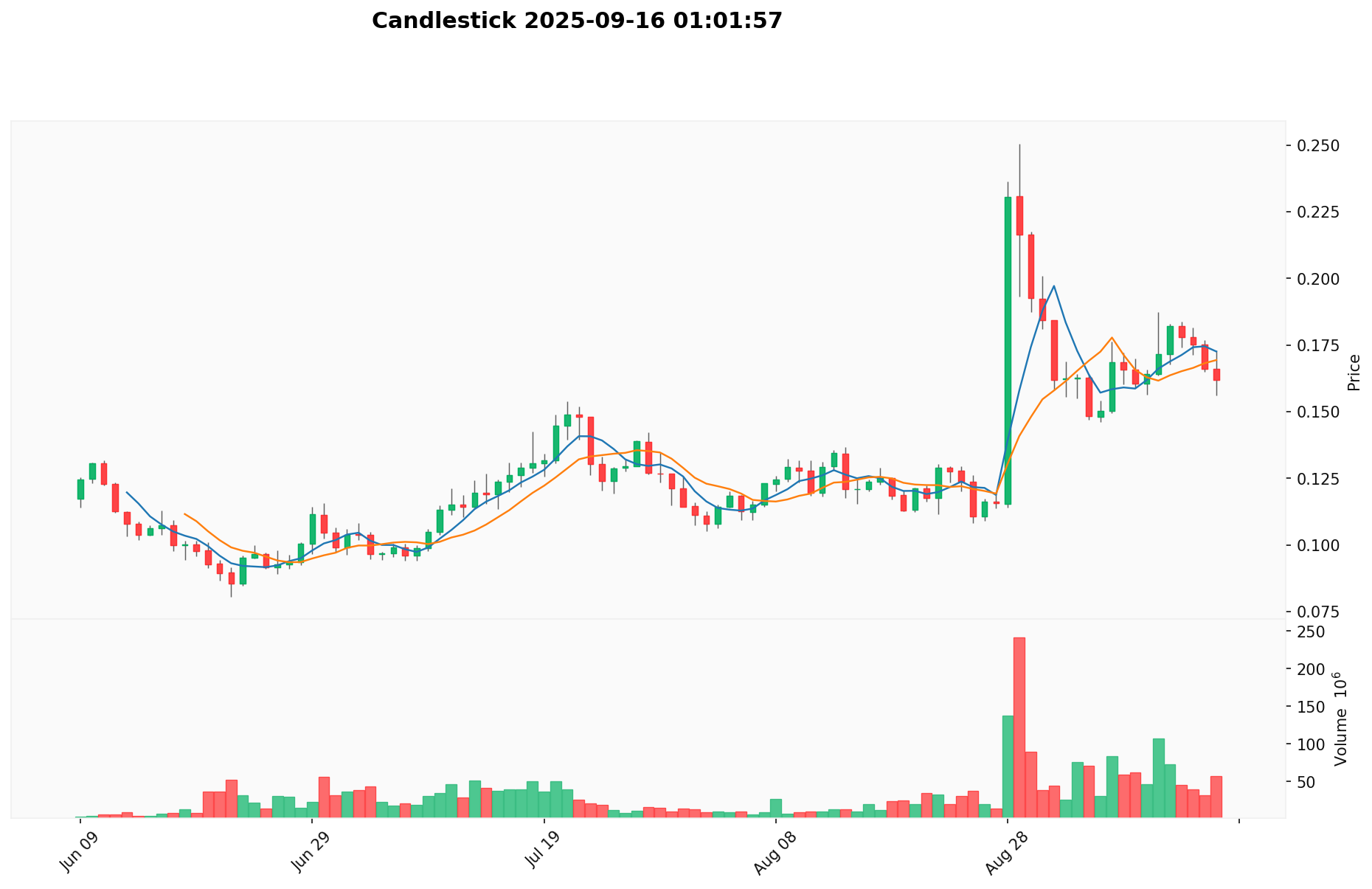
PYTH reached its all-time high of $1.1552 on March 16, 2024. Its lowest price was $0.08067, occurring on June 22, 2025. These fluctuations reflect market sentiment, adoption trends, and external factors.

Click to view the current PYTH market price

price-image

On-Chain Metrics

  • Daily Trading Volume: $9,187,459.511373 (indicating network activity)
  • Active Addresses: 313,290 (reflecting user engagement)

PYTH Ecosystem Applications and Partnerships

Core Use Cases

PYTH's ecosystem supports various applications:

  • Oracle Services: Providing real-time financial market data to multiple blockchains.
  • DeFi: Enabling accurate price feeds for decentralized exchanges and lending platforms.

Strategic Collaborations

PYTH has established partnerships with major financial institutions and blockchain projects to enhance its data accuracy and market influence. These partnerships lay a solid foundation for PYTH's ecosystem expansion.

Controversies and Challenges

PYTH faces the following challenges:

  • Technical Hurdles: Ensuring data reliability and minimizing latency across multiple chains
  • Regulatory Risks: Potential scrutiny from financial regulators due to its role in market data provision
  • Competitive Pressure: Emergence of other oracle solutions in the blockchain space

These issues have sparked discussions within the community and market, driving continuous innovation for PYTH.

PYTH Community and Social Media Atmosphere

Fan Enthusiasm

PYTH's community is vibrant, with 313,290 holders as of September 16, 2025. On X platform, posts and hashtags related to PYTH often trend, especially during significant market movements or new feature releases.

Social Media Sentiment

Sentiment on X shows a mix of opinions:

  • Supporters praise PYTH's accuracy and cross-chain capabilities, viewing it as the "backbone of DeFi pricing".
  • Critics focus on potential centralization risks and data manipulation concerns.

Recent trends indicate growing interest in oracle solutions, with PYTH gaining attention.

Hot Topics

X users actively discuss PYTH's role in DeFi, data accuracy, and integration with various blockchain networks, highlighting both its transformative potential and the challenges in achieving widespread adoption.

More Information Sources for PYTH

  • Official Website: Visit PYTH's official website for features, use cases, and latest updates.
  • Whitepaper: PYTH whitepaper details its technical architecture, goals, and vision.
  • X Updates: On X platform, PYTH uses @PythNetwork, as of September 16, 2025, with posts covering technical upgrades, community events, and partnership news.

PYTH Future Roadmap

  • Ecosystem Goal: Expand support for more blockchain networks and DeFi protocols
  • Long-term Vision: Become the standard for on-chain financial market data across the crypto ecosystem

How to Participate in PYTH?

  1. Purchase Channels: Buy PYTH on Gate.com
  2. Storage Solutions: Use Web3 wallets supporting Solana for secure storage
  3. Participate in Governance: Stay tuned for potential DAO implementation
  4. Build on the Ecosystem: Visit PYTH's GitHub to contribute or develop applications

Summary

PYTH is redefining oracle services in the blockchain space, offering high-frequency, real-time financial market data. Its active community, rich resources, and strong market performance make it stand out in the cryptocurrency field. Despite facing challenges in data reliability and network integration, PYTH's innovative spirit and clear roadmap position it as a crucial player in the future of decentralized finance. Whether you're a newcomer or a seasoned player, PYTH is worth watching and participating in.

FAQ

What is Python and why is it used?

Python is a versatile programming language used for web development, data analysis, and automation. It's popular for its simplicity and readability.

Is Python easy to learn?

Yes, Python is easy to learn. It has simple syntax, clear readability, and extensive libraries, making it ideal for beginners.

What's better, C++ or Python?

Both have strengths. C++ excels in performance and system-level programming. Python shines in ease of use and rapid development.

What is a Python simple definition?

Python is a versatile, high-level programming language used for web development, data analysis, and automation. It's known for its readable syntax and extensive libraries.

* The information is not intended to be and does not constitute financial advice or any other recommendation of any sort offered or endorsed by Gate.

Related Articles
What is JUP: Understanding Jupiter Network's Revolutionary Blockchain Technology

What is JUP: Understanding Jupiter Network's Revolutionary Blockchain Technology

Explore the revolutionary blockchain technology of Jupiter (JUP), the leading DeFi dApp on Solana, launched in 2022 to address liquidity fragmentation. Discover Jupiter's origins, technical architecture, and market performance, with milestones from launch to becoming a core asset in Solana's DeFi landscape by 2025. Learn how Jupiter enhances transaction efficiency with Solana's blockchain while maintaining security through decentralized control. Delve into its applications, partnerships, community engagement, and tackle challenges like regulatory risks and competitive pressures. Stay updated on Jupiter's future roadmap and how to participate in its ecosystem.
9-12-2025, 1:40:32 AM
How Does Avalanche (AVAX) Compare to Solana and Binance Smart Chain in 2025?

How Does Avalanche (AVAX) Compare to Solana and Binance Smart Chain in 2025?

The article offers a comprehensive comparison of Avalanche (AVAX), Solana, and Binance Smart Chain's (BSC) future potential, focusing on performance metrics, market share, and differentiation strategies ahead. It outlines the advantages of Solana's TPS and low gas fees, positioning it as the leading choice for high-speed applications, while AVAX shows strength in market capitalization and DeFi growth. AVAX's unique subnet architecture and developer incentives through programs like BOOST highlight its strategic focus, forging partnerships to enhance ecosystem value. This comparison aids developers and investors in selecting optimal blockchain platforms for application deployment and investment opportunities.
10-25-2025, 11:26:39 AM
How Does Competitive Analysis Identify Market Opportunities in Crypto?

How Does Competitive Analysis Identify Market Opportunities in Crypto?

This article explores how competitive analysis can identify market opportunities in the crypto landscape. Focusing on Solana's impressive growth and market dominance by 2025, it compares key metrics among leading cryptocurrencies, highlighting Solana's scalability, transaction speed, and low fees. By analyzing Solana's unique value propositions and its impact on market share, the piece addresses the needs of crypto investors and developers seeking insights into strategic advantages. The structure logically presents performance comparisons, value propositions, and growth trends, offering a concise yet comprehensive overview.
10-25-2025, 10:30:29 AM
How Does Ava Compare to Its Competitors in the Solana Ecosystem?

How Does Ava Compare to Its Competitors in the Solana Ecosystem?

The article thoroughly analyzes Ava's positioning and competitive dynamics within the Solana ecosystem, focusing on its comparison with Virtual and various Solana projects. Highlighting Ava's unique market approach for DTC brands, it contrasts with Virtual's benchmarking role and showcases Ava's competitive strategy using a multi-chain framework. Key metrics reveal Ava's growth potential and competitive pressures against Solana's dominant throughput capabilities. The information caters to developers and industry observers seeking insights into Ava's comparative market performance and architectural distinctions.
10-29-2025, 10:09:50 AM
What is MET: Understanding the Metabolic Equivalent of Task and Its Role in Exercise Science

What is MET: Understanding the Metabolic Equivalent of Task and Its Role in Exercise Science

The article examines Meteora's role and impact as a decentralized exchange launched in 2025 on the Solana ecosystem, focusing on secure and sustainable liquidity infrastructure. It addresses technical architecture, market performance, and challenges faced by Meteora, providing valuable insights for investors and DeFi enthusiasts. Covered topics include decentralized control, blockchain technology, and market metrics, interwoven with strategic collaborations and ecosystem applications. With growing community interest, the article outlines paths to engage with Meteora, emphasizing its significant presence and future roadmap in the DeFi space.
11-15-2025, 4:43:44 PM
What is PYTH: The High-Performance Oracle Network Revolutionizing Data Delivery

What is PYTH: The High-Performance Oracle Network Revolutionizing Data Delivery

Explore the revolutionary Pyth Network, launched in 2021, transforming data delivery in blockchain ecosystems with high-fidelity, real-time market data. As a decentralized oracle network, it is pivotal for DeFi protocols, traders, and blockchain applications. This article delves into Pyth's technical structure, market achievements, and key use cases, illuminating its impact and ongoing developments. Understand how Pyth addresses challenges around data reliability and decentralization, driving the future of decentralized finance. To engage, learn how to buy PYTH on Gate and participate in governance and development efforts.
11-15-2025, 1:41:25 AM
Recommended for You
ROSE vs ICP: Comparing Two Leading Blockchain Ecosystems for Enterprise and Developer Solutions

ROSE vs ICP: Comparing Two Leading Blockchain Ecosystems for Enterprise and Developer Solutions

The article "ROSE vs ICP: Comparing Two Leading Blockchain Ecosystems for Enterprise and Developer Solutions" presents a comprehensive comparison of Oasis Network (ROSE) and Internet Computer (ICP) in the context of their investment value, market presence, and technical architecture. It aims to address the essential question: "Which is the better buy right now?" by examining historical price trends, market dynamics, and technical ecosystems. The piece is targeted at investors seeking insights into blockchain investments, balancing risk and potential returns. The article systematically explores their market performance, technical differences, and community support, emphasizing ROSE's privacy-focused framework versus ICP's decentralized cloud capabilities, facilitating informed investment decisions.
12-17-2025, 1:23:43 PM
Is GMX (GMX) a good investment?: A Comprehensive Analysis of Tokenomics, Risk Factors, and Market Potential for 2024

Is GMX (GMX) a good investment?: A Comprehensive Analysis of Tokenomics, Risk Factors, and Market Potential for 2024

This article conducts an in-depth analysis of GMX as an investment opportunity by examining its tokenomics, historical price fluctuations, and market potential as of 2025. It addresses the investment risks associated with GMX's volatility and its strategic positioning in the decentralized perpetual exchange space. GMX serves dual functions as a utility and governance token, offering fee-sharing benefits and community participation. Structured across various sections, it evaluates price trends, token utility, market infrastructure, investment risks, and forecasts. The piece is tailored for potential investors seeking comprehensive insights into GMX's future growth prospects.
12-17-2025, 1:22:55 PM
ZETA vs GRT: A Comprehensive Comparison of Two Leading Blockchain Protocols and Their Impact on Decentralized Networks

ZETA vs GRT: A Comprehensive Comparison of Two Leading Blockchain Protocols and Their Impact on Decentralized Networks

The article titled "ZETA vs GRT: A Comprehensive Comparison" evaluates two leading blockchain protocols, ZetaChain and The Graph. It offers an in-depth analysis of their investment value by examining price trends, tokenomics, market adoption, and technical ecosystems. The article addresses investor concerns regarding which asset might present a better opportunity for investment. It is designed for investors who seek a detailed understanding of cross-chain and data indexing infrastructure projects. Key findings discuss the strengths, risks, and market positions of ZETA and GRT, guiding readers toward informed investment strategies.
12-17-2025, 1:12:31 PM
Is Aleo (ALEO) a good investment?: A Comprehensive Analysis of Price Potential, Technology, and Risk Factors in 2024

Is Aleo (ALEO) a good investment?: A Comprehensive Analysis of Price Potential, Technology, and Risk Factors in 2024

The article "Is Aleo (ALEO) a Good Investment?" thoroughly examines Aleo's investment potential by focusing on its historical pricing, technology, and risks. It provides an in-depth analysis of Aleo's market performance, emphasizing its price volatility since launch and the unique zero-knowledge cryptographic technology it employs for privacy and scalability. The article will guide investors in understanding key market sentiments, technological developments, partnerships, and liquidity concerns. It targets both potential and current investors in the cryptocurrency sector seeking insights into Aleo's investment viability. Visit [Gate.com](https://www.gate.com/price/aleo-aleo) for real-time Aleo updates and prices.
12-17-2025, 12:28:09 PM
Is Bio Protocol (BIO) a good investment?: A Comprehensive Analysis of Market Potential, Risk Factors, and Investment Prospects

Is Bio Protocol (BIO) a good investment?: A Comprehensive Analysis of Market Potential, Risk Factors, and Investment Prospects

The article provides a comprehensive analysis of Bio Protocol (BIO) as a potential investment, focusing on its market potential, risk factors, and investment prospects. It examines BIO's role in decentralized science, its historical price performance, and current market status on Gate. The analysis addresses key questions about BIO's investment value, technology infrastructure, market risks, and price forecasts through 2030. The article caters to investors considering exposure to DeSci, highlighting its speculative nature and associated risks. With structured insights, it aims to support informed decision-making for BIO investments.


12-17-2025, 12:27:57 PM
Is Holo (HOT) a good investment?: A Comprehensive Analysis of Price Potential, Market Fundamentals, and Risk Factors for 2024

Is Holo (HOT) a good investment?: A Comprehensive Analysis of Price Potential, Market Fundamentals, and Risk Factors for 2024

This article provides a thorough analysis of Holo (HOT) as an investment opportunity, exploring its price potential, market fundamentals, and associated risks for 2024. It begins with an overview of HOT's position in the cryptocurrency landscape, its historical price performance, and current market status while considering future price forecasts. The article also delves into the project's technical foundation, market liquidity, and community involvement, offering insights into its viability and challenges. Readers gain a deep understanding of the investment risks, strategies, and prospects for HOT, suitable for both novice and experienced investors aiming to capitalize on decentralized infrastructure alternatives.
12-17-2025, 12:26:50 PM