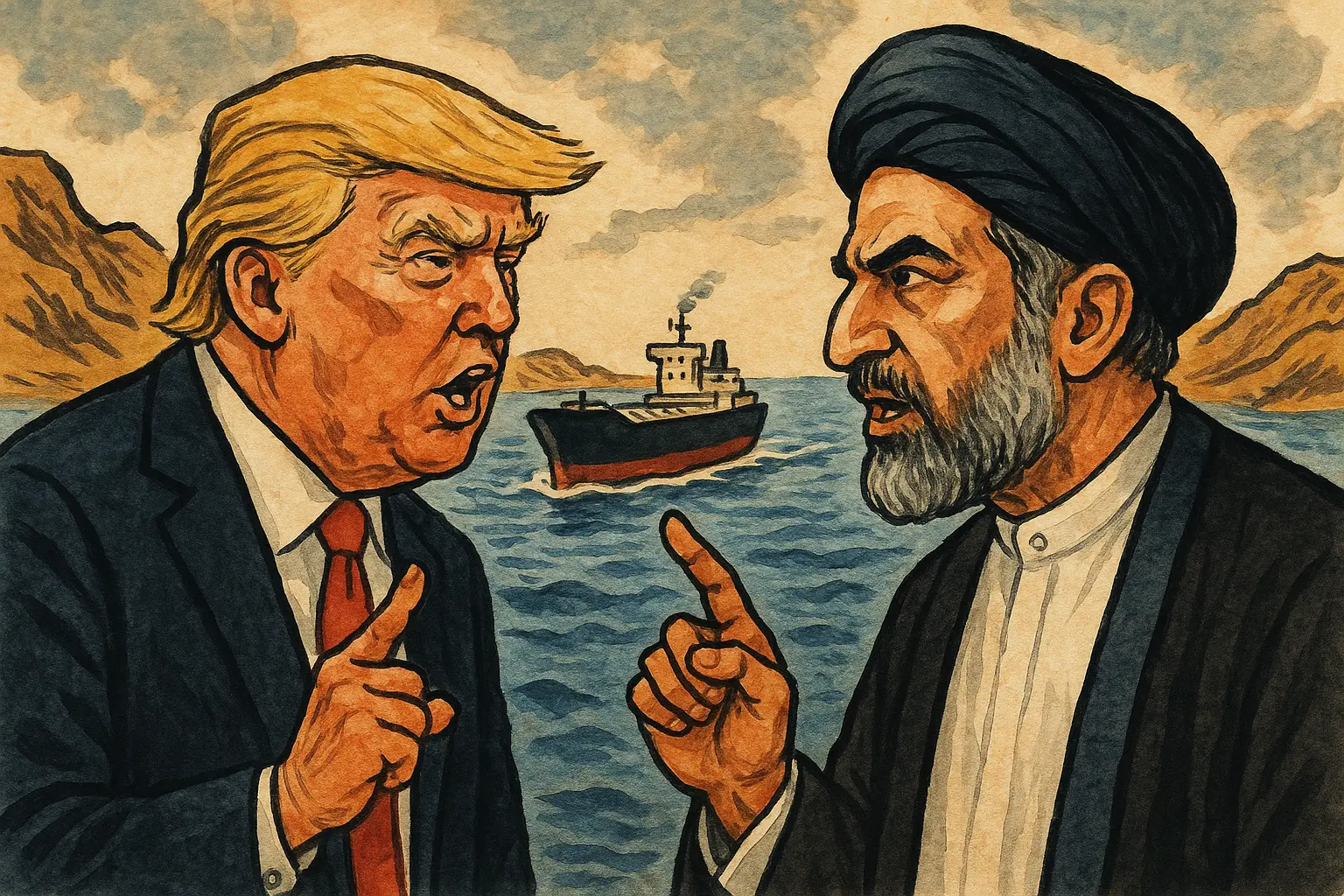
On April 13, the Speaker of the Iranian Parliament, Ghalibaf, issued a provocative statement to the U.S., warning that under the so-called “blockade” measures, the U.S. will soon miss the era of gasoline priced at $4 to $5 per gallon, hinting that oil prices are set to rise sharply. At the same time, the Islamabadi marathon-style peace negotiations were declared a failure; tensions in the Strait of Hormuz further escalated, and the Trump administration, according to reports, is considering resuming limited military strikes while carrying out the blockade operation.
Ghalibaf’s Warning: A Political Pressure Signal for Rising Oil Prices
Ghalibaf’s exact words were direct and laced with sarcasm: “Enjoy the current oil price level for now. Under the so-called blockade, you (referring to the U.S.) will soon start to miss the gasoline price of $4 to $5 per gallon.”
The timing of this statement is highly sensitive—peace negotiations in Islamabad have just been declared unsuccessful, and U.S. officials are considering strengthening the blockade of the Strait of Hormuz. The statement has been widely interpreted as Tehran’s counter-pressure signal: if the U.S. strengthens the blockade, Iran will not hesitate to counter by driving up global energy costs, targeting the political pain point of gasoline prices within the U.S.
Polymarket Forecast: The Market Has Begun Pricing in the Risk of a Oil Price Spike
According to the latest data from Polymarket prediction markets monitored by PolyBeats, the current market’s probability assessments for the WTI crude oil monthly close breaking above each key threshold are as follows:
WTI Crude Oil Monthly Close Breakout Probabilities (PolyBeats/Polymarket Data)
Breaks above $115 per barrel: 62%
Breaks above $120 per barrel: 42%
Breaks above $130 per barrel: 26%
Breaks above $150 per barrel: 10%
The market’s assessment that the $115 threshold has a probability above 60% suggests that traders on the long side have begun actively pricing in the potential impact of the Strait of Hormuz situation on oil supply; while the 10% probability at $150 reflects that extreme scenarios, though not the mainstream expectation, have already been included in the calculations.
Hormuz Blockade: Divergence Between U.S. and U.K. Positions; Second-Round Talks Still to Be Confirmed
On the issue of the blockade, there is a clear divergence in positions between the U.S. and the U.K. According to a report by the Financial Times, the U.K. has stated explicitly that it will not take part in a U.S.-led blockade operation of the Strait of Hormuz. A spokesperson for the U.K. government said, “We continue to support freedom of navigation and the openness of the Strait of Hormuz; we must never charge for navigation through the strait.” The British side said it is urgently working with France and other partners to build a broad alliance to “protect freedom of navigation.”
According to a report by The Wall Street Journal, Iranian officials proposed “alternative suggestions” during the Islamabad negotiations, including continuing symbolic uranium enrichment activities or cutting stocks of enriched uranium, but the two sides failed to reach a compromise. At present, countries across the region are racing to push for the U.S. and Iran to return to the negotiating table, and the second round of talks may be held within a few days.
Gap Between Trump and CENTCOM Statements: Disagreement Over the Practical Scope of the Blockade
Trump said the U.S. Navy will “blockade the Strait of Hormuz,” intercepting all ships that pay transit fees to Iran; but the official notice from U.S. Central Command (CENTCOM) uses more restrained wording, referring only to “maritime traffic entering and leaving Iranian ports and coastal areas,” and explicitly stating that it “will not impede freedom of navigation for ships traveling between non-Iranian ports via the Strait of Hormuz.”
If the practical scope of implementation is based on CENTCOM, the Strait of Hormuz is not completely closed; the real impact on global oil supply may be more limited than what the market currently prices in—this difference in phrasing is of key significance for assessing the direction of global oil prices.
FAQ
Why did the Iranian Speaker warn that oil prices will keep rising?
Ghalibaf’s statement was a retaliatory warning targeting the U.S. blockade measures in the Strait of Hormuz, meant to convey to the U.S. the cost of the blockade: the Strait of Hormuz transports about one-fifth of the world’s crude oil, and any substantive blockade will push up global oil prices, directly affecting oil product prices within the U.S., becoming a political burden for the U.S. government.
What is the highest probability of a price breakout shown by Polymarket data?
According to Polymarket data monitored by PolyBeats, the probability of WTI crude oil breaking above $115 within the month is 62%, breaking above $120 is 42%, breaking above $130 is 26%, and breaking above $150 is 10%, overall reflecting the market’s notable concern that the Strait of Hormuz situation may further worsen.
What is the difference between the Hormuz blockade announced by Trump and CENTCOM’s wording?
Trump described it as a “blockade of the Strait of Hormuz,” while CENTCOM’s notice only concerns “maritime traffic entering and leaving Iranian ports,” and explicitly preserves freedom of passage for ships bound for and from non-Iranian ports. If the latter is followed, the blockade scope is relatively limited, and the real impact on global oil supply may be smaller than what the market currently expects.
Disclaimer: The information on this page may come from third parties and does not represent the views or opinions of Gate. The content displayed on this page is for reference only and does not constitute any financial, investment, or legal advice. Gate does not guarantee the accuracy or completeness of the information and shall not be liable for any losses arising from the use of this information. Virtual asset investments carry high risks and are subject to significant price volatility. You may lose all of your invested principal. Please fully understand the relevant risks and make prudent decisions based on your own financial situation and risk tolerance. For details, please refer to
Disclaimer.
Related Articles
Poly Group Denies Operating Fraudulent Commodity Trading Platforms
Gate News message, April 23 — China's Poly Group issued a statement denying involvement in fraudulent commodity trading operations, after discovering that unauthorized individuals have been impersonating the company to conduct gold and crude oil trading activities through apps and websites.
The com
GateNews11m ago
Iran Outlines Retaliation Targets Against U.S. and Allies Across Multiple Scenarios
Gate News message, April 23 — Iran has prepared a comprehensive list of retaliation targets against the United States and its allies, based on principles of "proportional response" and "offensive deterrence," according to Iranian officials on April 23. The plan comes amid diplomatic setbacks and a l
GateNews1h ago
Middle East conflict drives 25% EV rental surge amid U.S. gas spike
American car rental companies are experiencing a significant jump in electric vehicle bookings as drivers seek to avoid soaring fuel costs tied to Middle East conflict-related disruptions, with Hertz reporting a 25% rise in EV reservations in March 2024 compared to February. The surge follows U.S. g
CryptoFrontier2h ago
Trump Orders US Navy to Shoot and Kill Boats Laying Mines in Strait of Hormuz
Gate News message, April 23 — President Donald Trump ordered the US Navy to "shoot and kill" any Iranian boat laying mines in the Strait of Hormuz "without hesitation," according to a statement posted on Truth Social today. Trump also directed minesweepers to continue clearing the strait at triple c
GateNews2h ago
Global Bond Markets Reprice on Geopolitical Tensions and Inflation Resurgence in Q1 2026
Gate News message, April 23 — Global bond markets entered 2026 expecting monetary easing, but geopolitical tensions in the Middle East and energy supply disruptions reversed that narrative during Q1, forcing investors to reassess interest rate outlooks. According to Eurex data, March marked a
GateNews5h ago
Iran Blocks Strait of Hormuz After Detaining Ships; Oil Surges Above $100 as Ceasefire Tensions Escalate
Gate News message, April 23 — Iran has brought Strait of Hormuz traffic close to a standstill after firing on three ships and seizing control of two of them on Wednesday, escalating tensions around a critical global energy route. The seizures came one day after Trump extended the ceasefire while
GateNews6h ago


