


Futures
Access hundreds of perpetual contracts
TradFi
Gold
One platform for global traditional assets
Options
Hot
Trade European-style vanilla options
Unified Account
Maximize your capital efficiency
Demo Trading
Introduction to Futures Trading
Learn the basics of futures trading
Futures Events
Join events to earn rewards
Demo Trading
Use virtual funds to practice risk-free trading
Launch
CandyDrop
Collect candies to earn airdrops
Launchpool
Quick staking, earn potential new tokens
HODLer Airdrop
Hold GT and get massive airdrops for free
Launchpad
Be early to the next big token project
Alpha Points
Trade on-chain assets and earn airdrops
Futures Points
Earn futures points and claim airdrop rewards


More



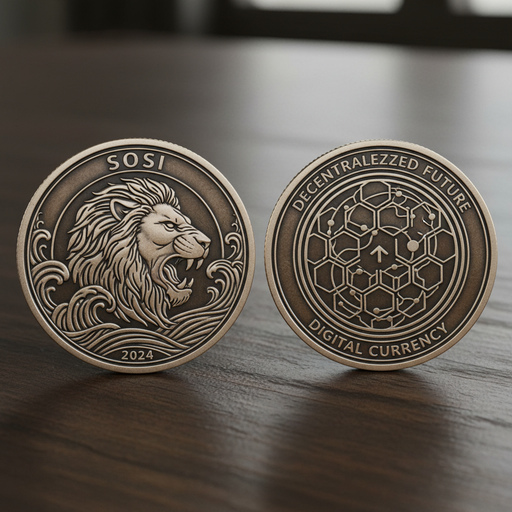

Cryptocurrencies Web3 in 2026: Beyond 2025 Expectations
The transformation of blockchain technology has reached a tipping point where Web3 cryptocurrencies are no longer just speculative tools but the core of the decentralized digital ecosystem. As we move into 2026, it’s essential to understand which projects are redefining the Web3 landscape and which offer tangible opportunities for sustained value.
Web3 is not simply the next evolutionary step of the Internet but a fundamental reimagining of how we interact, exchange value, and relate in digital spaces. Its core rests on three pillars: radical decentralization, individual data sovereignty, and economic autonomy. In this context, cryptocurrencies act as the glue holding the entire ecosystem together, enabling peer-to-peer transactions, automatic incentives via smart contracts, and frictionless value transfer.
The technical core: Ethereum and scalability solutions
Ethereum has established itself as the fundamental platform supporting most Web3 applications. After the successful migration to Ethereum 2.0, the network experienced dramatic improvements: lower transaction costs, higher processing speeds, and a more robust technical foundation. However, persistent bottlenecks required complementary solutions.
This is where Arbitrum and Optimism converge, two Layer 2 solutions utilizing optimistic rollup technology to expand Ethereum’s capacity without compromising security. Arbitrum has captured a significant share of the decentralized application ecosystem, positioning itself as a critical scalability platform. Optimism, with a similar approach but important architectural differences, has also proven its viability as essential infrastructure. By 2026, both cryptocurrencies represent not only technical bets but also stakes in the evolution of the underlying network supporting Web3.
Bitcoin, for its part, maintains its unique role: not as an application platform but as an immutable store of value. Its narrative has been reinforced with the introduction of token standards on its execution layers, allowing even the most conservative crypto asset to participate in the decentralized economy.
Specialized infrastructure: The invisible pillars of Web3
Not all Web3 cryptocurrencies are consensus protocols or application platforms. Many provide critical services that enable the entire system to function. Chainlink, for example, solves one of blockchain’s deepest problems: the gap between real-world data and on-chain information. As the ecosystem’s “oracle,” its importance has grown proportionally with DeFi demand. As more AI and machine learning applications integrate with blockchain, demand for assets like LINK faces structural bullish pressures.
The Graph plays a similar but different role: indexing and making accessible all dispersed information across multiple blockchains. While Bitcoin and Ethereum serve as the “consensus layers,” The Graph acts as the “search engine” that makes Web3 navigable and accessible. Render, less known but equally strategic, provides distributed computing power—an essential need in the convergence of metaverse, AI, and Web3.
Arweave offers another perspective: permanent, immutable storage. In an era where data is the new oil, owning a cryptocurrency whose function is to guarantee perpetual immutability of information gains both philosophical and practical significance.
DeFi and user applications: Where Web3 creates tangible value
Aave has emerged as the most mature decentralized lending protocol in the space. Not only does it simplify access to financial services without custodians, but it has also demonstrated resilience through multiple market cycles. Its decentralized governance and ability to expand across multiple chains show how Web3 cryptocurrencies evolve from simple utilities to complex economic entities.
Solana, often questioned but notably resilient, offers distinct features: extraordinary transaction speed and near-zero transaction costs. This combination has attracted developers seeking to build applications where economic friction is virtually eliminated. Polkadot, in contrast, pursues a different goal: interoperability among multiple independent blockchains. Its parachain model allows Web3 to be not a “competition” between different chains but a “confederation” of specialized systems.
Shiba Inu, perhaps the most questioned inclusion in any serious analysis, has shown that community narratives can translate into real development. Its ecosystem—including ShibaSwap and utility initiatives—demonstrates that even assets originating from meme culture can evolve into projects with clear purposes.
The selection criteria: How to evaluate Web3 cryptocurrencies in 2026
Investing in the Web3 space requires moving beyond short-term trend tracking. Cryptocurrencies with true sustained potential share common characteristics: they solve specific problems within the ecosystem, have committed developers, demonstrated resilience in previous cycles, and crucially, offer tangible applications beyond speculation.
The maturity of Web3 in 2026 clearly contrasts with the speculative wildness of previous years. The market has weeded out frivolous projects and consolidated those with solid fundamentals. For the informed investor, Web3 cryptocurrencies worth considering are those that fulfill specific functions, not just promise exponential returns.
The future of Web3 will not be dictated by a single asset but by a coordinated ecosystem where Bitcoin provides security, Ethereum offers programmable flexibility, Layer 2 solutions ensure scalability, specialized infrastructure provides critical functions, and user applications generate real value. Cryptocurrencies participating in this complex orchestration are the ones deserving serious attention from long-term trend-focused investors, not short-term fluctuations.