A quiet regulatory document can sometimes carry more weight than a loud market rally. That idea comes into focus after a new filing connected to AAVE appeared at the United States Securities and Exchange Commission. The paperwork points to a possible path that could move decentralized finance closer to traditional investment access.
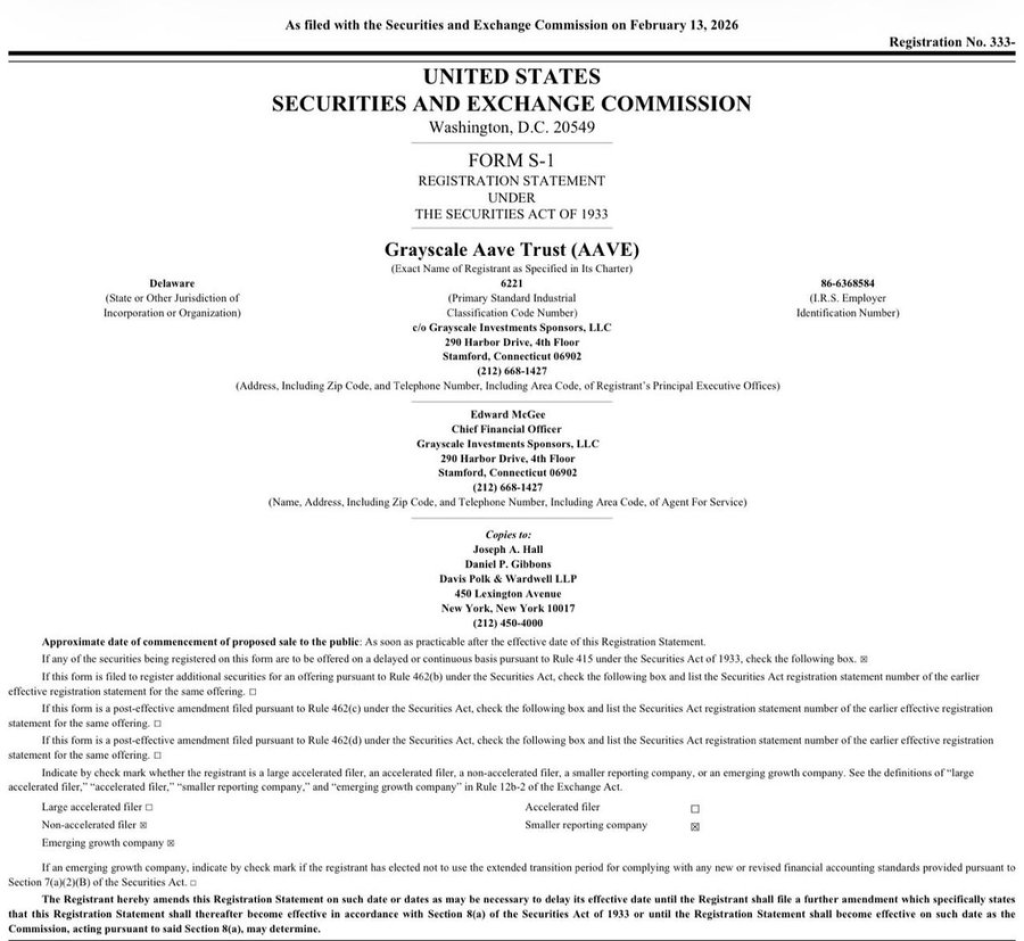
Crypto Patel noted the development in a post that framed the moment as a serious step toward a DeFi exchange-traded fund. The post notes that Grayscale submitted an S-1 registration tied to an Aave trust.
That type of filing usually marks the early stage of a product meant for public market exposure, which explains why the conversation around AAVE has started to focus on regulation instead of short term price action.
@CryptoPatel / X
SEC Filing Shows Formal Structure Behind Potential AAVE Investment Product
Details inside the document reveal that the proposed vehicle is named the Grayscale Aave Trust. The registration statement sits under the Securities Act of 1933, which governs how securities reach public investors in the United States. Grayscale Investments Sponsors appears as the listed sponsor, with corporate addresses and executive oversight clearly outlined.
Such structure matters because it shows preparation for institutional compliance rather than experimental token exposure. Traditional filings require disclosure, governance clarity, and operational transparency. Each requirement creates a bridge between decentralized assets like AAVE and regulated financial markets.
Crypto Patel connects this step to a wider pattern that includes similar ETF ambitions across the altcoin sector. Expansion beyond Bitcoin and Ethereum would mark a meaningful change in how regulators view decentralized finance infrastructure. Access through brokerage accounts could introduce AAVE to investors who never interact with on chain lending protocols.
Regulatory Approval Remains Uncertain Despite Growing DeFi Interest
Regulatory progress rarely follows a straight timeline. SEC review can stretch across months, and approval depends on market surveillance, custody standards, and investor protection rules. AAVE must satisfy those conditions before any product reaches trading desks.
Crypto Patel frames the moment as an open question rather than a guaranteed outcome. The post asks whether the SEC will allow a DeFi focused ETF during the current cycle. That question captures the tension between innovation and oversight that defines the digital asset market today.
Kaspa Crosses 600 Million Transactions: One of Crypto’s Most Underrated Growth Stories_**
Aave already holds a strong position inside decentralized lending, which gives the filing practical relevance beyond speculation. Institutional packaging could expand visibility, yet final approval still depends on regulatory comfort with DeFi mechanics. That balance will shape how quickly decentralized finance enters mainstream portfolios.
Disclaimer: The information on this page may come from third parties and does not represent the views or opinions of Gate. The content displayed on this page is for reference only and does not constitute any financial, investment, or legal advice. Gate does not guarantee the accuracy or completeness of the information and shall not be liable for any losses arising from the use of this information. Virtual asset investments carry high risks and are subject to significant price volatility. You may lose all of your invested principal. Please fully understand the relevant risks and make prudent decisions based on your own financial situation and risk tolerance. For details, please refer to
Disclaimer.
Related Articles
SEC Crypto Safe Harbor Proposal Submitted for Review! Eligible crypto projects can launch without registration
SEC Chair Paul Atkins has confirmed that the cryptocurrency “safe harbor” framework has been submitted to the White House for review. The proposal includes exemptions for start-ups and investment contracts to promote the regulation and innovation of digital assets. The move has sparked lively discussion in the financial community and among cryptocurrency advocates, and going forward it will aim to strike a balance between protecting investors and promoting innovation.
CryptoCity1h ago
New U.S. FDIC Rules! Stablecoin reserves have strict requirements and do not receive the $250k per-person deposit protection
The U.S. FDIC has rolled out a regulatory framework for stablecoins, requiring 1:1 reserves and liquidity, and setting a redemption deadline within two days. This proposal does not apply deposit insurance; it is intended to ensure stability in the financial system. The FDIC has clearly specified capital requirements and limits on earnings, and has clarified the safety and compliance of stablecoins. The proposal is currently in a public comment period.
CryptoCity2h ago
U.S. Department of the Treasury launches a digital asset industry cybersecurity information-sharing initiative
Gate News update: On April 9, the U.S. Department of the Treasury’s Office of Cybersecurity and Critical Infrastructure Protection (OCCIP) today announced the launch of a new initiative designed to strengthen cybersecurity protection capabilities across the digital asset industry. The program will provide timely, actionable cybersecurity information to eligible U.S. digital asset companies and industry organizations, helping them more effectively identify, prevent, and respond to cyber threats targeting customers and network systems. This initiative implements key recommendations put forward by the President’s Working Group on Digital Asset Markets in its report, “Strengthening U.S. Leadership in Digital Financial Technology.”
GateNews4h ago
SEC Crypto Safe Harbor Proposal Submitted for Review! Eligible crypto projects can launch without registration
U.S. SEC Chair Paul Atkins confirmed that the cryptocurrency “safe harbor” framework has been submitted to the White House for review. The proposal includes exemptions for startups and investment contracts to promote the regulation and innovation of digital assets. This move has sparked lively discussion in the financial sector and among cryptocurrency advocates, and going forward it will seek to strike a balance between protecting investors and promoting innovation.
CryptoCity4h ago
US FDIC New Rules! Stablecoin reserves have strict requirements and don’t get the $250k per person deposit insurance coverage
The U.S. FDIC has rolled out a regulatory framework for stablecoins, requiring 1:1 reserves and liquidity, and setting a redemption deadline within two days. The bill does not apply deposit insurance and is intended to ensure stability in the financial system. The FDIC has clearly specified capital requirements and limits on returns, and clarified the safety and compliance of stablecoins. This proposal is currently in a public comment period.
CryptoCity5h ago
U.S. Senator Lummis: Wyoming has established the nation’s most comprehensive digital asset regulatory framework
Cynthia Lummis, chair of the U.S. Senate Digital Assets Banking Subcommittee, chaired a roundtable in Wyoming to discuss the state’s digital asset regulation and the two-track banking system, emphasizing Wyoming’s leading position in the digital asset space and its influence on federal policy.
GateNews6h ago


