

Trade
Basic
Futures
Futures
Hundreds of contracts settled in USDT or BTC
TradFi
Gold
Trade global traditional assets with USDT in one place
Options
Hot
Trade European-style vanilla options
Unified Account
Maximize your capital efficiency
Demo Trading
Futures Kickoff
Get prepared for your futures trading
Futures Events
Participate in events to win generous rewards
Demo Trading
Use virtual funds to experience risk-free trading
Earn
Launch
CandyDrop
Collect candies to earn airdrops
Launchpool
Quick staking, earn potential new tokens
HODLer Airdrop
Hold GT and get massive airdrops for free
Launchpad
Be early to the next big token project
Alpha Points
Trade on-chain assets and enjoy airdrop rewards!
Futures Points
Earn futures points and claim airdrop rewards
Investment
Simple Earn
Earn interests with idle tokens
Auto-Invest
Auto-invest on a regular basis
Dual Investment
Buy low and sell high to take profits from price fluctuations
Soft Staking
Earn rewards with flexible staking
Crypto Loan
0 Fees
Pledge one crypto to borrow another
Lending Center
One-stop lending hub
VIP Wealth Hub
Customized wealth management empowers your assets growth
Private Wealth Management
Customized asset management to grow your digital assets
Quant Fund
Top asset management team helps you profit without hassle
Staking
Stake cryptos to earn in PoS products
Smart Leverage
New
No forced liquidation before maturity, worry-free leveraged gains
GUSD Minting
Use USDT/USDC to mint GUSD for treasury-level yields

More



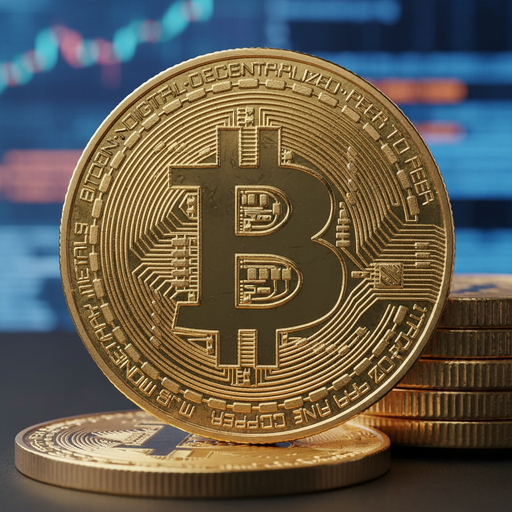


Top Crypto Investment Picks in Early 2026: Ethereum, Polygon, and DeepSnitch AI Shape Market Dynamics
Early 2026 presents a distinctive moment for crypto investment positioning. Rather than frenetic speculation, market participants are grappling with infrastructure maturation—stablecoins face regulatory scrutiny, tokenized finance enters traditional banking, and institutional actors are refining their blockchain engagement strategies. This measured pace shift doesn’t immediately move prices, but it fundamentally determines where sustainable value accumulates. For those evaluating crypto investment opportunities this quarter, understanding the distinction between mature infrastructure plays and early-stage growth vectors has become critical.
Market Maturation Shaping Crypto Investment Decisions
The stablecoin ecosystem remains under intense examination. Security firm Elliptic flagged activity patterns linked to the A7A5 stablecoin and its associations with sanctioned entities—a reminder that compliance and transparency are non-negotiable as stablecoins scale globally. Meanwhile, Circle’s leadership pushed back at Davos against systemic risk fears, arguing that well-designed stablecoin yield mechanisms haven’t triggered bank-run dynamics. This distinction matters profoundly: stablecoins increasingly serve as the liquidity foundation for on-chain payments and trading.
Parallel to this, traditional finance continues integrating blockchain infrastructure. A major investment firm managing $18 billion in assets announced ETF tokenization initiatives, signaling that blockchain is graduating from speculative sidebar to operational necessity. For crypto investment participants, this trend underscores why blockchain analytics, risk assessment tools, and infrastructure platforms are becoming strategically essential rather than peripheral additions.
Three Divergent Paths for Crypto Investment Allocation
The current market environment presents three distinctly different crypto investment theses. The first prioritizes stability and proven infrastructure—projects with deep liquidity, established developer ecosystems, and predictable roadmaps. The second targets early-stage platforms with working products but pre-mainstream adoption. The third focuses on structural innovation within existing chains. Understanding which aligns with your portfolio objectives is essential for crypto investment decision-making.
DeepSnitch AI: Working Tools Define Early-Stage Crypto Investment
For those pursuing crypto investment exposure to emerging platforms with demonstrated utility, DeepSnitch AI represents a notable candidate. Built by on-chain analysts with deep market experience, the platform distills scattered information into actionable trading intelligence—addressing a genuine friction point for retail investors navigating risk assessment.
The distinction here is operational: most early-stage crypto investment plays promise future utility; DeepSnitch AI already ships working tools. SnitchFeed flags unusual activity patterns. SnitchScan provides liquidity and holder concentration metrics. AuditSnitch renders contract-level verdicts (CLEAN, CAUTION, or SKETCHY) based on ownership structure, liquidity locks, tax mechanics, and known exploit vectors. SnitchGPT translates technical risk into plain language for non-technical users.
Presale participants already access these tools—eliminating the typical “trust us, it’s coming” dynamic. For early crypto investment positioning, this matters. The project trades at $0.03681 with over $1.3 million already deployed, and staking mechanisms with uncapped APY are live. This structure creates potential for compounding returns during the accumulation phase.
From a crypto investment standpoint, the combination of working products, near-term launch catalyst, and early-stage pricing creates an asymmetric risk-reward profile. Whether that translates to significant gains depends on adoption trajectory post-launch—a variable no early-stage crypto investment can guarantee.
Ethereum: Stability Within Crypto Investment Portfolios
As February begins, Ethereum trades around $2.27K as investors recalibrate risk assessments. Rather than exhibiting breakdown signals, ETH is consolidating—potentially positioning for movement toward $3,277 should broader sentiment improve by late February.
What reinforces Ethereum’s fundamental setup is how staking infrastructure continues evolving. Vitalik Buterin recently outlined distributed validator technology improvements—changes designed to simplify participation, reduce dependence on large validators, and reinforce network decentralization. These aren’t pricing catalysts; they’re structural resilience builders.
For crypto investment frameworks emphasizing durability, ETH remains foundational. It won’t deliver explosive returns from current levels, but it provides the deep liquidity, developer capital, and institutional integration that sustainable portfolios require. Ethereum functions as the crypto investment anchor rather than the growth engine.
Polygon: Patient Capital and Development Roadmap
Polygon trades near $0.14, reflecting headwinds across Layer 2 tokens generally. The path to $0.1368 by late February represents modest upside rather than breakout momentum—a reality that shapes its role within crypto investment allocation.
What remains intact is Polygon’s fundamental value proposition: enterprise deployment continues accelerating, zero-knowledge research advances steadily, and the scaling roadmap retains clarity. Yet these fundamental developments aren’t currently reflected in price action. For crypto investment purposes, this creates a tension between technical progress and market sentiment—a dynamic that typically resolves slowly.
Polygon fits a patient allocation strategy rather than a tactical trade. It represents crypto investment exposure to proven scaling infrastructure, but one requiring patience for price discovery to align with development progress.
Positioning Your Crypto Investment Portfolio
The early 2026 crypto investment landscape presents three distinct choices, each answering different objectives:
For stability-focused allocation: Ethereum remains the default. It anchors portfolios seeking deep liquidity, established governance, and predictable development cycles. The tradeoff is limited explosive upside.
For patient infrastructure exposure: Polygon offers Layer 2 scaling infrastructure with ongoing enterprise adoption and technical roadmap clarity. Price appreciation may lag development, but the fundamental thesis remains intact.
For asymmetric early-stage positioning: DeepSnitch AI provides working product exposure at pre-mainstream adoption pricing. The risk is material, but so is the potential reward if adoption trajectories accelerate.
Ultimately, crypto investment decisions this quarter hinge on timeline and risk tolerance. Those seeking three-to-five-year durability finds Ethereum compelling. Those backing layer 2 infrastructure but accepting slower price appreciation should consider Polygon. Those building positions in pre-launch platforms with demonstrated utility before mainstream awareness may find early-stage entries like DeepSnitch AI warrant allocation.
The market isn’t rushing in early 2026. For crypto investment participants, this measured pace actually creates opportunity—clarity separates working infrastructure from speculation, and early positioning in quality projects becomes distinguishable from hype-driven allocation.