

Trade
Basic
Futures
Futures
Hundreds of contracts settled in USDT or BTC
Options
HOT
Trade European-style vanilla options
Unified Account
Maximize your capital efficiency
Demo Trading
Futures Kickoff
Get prepared for your futures trading
Futures Events
Futures Mall
Participate in events to win generous rewards
Demo Trading
Use virtual funds to experience risk-free trading
Earn
Launch
CandyDrop
Collect candies to earn airdrops
Launchpool
Quick staking, earn potential new tokens
HODLer Airdrop
Hold GT and get massive airdrops for free
Launchpad
Be early to the next big token project
Alpha Points
NEW
Trade on-chain assets and enjoy airdrop rewards!
Futures Points
NEW
Earn futures points and claim airdrop rewards
Investment
Simple Earn
Earn interests with idle tokens
Auto-Invest
Auto-invest on a regular basis
Dual Investment
Buy low and sell high to take profits from price fluctuations
Soft Staking
Earn rewards with flexible staking
Crypto Loan
0 Fees
Pledge one crypto to borrow another
Lending Center
One-stop lending hub
VIP Wealth Hub
Customized wealth management empowers your assets growth
Private Wealth Management
Customized asset management to grow your digital assets
Quant Fund
Top asset management team helps you profit without hassle
Staking
Stake cryptos to earn in PoS products
Smart Leverage
NEW
No forced liquidation before maturity, worry-free leveraged gains
GUSD Minting
Use USDT/USDC to mint GUSD for treasury-level yields

More





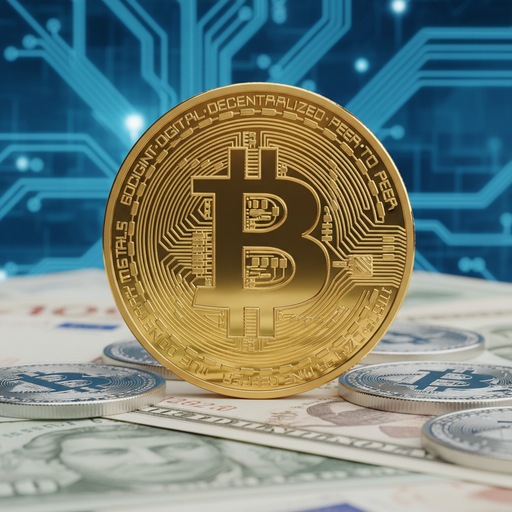

The Hidden Cost of Currency Debasement: From Ancient Rome to Modern Economies
When governments face financial crises or need funding, they often turn to a deceptively simple solution: expand the money supply. This practice, known as currency debasement, has shaped the rise and fall of empires throughout history. Yet many people today don’t realize they’re living through it right now. Currency debasement occurs when the value or purchasing power of money declines — whether through reducing precious metal content in coins or increasing the money supply in modern economies. The consequences ripple far beyond economics textbooks, affecting savings, wages, and wealth accumulation for ordinary citizens.
What Drives Currency Debasement Across History
At its core, currency debasement serves a single purpose: allowing governments to spend without raising taxes or facing political opposition. Before the age of digital currencies, rulers discovered they could reduce the amount of gold or silver in coins while maintaining the same face value. This created additional coins from the same amount of precious metals, effectively increasing purchasing power for the state at the expense of its citizens.
In modern times, the mechanism evolved but the principle remained unchanged. Instead of clipping coins, central banks simply print more money. The motivation stays consistent: governments need funds for wars, infrastructure, social programs, or crisis management. Short-term, it works. Long-term, it destabilizes entire economies. Currency debasement represents a hidden tax — one that erodes wealth silently through inflation rather than through explicit levies on income or property.
How Governments Debase: From Coin Clipping to Money Printing
Historically, currency debasement took several physical forms. Coin clipping involved shaving precious metal from coin edges, with the clippings collected for making counterfeit coins. Sweating worked similarly — vigorous shaking in bags would loosen metal dust from coin edges, then collected for reuse. Plugging entailed punching holes in coins’ centers, filling them with cheaper metals, then sealing the gaps.
These weren’t subtle processes, yet they persisted for centuries. Once paper money replaced commodity-based coins, currency debasement transformed into monetary expansion. Central banks adjusted two primary levers: increasing money supply through printing and lowering interest rates to encourage borrowing and spending. Both achieve the same effect — diluting the value of existing currency units. The modern methods appear more sophisticated, but the outcome mirrors the ancient practices: each unit of money buys less than it did before.
Currency Debasement in Action: Four Empires’ Cautionary Tales
The Roman Empire’s Gradual Collapse
The first documented instance of currency debasement dates to Emperor Nero around 60 A.D., who reduced silver content in the denarius from 100% to 90%. This triggered a cascade. Subsequent emperors, facing massive reconstruction costs after civil wars and natural disasters, accelerated the process. Vespasian and his son Titus reduced denarius silver content further to fund the Colosseum, Vesuvius relief efforts, and rebuilding after the Great Fire of Rome.
Interestingly, Titus’s brother Domitian temporarily reversed course, increasing silver content to 98% — a recognition that sound money mattered for stability. This pause proved temporary. Military pressures soon forced renewed debasement. By the third century A.D., the denarius contained merely 5% silver, transforming what once represented substantial value into essentially copper tokens.
The Crisis of the Third Century (235-284 A.D.) revealed currency debasement’s ultimate consequences. As the denarius collapsed, Romans demanded higher wages and charged more for goods. Political instability, barbarian invasions, plague, and economic chaos ensued. Only when Emperor Diocletian and Constantine introduced comprehensive reforms — new coinage, price controls, and economic restructuring — did stability return. Yet these measures couldn’t undo the damage already inflicted on the empire’s economic foundations.
Ottoman Empire’s Century-Long Erosion
The Ottoman akçe silver coin experienced even slower but equally devastating currency debasement. In the 15th century, the akçe contained 0.85 grams of silver. Across four centuries of gradual debasement, this declined to 0.048 grams by the 19th century — a 95% reduction. Rather than dramatic collapse, the Ottoman experience demonstrated how populations might not immediately recognize currency debasement’s effects when erosion occurs incrementally.
Eventually, the akçe’s debasement became so severe that new currencies — the kuruş in 1688 and later the lira in 1844 — entirely replaced it. The process illustrated what economists now call “currency substitution”: when people lose confidence in a money supply due to persistent debasement, they spontaneously shift to alternatives, whether commodity-based or foreign currencies.
Henry VIII’s Desperate Measure
When England needed additional funds during the 16th century, Henry VIII’s government pursued direct currency debasement strategy. His administration mixed copper into silver coins to stretch precious metal supplies while maintaining coin quantities. The outcome: silver content plummeted from 92.5% to 25% by the reign’s end. This financed military campaigns but triggered inflation that harmed ordinary English citizens far more than it helped the crown’s coffers.
Weimar Republic’s Hyperinflationary Spiral
The Weimar Republic of the 1920s provided perhaps history’s starkest example of currency debasement’s consequences. Facing massive World War I reparations and post-war expenses, the German government pursued aggressive money printing. The mark’s value collapsed from eight per dollar in 1921 to 7,350 by 1922. Within months, the currency became worthless: by 1923, it reached 4.2 trillion marks per dollar.
This wasn’t mere economic inefficiency; it was social catastrophe. Middle-class savings evaporated overnight. Pensions became worthless. The currency’s destruction planted seeds for the political instability that followed. The Weimar hyperinflation stands as history’s warning: currency debasement, once unleashed, can spiral beyond any government’s control.
The Bretton Woods Shift: Accelerating Modern Currency Debasement
The post-World War II Bretton Woods system temporarily constrained currency debasement by tethering major world currencies to the U.S. dollar, itself nominally backed by gold reserves. This system provided decades of relative monetary stability and predictability. However, in the 1970s, the system collapsed — a watershed moment in financial history.
With Bretton Woods dissolved, central banks gained unfettered discretion over monetary policy. The theoretical justification: this flexibility would allow better crisis management and economic optimization. The practical result: accelerated currency debasement.
Consider the U.S. monetary base — the ultimate measure of money creation. In 1971, it stood at 81.2 billion dollars. By 2023, it had surged to 5.6 trillion dollars. That represents roughly a 69-fold increase in less than five decades. To contextualize: the money supply growth rate vastly exceeded economic growth, income growth, or productivity gains. This disparity is the definition of currency debasement in the modern era.
The Real Price: How Currency Debasement Hurts Your Wealth
The immediate effect of currency debasement manifests as inflation — the most visible and painful consequence. As money’s purchasing power declines, the same amount of currency buys fewer goods and services. A purchase that cost $100 in 2015 might cost $130 today, representing genuine wealth erosion for anyone holding cash or fixed-income assets.
Savers and retirees suffer disproportionately. Unlike property owners or business equity holders who benefit from asset price inflation, retirees dependent on fixed pensions or bond interest see their purchasing power systematically diminished. Currency debasement essentially transfers wealth from savers to borrowers and asset owners — a regressive redistribution mechanism often unrecognized by policymakers implementing it.
Central banks responding to currency debasement frequently raise interest rates, increasing borrowing costs and disrupting business investment. Import costs rise, potentially creating stagflation — simultaneous inflation and economic stagnation. Export competitiveness may temporarily improve, but the underlying economic damage persists. Most dangerously, persistent currency debasement erodes public confidence in both the currency and the institutions managing it, potentially triggering the very hyperinflationary death spiral history repeatedly demonstrates.
Breaking the Cycle: Can Bitcoin End Currency Debasement?
Conventional solutions to currency debasement prove inadequate. A return to the gold standard, despite its appeal to sound-money advocates, faces a fundamental problem: governments or central banks would likely recentralize gold supplies again, recreating the conditions for renewed debasement and eventual confiscation.
Bitcoin presents a structural alternative. With a hard cap of 21 million coins written into its underlying code, Bitcoin’s supply cannot be manipulated by any authority. Its decentralized network of nodes and proof-of-work mining mechanism prevents any single entity — government, corporation, or institution — from controlling issuance or governance.
This scarcity proves resilient against the inflationary pressures endemic to fiat currency systems. During periods of aggressive money printing or economic uncertainty, investors increasingly recognize Bitcoin not merely as a speculative asset but as a store of value — a hedge against currency debasement engineered by central banks. As historical patterns repeat themselves, Bitcoin represents potential recognition of an evolution in monetary systems: from currencies subject to debasing by human institutions toward currency whose integrity is mathematically guaranteed.
History whispers the same lesson repeatedly: unchecked currency debasement cannot persist indefinitely. The question isn’t whether the current system faces reckoning, but when — and whether alternative mechanisms like Bitcoin gain sufficient adoption to offer escape routes before the reckoning arrives.