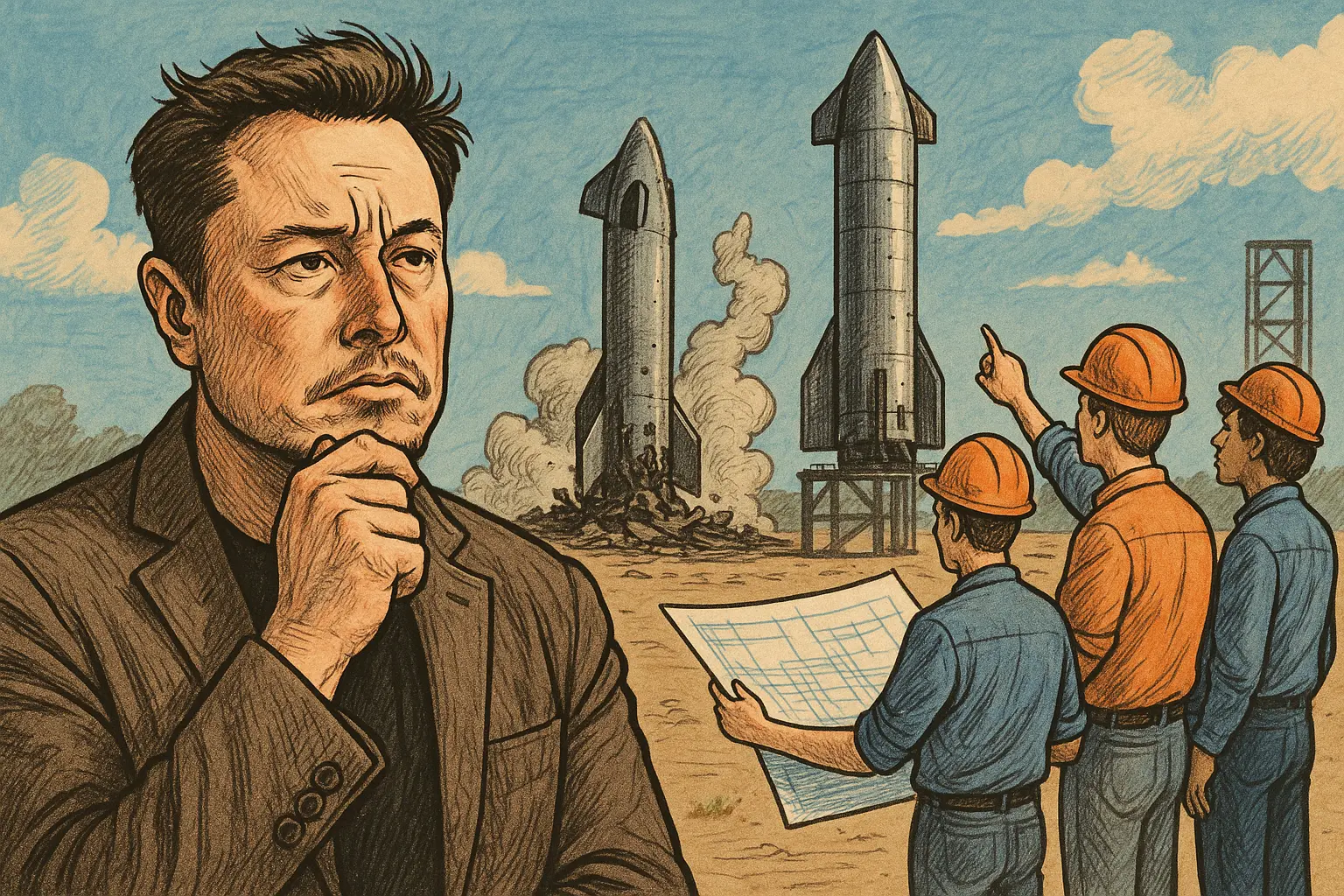
According to a Business Insider report, SpaceX executive Michael Nicholls explicitly said in an internal memo sent to xAI employees that the company’s current compute training performance is “embarrassingly low” and “clearly behind” major competitors, and announced that the related engineering reorganization would take effect immediately. This comprehensive overhaul is the second round of rebuilding pushed by Musk after SpaceX acquired xAI in February.
Memo Leaked: Training Performance “Embarrassingly Low,” the Gap No Longer Can Be Avoided
In the memo, Nicholls (SpaceX Starlink senior vice president, who also serves as xAI CEO) describes the current state of xAI in direct and harsh language, and says the company plans to significantly improve training performance within the next two months.
Musk also publicly acknowledged on X in March: “xAI’s first build didn’t work, so we’re rebuilding from scratch.” He also announced the company will revisit candidates it had previously rejected, pointing out that “over the past few years, many talented people were rejected by xAI’s employment notice—some even without getting an interview opportunity.”
Full Rebuild: After the Departure of 8 Co-Founders, a New Generation of Engineering Leadership
Since January of this year, eight xAI co-founders have left in succession, including Nordeen, Zhang Guodong, Manuel Kroiss (head of the Grok Code project), Toby Pohlen (head of the Macrohard project for AI agents), and Ross Nordeen, who recently left. Business Insider said that since February this year, xAI has cut dozens of employees, including members of teams related to Grok Imagine and Macrohard.
Key Appointments in xAI’s New Engineering Leadership
Pre-training: Devendra Chaplot (former Facebook and Thinking Machines Labs researcher)
Model Factory and Tools: Aman Madaan, responsible for AI model development infrastructure and data pipelines
Post-training and Reinforcement Learning (RL): Aditya Gupta, leading model fine-tuning and human preference alignment
Post-training for Grok Code: Li Beibin (former Microsoft, Meta researcher)
Video and Image Training: Jia Xuhui (former Google DeepMind) and Zhu Yukun jointly responsible
Product: Andrew Milich and Jason Ginsburg (joined in March from the AI code editor Cursor)
Compute Infrastructure: Daniel Dueri (SpaceX software engineering director)
Data: Matt Monson (SpaceX Starlink software director)
SpaceX IPO Backstory: The Pressure of a $2 Trillion Valuation and the Strategic Significance of xAI Integration
The macro backdrop for this engineering restructuring is the IPO that SpaceX is about to launch. According to sources who spoke with Business Insider, SpaceX is expected to file for an IPO this year, and the overall valuation could exceed $2 trillion. The strategic intent behind SpaceX’s acquisition of xAI is to integrate Starlink’s data infrastructure with xAI’s AI model capabilities, providing a stronger technical narrative after going public.
However, xAI’s clear lag in core training capabilities, along with ongoing personnel churn, adds uncertainty to realizing this lofty valuation. Nicholls’s memo clearly sets improving training performance as the top priority for the next two months, showing that SpaceX is forcing xAI to catch up on the technical front with an urgent IPO timeline.
Frequently Asked Questions
Why did SpaceX acquire and rebuild xAI before going public?
SpaceX completed its acquisition of xAI in February 2026. Musk’s goal is to integrate SpaceX’s engineering culture and Starlink’s data infrastructure, building a more compelling AI asset lineup for the upcoming IPO. Musk himself admits that xAI “didn’t succeed the first time it was built,” and this restructuring is a direct reflection of tearing it down and rebuilding.
Why is xAI’s training performance “embarrassingly low”?
According to Nicholls’s internal memo, xAI’s compute training performance has a significant gap compared with competitors such as OpenAI, Anthropic, and Google, and multiple key technology co-founders leaving one after another further weakens existing capabilities. The company plans to substantially improve performance within two months, and to accelerate the catch-up by bringing in new leadership from backgrounds including Facebook and Google DeepMind.
What is the basis for SpaceX IPO valuation, and what share does xAI represent?
According to Business Insider, SpaceX’s overall IPO valuation could exceed $2 trillion, primarily based on the rapid growth of Starlink’s satellite internet business, rocket manufacturing capabilities, and AI assets resulting from the acquisition of xAI. The specific portion xAI represents in the valuation and the final IPO timeline have not been made public. An xAI spokesperson has not yet responded to the related reports.
Disclaimer: The information on this page may come from third parties and does not represent the views or opinions of Gate. The content displayed on this page is for reference only and does not constitute any financial, investment, or legal advice. Gate does not guarantee the accuracy or completeness of the information and shall not be liable for any losses arising from the use of this information. Virtual asset investments carry high risks and are subject to significant price volatility. You may lose all of your invested principal. Please fully understand the relevant risks and make prudent decisions based on your own financial situation and risk tolerance. For details, please refer to
Disclaimer.


