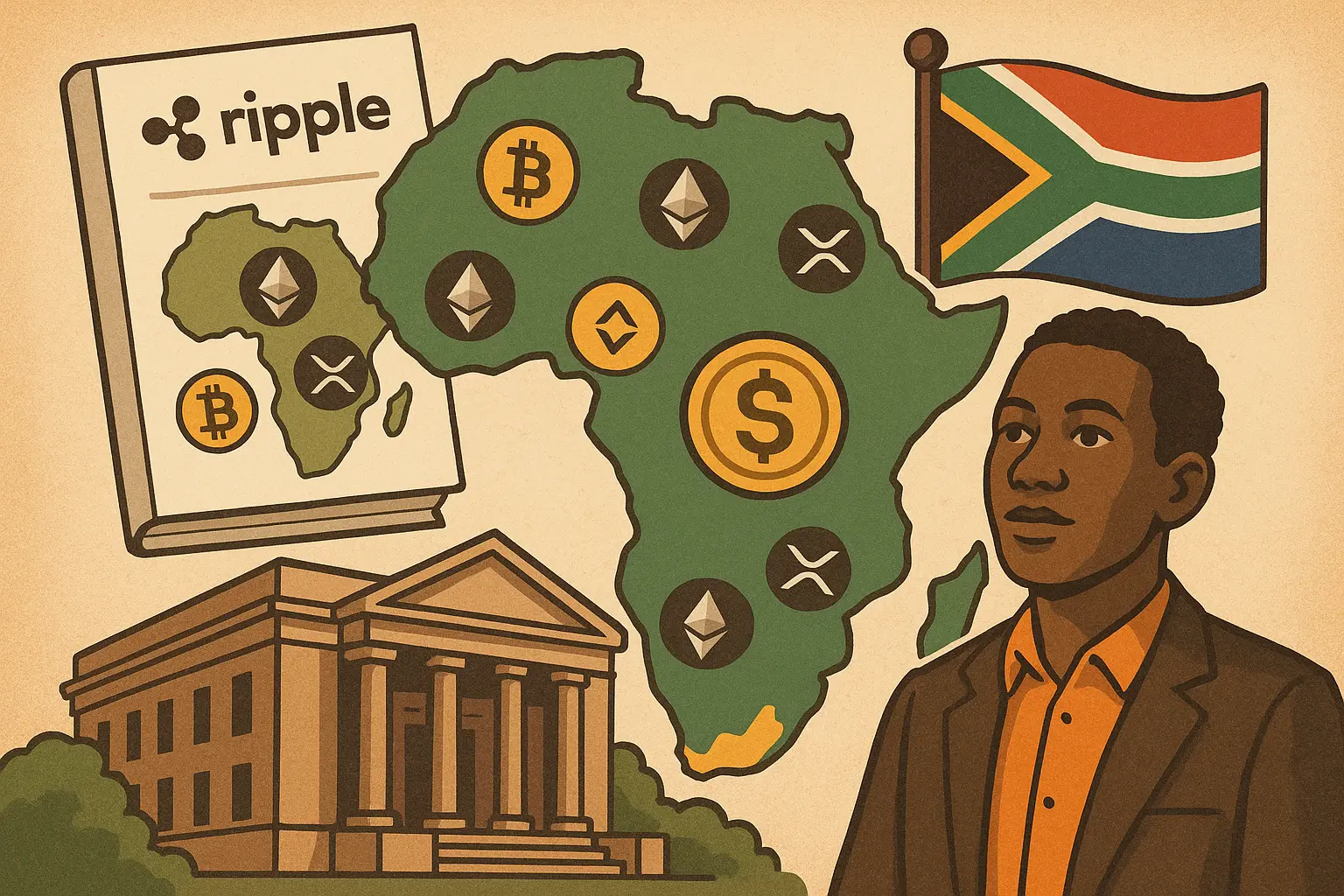
Ripple, a company, released a research report on April 6 stating that, across Africa, about 8 countries have already implemented some form of dedicated regulatory oversight for cryptocurrencies, while several other jurisdictions are in the process of developing formal frameworks. Driven by long-term needs such as remittance demand, cross-border trade, and mobile-first financial services, Africa has become one of the regions with the highest global cryptocurrency adoption; as regulatory frameworks continue to take shape at an accelerated pace, the region is moving into a phase where cryptocurrencies are formally integrated into the mainstream financial system.
Regulatory Progress in Eight Countries: From Mature Frameworks to Early Exploration
In its report, Ripple classifies jurisdictions according to their level of development maturity and presents a complete spectrum of cryptocurrency regulation across Africa:
Africa’s Cryptocurrency Regulatory Gradient (Ripple Report Summary)
South Africa (Mature): Has formally recognized crypto assets as financial instruments, requiring service providers to complete registration with the FSCA and FIC; it has already established itself as the most advanced regulatory environment on the continent
Mauritius (Mature): Continues to expand its regulatory toolbox, broadening the categories of licenses and clarifying its stance on stablecoin activities, while actively developing long-term issuance and usage rules
Nigeria (Developing): Formally recognizes digital assets within the securities framework, relaxes early banking industry restrictions, and shifts toward a more pragmatic approach to regulatory engagement
Kenya (Developing): Advances a legal framework for virtual asset service providers, allocating regulatory responsibilities to the currency and capital markets regulators
Ghana (Initial): Introduces initial compliance measures that include registration requirements, laying the groundwork for more comprehensive regulation
Botswana, Namibia, Seychelles (Initial): Are at different stages of drafting or implementing crypto regulations, with a focus on establishing licensing processes and compliance standards
Ethiopia, Morocco, Rwanda, Tanzania, Uganda (Exploration): Are evaluating how to adapt digital-asset policy to local economic structures and the financial system’s priority considerations
In its report, Ripple notes that, “As cryptocurrency activity across the African continent becomes increasingly active, regulatory authorities in multiple key jurisdictions are moving quickly, laying the foundation for the next phase of development of Africa’s digital-asset ecosystem.”
Structural Drivers of Cryptocurrency Adoption in Africa
Africa’s high rate of crypto adoption is not accidental; it is a natural response to long-standing gaps in local financial infrastructure. Traditional banking systems fall short in cross-border payment efficiency and stable foreign-currency access, especially in underdeveloped or rural markets. Against this backdrop, cryptocurrencies—particularly stablecoins—have become a practical tool for addressing these limitations.
The widespread success of mobile payment platforms in Africa has already validated the feasibility of “digital-first” financial solutions, establishing an inherent infrastructure bridge for broader digital-asset applications. Ripple emphasizes that, “Driven by real-world needs such as remittances, cross-border trade, and mobile-first financial services, Africa has long been a global leader in cryptocurrency adoption.”
Stablecoins: Emerging New Infrastructure for Cross-Border Finance
In Africa’s crypto applications, the role of stablecoins is shifting from speculative tools to commercial infrastructure. Use cases have expanded into core areas such as commercial settlement, liquidity management, and remittance flows. Compared with traditional financial channels, stablecoins offer clear advantages in both speed and cost, and their share in trade flows continues to rise.
As regulatory frameworks become clearer, financial institutions are also actively exploring new service formats such as secure custody and compliance-driven platforms. Ripple believes that continued regulatory advancement and stronger coordination among jurisdictions will accelerate the integration of digital assets into the mainstream financial system, ultimately supporting Africa in building a more cohesive and scalable digital economic ecosystem.
Frequently Asked Questions
Which countries in Africa have officially advanced cryptocurrency regulation?
According to the Ripple report, the regulatory frameworks in South Africa and Mauritius are the most mature; Nigeria and Kenya are actively advancing; Ghana, Botswana, Namibia, and Seychelles are in the stage of initially establishing compliance measures; while countries such as Ethiopia, Morocco, and Rwanda are still in the policy exploration and assessment stage.
Why has Africa become one of the regions with the highest global cryptocurrency adoption rates?
The main driving factors include: large demand for cross-border remittances, insufficient coverage of traditional banking infrastructure, widespread adoption of mobile payments, and strong real-world demand for stablecoins in markets where local currencies are unstable—these structural factors jointly drive high acceptance of cryptocurrencies among African users.
What are the main use cases for stablecoins in Africa?
Stablecoin applications in Africa have moved beyond speculative purposes and focus mainly on three scenarios: commercial settlement, cross-border trade liquidity management, and personal remittances. Compared with traditional financial channels, they provide higher efficiency and lower costs, which is especially prominent in markets where coverage of traditional banking services is insufficient.
Disclaimer: The information on this page may come from third parties and does not represent the views or opinions of Gate. The content displayed on this page is for reference only and does not constitute any financial, investment, or legal advice. Gate does not guarantee the accuracy or completeness of the information and shall not be liable for any losses arising from the use of this information. Virtual asset investments carry high risks and are subject to significant price volatility. You may lose all of your invested principal. Please fully understand the relevant risks and make prudent decisions based on your own financial situation and risk tolerance. For details, please refer to
Disclaimer.


