As crypto assets continue to evolve, meme coins have emerged as a distinct and increasingly important category. Unlike traditional projects, they do not rely on complex technology or clearly defined use cases. Instead, they gain attention through internet culture and social dissemination. Their core driver is not function, but narrative.
Against this backdrop, the concept of the meme coin narrative becomes essential for understanding this type of asset. The example of 7×7=49 illustrates how a simple symbol can evolve into shared consensus through mechanisms of spread and community participation. This process reflects how “culturally driven assets” take shape in the crypto market.
What Is a Meme Coin Narrative? Core Concept and Characteristics
A meme coin narrative refers to a shared cognitive framework built around a symbol, image, or expression. It develops through community-driven dissemination and user participation, ultimately shaping how the market perceives and values the token.

Unlike traditional projects, meme coin narratives typically have the following characteristics:
First, they rely on symbolic expression, such as images, phrases, or simple ideas.
Second, their spread depends on social media and user interaction rather than official channels.
Third, their value is derived from consensus, not from technology or practical applications.
At its core, this type of narrative is a “structure of meaning designed for spread.”
Conditions for the Formation of Meme Coin Narratives: Content, Symbols, and Distribution
The formation of a meme coin narrative usually depends on three foundational elements:
At the content level, the message must be simple enough for users to quickly understand and repeat.
At the symbolic level, it must be recognizable, often through a specific phrase or visual element.
At the distribution level, it relies on social platforms that enable rapid sharing.
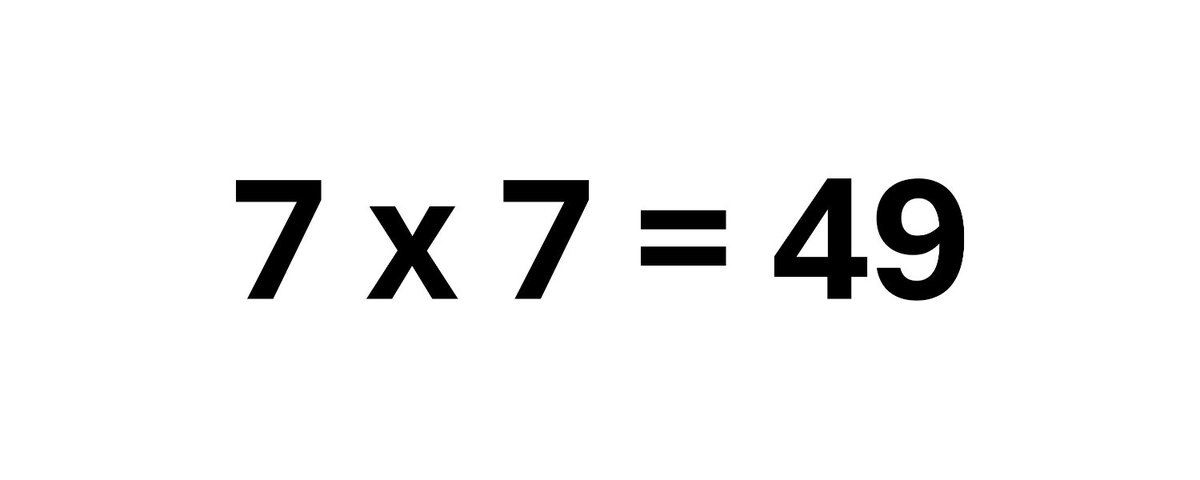
Using 7×7=49 as an example, the expression itself has an extremely low cognitive barrier, making it easy to understand across cultures. This “no explanation needed” quality is a key factor in its narrative formation.
Meme coin dissemination typically follows a decentralized path.
A small group of users introduces the initial content, which then spreads through reposts, comments, and remixes. Unlike traditional communication models, this process does not depend on a single source. Instead, it is driven collectively by a large number of participants.
Two key mechanisms are at play during this process:
First, repetition. Simple content is easier to replicate and share.
Second, variation. Users adapt or remix the content, increasing its appeal.
This combination of “replication plus mutation” allows memes to sustain ongoing spread.
User participation in meme coin dissemination is driven by multiple factors.
From a psychological perspective, people are inclined to join trending topics to gain social recognition.
From a behavioral perspective, sharing simple content requires minimal effort, lowering the barrier to entry.
From a structural perspective, token holders are often incentivized to promote wider dissemination.
Together, these factors make the community the central force behind the expansion of meme coin narratives.
Lifecycle of Meme Coins: From Emergence to Shifting Attention
Meme coins generally follow a relatively clear lifecycle:
-
Initial phase, where the meme appears and spreads within a small group.
-
Expansion phase, where social media drives rapid growth.
-
Peak phase, where attention concentrates and broad consensus forms.
-
Transition phase, where interest may decline or shift to new narratives.
This cycle reflects how attention dynamically moves within the market.
Case Study: The Spread and Community Dynamics of 7×7=49
The trajectory of 7×7=49 represents a classic minimalist meme model.
It begins with a self-explanatory mathematical expression, allowing users to immediately understand and participate in its spread. On social media, repeated posting and sharing generate high-frequency exposure.
As attention grows, the meme evolves into a token and enters the on-chain trading environment. At this stage, community members are not only distributors but also active participants.
Its community is characterized by highly decentralized dissemination, uniform content formats, and extremely low participation barriers. This model demonstrates how a meme coin can transition from “expression” to “asset.”
Differences in Narrative Styles Across Meme Coins
Meme coins vary significantly in how their narratives are constructed.
For example, Dogecoin relies on a visual symbol and long-standing community culture. In contrast, meme coins like 7×7=49 depend more on abstract expression and repeated dissemination.
These differences are reflected in narrative complexity, distribution pathways, and community structure. Each approach leads to different levels of spread efficiency and lifecycle duration.
Characteristics and Potential Risks of Meme Coins
As a unique type of asset, meme coins have distinct characteristics.
Their strengths include rapid dissemination, low participation barriers, and strong community-driven momentum.
However, their limitations are equally clear.
Without a stable value foundation, their development depends heavily on shifts in attention. In addition, their prices and market performance tend to be highly volatile.
For these reasons, meme coins are often more useful for understanding market behavior than for traditional value evaluation.
Conclusion
At its core, a meme coin narrative is a community-driven process of building consensus. It relies on symbolic dissemination and user participation to shape shared understanding.
Using 7×7=49 as an example, we can observe how a simple expression evolves into a crypto asset through social spread, community engagement, and on-chain integration. This process highlights a new model of value creation emerging from the intersection of blockchain technology and internet culture.
FAQs
Why can meme coins exist without practical utility?
Because their value is derived from dissemination and consensus rather than traditional functions or use cases.
What makes the 7×7=49 narrative unique?
Its narrative is extremely minimal, relying solely on a basic expression for propagation.
Can the spread of meme coins be controlled?
Dissemination is typically decentralized and difficult to fully control, as it depends on voluntary user participation.
The community is the central force behind narrative expansion and consensus formation.
Do meme coins have long-term stability?
Their development depends on attention and community activity, which makes their long-term stability uncertain.