In DeFi protocols, tokenomics dictate how value is distributed within the protocol and how participants across the ecosystem are incentivized. For protocols with genuine sources of return, tokens serve as more than just governance tools—they become the essential link between protocol revenue and user incentives.
For USD.AI, CHIP is more than a governance token; it acts as the value coordination layer in the AI infrastructure financing marketplace. Since USD.AI generates return from GPU-collateralized loans and AI hash power financing, CHIP’s core function is to channel these underlying returns into a sustainable incentive system through governance mechanisms—connecting capital providers, governance participants, and the protocol itself. This design positions CHIP as a critical lever for protocol value capture and long-term growth.
USD.AI Tokenomics: Total CHIP Supply, Allocation, and Ecosystem Role
CHIP is USD.AI’s native governance token, with a total supply of 10 billion tokens, primarily allocated to ecosystem growth, treasury reserves, core contributors, and investors.
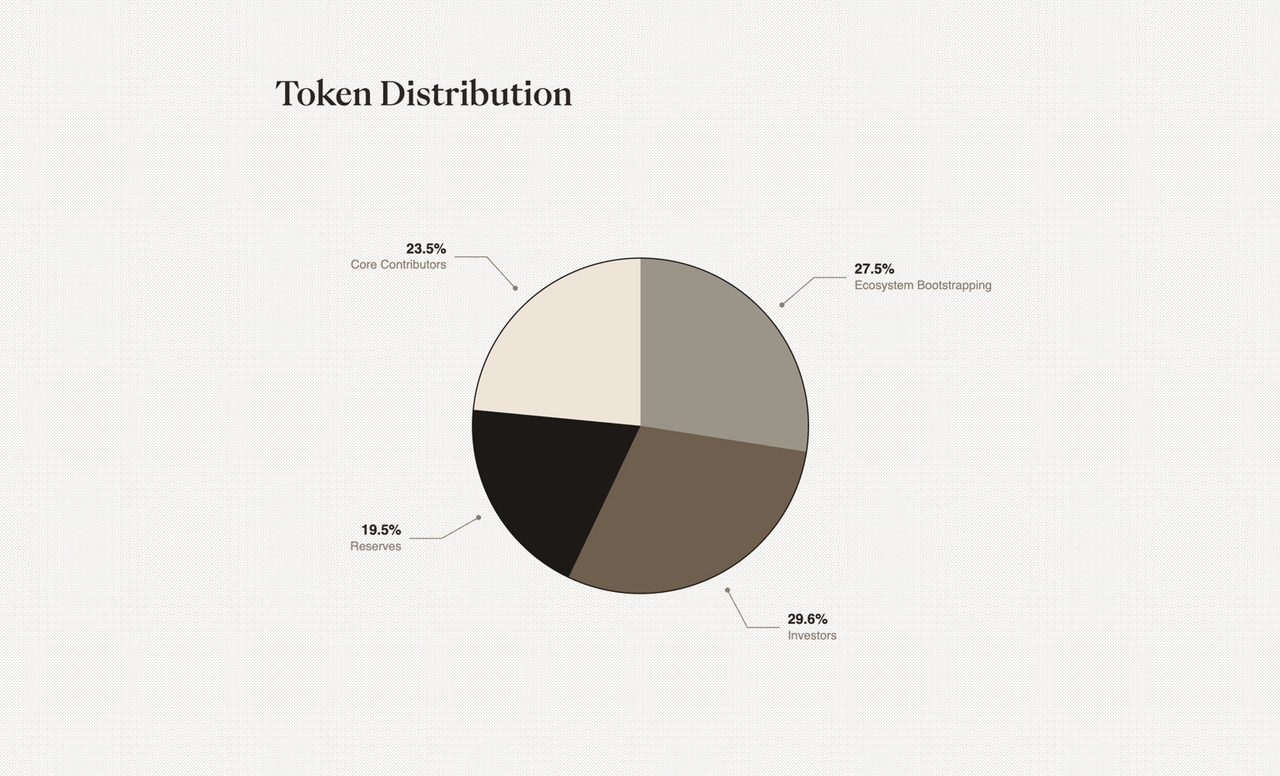
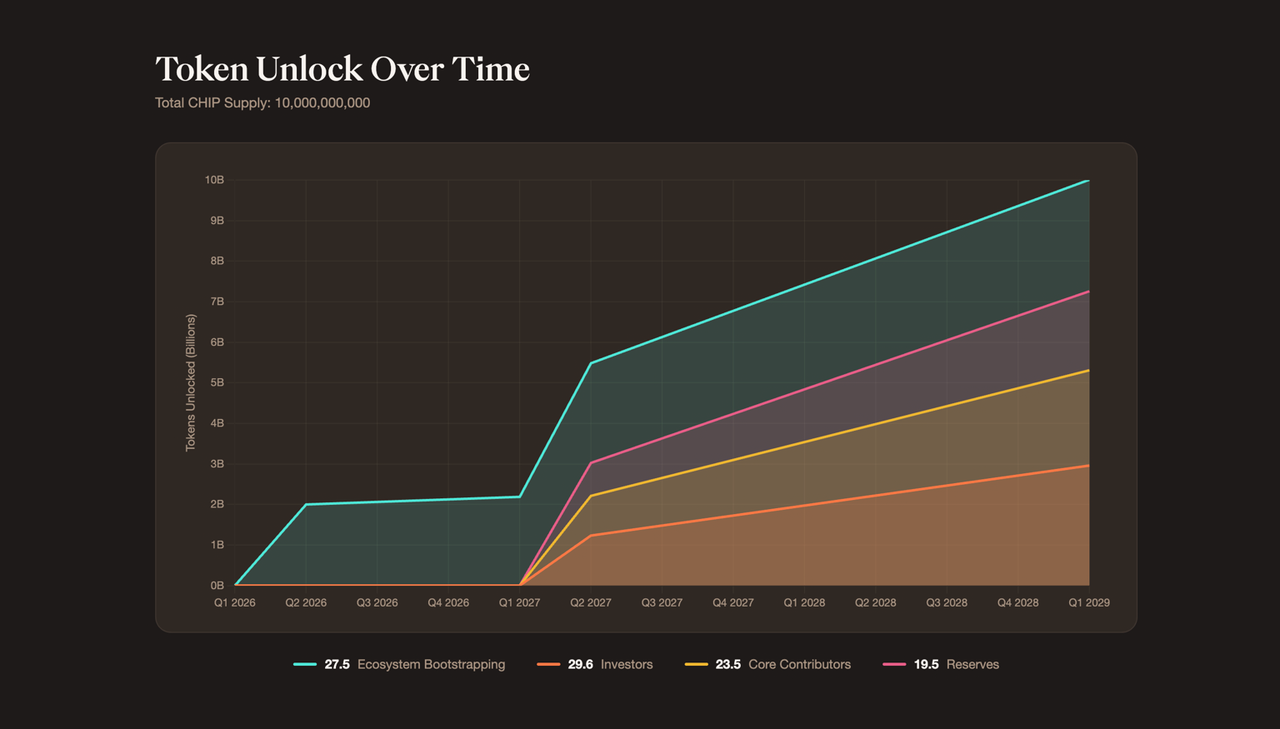
Within the ecosystem, CHIP is responsible for coordinating key protocol parameters and managing value distribution. CHIP holders can participate in governance decisions such as adjusting loan interest rates, setting risk parameters, and determining return distribution ratios. This means CHIP is not just a voting instrument—it is the governance core of the entire AI credit marketplace.
Functionally, CHIP is the pivotal asset in USD.AI, linking protocol governance, return distribution, and long-term incentives.
What Are CHIP’s Core Use Cases?
CHIP’s primary use cases center on governance and incentives.
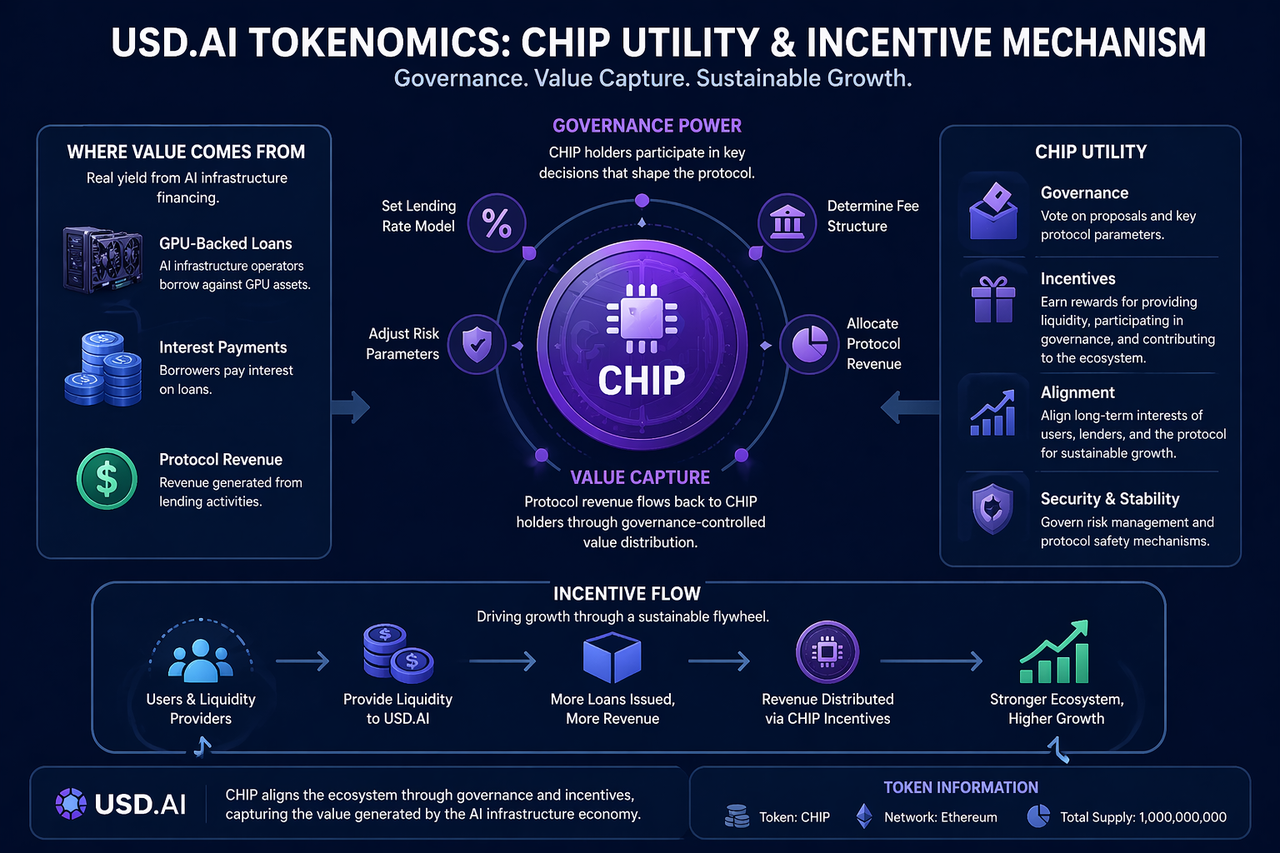
On the governance side, CHIP holders can vote on key protocol parameters, including loan interest rate models, collateral ratios, and protocol fee structures. On the incentive side, CHIP is used to reward ecosystem participants—liquidity providers, governance participants, and contributors.
This dual role enables CHIP to function both as a governance credential and as a driving force for ecosystem growth.
How Does CHIP Capture Protocol Value?
USD.AI’s primary returns come from AI infrastructure financing, such as GPU-collateralized loans that generate interest income. CHIP’s value capture mechanism relies on governance to control how these returns are allocated.
The protocol can direct a portion of returns to governance participants, buy back tokens, or boost token incentives, directly linking protocol revenue to CHIP’s value. As USD.AI’s loan volume increases, both CHIP’s governance and economic value rise accordingly.
This approach makes CHIP a vehicle for protocol growth and value, not just a utility token.
How Does CHIP’s Incentive Mechanism Drive Protocol Expansion?
CHIP’s incentive mechanism is designed to attract liquidity, increase governance participation, and drive ecosystem expansion.
By incentivizing liquidity providers with CHIP, the protocol draws more capital into the USD.AI ecosystem, expanding the AI credit marketplace. Governance incentives further encourage user participation in protocol decisions, boosting community governance activity.
The core objective is to align participant interests with protocol growth through long-term incentives, ensuring sustainable ecosystem expansion.
What Are the Potential Risks of the CHIP Token Model?
While CHIP’s design facilitates value capture, certain risks remain.
If protocol revenue growth falls short, token incentives may not provide lasting value support. Governance tokens can also be highly sensitive to market sentiment, resulting in significant price volatility. Additionally, poorly designed incentive release schedules can lead to token dilution.
Ultimately, CHIP’s long-term value depends not only on token design, but also on the continued expansion of the USD.AI AI credit marketplace.
Summary
CHIP is the core token of the USD.AI protocol, uniting governance, return distribution, and ecosystem incentives. Through CHIP, the protocol transforms value generated by AI infrastructure financing into governance and incentive mechanisms, fueling long-term growth. As the AI hash power financing market evolves, CHIP’s ability to capture value will be central to the sustainable development of the USD.AI ecosystem.
FAQs
What is the primary role of CHIP in USD.AI?
CHIP is the governance token for USD.AI, used to manage protocol parameters, return distribution, and ecosystem incentive mechanisms.
How does CHIP derive its value?
CHIP’s value is supported by USD.AI’s protocol revenue growth and its central role in governance and return distribution.
Is CHIP used to reward users?
Yes, CHIP is used to reward liquidity providers, governance participants, and ecosystem contributors.
What determines CHIP’s long-term value?
CHIP’s long-term value depends primarily on the growth of the USD.AI AI infrastructure financing market and the protocol’s revenue expansion.
What are the main risks of the CHIP token model?
Key risks include insufficient protocol revenue, token price volatility, and dilution from incentive releases.







