As the DeFi yield market evolves, users are no longer satisfied with simply “earning returns”—they are increasingly focused on “optimizing returns.” Traditional DeFi protocols typically offer only variable yield models; while users can earn returns through staking or lending, it’s difficult to lock in a stable return % or adjust yield strategies flexibly in response to market shifts. These constraints expose yield assets to clear inefficiencies in capital utilization and risk management.
Pendle has transformed the landscape with its yield tokenization mechanism. By splitting yield assets into PT and YT, Pendle empowers users to manage principal and future returns separately. This not only enables users to lock in fixed yields, but also to speculate on yield rates and hedge yield risk. This structure establishes Pendle as a leading protocol for fixed yield and the on-chain yield strategy marketplace, delivering more flexible yield management tools for users.
What are the main yield strategies offered by Pendle?
Pendle’s yield strategies are built on the PT and YT yield-splitting mechanism. By separating principal and future yield, users can tailor strategies to their own risk profiles. Risk-averse users can earn fixed yield with PT, while yield seekers can pursue upside by holding YT for potential future growth.
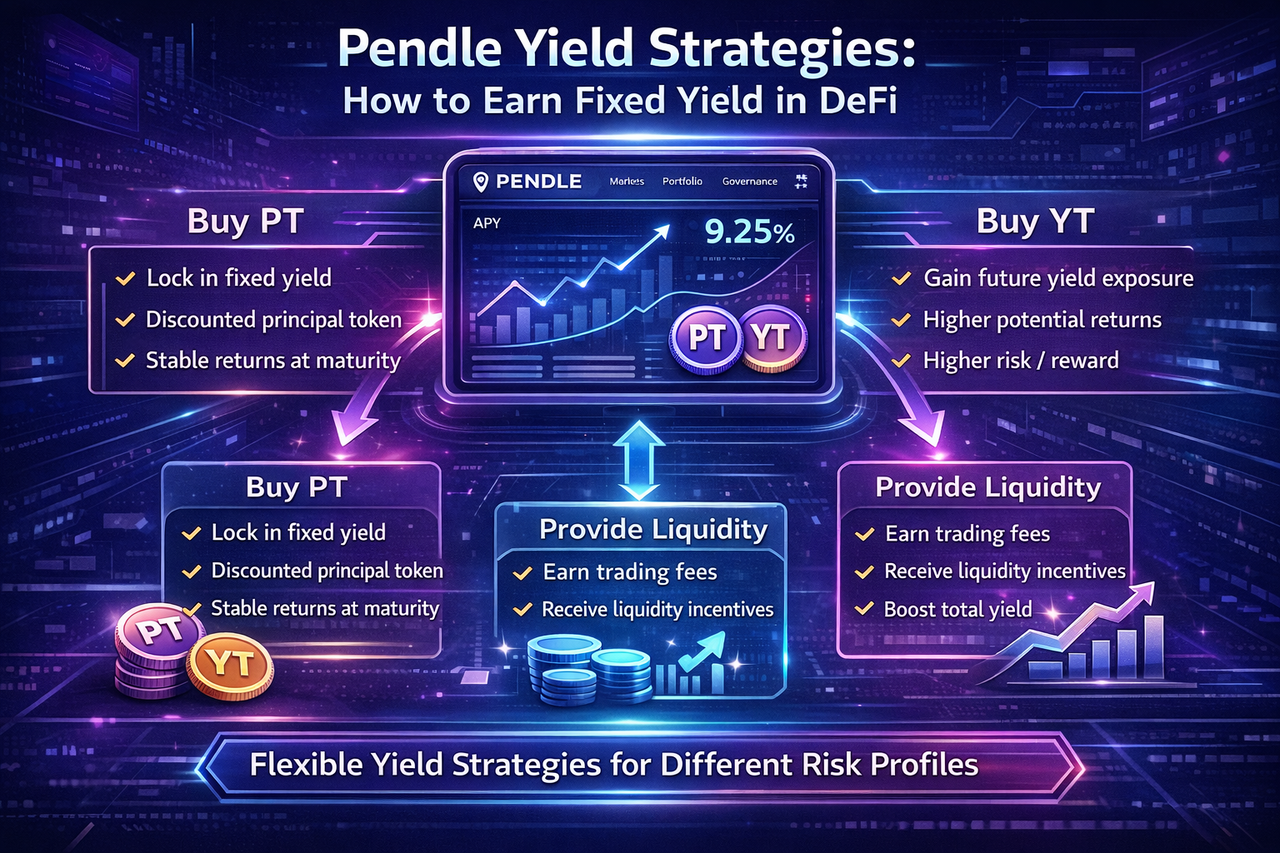
Pendle also allows users to lock in yield early by selling yield rights, as well as earn additional rewards by providing liquidity. This means Pendle is more than just a yield trading platform—it’s a comprehensive on-chain yield strategy marketplace for fixed yield, yield enhancement, and yield risk management.
How do you earn fixed yield with Pendle?
The most common way to achieve fixed yield in Pendle is by purchasing PT. PT represents the principal portion of a yield asset and typically trades at a discount to its redemption value at expiry. When users purchase PT and hold until expiry, they redeem the principal at par value—the price difference is the fixed yield.
This mechanism closely resembles zero-coupon bonds in traditional finance. The yield % is essentially locked in at the time of PT purchase, so users don’t need to worry about future rate volatility affecting their final return. For DeFi users seeking stable returns, PT is Pendle’s core fixed yield instrument and one of its most important strategies.
How can you use YT to pursue higher yields?
Beyond fixed yield, Pendle lets users bet on future yield growth by purchasing YT. YT represents the right to future yield generated by the underlying asset, so its value is driven by market expectations for yield rates.
If users believe future yields will rise, buying YT may deliver greater returns, as higher rates increase both YT’s market value and future yield distributions. This strategy offers higher potential returns than PT, but also comes with greater risk. If future yields fall, YT’s value may decline, resulting in losses.
YT is therefore best suited for users with higher risk tolerance and a bullish outlook on future yield growth.
How do you lock in yield by selling YT?
For users already holding yield-generating assets, Pendle offers another strategy: selling YT to lock in yield early. After depositing yield assets into Pendle, users receive both PT and YT. Selling YT is akin to forgoing future variable yield in exchange for the current value of yield.
In this scenario, users can redeem principal with PT at expiry, while proceeds from selling YT effectively lock in yield ahead of time. This approach is ideal for users concerned about declining future yields, as it converts uncertain future returns into guaranteed current returns and reduces yield volatility risk.
This mechanism enables on-chain yield locking, providing users with greater flexibility in yield management.
What liquidity strategies does Pendle offer?
In addition to PT and YT trading strategies, Pendle supports earning extra yield by providing liquidity. Users can supply liquidity to PT and YT pools and earn protocol rewards as well as trading fee income.
This approach is suitable for users seeking to enhance returns on top of fixed yield. Compared to simply holding PT, providing liquidity can offer higher returns, but it also introduces impermanent loss and market risk. As such, liquidity strategies are best for users who understand DeFi liquidity mechanisms.
By combining yield trading and liquidity incentives, Pendle delivers a more diversified selection of yield strategies.
What are the advantages of Pendle’s yield strategies?
Pendle’s greatest advantage is flexibility. Traditional DeFi yield products typically offer only a single source of return, while Pendle’s PT and YT splitting mechanism allows users to choose fixed yield, yield enhancement, or yield hedging strategies based on market outlook and risk preference.
This approach increases capital efficiency for yield assets and shifts yield management from “passive earning” to “active allocation.” Users can lock in fixed yield, pursue higher returns based on yield forecasts, or manage risk by selling yield rights.
As a result, Pendle brings a richer yield strategy structure to the DeFi market and accelerates the growth of the on-chain fixed yield sector.
What risks are associated with Pendle’s yield strategies?
While Pendle provides flexible yield strategies, each comes with its own risks. Fixed yield strategies are relatively stable but still subject to Smart Contract risk and liquidity risk. If market liquidity is low, users may not receive ideal pricing when selling PT before expiry.
YT strategies involve higher volatility risk, as changes in future yield rates directly impact YT’s value. If yields fall short of expectations, users may incur losses. Liquidity strategies also carry impermanent loss risk.
Additionally, because Pendle’s yield mechanisms are complex, users who do not fully understand PT and YT pricing may take on extra risk when selecting strategies. Therefore, users should choose strategies that match their risk tolerance when managing yield with Pendle.
Summary
With its PT and YT yield-splitting mechanism, Pendle offers users a range of strategies for fixed yield, yield enhancement, and yield risk management. Users can lock in fixed yield by purchasing PT, pursue future yield growth by buying YT, or lock in returns early by selling YT.
This flexible yield strategy framework makes Pendle a key protocol in the DeFi yield market. As demand for on-chain fixed yield continues to rise, Pendle’s strategies will empower users with more efficient yield management and further drive the growth of the DeFi fixed yield market.
FAQs
What are Pendle’s main yield strategies?
Pendle’s primary strategies include buying PT for fixed yield, buying YT for yield growth opportunities, and selling YT to lock in current returns.
How do you earn fixed yield with Pendle?
Users can buy discounted PT and redeem at face value upon expiry, locking in fixed yield through the price difference.
Who is YT suitable for?
YT is best for users who are optimistic about future yield growth and willing to accept yield volatility risk.
What is the purpose of selling YT?
Selling YT converts future variable yield into current guaranteed returns, locking in the yield % and reducing yield volatility risk.
What risks are associated with Pendle’s yield strategies?
Key risks include Smart Contract risk, liquidity risk, yield volatility risk, and impermanent loss risk in liquidity strategies.