In traditional DeFi lending protocols, capital typically revolves around crypto assets. For example, users deposit ETH or stablecoins into the protocol as collateral and then borrow other digital assets. While this model is efficient, the collateral is mainly limited to on-chain native assets, making it difficult to support real-world financial assets such as invoices, loan receivables, or accounts receivable.
When Real-World Assets (RWA) are brought into DeFi, a mechanism is needed to convert off-chain assets into on-chain financeable assets, while also establishing a logical framework for distributing returns to investors. Because real-world assets often have different terms, risk profiles, and return structures, a simple collateralized lending model cannot fully meet their financing needs. In this context, the asset pool mechanism has become a vital way to bridge real-world assets and on-chain capital.
What Role Does Tinlake Play in the Centrifuge Ecosystem?
As the core financing module of the Centrifuge ecosystem, Tinlake primarily organizes real-world assets into financeable on-chain asset pools and enables DeFi investors to provide liquidity for these assets. Through this mechanism, real-world assets can secure financing via blockchain protocols, while investors gain access to returns generated by these assets.
Tinlake is significant because it not only provides a financing channel for asset originators but also establishes risk tranching and return distribution mechanisms for on-chain capital. With its standardized asset pool structure, Tinlake enables various types of real-world assets to enter the DeFi market, serving as the key infrastructure for Centrifuge to connect real assets with on-chain liquidity.
What Is the Tinlake Asset Pool Mechanism?
As an on-chain asset pool mechanism, Tinlake aggregates real-world assets into financeable pools and leverages Smart Contracts to manage fund inflows, financing issuance, and return distribution.
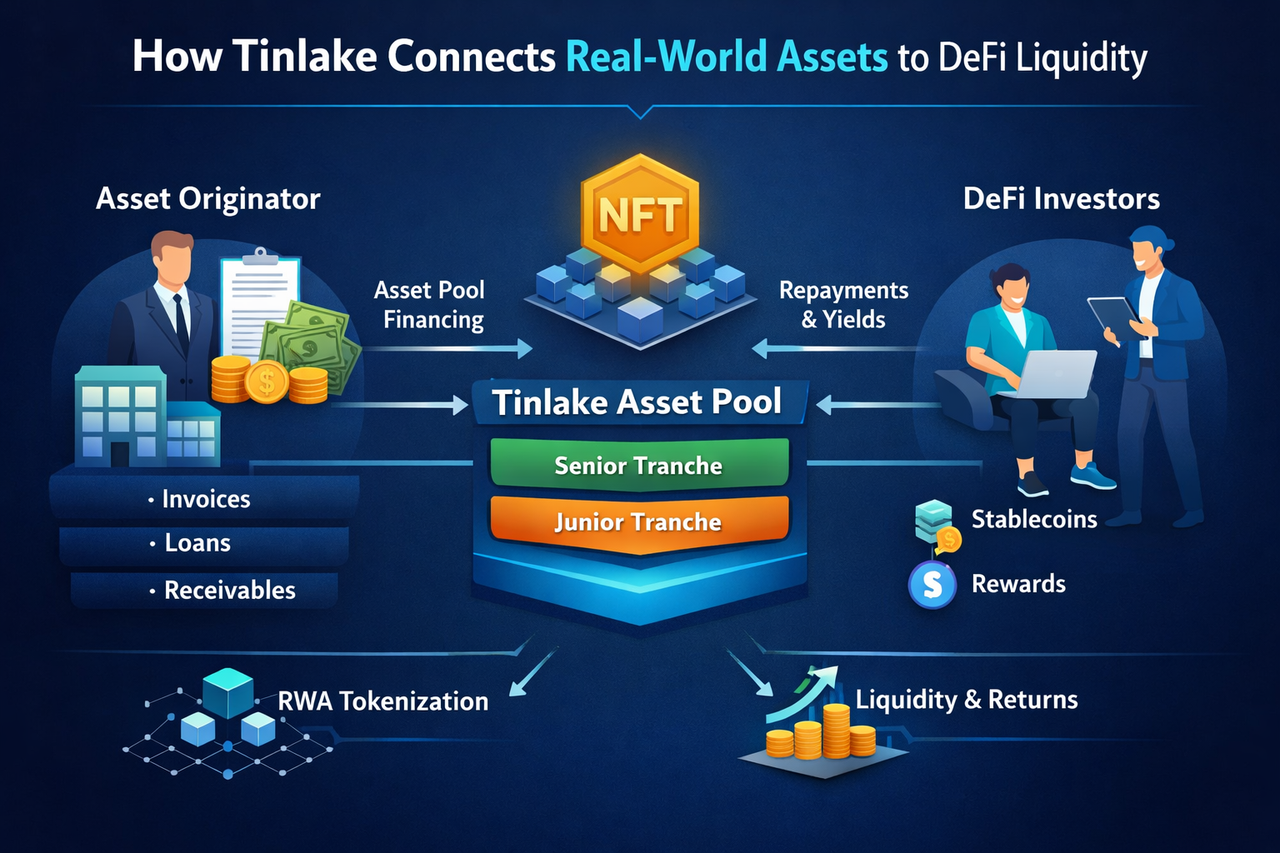
Asset originators first submit real-world receivable assets to the protocol—such as invoices, commercial loans, or accounts receivable. These assets are tokenized on-chain and placed into a dedicated financing pool. Investors can then contribute stablecoins to the pool, providing financing capital to the asset originators.
After financing is complete, asset originators repay principal and returns according to the protocol, and the system distributes repayments to investors based on their share of the pool. The entire process is executed automatically by Smart Contracts, increasing efficiency and minimizing the need for intermediaries.
How Do Asset Originators Create Asset Pools with Tinlake?
Asset originators are holders of real-world assets, such as businesses or financial institutions. Through Tinlake, they create dedicated financing pools using their receivable assets as the financing foundation.
When creating an asset pool, asset originators submit asset information to the protocol, including asset type, value, and financing needs. Once approved, the assets are tokenized and added to the asset pool. The pool is then opened to investors, allowing them to provide funding for these assets.
This process enables real-world asset holders to transform illiquid assets into financeable ones, securing funding without relying on traditional financial intermediaries.
How Do Investors Provide Liquidity Through Tinlake?
Investors provide financing for real-world assets in the Tinlake asset pool by depositing stablecoins.
When investors deposit funds into the pool, the capital is used to meet the financing needs of asset originators. Investors receive returns based on their share of the pool, typically sourced from the interest repaid by asset originators.
This model allows DeFi investors to access returns from real-world assets, expanding beyond the traditional crypto market and offering more diverse investment opportunities for on-chain capital.
How Does Tinlake’s Tranching Structure Mitigate Risk?
A core feature of Tinlake is its tranching structure, which divides investment shares into different risk levels to suit varying investor risk preferences.
Typically, the pool’s capital is split into senior and junior tranches. Senior tranche investors have higher repayment priority and lower risk, but also lower returns; junior tranche investors take on more risk but have the potential for higher returns.
This structure enhances the pool’s stability through risk segmentation and allows investors to select investment tiers based on their risk appetite, improving risk allocation in real-world asset financing.
How Does Tinlake Bridge Real-World Assets and DeFi Liquidity?
Tinlake’s primary function is to bridge real-world assets with on-chain capital.
Asset originators bring real-world receivable assets into the protocol, making them financeable on-chain. DeFi investors participate by providing stablecoins to the asset pool. Tinlake uses Smart Contracts to coordinate fund flows between both parties, automating financing disbursement and return collection.
This mechanism gives real-world assets access to on-chain liquidity and enables DeFi capital to participate in real economic activity, driving the integration of real-world assets into decentralized finance.
What Are the Advantages and Limitations of the Tinlake Asset Pool Mechanism?
Tinlake’s main advantages include improved financing efficiency for real-world assets and providing DeFi investors with access to real-world returns. The on-chain asset pool mechanism makes the financing process more transparent, increases capital flow efficiency, and reduces costs associated with traditional financial intermediaries.
However, this model also has limitations. Since the underlying assets are from the real world, investors still face default risk and the risk of off-chain asset authenticity. Additionally, the legal structure and compliance requirements of the asset pool can impact financing efficiency.
Therefore, while Tinlake boosts financing efficiency, it also depends on the quality of off-chain assets and legal frameworks to ensure system stability.
Summary
As Centrifuge’s core asset pool mechanism, Tinlake organizes real-world assets into on-chain financing pools, connecting real assets with DeFi liquidity. Asset originators can obtain financing through Tinlake, while investors can earn returns from real-world assets.
This mechanism not only expands the scope of assets supported by DeFi but also provides new financing options for real-world assets. As Real-World Assets (RWA) become an increasingly important part of on-chain finance, Tinlake is emerging as a key infrastructure driving the integration of real-world assets into DeFi.
FAQs
What Is Tinlake?
Tinlake is Centrifuge’s asset pool financing module, designed to convert real-world assets into on-chain financing pools and connect them with DeFi liquidity.
Where Does Tinlake’s Capital Come From?
Capital primarily comes from DeFi investors who contribute stablecoins to the asset pool.
How Does Tinlake Facilitate Asset Financing?
Asset originators place receivable assets into the pool, and after investors provide capital, the protocol releases financing liquidity to the asset originators.
What Is Tinlake’s Tranching Mechanism?
Tinlake distributes returns and risk through senior and junior tranches to meet the needs of different investors.
What Is Tinlake’s Core Value?
Tinlake’s core value is connecting the financing needs of real-world assets with on-chain capital liquidity, providing on-chain financing infrastructure for RWA.







