RaveDAO คืออะไร? นี่คือองค์กรอิสระแบบกระจายศูนย์ที่ใช้เทคโนโลยีบล็อกเชนและ NFT เพื่อให้ศิลปินเพลง เจ้าของสถานที่ และผู้ร่วมงานสร้าง “NFT ประสบการณ์” RaveDAO จะแบ่งรายได้ 90% ให้กับผู้สร้างผลงาน โดยเรียกเก็บค่าธรรมเนียมแพลตฟอร์มเพียง 3-10% จากจำนวนโทเค็น RAVE ทั้งหมด 990 ล้านหน่วย ซึ่ง 90% จะแจกจ่ายผ่านการแจกจ่ายดิจิทัลและในงานอีเวนต์จริง โดยในจำนวนนี้ 40% เป็นการแจกจ่ายผ่านรายชื่อขาว (whitelist) ในรูปแบบดิจิทัล
โมเดลเศรษฐกิจสามฝ่ายของ NFT ประสบการณ์
คำตอบหลักของ RaveDAO อยู่ที่กลไกการมีส่วนร่วมของสามฝ่ายที่ไม่เหมือนใคร ศิลปินสามารถนำการแสดงของตนมาทำเป็น NFT ขายในแพลตฟอร์ม RaveDAO พร้อมแนบสิทธิพิเศษ เช่น สิทธิ์พบปะ ศิลปินในอนาคต ส่วนลดการแสดง หรือของที่ระลึกแบบจำกัดจำนวน เจ้าของสถานที่สามารถนำเนื้อหาที่เกิดขึ้นในงานมาทำเป็นโทเค็น เช่น ออก NFT สำหรับสมาชิก VIP ถาวร 10 ราย หรือเสนอส่วนลดเครื่องดื่มแอลกอฮอล์ในรูปแบบ NFT ผู้ร่วมงานสามารถสร้าง NFT จากประสบการณ์ปาร์ตี้ของตนเอง เช่น รูปถ่ายเซลฟี่ รูปกลุ่มเพื่อน หรือผลงานสร้างสรรค์ในงาน
โมเดลนี้พลิกโฉมโครงสร้างอำนาจในอุตสาหกรรมดนตรีแบบเดิมอย่างสิ้นเชิง ในแพลตฟอร์มสตรีมมิ่งอย่าง Spotify ศิลปินจะได้เงินเพียง 3 ถึง 5 ดอลลาร์ต่อการฟัง 1000 ครั้ง โดยแพลตฟอร์มเก็บส่วนแบ่งผลกำไรไปเกือบทั้งหมด ค่าธรรมเนียมตั๋วของ Ticketmaster สูงถึง 20-30% และมักถูกกล่าวหาว่ามีการผูกขาดตลาด เมื่อเปรียบเทียบแล้ว RaveDAO ที่แบ่งปัน 90% ให้กับผู้สร้างสรรค์และเก็บค่าบริการเพียง 3-10% จัดสรรเศรษฐกิจส่วนใหญ่ให้กับผู้เข้าร่วม
โครงสร้างการแบ่งรายได้ของแพลตฟอร์ม RaveDAO
เนื้อหาทั่วไป: ผู้สร้างได้รับ 90% ของยอดขาย NFT, RaveDAO ได้ 10%
เนื้อหาคุณภาพสูง: หากผ่านเกณฑ์ (จำนวนเงินรอการกำหนด) ผู้สร้างจะได้รับ 97% และฝ่ายการเงินเพียง 3%
ตลาดขายต่อ: ผู้แนะนำจะได้รับค่าธรรมเนียมแพลตฟอร์มตามจำนวน $RAVE โทเค็นที่ถืออยู่ ผ่านระบบระดับชั้น
การชำระเงินอัตโนมัติ: รายได้จากการขายทั้งหมดจะส่งตรงถึงกระเป๋าเงินของผู้สร้างทันทีเมื่อการทำธุรกรรมเสร็จสมบูรณ์
โมเดลเศรษฐกิจนี้สร้างกลไกแรงจูงใจหลายชั้น ผู้สร้างสนใจผลิตเนื้อหาด้วยอัตราการแบ่งปันที่สูง ผู้แนะนำจะได้รับผลตอบแทนอย่างต่อเนื่องจากการส่งเสริมแพลตฟอร์ม ผู้ถือ $RAVE โทเค็นจะมีส่วนร่วมระยะยาวด้วยสิทธิในการกำกับดูแลและผลตอบแทนจากการแนะนำ กลไกเชิงบวกนี้เป็นกุญแจสำคัญที่ทำให้ระบบนิเวศของ RaveDAO ยังคงดำเนินต่อไปได้
กลไกนวัตกรรมการแจกจ่ายโทเค็น 90% ผ่านการแจกจ่ายดิจิทัลและของจริง
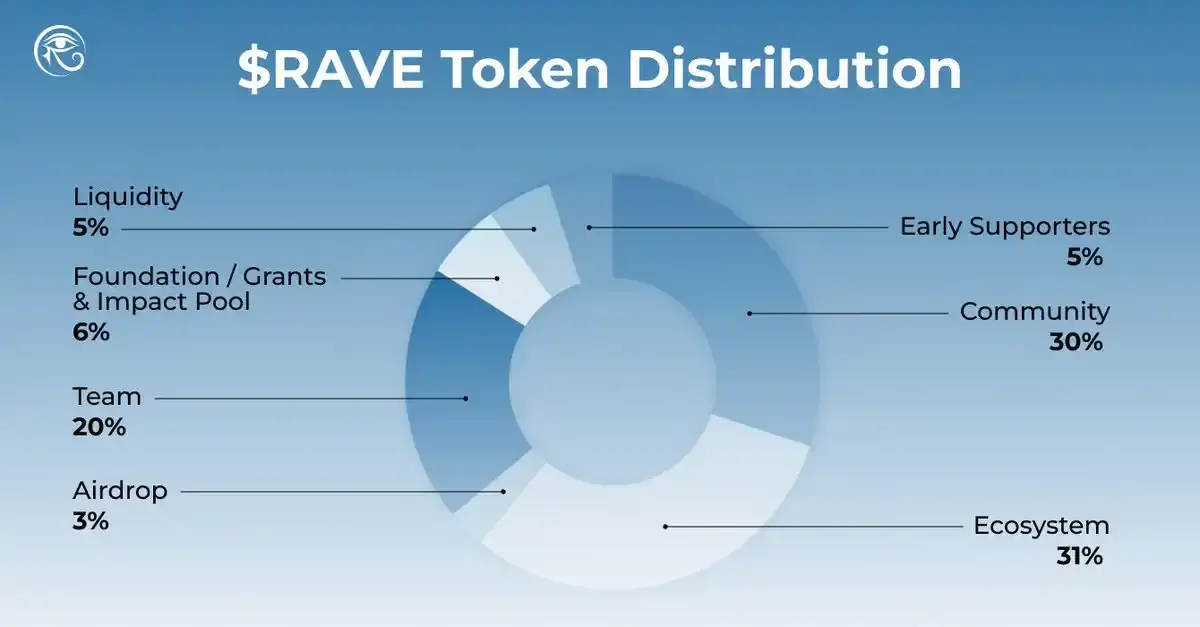
อีกจุดแข็งของ RaveDAO อยู่ที่กลยุทธ์การแบ่งสรรโทเค็น ในจำนวนรวม 990 ล้านหน่วยนั้น 90% จะแจกจ่ายผ่านการแจกจ่ายดิจิทัลและในงานอีเวนต์จริง โดยมีเพียง 10% ที่เก็บไว้สำหรับการพัฒนาของฝ่ายการเงินของ RaveDAO ซึ่งเป็นอัตราการแบ่งสรรที่สูงมากในโครงการคริปโต ซึ่งปกติแล้วโครงการส่วนใหญ่จะเก็บไว้ 30-50% สำหรับทีมและนักลงทุน
40% ของโทเค็นจะถูกแจกผ่านการแจกจ่ายดิจิทัลในรายชื่อขาว ซึ่งทุกคนสามารถสมัครเข้าร่วมได้ การเปิดเผยเช่นนี้ช่วยให้ชุมชนเข้ามามีส่วนร่วมอย่างกว้างขวาง ไม่ใช่เฉพาะกลุ่มผู้สนับสนุนในช่วงแรกหรือกลุ่มสิทธิพิเศษ 60% ของโทเค็นจะถูกแจกผ่าน ‘การรับของจริง’ ให้กับศิลปิน นักแสดง ผู้ดำเนินรายการ หรือผู้ร่วมงานในกิจกรรมที่ร่วมมือกับ RaveDAO กระบวนการรับของจริงนี้เป็นนวัตกรรม ผสมผสานการแจกจ่ายโทเค็นออนไลน์เข้ากับการมีส่วนร่วมในกิจกรรมจริง
การทำงานของการรับของจริงเป็นอย่างไร? ผู้เข้าร่วมสามารถรับโทเค็นได้โดยการสแกน QR code หรือทำภารกิจที่กำหนดในงานดนตรีที่ร่วมมือกับ RaveDAO การออกแบบนี้สร้างผลลัพธ์สำคัญสองประการ: ประการแรก เพื่อให้แน่ใจว่าโทเค็นแจกจ่ายให้กับผู้ที่เข้าร่วมกิจกรรมจริงเท่านั้น ไม่ใช่บอทหรือผู้แสวงหาผลกำไร ประการที่สอง เพื่อให้การแจกจ่ายโทเค็นเป็นส่วนหนึ่งของกิจกรรมเอง ซึ่งเสริมสร้างความเชื่อมโยงระหว่าง RaveDAO กับวัฒนธรรมดนตรีสด
ทุกกลุ่มสภาพคล่อง (LP) ได้รับการสนับสนุนโดยชุมชน ซึ่งหมายความว่าไม่มีการขุดล่วงหน้า ไม่มีรอบการระดมทุนแบบส่วนตัว ไม่มีการควบคุมโดยนักลงทุนเชิงรุก โหมดนี้เป็นการขับเคลื่อนโดยชุมชนอย่างแท้จริง แม้จะยากในช่วงเริ่มต้น แต่ก็มั่นใจได้ว่าอำนาจจะกระจายและเป็นของชุมชน สำหรับผู้เข้าใจว่า RaveDAO คืออะไร โครงสร้างการแบ่งสรรนี้ก็เป็นหลักฐานสำคัญของความมุ่งมั่นในการกระจายอำนาจอย่างแท้จริง
$RAVE จาก Rave 3.0 สู่กลยุทธ์วัฒนธรรม Web3
![RaveDAO Web3文化層]###https://img-cdn.gateio.im/webp-social/moments-87a9b3933a-25a25e628e-153d09-6d5686.webp(
คำตอบสุดท้ายของ RaveDAO ไม่ได้อยู่ที่รายละเอียดเทคนิค แต่เป็นเรื่องของการกำหนดทิศทางวัฒนธรรม เรายืนอยู่จุดตัดของวัฒนธรรม เทคโนโลยี และชุมชน RaveDAO กำลังสร้างชั้นวัฒนธรรม (Cultural Layer) ที่รากฐานมาจากชุมชน Crypto ในขณะที่โลกคริปโตเผชิญกับวิกฤติและความผิดหวังในรอบสิบปีที่ผ่านมา ตั้งแต่ ‘ยูโทเปียแห่งความเป็นอิสระ’ ไปจนถึง ‘ระเบียบการเงินโลกใหม่’ หลายโครงการระดมทุนหลายสิบล้านดอลลาร์ แต่ไม่มีกลุ่มเป้าหมายที่แท้จริง
จุดเริ่มต้นของคริปโตคือเสรีภาพ ความสร้างสรรค์ และความเป็นเจ้าของ แต่เมื่อทุนเดิมและกลุ่มหน่วยงานเข้ามามีอิทธิพล ค่านิยมเหล่านี้ก็ถูกลดทอน เราพูดถึง ‘Mass Adoption’ มาหลายปี แต่ยังไม่สามารถเข้าถึงคนทั่วไปได้จริง หากเราต้องการพาโลกเข้าสู่บล็อกเชนอย่างแท้จริง ต้องหาวิธีที่เป็นธรรมชาติมากขึ้น วัฒนธรรมคือสะพานที่แข็งแกร่งที่สุด ซึ่งสามารถถ่ายทอดอารมณ์ การศึกษา เชื่อมโยงและสร้างความรู้สึกผูกพัน
RaveDAO เริ่มต้นจาก afterparty ในอิสตันบูลที่มีคน 200 คน และเติบโตเป็นงานปาร์ตี้ที่สิงคโปร์มีผู้เข้าร่วม 5000 คน ภายหลังกิจกรรม หลายคนบอกว่านี่เป็นครั้งแรกที่ได้เห็นแบรนด์จาก Web3 ที่สามารถก้าวเข้าสู่วัฒนธรรมบันเทิงและเยาวชนอย่างแท้จริง ตลอดหนึ่งปีที่ผ่านมา รายได้จากกิจกรรมได้สนับสนุนผู้ป่วยต้อกระจกในเนปาลกว่า 400 คนให้กลับมามองเห็น และในซีแอตเทิล สหรัฐอเมริกา ก็สนับสนุนโครงการสมาธิ 150 โครงการ เราเชื่อว่าพลังของวัฒนธรรมไม่ใช่แค่สร้างความรู้สึกเชื่อมโยง แต่ยังสามารถขยายความดีได้อย่างต่อเนื่อง


