For a Layer1 network, a token is not just a medium for transactions. It is also the core of the entire network incentive system. Whether a public blockchain can continue attracting users, developers, and ecosystem partners depends largely on whether its token economic model can strike the right balance between growth incentives and value support.
Pharos positions PROS as the core value medium within its RealFi infrastructure. Its role is not limited to paying fees; it is the key asset that connects network operations, ecosystem incentives, and long term value capture. As more real world assets and institutional financial activities are deployed on the network, PROS will be used for fee payments, network staking, and ecosystem participation, creating a value loop centered on demand for network usage.
What Role Does PROS Play in the Pharos Network?
PROS is the native token of the Pharos network. It performs several key functions across the ecosystem and serves as an essential core asset supporting network operations and value circulation. First, PROS is used to pay onchain transaction fees and execution costs.
In addition, PROS is used for network staking and helps maintain network security through a PoS, Proof of Stake, mechanism. At the same time, PROS also has governance functions. Holders can take part in votes on network upgrades, parameter adjustments, and ecosystem proposals, thereby influencing the future direction of the protocol.
At the ecosystem development level, PROS is used to incentivize developers, liquidity providers, and user growth programs, including ecosystem grants, liquidity incentives, and RWA onboarding rewards. In the future, as Pharos expands further into real financial use cases, PROS may also be used for specific purposes such as stablecoin collateral, priority access to financial infrastructure, and RWA staking.
How Are the Initial Supply and Allocation Mechanism of PROS Designed?
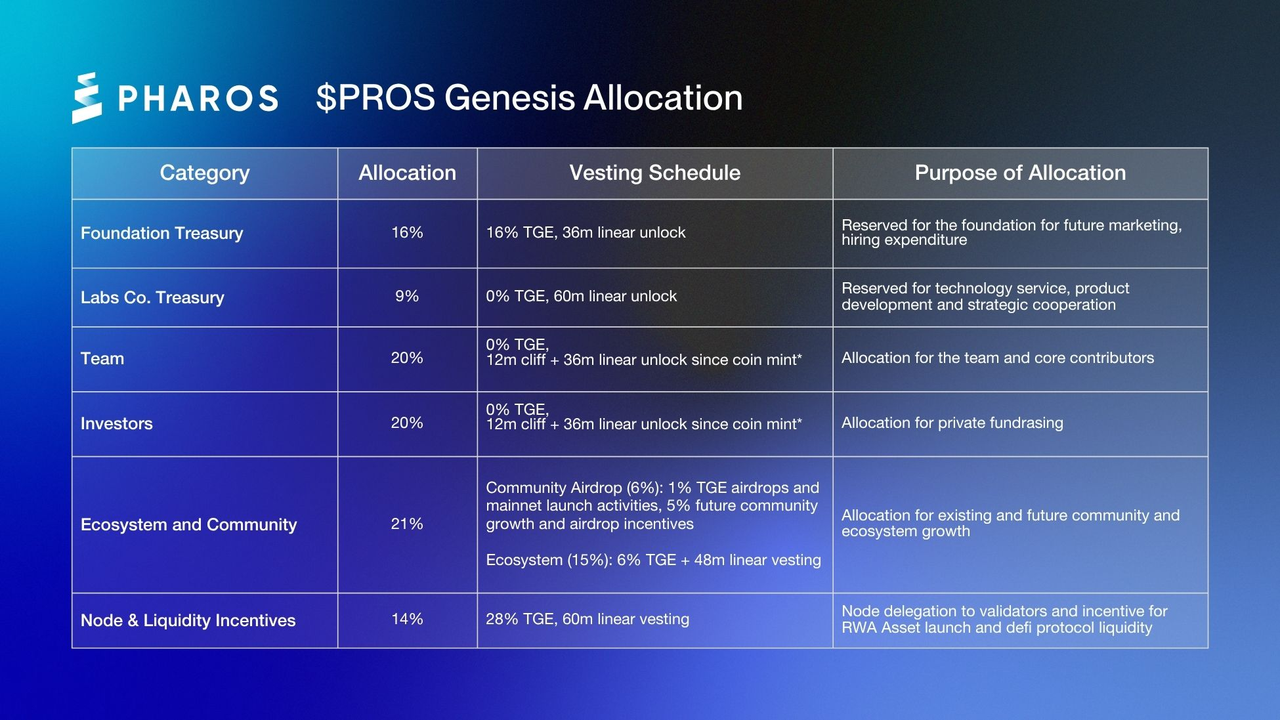
According to the official tokenomics design, the initial issuance, or Genesis Supply, of PROS is 1 billion tokens. This initial supply forms the foundation for early token allocation and is intended to support ecosystem development, network security, and long term growth. On this basis, additional tokens may be issued in the future under the established issuance policy according to the network staking mechanism, in order to maintain PoS network operations and validator incentives.
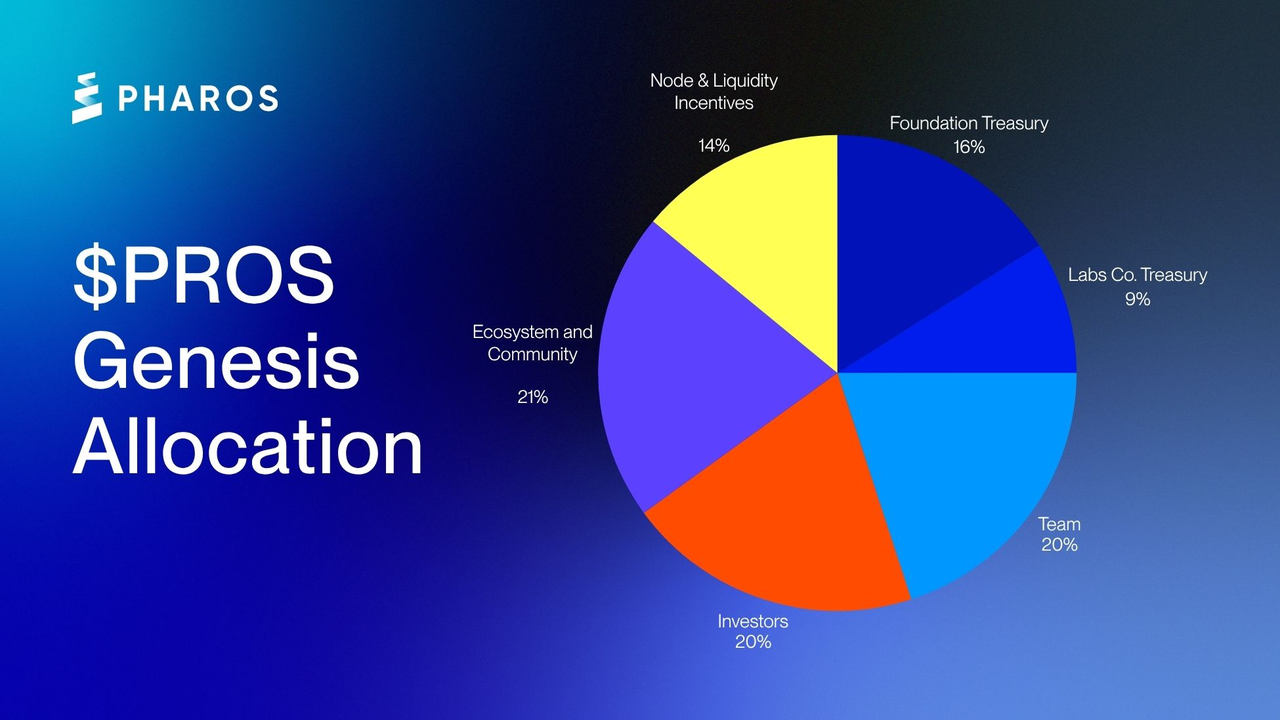
The initial supply allocation follows the principle of long term release. Its purpose is to support ecosystem growth while controlling early circulation pressure. Through a phased release mechanism, Pharos allocates resources among core participants, ecosystem incentives, and network development funds in a balanced way, keeping the token release schedule aligned with the pace of network development. This design helps reduce the risk of short term selling pressure and aligns the interests of token holders, validators, and ecosystem builders with the network’s long term growth.
How Does the PROS Staking Issuance Mechanism Balance Scarcity and Long Term Incentives?
In the PROS token economic model, Pharos uses a phased staking issuance mechanism to balance supply scarcity with long term network incentives. According to the official design, Pharos will set the staking inflation rate at 0% for the first six months after mainnet launch. In other words, no additional tokens will be issued through the staking mechanism during the initial stage of the network. This design helps reduce early supply dilution and provides a more stable circulating environment during the network launch and market price discovery phase.
Starting from the seventh month, the PROS staking inflation rate will be set at an annualized 5%, supporting validator incentives, network security maintenance, and long term ecosystem development. As the network enters a more mature stage, moderate issuance can provide validators and staking participants with ongoing rewards, helping maintain the security and operating efficiency of the PoS network.
In the future, the Pharos Foundation may also dynamically adjust this issuance rate based on network conditions, so it can better adapt to staking participation rates, validator node incentives, and ecosystem expansion needs.
How Does PROS Capture the Growth Value of the RealFi Network?
The value capture mechanism of PROS is built on the growth of real financial activity. Pharos aims to support RWA, payment, and institutional grade financial applications, all of which require PROS for fee payments or participation in network operations. As onchain financial activity increases, demand for PROS is expected to rise in tandem, allowing network expansion to translate into value support for the token.
This value capture logic makes PROS the core beneficiary asset of Pharos infrastructure growth. As more real world financial assets connect to the network, the value support logic for PROS will become stronger. This is also the core of its RealFi token model.
Conclusion
Pharos (PROS) tokenomics is not simply designed around transaction fees. Instead, it builds a complete model around long term incentives, supply scarcity, and RealFi value capture. By reducing short term selling pressure through a long term release mechanism, strengthening scarcity through limited supply, and realizing value flowback through demand for network usage, PROS is designed as the core value asset supporting the growth of Pharos infrastructure.
Over the long term, the value potential of PROS depends on Pharos network’s ability to expand in the RWA and institutional finance sectors. If the network can continue attracting real financial activity, PROS will strengthen its value support as demand for network usage grows.
FAQs
Why Does PROS Emphasize Long Term Release?
Long term release can reduce early selling pressure and align the interests of ecosystem participants with the network’s long term development, thereby improving the stability of the token model.
How Is the Scarcity of PROS Reflected?
PROS controls the total token supply through limited issuance, strengthens token value support when network demand grows, and reduces long term inflation risk.
What Is the Source of PROS Value?
The value of PROS mainly comes from demand for network usage, including fee payments, staking participation, and ecosystem expansion. It is the core medium in the value cycle of Pharos RealFi infrastructure.







