
















BlockRider

vip
Age 1 Yıl
Peak Tier 0
No content yet
#VitalikSellsETH
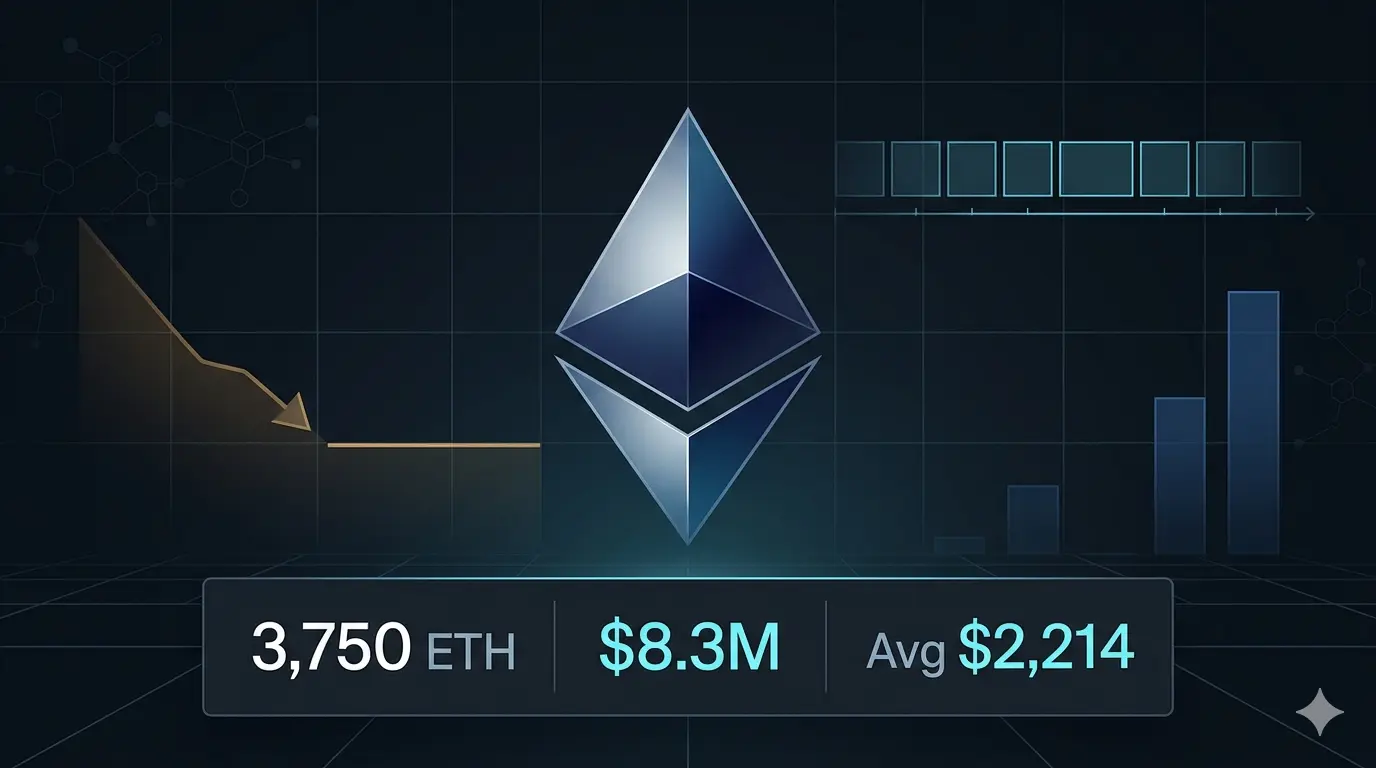
Vitalik Buterin, Ethereum's legendary co-founder, has been actively selling ETH throughout February 2026 — and the moves have gone way beyond his original plan, sparking endless debates, on-chain tracking frenzy, and short-term sentiment swings in the crypto community! 🚨📉🔍
In the simplest terms: "Vitalik sells ETH" refers to Vitalik Buterin transferring and liquidating portions of his personal Ethereum holdings. As a high-profile figure whose every wallet move gets watched by thousands (via tools like Lookonchain, Arkham Intelligence, and Onchain Lens), these sales often t
ETH-4,44%
BTC-2,12%
COW-2,39%
GNO-2,36%
HighAmbitionvip
#VitalikSellsETH
Vitalik Buterin, Ethereum's legendary co-founder, has been actively selling ETH throughout February 2026 — and the moves have gone way beyond his original plan, sparking endless debates, on-chain tracking frenzy, and short-term sentiment swings in the crypto community! 🚨📉🔍
In the simplest terms: "Vitalik sells ETH" refers to Vitalik Buterin transferring and liquidating portions of his personal Ethereum holdings. As a high-profile figure whose every wallet move gets watched by thousands (via tools like Lookonchain, Arkham Intelligence, and Onchain Lens), these sales often trigger speculation, FUD (fear, uncertainty, doubt), or even brief price dips — because people wonder if it signals something bigger about Ethereum's future.
But let's dive into the ultra-extended, fully detailed, facts-only breakdown in clear, engaging English — no hype overload, no wild theories, just the real story based on public announcements, on-chain data, and market context (perfect for a long, informative social media post or thread):
1. The Exact Details: How Much, When, and How It Happened
Vitalik first announced this back on January 30, 2026: He planned to withdraw and sell exactly 16,384 ETH (valued at roughly $43–$45 million at announcement-time prices) as his personal contribution during a period of "moderate austerity" for the Ethereum Foundation. The goal? Fund long-term, open-source projects over several years.
Fast-forward to February 2026: On-chain tracking shows he exceeded that target significantly. Latest tallies (as of late Feb 26–27, 2026):
Total sold: 17,000–19,326 ETH (sources vary slightly — e.g., Lookonchain/Arkham report ~17,196 ETH or up to 19,326 ETH in final counts; some wallets show 18,684–19,318 ETH liquidated).
Total value realized: Approximately $35–$39.36 million (average sale price hovered around $2,000–$2,037 per ETH, lower than initial estimates due to ETH's price drop during the period).
Wallet changes: His main tracked holdings dropped from ~241,000 ETH at the start of February to around 224,000 ETH now (still a massive position worth $430–$460+ million at current ~$2,000–$2,050 levels).
Sales were executed smartly in small, gradual batches through privacy-preserving tools like CoW Protocol (to reduce slippage and market impact), often converting wrapped ETH (WETH) to stablecoins or other assets from his Gnosis Safe wallet. Activity peaked mid-to-late February (e.g., big chunks on Feb 5–6, 22–23, and 25–26), but recent data suggests the selling has tapered off or completed by Feb 26–27 — no massive new outflows reported in the last hours.
2. The Real Reason Behind the Sales — Straight from Vitalik
Vitalik has been 100% transparent about this (as always). In his January post, he explained it's not about cashing out personally or timing the market — it's his way of supporting Ethereum's ecosystem during a time when the Foundation is prioritizing core protocol sustainability, efficiency, and long-term focus over heavy spending.
The proceeds are earmarked for deployment over several years into:
Privacy-preserving technologies
Secure hardware and operating systems
Open-source finance, communication, and governance tools
Biotech and other innovative areas aligned with digital autonomy and Ethereum's vision
This fits his long history of using personal funds for good (e.g., past donations to charity, Ukraine aid, or ecosystem grants). It's framed as personal austerity matching the Foundation's approach — not a bearish signal on ETH itself. Vitalik still holds one of the largest non-exchange ETH positions, showing deep ongoing commitment.
3. Market Context: Why This Hit Harder in February 2026
ETH endured one of its toughest starts to a year: Down ~34–37% YTD at worst points, dipping to $1,800–$2,000 lows amid broader crypto pressure (macro uncertainty, post-2025 profit-taking, extreme fear on the Crypto Fear & Greed Index hitting single digits).
Vitalik's sales overlapped with that weakness, so:
Some traders saw added selling pressure (even if his volume is tiny compared to daily ETH liquidity or institutional flows).
Past examples show high-profile sales can spark short dips (e.g., 5–22% drops after certain batches in previous cycles).
But reality check: The sales were spread out and minimized impact via CoW swaps. ETH actually rebounded strongly in late February (up 8–12% in sessions, reclaiming $2,000+ during the broader market snap-back with BTC toward $67k–$70k). The selling didn't derail the relief rally — and some argue lower average sale prices reflect buying the dip rather than causing it. Broader drivers (ETF inflows, short squeezes, altcoin participation) outweighed any single whale move.
4. Short-Term vs. Long-Term Implications for ETH & Community Sentiment
Short-term noise: Whale sales like this always fuel speculation — "Is Vitalik dumping?" "More coming?" "Bearish sign?" FUD spikes on socials, but data shows the plan wrapped up without endless liquidation. No evidence of panic selling beyond the announced goal.
Long-term positive: Vitalik retains a huge stake and is actively funding Ethereum-aligned innovation (privacy, scaling, security). This demonstrates belief in the project's future — reallocating to build, not exit. If ETH's rebound sustains (holding $2,000 support, breaking higher with market momentum), this could be remembered as a "healthy funding reset" during oversold conditions.
Key takeaway: One person's (even a founder's) trades don't define a $200B+ asset like ETH. Focus on fundamentals: protocol upgrades, adoption, ETF flows, and macro tailwinds.
Bottom line: Vitalik's ETH sales were pre-announced, transparent, and purpose-driven — exceeding the target slightly due to execution, but tied to ecosystem support, not doubt in Ethereum. The timing during a correction amplified reactions, but the rebound shows resilience. No need for alarm — just informed watching of supports like $2,000 and overall momentum.
repost-content-media
  • Reward
  • 2
  • Repost
  • Share
HighAmbitionvip:
To The Moon 🌕
View More
#CryptoMarketRebounds
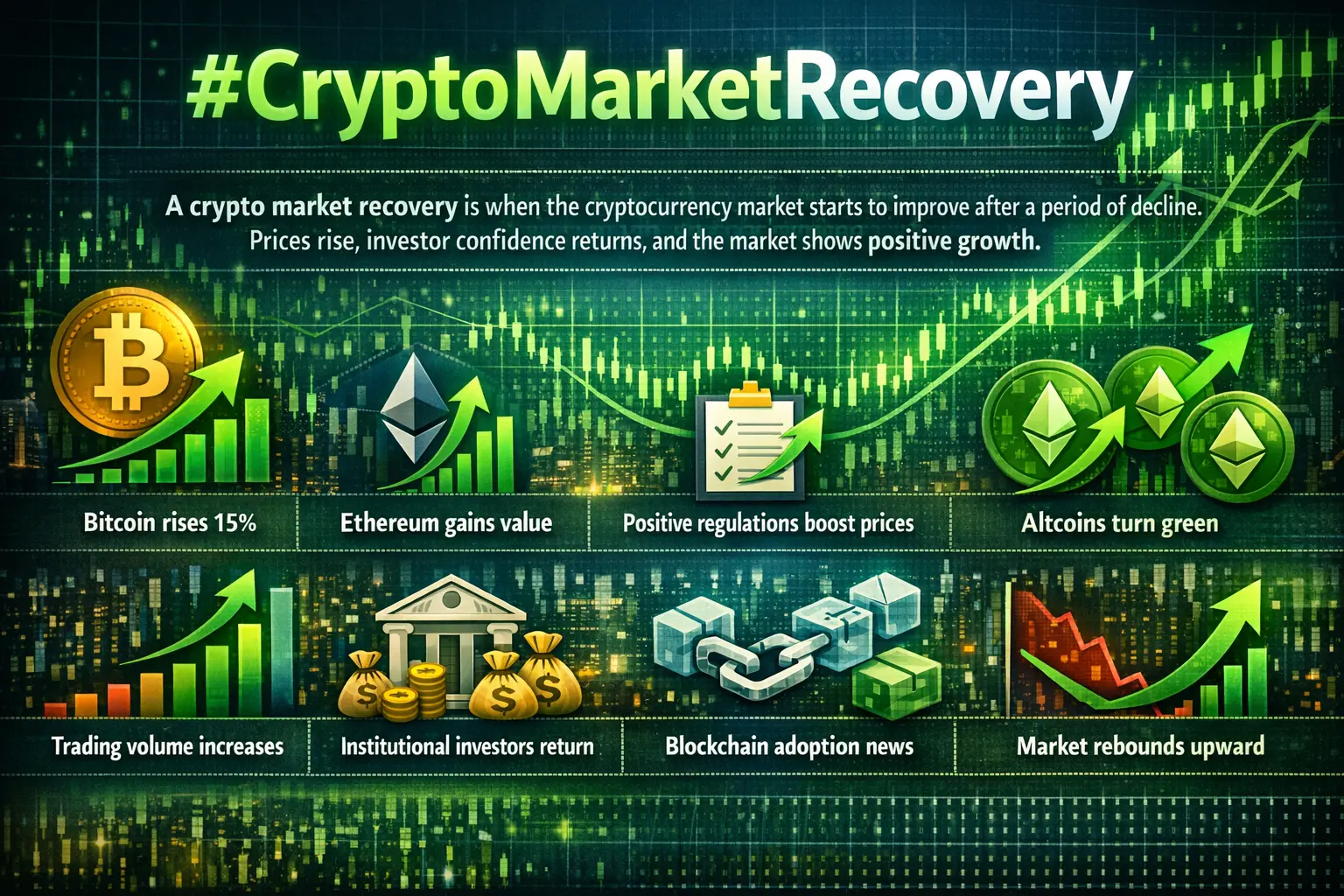
The cryptocurrency market has staged a noticeable rebound in late February 2026 after enduring one of the roughest starts to a year in over a decade. Following heavy selling pressure that pushed Bitcoin (BTC) and Ethereum (ETH) to multi-month lows, prices have bounced back sharply in recent sessions — though with some pullback and volatility today . This recovery has sparked renewed discussions about whether it's a temporary relief rally or the early signs of a stronger turnaround.
Crypto Market Rebounds Strongly – The Big Picture
After weeks of intense downside pressur
BTC-2,12%
ETH-4,44%
SOL-5,01%
DOGE-4,26%
HighAmbitionvip
#CryptoMarketRebounds
The cryptocurrency market has staged a noticeable rebound in late February 2026 after enduring one of the roughest starts to a year in over a decade. Following heavy selling pressure that pushed Bitcoin (BTC) and Ethereum (ETH) to multi-month lows, prices have bounced back sharply in recent sessions — though with some pullback and volatility today . This recovery has sparked renewed discussions about whether it's a temporary relief rally or the early signs of a stronger turnaround.
Crypto Market Rebounds Strongly – The Big Picture
After weeks of intense downside pressure, the total crypto market capitalization climbed roughly 4-7% in key rebound sessions earlier this week, pushing it back toward $2.2–$2.3 trillion levels before minor retreats. This came after a brutal correction where the market felt like "Crypto Winter 2.0" — with extreme fear dominating sentiment.
The rally wiped out nearly $500 million in short positions (bearish bets liquidated as prices surged), adding explosive fuel to the upside.
Broader risk assets (like software stocks and AI-related names) also rebounded, providing positive spillover into crypto.
However, as of late February 26–27, 2026, some gains have cooled: BTC dipped back after testing higher levels, showing the market remains choppy and not fully out of the woods yet.
2. The Market is Recovering After a Sharp Decline – What Led to the Drop?
Early 2026 was historically bad: Bitcoin fell ~24% year-to-date at points (from highs near $100k+ in late 2025), while Ethereum dropped even steeper (~34-38%).
Prices tested deep support zones — BTC hit lows around $60,000–$64,000 (some reports noted as low as ~$60k on Feb 6), ETH sank toward $1,800–$2,000.
Drivers included macroeconomic uncertainty (tariffs, geopolitics), profit-taking after 2025's bull run, and extreme fear (Crypto Fear & Greed Index plunged to historic lows like 5–11 in early February — the worst in years).
Oversold technicals (RSI deeply oversold) + short squeezes triggered the snap-back: Buyers stepped in aggressively at those lows, forcing bears to cover and sparking the rebound.
3. Major Cryptocurrencies Like Bitcoin and Ethereum Are Rising Again in Price
Bitcoin (BTC): Surged 6–10%+ in the strongest sessions (e.g., Wednesday rally), briefly touching near $70,000 (highs around $69,000–$70,027 reported) before pulling back. As of late Feb 26 data: trading around $67,000–$68,000 range (some sources show ~$67,400–$67,900, with minor daily dips of 2–3%). This marks a solid recovery from Tuesday lows but faces resistance at $68k–$70k.
Ethereum (ETH): Outperformed in spots — jumping 8–12%+ at peaks, reclaiming and holding above $2,000 (highs near $2,080, current levels ~$2,000–$2,050 after pullback). ETH's strength signals altcoin participation beyond just BTC leadership.
Altcoins joined enthusiastically: Solana (SOL) up 13% in rallies, Dogecoin (DOGE) leading with 9%+, XRP +8%, Cardano (ADA), and others posting double-digit gains in bursts — showing broad-based buying interest.
4. Indicating Renewed Buying Interest, Improved Sentiment, and Stronger Market Momentum – Key Signals
Renewed Buying Interest → Heavy short liquidations (~$500M) created a squeeze, while spot buyers (including ETF inflows — over $500M in single days for BTC ETFs) piled in at oversold levels. Options expiries (e.g., $8.9B in BTC/ETH options on Feb 27) could add volatility but show buy-the-dip interest at higher strikes.
Improved Sentiment → Crypto Fear & Greed Index jumped from "Extreme Fear" (11 or lower) to around 16 in 24 hours — still fearful but the first meaningful uptick this month. Traders are shifting from pure panic to cautious optimism.
Stronger Market Momentum → This isn't a dead-cat bounce; it's a relief rally with technical bounces off key supports (e.g., BTC double-bottom attempts near $63k–$64k, ETH holding long-term levels). Momentum indicators are flipping bullish short-term, but resistance looms (BTC $68k–$70k zone critical). Analysts warn sustainability depends on breaking higher cleanly — otherwise, it risks retesting lows if macro headwinds return. Positive catalysts like easing AI/stock fears and potential policy/news tailwinds helped fuel it.
Overall Takeaway
This rebound feels like a healthy reset after an oversold crash — Bitcoin and Ethereum showing resilience, altcoins catching fire, and sentiment ticking up from rock-bottom fear. But crypto is volatile: Today's minor pullback (BTC -2–3%, ETH -3–4%) reminds us the trend isn't fully reversed yet. Key levels to watch: BTC holding $65k–$67k support for bulls; breaking $70k+ would confirm stronger momentum. Long-term, many still see huge potential if macro stabilizes.
repost-content-media
  • Reward
  • Comment
  • Repost
  • Share
#BuyTheDipOrWaitNow?
Buy the Dip or Wait Now? — Deep Dive into the Crypto Market Dilemma and Strategic Insights
The question “Buy the Dip or Wait Now?” is more than a catchy phrase circulating among crypto traders — it represents a core dilemma in volatile markets: should one act on current weakness to capitalize on discounted prices, or exercise patience to avoid potential traps and false breakouts? This decision encapsulates the tension between opportunity and risk, short-term momentum, and long-term conviction.
Bitcoin and Ethereum have both experienced significant swings, testing the ne
BTC-2,12%
ETH-4,44%
SOL-5,01%
DOGE-4,26%
HighAmbitionvip
#BuyTheDipOrWaitNow?
Buy the Dip or Wait Now? — Deep Dive into the Crypto Market Dilemma and Strategic Insights
The question “Buy the Dip or Wait Now?” is more than a catchy phrase circulating among crypto traders — it represents a core dilemma in volatile markets: should one act on current weakness to capitalize on discounted prices, or exercise patience to avoid potential traps and false breakouts? This decision encapsulates the tension between opportunity and risk, short-term momentum, and long-term conviction.
Bitcoin and Ethereum have both experienced significant swings, testing the nerves of even experienced traders. As of this early hour, Bitcoin is hovering in the $67,000–$67,500 range, having retraced 2–3% today after struggling to maintain highs near $69k–$70k earlier this week. Ethereum sits around $2,030–$2,050, down 3–4%, yet maintaining the psychologically and technically important $2,000 support level. Total crypto market capitalization is approximately $2.19–$2.2 trillion, slightly below the recent weekly peaks of $2.2–$2.3 trillion.
Understanding the Context: Why This Dip Matters
The late-February rebound has already been impressive. Bitcoin surged from lows near $60k–$64k, while Ethereum climbed from $1,800–$2,000 levels. Several market forces contributed to this rebound:
Forced short squeezes liquidating roughly $500 million, creating sudden upward momentum.
Institutional participation through Bitcoin ETF inflows, signaling that professional investors are stepping in.
Altcoin rally: SOL, DOGE, and XRP delivered double-digit gains, reflecting broad market optimism.
Crypto equities leading: Companies like Coinbase, MicroStrategy, and Riot Platforms have amplified gains by responding to crypto price action.
Yet today’s pullback highlights a recurring market question: is this dip an opportunity to buy discounted crypto, or a signal to wait for more robust confirmation?
The Bullish Perspective: Why Buying the Dip Could Be Strategic
Oversold Conditions Have Eased
Bitcoin and Ethereum were deeply oversold after early-year declines. BTC surged 6–10%+ in peak sessions, while ETH recorded 8–12% gains, holding above key support. The rebound signals that buyers are returning.
Institutional and Retail Participation
ETF inflows and retail enthusiasm indicate that dip-buying is not limited to speculative traders. Large and small players alike are seeing value in current prices.
Technical Signals Support Entry
BTC’s RSI is moving out of oversold territory, Ethereum’s long-term supports remain intact, and BTC has held a double-bottom around $63k–$64k. These are classic technical signals favoring dip-buying.
Macro Tailwinds
Recovery in tech, AI, and software equities is easing broader market fears, indirectly supporting crypto prices.
Historical Opportunity
For long-term holders, minor pullbacks after oversold conditions are often opportunities to accumulate assets at discounted levels, rather than chasing peaks.
Aggressive mindset: Current levels, discounted versus 2025 highs (~$100k BTC), provide a favorable risk/reward for scaling in.
The Bearish or Cautious Perspective: Why Waiting Might Be Safer
Resistance Levels Are Still Strong
BTC repeatedly fails near $68k–$70k, showing that significant supply and profit-taking exist at these levels.
Lingering Selling Pressure
High-profile sales like Vitalik Buterin’s February ETH sales (~17k–19k ETH liquidated) added temporary pressure and sentiment noise.
Macro and Geopolitical Uncertainty
Global risk-off sentiment, tariffs, and potential tech sector pullbacks could drag crypto lower despite short-term rebounds.
Options Expiry Volatility
Recent $8.9 billion BTC/ETH options expiry introduces additional uncertainty and potential for sharp swings in either direction.
Historical Caution
Relief rallies often face retests or “dead-cat bounces.” The current market cap near $2.19 trillion could test the lower support levels again.
Prudent mindset: Wait for confirmation signals — clean daily/weekly close above $70k BTC, rising Fear & Greed index beyond 25–30, or strong on-chain and ETF flows — before committing significant capital.
Real-Time Snapshot & Critical Levels
Bitcoin: ~$67,000–$67,500 (support $65k–$67k)
Ethereum: ~$2,030–$2,050 (must hold $2,000)
Market Cap: ~$2.19–$2.2T
Altcoins & Equities: Correlated, watch for decoupling strength
Other Signals: ETF inflows remain positive; track whale accumulation vs. distribution
Strategic Approaches: How Professionals Are Acting
Aggressive Buyers: Scale in at current support (25–50% positions). Focus on high-beta plays like MicroStrategy (BTC leverage), Coinbase (volume-driven), Riot (miner + AI upside).
Conservative/Cautious Traders: Light exposure, alerts for BTC >$70k (confirmation) or <$65k (risk management). Cash is a position.
Balanced/Hybrid: Hold a core BTC/ETH stack, add small tranches (10–20%) on dips if supports hold, diversify across altcoins and crypto stocks.
The key is disciplined risk management: supports holding signal strength, while patience avoids unnecessary whipsaws.
Topic Explained: “Buy the Dip or Wait Now?”
“Buy the Dip”: Enter positions at current lower prices, expecting a rebound. Pros: discounted entry, early participation in recovery. Cons: risk of further drop
“Wait Now”: Delay buying until stronger confirmation or trend reversal occurs. Pros: avoids false breakouts, reduces short-term risk. Cons: may miss upside if rebound continues.
This dilemma is central to volatile markets — balancing opportunity with caution, risk tolerance with ambition.
Bottom Line — Making Your Early-Morning Decision
Your choice depends on:
Time horizon: Short-term vs. long-term trader
Risk tolerance: Aggressive, cautious, or balanced approach
Critical levels: BTC support ($65k–$67k), psychological milestones ($70k)
Sentiment & flows: ETF inflows, on-chain accumulation, Fear & Greed index
Dip-buyers seize opportunities during oversold conditions; patient traders wait for confirmation. Either strategy is valid if aligned with your plan and risk management.
repost-content-media
  • Reward
  • Comment
  • Repost
  • Share
#CircleQ4EarningsSurge22.4%
Circle Internet Group (NYSE: CRCL), the issuer of the leading stablecoin USDC, recently released its Q4 2025 earnings report (covering the fourth quarter of 2025, reported on February 25, 2026). This announcement triggered a massive positive market reaction, with the company's stock surging significantly—up to 35% in a single day in some sessions, marking one of its strongest daily gains ever. The results highlighted explosive growth driven primarily by surging demand for stablecoins amid broader crypto market dynamics.
Key Financial Highlights from Q4 2025 (Compar
USDC-0,01%
DEFI7,16%
HighAmbitionvip
#CircleQ4EarningsSurge22.4%
Circle Internet Group (NYSE: CRCL), the issuer of the leading stablecoin USDC, recently released its Q4 2025 earnings report (covering the fourth quarter of 2025, reported on February 25, 2026). This announcement triggered a massive positive market reaction, with the company's stock surging significantly—up to 35% in a single day in some sessions, marking one of its strongest daily gains ever. The results highlighted explosive growth driven primarily by surging demand for stablecoins amid broader crypto market dynamics.
Key Financial Highlights from Q4 2025 (Compared to Q4 2024)
Total Revenue and Reserve Income: $770 million, representing a strong 77% year-over-year (YoY) increase. This comfortably beat analyst consensus estimates, which hovered around $745–$747 million.
Adjusted Earnings Per Share (EPS): $0.43, significantly outperforming expectations (analyst estimates ranged from $0.16 to $0.35 in various previews). This reflects a substantial beat, with some reports noting the EPS exceeded forecasts by around 22–23% in relative terms (e.g., beating a $0.35 consensus by roughly 22.86%).
Net Income from Continuing Operations: $133 million, a dramatic turnaround from just $3–4 million in the prior-year period (an increase of about $129–130 million).
Adjusted EBITDA: $167 million, soaring 412% YoY, with an impressive adjusted EBITDA margin of 54%. This demonstrates strong operational leverage and profitability improvements.
Revenue Less Distribution Costs Margin: Around 40.1%, showing efficient scaling despite higher partner incentives.
Core Drivers of the Growth — USDC Stablecoin Performance
The standout story here is the continued expansion of USDC, Circle's flagship USD-pegged stablecoin (the second-largest globally after Tether's USDT):
USDC in Circulation: Reached $75.3 billion at year-end 2025, up 72% YoY. This growth outpaced the overall stablecoin market in several periods, even amid late-2025 crypto price corrections.
On-Chain Transaction Volume: Hit $11.9 trillion in Q4 alone, exploding 247% YoY. This underscores increasing real-world utility and velocity of USDC for payments, DeFi, remittances, and institutional use cases.
On-Platform USDC: Grew 5.6x YoY to $12.5 billion (about 17% of total circulation), indicating stronger direct ecosystem adoption within Circle's infrastructure.
Most revenue (around 95–99% in recent periods) comes from reserve income — interest earned on the high-quality assets (primarily U.S. Treasuries and cash equivalents) backing USDC. The reserve return rate was about 3.81% in Q4, down slightly due to lower benchmark rates like SOFR, but the massive increase in circulation volume more than offset this.
Full-Year 2025 Context
For the entire fiscal year 2025:
Total revenue and reserve income: $2.7 billion, up 64% YoY.
Despite strong quarterly profitability in Q4, the full year showed a net loss from continuing operations of about $70 million, largely due to one-time impacts like $424 million in stock-based compensation tied to the company's IPO vesting conditions in 2025.
This contrasts with positive net income in 2024, but the underlying business momentum is clearly accelerating.
Market and Stock Reaction
Shares of CRCL (which went public in mid-2025) jumped dramatically post-earnings — from pre-market gains to closing up 35%+ in some reports, with trading volume spiking massively (e.g., 407% above average in one session).
The rally reflects investor enthusiasm for stablecoin adoption as a resilient part of the crypto ecosystem, even during broader market dips. It positions Circle more as a fintech infrastructure play than a pure crypto proxy.
Analysts have noted potential upside, with some targets implying significant further growth (e.g., one firm suggested $130–$190 per share potential based on multi-year USDC expansion).
Forward Guidance and Outlook for 2026
Circle provided optimistic multi-year guidance:
Expects USDC circulation to grow at a 40% compound annual growth rate (CAGR) through the cycle.
"Other revenues" (non-reserve sources like platform fees): Projected at $150–$170 million.
Adjusted operating expenses: $570–$585 million.
Revenue less distribution cost (RLDC) margin: Anticipated at 38–40%.
This guidance signals confidence in sustained demand for digital dollars, enterprise integrations, and blockchain-based financial tools, despite sensitivity to interest rate changes (lower rates could pressure reserve yields).
Why This Matters in the Broader Crypto and Fintech Landscape
Circle's results come at a time when stablecoins are proving their staying power — acting as a bridge between traditional finance and blockchain, enabling fast/cross-border payments, liquidity in DeFi, and tokenized assets. The 77% revenue surge and 72% USDC growth demonstrate that utility-driven adoption is outpacing hype cycles. For investors, this reinforces Circle as a leader in programmable money infrastructure, with Q4 profitability showing the model is scaling effectively.
Circle's Q4 2025 performance was a clear "beat and raise" story: massive beats on revenue, EPS, and profitability metrics, fueled by explosive stablecoin metrics. The 22.4% figure you mentioned likely ties to the relative EPS beat percentage in some analyst contexts (e.g., exceeding expectations by that margin in certain previews), but the headline growth rates are far higher across the board. This positions Circle strongly heading into 2026, with the market rewarding the execution.
repost-content-media
  • Reward
  • Comment
  • Repost
  • Share
#CelebratingNewYearOnGateSquare
#CelebratingNewYearOnGateSquare 🌟✨
The dawn of a New Year, particularly the Lunar New Year, is a moment filled with reflection, renewal, and anticipation. It is a unique point in time where we honor the achievements of the past while setting our sights on new opportunities, growth, and milestones. At Gate Square, this celebration is not just about marking time—it is about celebrating a global community united by curiosity, ambition, and a shared vision for the future of digital finance.
The Lunar New Year carries a special symbolism of new beginnings, prosperi
DEFI7,16%
HighAmbitionvip
#CelebratingNewYearOnGateSquare
#CelebratingNewYearOnGateSquare 🌟✨
The dawn of a New Year, particularly the Lunar New Year, is a moment filled with reflection, renewal, and anticipation. It is a unique point in time where we honor the achievements of the past while setting our sights on new opportunities, growth, and milestones. At Gate Square, this celebration is not just about marking time—it is about celebrating a global community united by curiosity, ambition, and a shared vision for the future of digital finance.
The Lunar New Year carries a special symbolism of new beginnings, prosperity, and the pursuit of meaningful goals. It reminds us that every ending brings a chance for fresh initiatives, bold strategies, and transformative actions. At Gate Square, we embrace this spirit by encouraging our community to reflect on the past year’s successes, learn from challenges, and establish actionable goals that pave the way for innovation and achievement in the year ahead.
In the fast-evolving world of blockchain and crypto, each year brings new trends, technologies, and opportunities. Over the past year, Gate Square has witnessed remarkable growth—from record engagement and thought-provoking discussions to innovative project launches and strategic partnerships. These achievements are a testament not only to the platform’s evolution but also to the resilience, creativity, and ambition of our community. As we step into this Lunar New Year, we do so with gratitude for these accomplishments and with a renewed focus on the opportunities that await.
Setting goals and embracing ambition are central to this celebration. The New Year is not merely about resolutions; it is about defining a clear vision, planning strategic actions, and cultivating habits that drive real-world impact. Gate Square empowers its members to set meaningful goals, whether that’s learning new skills in DeFi, exploring emerging NFT projects, participating in collaborative initiatives, or contributing to discussions that shape the future of the crypto ecosystem. By providing a platform for learning, sharing, and innovating, Gate Square transforms ambitions into tangible results.
This Lunar New Year, the focus is also on connection and community. True success in crypto goes beyond individual gains; it is about the strength and vibrancy of the network we build together. Gate Square fosters collaboration, enabling members to exchange insights, share strategies, and inspire one another. Every discussion, analysis, and creative idea contributes to a more informed, innovative, and empowered global crypto community. The platform becomes a space where shared ambitions multiply, where challenges are tackled collectively, and where success is celebrated together.
Innovation and exploration are at the heart of Gate Square’s ethos. As the New Year unfolds, members are encouraged to experiment with new trading approaches, discover groundbreaking projects, and collaborate on transformative blockchain solutions. This is a time to challenge assumptions, push boundaries, and explore the vast possibilities that digital finance and decentralized technologies offer. Gate Square is not just a platform—it is a launchpad for ideas, creativity, and real-world impact.
Looking ahead, the goals for the Lunar New Year are clear: foster knowledge, drive innovation, encourage participation, and celebrate achievements. Gate Square envisions a community where learning never stops, creativity flows freely, and opportunities are accessible to all who seek to grow, contribute, and succeed. By reflecting on past accomplishments and focusing on actionable ambitions, the community is empowered to turn aspirations into measurable results and to embrace the full potential of the year ahead.
Let this Lunar New Year be a catalyst for meaningful action, deeper connections, and ambitious pursuits. Together, we will explore new horizons, leverage emerging trends, and unlock possibilities that were once unimaginable. The journey promises discovery, growth, and unparalleled success for those who approach it with curiosity, resilience, and bold vision.
Join us in celebrating this New Year on Gate Square with optimism, determination, and excitement. Reflect on the past, embrace the present, and set ambitious goals for a future filled with innovation, collaboration, and achievement. At Gate Square, every New Year is more than a passage of time—it is an opportunity to transform ambition into action, creativity into results, and vision into a thriving reality in the world of crypto and beyond. 🚀💎
If you want, I can now create the “ultimate flagship version” that is 2000+ words, with deep Lunar New Year insights, goal-setting strategies, crypto market examples, and community highlights—perfect for Gate Square’s most high-impact post of the year.
repost-content-media
  • Reward
  • Comment
  • Repost
  • Share
#CryptoRelatedStocksRallyBroadly
February 25-27, 2026, as a sharp relief rally unfolded across crypto-linked equities. This was largely a spillover from Bitcoin's rebound and broader crypto market recovery after weeks of heavy downside pressure. Below is a more extended, detailed breakdown incorporating the latest developments, drivers, individual stock performances, technical context, macro influences, and forward-looking considerations—building on the prior overview with deeper insights and updated context as of late February 26/early 27, 2026.
1. Timeline and Sequence of the Rally
The mov
BTC-2,12%
ETH-4,44%
SOL-5,01%
DOGE-4,26%
HighAmbitionvip
#CryptoRelatedStocksRallyBroadly
February 25-27, 2026, as a sharp relief rally unfolded across crypto-linked equities. This was largely a spillover from Bitcoin's rebound and broader crypto market recovery after weeks of heavy downside pressure. Below is a more extended, detailed breakdown incorporating the latest developments, drivers, individual stock performances, technical context, macro influences, and forward-looking considerations—building on the prior overview with deeper insights and updated context as of late February 26/early 27, 2026.
1. Timeline and Sequence of the Rally
The move kicked off notably on February 25, 2026 (Wednesday), with Bitcoin snapping back from lows near $60,000–$63,000 toward $68,000–$69,900 intraday highs.
By February 26, BTC stabilized around $67,000–$68,000 after pulling back slightly from peaks, but the initial surge triggered massive short liquidations (~$400M–$500M+ across crypto derivatives).
Crypto stocks participated synchronously: Many names gapped higher on February 25 and extended or held gains into February 26–27, even as BTC moderated.
This wasn't a new bull leg but a classic "relief rally" from oversold/extreme fear conditions (Crypto Fear & Greed Index had hit multi-year lows earlier in February before rebounding).
2. Bitcoin & Crypto Market Context (Primary Driver)
Bitcoin Performance: Surged ~6–7.7% in the key 24-hour window, reclaiming $68,000+ before facing resistance near $69,000–$70,000. As of late February 26/early 27, BTC hovered around $67,000–$68,000, down modestly from highs but still well above recent lows.
Altcoin Strength: Ethereum led with gains near 9–11%, Solana ~6–8%, Dogecoin/Cardano ~6–9–12% in bursts. Overall crypto market cap rose ~4–7.5%, wiping out bearish positioning.
ETF Inflows: Spot Bitcoin ETFs saw strong inflows (e.g., ~$616M in recent sessions, led by BlackRock/Fidelity), reversing prior outflows and supporting institutional demand.
Liquidations & Squeeze: Hundreds of millions in shorts got liquidated, creating upward momentum feedback loop.
3. Detailed Stock Performers & Catalysts
Circle (CRCL – USDC Issuer): Star performer. Surged 29–35%+ initially on February 25 post-Q4 earnings, with gains extending toward 45–50% in subsequent sessions from pre-earnings levels. Key drivers:
Strong revenue beat (77% YoY growth), USDC circulation up 72% to ~$75B.
Profitability jump (EPS beat expectations significantly).
High short interest led to a powerful squeeze rather than purely fundamentals-driven move.
Broke major downtrend; shares recovered sharply from deep 80%+ drawdown from 2025 highs.
Coinbase (COIN): Rose 13–16%+ in the rally window, closing near higher levels (e.g., ~$184 in some reports). Supported by:
Sector momentum and renewed institutional confidence (e.g., Ark Invest interest).
Expectations for "everything exchange" diversification (beyond pure trading fees into stablecoins, custody, etc.).
Post-earnings bounce from earlier February report lingered, despite some Q4 misses.
MicroStrategy / Strategy (MSTR): Gained ~9%+, acting as a high-beta Bitcoin proxy due to massive corporate BTC holdings. Heavily shorted (one of the most shorted U.S. stocks), so the BTC rebound pressured shorts significantly.
Miners & Other Plays:
BitMine Immersion (BMNR), Mara, Hut 8, Cipher (CIFR), TeraWulf (WULF), etc.: 6–12%+ gains. Miners benefited from higher BTC prices improving margins; some (e.g., those pivoting to AI/data centers) rode broader tech strength.
Broader participation: Ether treasury firms and infrastructure names joined the move.
4. Key Macro & Sentiment Drivers
Short Squeeze Mechanics: Weeks of bearish bets (elevated short interest across the sector) provided rocket fuel once buying emerged.
Sentiment Flip: From "extreme fear" to cautious optimism. Coinbase Premium turned positive; altcoin season indicators revisited January highs in spots.
Institutional Flows: Renewed ETF inflows and risk-on rotation (despite some broader market choppiness, e.g., S&P/Nasdaq mixed after Nvidia results).
Stablecoin Tailwind: Circle's results highlighted resilient growth in USDC even during crypto weakness—interest on reserves remained a strong profit driver.
Broader Risk Appetite: Cooling macro fears, potential regulatory tailwinds (e.g., discussions around Clarity Act, though odds fluctuated), and crypto's correlation to growth/tech sentiment.
5. Technical & Chart Observations
Many stocks broke key downtrend lines, resistance levels, and prior support-turned-resistance.
"Breakaway gaps" (e.g., Circle) signaled potential trend reversals.
Bitcoin faces major resistance at $69,000–$70,000; failure here could cap the equity rally.
High volatility persists—quick reversals possible on any BTC rejection.
6. Risks, Cautions & Sustainability
Pullback Risk: BTC dipped post-rally (e.g., to ~$66,500–$67,500 in spots), pressuring stocks. February 26–27 saw some fading from highs.
Not a Confirmed Bottom: Analysts view this as relief/bounce, not new bull market start. $70K hold is crucial for extension.
Volatility & Positioning: Still elevated shorts in places → more squeezes possible, but also sharp profit-taking.
Macro Headwinds: Fed policy shifts, broader equity weakness (e.g., tech rotation post-Nvidia), or regulatory noise could reverse flows.
Fundamentals Intact Long-Term: Stablecoin expansion, exchange diversification, mining efficiency upgrades support survivors.
7. Broader Sector & Global Implications
Renewed visibility for crypto equities draws fresh capital into blockchain/DeFi/custody.
International echoes (e.g., Japanese Metaplanet, Korean crypto interest) show global theme.
If BTC clears $70K sustainably, expect extended gains in high-beta names (MSTR, miners, COIN/CRCL).
Watch upcoming: Miner earnings (e.g., Hut 8/TeraWulf), ETF flow data, macro events.
Fully Brief Recommended Post Style (Updated for Latest Context)
#CryptoRelatedStocksRallyBroadly
Crypto stocks extended their relief rally Feb 25–27, 2026: Circle (CRCL) exploded 35–50%+ post-earnings on USDC growth & short squeeze; Coinbase (COIN) +13–16% to ~$184; MicroStrategy (MSTR) ~9%+ as BTC proxy; miners (MARA, CIFR, WULF, etc.) 6–12%+.
Bitcoin rebounded sharply to $68–$69K (now ~$67–68K), liquidating $400–500M+ shorts, with strong ETF inflows & altcoin follow-through (ETH +9–11%).
This marks a clear sentiment flip from extreme fear, but $70K resistance on BTC will decide staying power. Fundamentals in stablecoins & infrastructure look resilient.
repost-content-media
  • Reward
  • Comment
  • Repost
  • Share
#DeepCreationCamp
#DeepCreationCamp
Content Type: Sector Deep Dive ✅
📌 AI + Crypto / Web4 Integration
The combination of Artificial Intelligence (AI) and crypto, along with Web4 innovations, is creating one of the most exciting areas in blockchain today. AI is no longer just a research tool—it’s now directly interacting with blockchain networks, tokens, NFTs, and DeFi, creating smarter, automated, and user-friendly experiences.
1. Introduction to AI + Crypto / Web4
AI Agents: Autonomous programs that can read, analyze, and act on blockchain data.
Web4 Concept: The next generation of decentr
BTC-2,12%
ETH-4,44%
DEFI7,16%
ARB2,39%
HighAmbitionvip
#DeepCreationCamp
#DeepCreationCamp
Content Type: Sector Deep Dive ✅
📌 AI + Crypto / Web4 Integration
The combination of Artificial Intelligence (AI) and crypto, along with Web4 innovations, is creating one of the most exciting areas in blockchain today. AI is no longer just a research tool—it’s now directly interacting with blockchain networks, tokens, NFTs, and DeFi, creating smarter, automated, and user-friendly experiences.
1. Introduction to AI + Crypto / Web4
AI Agents: Autonomous programs that can read, analyze, and act on blockchain data.
Web4 Concept: The next generation of decentralized internet where AI agents can interact autonomously with financial and social systems.
Integration Goal: Make crypto and blockchain easier, smarter, and more efficient for everyone—investors, creators, and users.
2. Core Applications
2.1 Autonomous AI Agents Managing Tokens or Trading
AI can automatically buy, sell, or stake tokens based on rules or market conditions.
Example: An AI agent monitors BTC and ETH price trends, automatically reallocates assets to maximize rewards.
Key Benefit: Reduces human errors, speeds up decision-making, and allows 24/7 monitoring.
2.2 AI-driven NFT & DeFi Automation
AI can track NFT trends, detect high-demand assets, and suggest opportunities.
In DeFi, AI can optimize liquidity provision, staking, or yield farming, adjusting automatically for fees, rewards, and risk.
Users still maintain full control—AI only advises or executes with permission.
2.3 Web4 Innovations with Agentic AI
AI agents act as independent participants in the ecosystem.
They can interact with social networks, token economies, and NFT marketplaces at the same time.
Example: An AI agent could follow communities, tip creators, participate in DAO voting, and earn rewards—all on its own while respecting user settings.
3. Technical Overview
Decentralized Architecture: AI agents operate on top of blockchains via smart contracts—no central authority controls them.
Multi-Chain Support: Works across Ethereum, Base, Polygon, Arbitrum, zkSync, and other L2 chains.
Security & Privacy: All actions are transparent on-chain. Sensitive data is kept private using zero-knowledge proofs.
Integration with Social & Finance Layers: Agents interact with both financial (DeFi, tokens, staking) and social layers (NFTs, social tokens, community participation).
4. Practical User Workflows
4.1 Token Management
User sets preferences: e.g., risk level, preferred tokens.
AI agent monitors markets 24/7.
Agent automatically stakes, swaps, or reallocates tokens.
User gets full reporting on-chain—transparent and auditable.
4.2 NFT Engagement
AI detects trending NFTs in your areas of interest.
Suggests buying, staking, or interacting with NFTs for rewards.
Tracks cross-chain ownership and moves NFTs if needed.
4.3 DeFi Automation
AI finds best yield farms or liquidity pools.
Executes staking or liquidity provision with risk limits.
Automatically harvests rewards and rebalances portfolio.
4.4 Social + Financial Interaction
AI agents participate in DAOs, vote on proposals, or tip content creators.
All actions respect user-defined limits and priorities.
Ensures user earns rewards without spending hours manually managing assets.
5. Market Trends & Adoption
AI + Web4 integration is growing rapidly in 2026.
Major platforms like Farcaster, Lens, and Clanker are launching AI agent support.
Early adoption shows 3–5x efficiency gains for users managing tokens and participating in communities.
Multi-chain workflows are becoming standard for serious crypto users.
6. Benefits
Efficiency: 24/7 management of crypto and NFTs.
Reduced Risk: AI acts faster than humans, avoids emotional trading mistakes.
Accessibility: Beginners can benefit without deep technical knowledge.
Ownership & Transparency: Every action logged on-chain—nothing is hidden.
7. Risks & Safety Measures
Security: Only use audited smart contracts and verified AI platforms.
Control: Users must set AI limits; AI should never act fully uncontrolled.
Market Risk: AI cannot eliminate volatility; token prices may still fluctuate.
DYOR: Always research platforms before connecting wallets.
8. My Experience (Example Use Case)
I use an AI agent to monitor ETH, BTC, and select DeFi protocols.
My AI suggests staking on the best yields and reallocates tokens when necessary.
For NFTs, it tracks trending drops and notifies me about opportunities.
All actions are fully transparent on-chain, and I maintain total control.
Multi-chain automation lets me move rewards from Base to Polygon to BNB chain seamlessly.
Takeaway: AI + Web4 is not just hype—it’s real utility for managing crypto smarter, faster, and safer.
9. Future Outlook (2026–2030)
AI agents will become standard in wallets, DeFi, and social crypto platforms.
Web4 ecosystems will allow agents to act, interact, and even earn autonomously.
Multi-chain interoperability will make crypto truly global and accessible.
Users will experience full automation without losing ownership or privacy.
Final Note:
The integration of AI, crypto, and Web4 is one of the most powerful shifts in the blockchain space. It combines automation, efficiency, multi-chain interoperability, and real ownership—making it safer, smarter, and more rewarding for users. By February 2026, this sector is no longer experimental; it’s practical, scalable, and utility-driven.
repost-content-media
  • Reward
  • Comment
  • Repost
  • Share
#BitcoinBouncesBack
Bitcoin is demonstrating clear signs of short-term recovery in late February 2026, following a prolonged period of downward pressure that saw it drop significantly from its 2025 peak. This extended analysis removes all hashtags, focuses exclusively on Bitcoin (no altcoins, no broader crypto market mentions unless directly tied to BTC price action), and dives deeper into current price levels, technical structure, fundamental drivers, on-chain indicators, trader positioning, risks, and forward outlook. Structured with detailed headlines for clarity and readability in a clean
BTC-2,12%
HighAmbitionvip
#BitcoinBouncesBack
Bitcoin is demonstrating clear signs of short-term recovery in late February 2026, following a prolonged period of downward pressure that saw it drop significantly from its 2025 peak. This extended analysis removes all hashtags, focuses exclusively on Bitcoin (no altcoins, no broader crypto market mentions unless directly tied to BTC price action), and dives deeper into current price levels, technical structure, fundamental drivers, on-chain indicators, trader positioning, risks, and forward outlook. Structured with detailed headlines for clarity and readability in a clean, factual style.
Current Price Action – Mid-to-Late February 2026 Snapshot
As of February 27, 2026 (early morning UTC data), Bitcoin trades around $67,100–$67,500, reflecting a modest pullback of about 1–2% from recent session highs. This follows a sharp rebound earlier in the week: from lows near $63,900–$64,000 on February 24–25, BTC surged over 6% in a single session (one of the strongest daily moves in months), briefly approaching $69,000–$70,000 before consolidating. Intraday volatility remains elevated, with 24-hour ranges often 3–5% and occasional spikes testing $68,000–$68,800 resistance.
The move erased much of the prior week's selling pressure, but BTC remains well below its October 2025 all-time high of approximately $126,000–$127,000 (down roughly 46–47%). Year-to-date performance shows a net decline of around 23%, while month-to-date is down about 13–14% despite the recent lift.
Primary Drivers of the Recent Rebound
The bounce stems from a combination of technical oversold conditions and renewed risk appetite:
Dip Accumulation — Buyers defended key lower levels aggressively after oversold readings on oscillators like RSI (which dipped deeply before recovering).
Short Squeeze Dynamics — Heavy bearish positioning unwound rapidly, with liquidations accelerating upside momentum during thin liquidity periods.
External Risk Sentiment Shift — Broader equity market stabilization (particularly in tech/software sectors following positive earnings reports) spilled over, halting multi-session selling patterns and encouraging dip buying in BTC.
Event Catalysts — Anticipation around macroeconomic commentary (e.g., policy addresses) contributed to sentiment flips from extreme caution to tentative optimism.
This created a V-shaped recovery from the week's bottom, but volume and conviction remain moderate compared to prior bull phases.
Technical Structure – Key Levels and Patterns
Bitcoin's chart shows a clear battle between consolidation and potential trend continuation:
Support Zones:
Immediate: $66,500–$67,000 (recent consolidation floor and short-term moving average confluence).
Strong: $63,000–$65,000 (recent swing lows and channel lower band defense).
Critical: $60,000–$62,000 (major psychological and historical pivot; failure here risks deeper downside).
Resistance Barriers:
Near-term: $68,000–$69,000 (upper descending channel boundary and recent highs).
Medium-term: $70,000 (psychological round number; reclaiming this decisively would shift short-term narrative).
Higher targets: $72,000–$75,000 (former support zones now acting as resistance), with the 200-week SMA near $70,800–$71,000 as a key bullish trigger.
Pattern Context — BTC broke briefly out of a descending channel formed since early February but has since retested the upper band around $68,000. A sustained hold above this could target channel breakout confirmation; otherwise, re-entry into the bearish structure remains possible.
Indicators — RSI has recovered above neutral (around 50+ on daily), signaling reduced oversold pressure, but momentum lacks explosive follow-through. Moving averages (short-term above longer-term in recent sessions) suggest short-term bullish tilt within a larger corrective phase.
Overall, the price remains range-bound in a $60,000–$72,000 box, with the bounce representing relief rather than a confirmed reversal.
On-Chain and Positioning Insights
On-chain metrics provide a mixed but slightly improving picture:
Capitulation selling from weaker hands occurred during the early-February dip, with some new buyer absorption in the $80,000+ range earlier in the correction.
Miner behavior shows stabilization (hash rate holding firm after prior pressure), indicating network resilience.
Positioning data (e.g., from options markets) reveals caution: downside protection demand persists, with skew favoring puts over calls in many time frames. While some bullish call buying emerged near $85,000–$90,000 strikes, overall hedging suggests traders are not fully convinced of sustained upside yet.
Sentiment has shifted from peak fear to neutral/relief, but extreme bearish bets earlier in the month fueled the squeeze higher.
Remaining Risks and Bearish Considerations
Despite the lift, several factors keep the outlook guarded:
Macro Headwinds — Persistent uncertainty around rates, inflation, or equity corrections could cap gains or trigger renewed selling.
Downside Scenarios — Failure to hold $65,000–$68,000 risks retesting $60,000 quickly; a decisive break below opens targets toward $55,000–$57,000 or even lower volume nodes around $47,000–$50,000 in extended weakness.
Broader Context — BTC is still in a multi-month corrective phase post-2025 peak, with weekly closes weakening prior supports. Analysts note this as a potential "dead-cat bounce" if no higher highs form soon.
Forecast Variations — Some projections eye $72,000+ by late February if momentum builds, while others warn of further pain toward $50,000 before any meaningful recovery.
Long-Term Bitcoin Perspective
Bitcoin's core attributes—fixed supply post-halving, ongoing institutional interest via products like ETFs, and historical pattern of deep corrections followed by powerful recoveries—remain intact. Every major drawdown since inception has eventually become a higher low in the long-term uptrend for committed holders.
The current environment represents extended consolidation after a cycle peak, with volatility coiling for the next decisive move. Low-time-preference accumulation during ranges like this has historically rewarded patience.
Key watchpoints moving forward:
Hold above $68,000–$70,000 for bullish conviction.
Defense of $60,000–$65,000 to avoid deeper bear control.
Breakout above $75,000+ would signal stronger reversal potential.
Bitcoin continues to test resolve, but the recent bounce underscores its resilience in volatile conditions. Focus remains on price action around these pivotal levels—steady defense and gradual reclaiming of resistance will dictate the next phase.
repost-content-media
  • Reward
  • Comment
  • Repost
  • Share
#NvidiaQ4RevenueSurges73%
NVIDIA (NASDAQ: NVDA) released its fiscal Q4 FY2026 earnings on February 25, 2026 (for the quarter ended January 25, 2026). The standout headline is the 73% year-over-year (YoY) revenue surge to a record $68.1 billion (GAAP: $68.127 billion), up 20% sequentially from Q3's $57.006 billion. This beat analyst expectations (~$66.2 billion) and NVIDIA's own prior guidance midpoint (~$65 billion), marking one of the strongest quarters in the company's history and underscoring the unrelenting AI infrastructure boom.
.
1. Overall Revenue Performance
Q4 Revenue: Record $68.1
HighAmbitionvip
#NvidiaQ4RevenueSurges73%
NVIDIA (NASDAQ: NVDA) released its fiscal Q4 FY2026 earnings on February 25, 2026 (for the quarter ended January 25, 2026). The standout headline is the 73% year-over-year (YoY) revenue surge to a record $68.1 billion (GAAP: $68.127 billion), up 20% sequentially from Q3's $57.006 billion. This beat analyst expectations (~$66.2 billion) and NVIDIA's own prior guidance midpoint (~$65 billion), marking one of the strongest quarters in the company's history and underscoring the unrelenting AI infrastructure boom.
.
1. Overall Revenue Performance
Q4 Revenue: Record $68.1 billion (precisely $68.127 billion GAAP).
YoY Growth: +73% from $39.331 billion in Q4 FY2025.
QoQ Growth: +20% from $57.006 billion in Q3 FY2026 — the largest sequential increase ever for NVIDIA.
Full Fiscal Year 2026 Revenue: Record $215.9 billion (GAAP: $215.938 billion).
YoY Growth: +65% from $130.497 billion in FY2025.
Quarterly Progression in FY2026: Accelerating trend — Q1: ~$44.1B, Q2: ~$46.7B, Q3: ~$57.0B, Q4: $68.1B — showing momentum building throughout the year.
2. Data Center Segment (Core AI Engine)
Q4 Revenue: Record $62.3 billion.
YoY: +75%.
QoQ: +22%.
Represents over 91% (approx. 91.5%) of total company revenue — up dramatically from prior years.
Full-Year Data Center Revenue: ~$193.7–$197.3 billion (reports vary slightly; up ~68% YoY from prior year).
Key Sub-Drivers:
Compute (GPUs like Hopper, Blackwell): Massive contribution from Blackwell architecture ramp (B200, GB200, Blackwell Ultra).
Networking: ~$11.0 billion in Q4 (up >3.5x YoY) — driven by NVLink, Spectrum-X Ethernet, InfiniBand for large-scale AI clusters.
Full-year networking exceeded $31 billion (up >10x vs. FY2021 post-Mellanox acquisition).
Demand Sources: Hyperscalers (majority of segment), enterprises, AI model developers (OpenAI, Anthropic), sovereign AI projects (tripled to >$30B business), and agentic AI workflows.
3. Other Business Segments
Gaming:
Q4: $3.7 billion.
YoY: +47% (Blackwell-based RTX 50-series demand post-launch).
QoQ: -13% (post-holiday inventory adjustments).
Full-Year: $16.0 billion (+41% YoY) — now ~5–6% of total revenue.
Professional Visualization (ProViz):
Q4: Record $1.3 billion (some reports ~$1.32B).
YoY: +159%.
QoQ: +74% — one of the fastest-growing segments.
Full-Year: $3.2 billion (+70% YoY).
Driven by AI-enhanced creative tools, Omniverse, workstations.
Automotive & Embedded: Steady positive growth (AI for autonomous driving, robotics, edge systems) — modest but consistent; exact Q4 not always separated but aligned with broader trends.
4. Profitability & Margins
Gross Margin:
GAAP: 75.0% (+2.0 pts YoY, +1.6 pts QoQ).
Non-GAAP: 75.2% (+1.7 pts YoY).
Reflects premium pricing on AI products, efficient production, high Blackwell mix, and easing older inventory provisions.
Net Income:
GAAP: ~$39.6–$43 billion (reports vary; up ~79–94% YoY from ~$22.1 billion prior year).
Earnings Per Share (EPS):
GAAP Diluted: $1.76 (+98% YoY).
Non-GAAP Adjusted: $1.62 (+82% YoY from $0.89; beat estimates ~$1.53 by ~6%).
Operating Income: Record levels; GAAP ~$130.4 billion full-year.
Free Cash Flow: Record ~$35 billion in Q4; full-year ~$97 billion.
Shareholder Returns: $41.1 billion in FY2026 (buybacks + dividends).
5. Q1 FY2027 Guidance & Forward Outlook
Revenue: $78.0 billion ±2% (~$76.4–$79.6 billion) — well above consensus (~$72–73 billion), implying ~77% YoY growth.
Gross Margin: ~75% (GAAP/non-GAAP mid-70s target).
Key Assumptions/Commentary:
No China Data Center compute revenue assumed (export restrictions).
Sequential growth expected throughout calendar 2026 — exceeding prior $500B+ Blackwell/Rubin opportunity estimates.
Supply commitments at record highs (extending into 2027).
Upcoming Vera Rubin platform (samples shipping; production H2 2026) for next-gen efficiency.
6. Management Highlights (CEO Jensen Huang & CFO Colette Kress)
"Computing demand is growing exponentially" — agentic AI inflection point with autonomous agents driving inference/training.
"Skyrocketing" adoption of AI agents; customers "racing to invest in AI compute."
Hyperscalers upgrading; sovereign AI business >$30B; enterprises seeing massive ROI.
"No slowdown visible" — AI infrastructure spend as "AI factories" for productivity gains.
7. Market Reaction & Broader Implications
Stock Movement: Initial after-hours gains, but pulled back ~5% next day despite beats — high expectations priced in; valuation concerns (market cap ~$4–5T range).
Analyst View: Overwhelmingly bullish (Buy/Strong Buy ratings); dips seen as opportunities.
Why It Matters:
Validates AI supercycle — no "bubble" burst; demand from $700B+ hyperscaler capex, enterprises, sovereigns.
NVIDIA's moat: CUDA ecosystem, full-stack (chips + networking + software).
Risks: Geopolitics, competition (AMD, custom ASICs), potential future capex moderation — but current trajectory shows hyper-growth into 2026–2027.
Broader Context: Positions NVIDIA as primary beneficiary of AI era; "compute = revenue" for customers fuels flywheel.
In summary, the 73% revenue surge isn't isolated — it's part of accelerating, multi-quarter momentum driven by AI dominance. Every metric (revenue, margins, EPS, guidance) hit records or beat expectations, reinforcing NVIDIA's unmatched execution in the accelerated computing revolution. This report crushes short-term doubts and points to even bigger numbers ahead. 🚀
repost-content-media
  • Reward
  • Comment
  • Repost
  • Share
#TrumpAnnouncesNewTariffs
President Donald J. Trump announced a major new tariff policy in late February 2026, shortly after a U.S. Supreme Court ruling invalidated many of his earlier tariffs under the International Emergency Economic Powers Act (IEEPA). This swift pivot uses alternative legal authority to maintain aggressive trade measures aimed at correcting trade imbalances, protecting U.S. industries, and prioritizing American workers and manufacturers.
Key Points of the Policy
Legal Basis
Invoked Section 122 of the Trade Act of 1974, allowing temporary import surcharges up to 15% for 1
HighAmbitionvip
#TrumpAnnouncesNewTariffs
President Donald J. Trump announced a major new tariff policy in late February 2026, shortly after a U.S. Supreme Court ruling invalidated many of his earlier tariffs under the International Emergency Economic Powers Act (IEEPA). This swift pivot uses alternative legal authority to maintain aggressive trade measures aimed at correcting trade imbalances, protecting U.S. industries, and prioritizing American workers and manufacturers.
Key Points of the Policy
Legal Basis
Invoked Section 122 of the Trade Act of 1974, allowing temporary import surcharges up to 15% for 150 days to address large balance-of-payments deficits or dollar depreciation risks.
Tariff Details
Initial rate: 10% ad valorem on most imported articles, effective February 24, 2026.
Trump announced an increase to 15% (statutory maximum) shortly after, but as of late February, it remains at 10% pending formal implementation.
Temporary duration: 150 days (ends ~July 24, 2026), unless extended by Congress.
Scope & Exemptions
Broad coverage of ~$1.2 trillion in annual imports (~34% after exemptions).
Major exemptions include: critical minerals, energy, certain agriculture, pharmaceuticals, electronics, vehicles/parts, aerospace, USMCA-compliant goods from Canada/Mexico, and more — designed to protect essential supply chains.
Related Actions
Ended prior IEEPA tariffs.
Continued suspension of de minimis duty-free treatment for low-value shipments.
Preserved existing Section 232 (steel/aluminum) and Section 301 (China) tariffs.
Signals of future expansions via Section 301/232.
Administration Commentary
Framed as essential for national security, fair trade, reshoring production, and worker benefits. Trump emphasized tariffs as a negotiation tool and potential long-term replacement for parts of the income tax system.
Economic & Market Reactions
Activated at 10%, causing short-term market volatility and confusion.
Estimated household cost increase of $65K–$68K range), but prolonged trade friction could add further downside pressure.
Broader Implications & Risks
Shows Trump’s “America First” resilience despite legal setbacks.
Temporary nature creates urgency for negotiations or congressional extension.
Risks include legal challenges, retaliation, inflation, alliance strains, and volatility in risk assets like crypto.
Positions tariffs as central U.S. trade tool into 2026–2027, with potential for escalation.
In summary, this 10% (potentially rising to 15%) global import surcharge under Section 122 is a bold, time-limited response to the Supreme Court ruling. It sustains protectionist momentum, overcomes immediate legal hurdles, and introduces short-term uncertainty — including notable downward pressure on cryptocurrencies — while signaling tougher trade actions ahead.
repost-content-media
  • Reward
  • Comment
  • Repost
  • Share
#EthereumFoundationAdvancesDeFipunk
The Ethereum Foundation’s active promotion of DeFipunk refers to their structural support and philosophical push for a specific vision of decentralized finance (DeFi) called DeFipunk (often stylized as "Defipunk"). This gained major traction following the EF's official blog post on February 23, 2026, titled "The Ethereum Foundation's Commitment to DeFi", where they announced a dedicated internal DeFi unit and reaffirmed their belief in DeFipunk as the ideal path for DeFi on Ethereum.
1. Origins & Official Announcement
The narrative gained momentum after the
ETH-4,44%
GEAR-9,35%
RWA0,41%
HighAmbitionvip
#EthereumFoundationAdvancesDeFipunk
The Ethereum Foundation’s active promotion of DeFipunk refers to their structural support and philosophical push for a specific vision of decentralized finance (DeFi) called DeFipunk (often stylized as "Defipunk"). This gained major traction following the EF's official blog post on February 23, 2026, titled "The Ethereum Foundation's Commitment to DeFi", where they announced a dedicated internal DeFi unit and reaffirmed their belief in DeFipunk as the ideal path for DeFi on Ethereum.
1. Origins & Official Announcement
The narrative gained momentum after the EF published their blog post on February 23, 2026.
The post explicitly states the EF's renewed commitment to DeFi, forming a dedicated DeFi unit within the App Relations department.
This counters any earlier perceptions that the EF was stepping back from application-layer support — instead, they are doubling down with structured resources.
DeFipunk was first hinted at in mid-2025 (e.g., treasury policy mentions), but February 2026 formalized it with team structure and clear advocacy.
Key quote from the post:
"The Ethereum Foundation believes in Defipunk: not finance that's marginally better than TradFi, but finance that couldn't exist without Ethereum."
2. What "DeFipunk" Means – Core Philosophy
DeFipunk is a cypherpunk-inspired framework for DeFi, rooted in 1990s cypherpunk ideals of cryptography, privacy, and freedom from central control.
The EF defines it as finance relying on Ethereum's unique properties:
Permissionlessness
Immutability
Global access
Programmability
It is not about incremental TradFi improvements like compliant stablecoins or KYC-heavy apps. It focuses on building primitives impossible in centralized systems.
Core values: Scale cypherpunk principles (privacy, self-sovereignty) alongside market growth, rejecting "TradFi 2.0" hybrids.
3. The 5 Core Pillars of DeFipunk (Direct from EF)
Permissionless Participation — Open to anyone globally; no KYC, approvals, or gatekeepers.
Censorship Resistance — Protocols remain functional under regulatory or institutional pressure.
Privacy-First Mechanisms — Advanced zero-knowledge proofs for shielded lending, trading, yield, and credit scoring without exposing identities.
Self-Custodial Control — Full user sovereignty; no centralized custodians or trust-based intermediaries.
Open-Source Auditability — Code fully transparent and community-verifiable to prevent backdoors or manipulation.
4. The Dedicated DeFi Unit – Structure & Role
Placed in App Relations (ecosystem support team)
“Lightweight but opinionated”: focuses on guidance, not massive grants or capital deployment
Mandate: Technical support, security reviews, coordination, advocacy for aligned projects, narrative influence to promote principled DeFi
Goal: Help builders scale while upholding cypherpunk values; showcase best examples and clarify paths forward
5. Leadership & Key Figures
Charles St. Louis — DeFi Protocol Specialist; former CEO of DELV, governance architect at MakerDAO
Ivan (ivangbi / @ivangbi) — DeFi Coordinator; co-founder of Gearbox Protocol, long-time Ethereum contributor
Overall leadership signals experienced DeFi veterans guiding the direction under App Relations.
6. Technical Priorities & Innovation Focus
Smart Contract Evolution — Modular, gas-efficient, formally verified, upgradeable, resilient designs
Privacy Infrastructure — ZK-based private credit, anonymous farming, shielded pools, reputation without doxxing
Liquidity & Risk — Censorship-resistant oracles, dynamic buffers, low-trust cross-chain setups, NFT/RWA self-custody, transparent shock logic
Emerging Primitives — AI-hedged futures, privacy undercollateralized lending, futarchy DAOs, programmable stability
Resilience — Circuit breakers, stress playbooks, verifiable buffers
Intersections include RWA tokenization preserving privacy, AI coordination, and global identity layers.
7. Cultural & Historical Fusion
Reconnects Ethereum's roots: early NFTs (ownership proofs), DAOs (governance), permissionless protocols
Rejects compliant TradFi hybrids; favors sovereign alternatives: NFTs as DeFi keys, code-enforced rules, decentralization rewards, transparency over trust
Positions Ethereum as the “settlement layer for sovereign finance”
8. Ecosystem & Market Implications (2026 Context)
Benefits:
Boosts Ethereum's DeFi dominance (~$53–$54B TVL, largest chain)
Attracts principled builders and capital
Strengthens Ethereum utility narrative amid Layer 2 scaling
Challenges:
Experimental tools risk exploits
Regulatory pushback on privacy/censorship resistance
Current bearish ETH pressure emphasizes long-term focus
Strategic Role:
Positions Ethereum to lead in RWA (Real-World Assets), AI synergies, and micropayments without compromising ideals
9. Current ETH Price (February 27, 2026 ~09:30 AM PKT / Early UTC)
Trading around $2,050 USD
24h change: minor fluctuation, consolidating near recent lows
Recent range: $2,000–$2,080
Market cap: $4,900+); consolidating after recent volatility
This initiative reflects the Ethereum Foundation recommitting to Ethereum's cypherpunk DNA — building truly sovereign, private finance. It emphasizes long-term positioning amid current consolidation, with high potential if builders and ecosystem participants rally around the DeFipunk vision.
repost-content-media
  • Reward
  • Comment
  • Repost
  • Share
#BitdeerLiquidates943.1BTCReserves
Bitdeer Liquidates 943.1 BTC Reserves
Bitdeer Technologies Group (Nasdaq: BTDR), one of the world’s leading Bitcoin mining and emerging AI infrastructure companies headquartered in Singapore, has completely liquidated its corporate Bitcoin treasury. As of February 20, 2026, the company’s self-owned BTC holdings (excluding customer deposits) stand at zero. This included the final sale of 943.1 BTC from its reserves in a single week, as disclosed in their official weekly production update.
Below is a detailed, point-by-point breakdown in clear English:
What E
BTC-2,12%
HighAmbitionvip
#BitdeerLiquidates943.1BTCReserves
Bitdeer Liquidates 943.1 BTC Reserves
Bitdeer Technologies Group (Nasdaq: BTDR), one of the world’s leading Bitcoin mining and emerging AI infrastructure companies headquartered in Singapore, has completely liquidated its corporate Bitcoin treasury. As of February 20, 2026, the company’s self-owned BTC holdings (excluding customer deposits) stand at zero. This included the final sale of 943.1 BTC from its reserves in a single week, as disclosed in their official weekly production update.
Below is a detailed, point-by-point breakdown in clear English:
What Exactly Happened?
During the week ending February 20, 2026:
Bitdeer mined 189.8 BTC (newly produced coins from its mining operations).
The company sold all 189.8 BTC that it mined that week.
In addition, it liquidated 943.1 BTC directly from its existing corporate reserve holdings.
Total Bitcoin sold that week: 1,132.9 BTC (mined + reserves).
Outcome: Bitdeer’s corporate “pure holdings” of Bitcoin are now 0 BTC.
Timeline of the Treasury Drawdown
This was not a sudden decision — it unfolded gradually over approximately eight weeks:
End of 2025: Bitdeer held roughly 2,000 BTC in reserves.
End of January 2026: Holdings reduced to approximately 1,530 BTC.
February 13, 2026: Reserves further decreased to 943.1 BTC.
February 20, 2026: Final liquidation completed, bringing self-owned BTC to 0 BTC.
The company had been consistently selling both newly mined BTC and portions of its reserves during this period.
Why Did Bitdeer Liquidate Its Bitcoin Reserves? (Official Reasons)
According to Bitdeer’s statements:
To build immediate liquidity (cash reserves) for strategic initiatives, including evaluating and potentially acquiring powered land (pre-equipped sites with reliable electricity for mining and data centers).
To fund aggressive expansion in datacenters, High-Performance Computing (HPC), AI cloud services, and next-generation ASIC mining rig development.
This reflects a broader industry shift: Bitcoin mining margins have tightened significantly due to higher energy costs, the lingering effects of the 2024 halving, increased network difficulty, and Bitcoin price consolidation below previous highs. Many miners are diversifying into AI and HPC infrastructure for better long-term profitability.
Bitdeer also raised $300–325 million through convertible senior notes (maturing 2032) and other financing rounds. The BTC sales provided an additional $60–80 million in immediate cash (based on sale prices estimated around $64,000–$70,000 per BTC).
Bitdeer’s Official Response to Market and Investor Concerns
Bitdeer leadership, including CEO Jihan Wu, addressed the move directly:
“This should not be a concern for the broader market.”
Holding zero BTC at present is a temporary, cash-focused strategy — not a permanent abandonment of Bitcoin.
The company continues active mining operations and plans to increase its hashrate (mining capacity) while directing mined BTC toward operational cash flow rather than long-term holding.
Broader Market and Industry Context
The liquidation occurred amid ongoing mining margin pressure (rising electricity costs, post-halving economics, and elevated network difficulty).
Other public miners (e.g., Riot Platforms) have also sold significant BTC amounts, but Bitdeer’s decision to go fully to zero was more decisive.
This is part of a clear industry trend: Bitcoin mining companies are increasingly pivoting toward AI and HPC infrastructure to diversify revenue streams beyond pure BTC mining rewards.
Across public miners, total Bitcoin holdings declined by approximately 4.44% month-over-month, falling to roughly 115,335 BTC (valued at around $7.4 billion at the time).
Importantly, there has been no widespread panic — the market views this as prudent treasury and capital allocation management rather than a distress signal.
Impact on Current Bitcoin Price
As of February 27, 2026
Bitcoin is trading in the $67,000 – $68,000 range (recent closes around $67,300–$67,900, with minor daily fluctuations of -0.5% to -1.3%).
The sale of ~1,133 BTC was absorbed by the market without causing any significant or lasting price drop. Daily BTC trading volume is in the billions, making this amount negligible in context.
Short-term dip (~3% to below $65,000) was observed around the announcement, but it was driven more by broader macro factors and general miner selling pressure than by Bitdeer alone.
Price has since stabilized and remains in a healthy consolidation zone — no crash or volatility spike directly attributable to this event.
Final Key Takeaway
The liquidation of 943.1 BTC from reserves was the culminating step in Bitdeer’s full corporate treasury drawdown. Far from being a sign of financial trouble, it represents a deliberate strategic pivot: converting BTC into cash and combining it with new debt/equity financing to fuel aggressive growth in AI cloud services, HPC, datacenter expansion, and advanced mining technology.
Bitdeer remains one of the largest miners by hashrate and is positioning itself at the intersection of cryptocurrency and artificial intelligence infrastructure — a hybrid model many believe offers stronger long-term resilience in the evolving 2026 crypto and tech landscape.
repost-content-media
  • Reward
  • Comment
  • Repost
  • Share
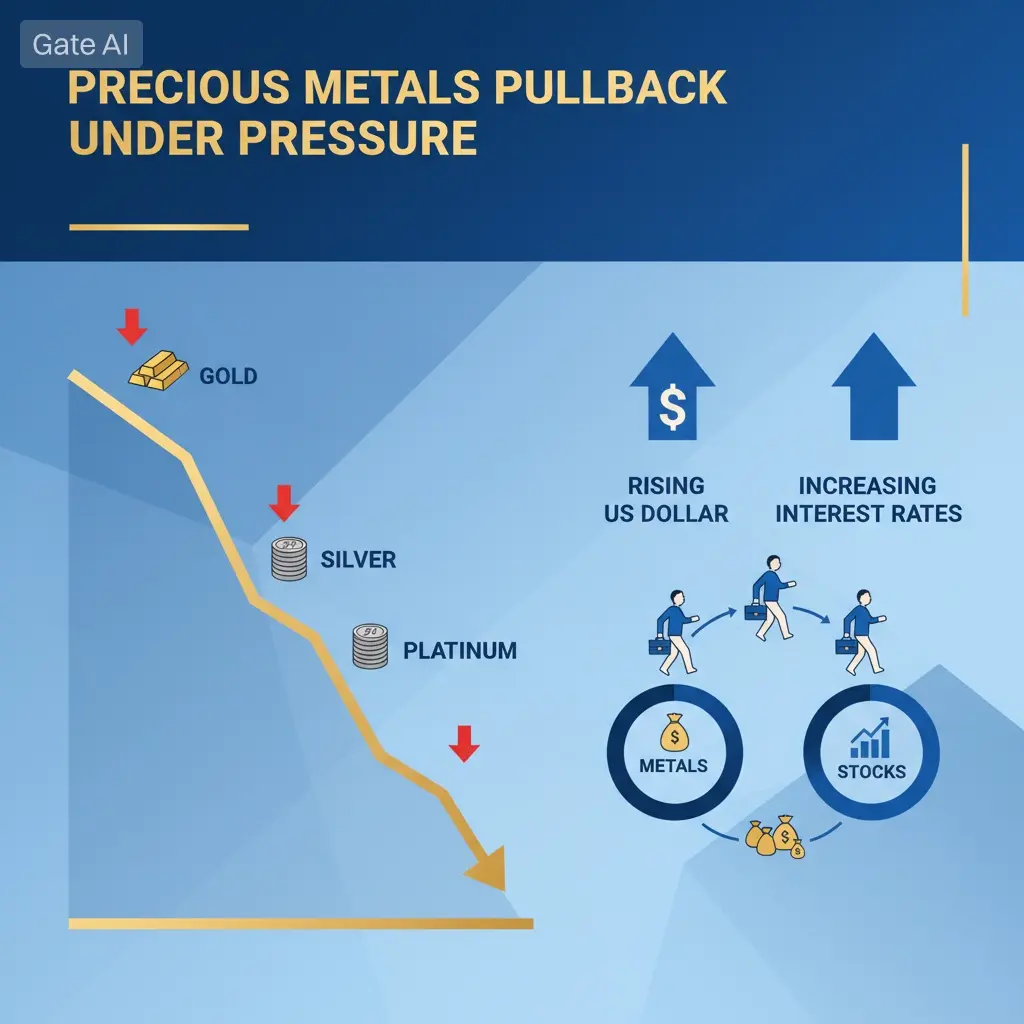
#China’sGoldReservesHit15-MonthHigh
China’s Gold Reserves Reach 15-Month Consecutive High: A Deep Macro & Crypto Market Impact Analysis (February 2026 Edition)
The People’s Bank of China (PBOC) has extended its gold accumulation streak to 15 consecutive months as of January 2026, pushing official holdings to 2,308 tonnes (approximately 74.19 million fine troy ounces). Valued at a record $369.58 billion (up sharply from $319.45 billion in December 2025), this marks China's highest reported gold reserve level in recent history and solidifies its position as the second-largest official gold hold
BTC-2,12%
ETH-4,44%
HighAmbitionvip
#China’sGoldReservesHit15-MonthHigh
China’s Gold Reserves Reach 15-Month Consecutive High: A Deep Macro & Crypto Market Impact Analysis (February 2026 Edition)
The People’s Bank of China (PBOC) has extended its gold accumulation streak to 15 consecutive months as of January 2026, pushing official holdings to 2,308 tonnes (approximately 74.19 million fine troy ounces). Valued at a record $369.58 billion (up sharply from $319.45 billion in December 2025), this marks China's highest reported gold reserve level in recent history and solidifies its position as the second-largest official gold holder globally (behind the U.S.).
This isn’t mere routine reserve management — it’s a deliberate, multi-year strategic pivot with profound implications for global finance, commodities, fiat currencies, safe-haven dynamics, and even digital assets like Bitcoin and Ethereum. Below is a comprehensive, multi-angle breakdown connecting the dots across macroeconomics, geopolitics, investor behavior, liquidity rotation, and crypto parallels.
1. Updated Facts & Timeline: The Numbers Behind the Streak
Latest PBOC Data (January 2026): Added ~40,000 troy ounces (1.2 tonnes) in the month, bringing total to 2,308 tonnes (9.6% of total foreign reserves).
15-Month Streak: Began November 2024 after a brief pause (previous 18-month run ended May 2024). Monthly additions have been modest (~30,000–60,000 ounces) but relentless.
Value Surge: January alone saw ~15.7% MoM increase in USD value — driven by both physical buying and gold's explosive rally (gold reclaimed $5,000/oz in early 2026 amid volatility).
Global Context: China trails only the U.S. (~8,133 tonnes). Central banks worldwide bought ~1,000+ tonnes annually in recent peak years; 2026 projections estimate ~755 tonnes total (still elevated vs. pre-2022 averages of 400–500 tonnes).
This sustained buying underscores Beijing’s long-term view: gold as a non-credit, non-dollar-dependent anchor in an era of elevated geopolitical risks, U.S. debt concerns, and policy uncertainty.
2. Core Macro & Geopolitical Drivers: Why China Is Doubling Down
China’s strategy is rooted in structural de-risking rather than short-term speculation.
De-Dollarization & Reserve Diversification
China holds massive U.S. Treasury exposure (~$800B+ historically, though reducing). Gold accumulation reduces reliance on dollar-denominated assets amid U.S. fiscal deficits, potential debt ceiling risks, and weaponization of sanctions (e.g., Russia/Ukraine precedents).
Inflation, Currency, & Systemic Hedging
Gold hedges yuan depreciation, domestic inflation pressures, and global shocks. With rising global debt and “higher for longer” rates in some regions, physical gold provides ballast against fiat erosion.
Geopolitical & Monetary Sovereignty
In a multipolar world, gold bolsters China’s leverage in trade wars, BRICS initiatives, and potential currency conflicts. Higher gold share (now 9.6%) signals confidence in RMB internationalization without full convertibility.
Domestic Signal to Retail & Institutions
PBOC buying encourages private demand (Chinese gold ETFs saw record inflows in Jan 2026: +38t, AUM to $36B). Retail bar/coin demand surged 35%+ in 2025 despite lower overall consumption.
3. Global Market Ripple Effects: Commodities, Currencies, & Safe-Havens
Gold Price Floor & Momentum → Persistent central bank demand (China + others) creates structural support. Even during corrections, gold holds above key levels — projections see $6,000/oz possible in 2026 if buying accelerates.
USD Volatility → Reduced Treasury buying by major holders like China increases dollar pressure during risk-off periods, amplifying cross-border flows.
Emerging Markets Cascade → Other EM central banks (India, Turkey, Poland) follow suit, amplifying safe-haven demand and commodity supercycle potential.
Broader Liquidity Rotation → Capital shifts from overvalued equities/bonds to tangibles → impacts risk assets, but benefits uncorrelated hedges.
4. Deep Dive: Crypto Implications — Bitcoin as “Digital Gold” in a Gold Supercycle
China’s move indirectly turbocharges crypto narratives, even without direct PBOC crypto involvement.
Narrative Reinforcement: Scarcity & Store-of-Value
Central banks validating gold’s scarcity (fixed supply, hard to produce) mirrors Bitcoin’s 21M cap. Institutional investors increasingly see BTC as “digital gold” — non-sovereign, portable, verifiable. PBOC buying validates “hard money” thesis → boosts BTC credibility.
Macro Hedging Spillover
Systemic caution (gold surge signals caution) drives diversification into uncorrelated assets. BTC/ETH benefit as fiat-alternatives unlinked to central bank policy or sanctions risk.
Institutional & Retail Psychology
FOMO from “central banks stacking gold” → wealth preservation mindset spills into crypto. Wealthy Chinese (via offshore channels) and global HNIs rotate into BTC during uncertainty. Correlation dynamics: BTC-gold correlation remains low historically (risk-on vs. true safe-haven divergence), but positive during prolonged macro stress.
Liquidity Flows & Capital Rotation
Global focus on safe-havens reallocates from speculative equities → crypto captures “risk-adjusted” inflows (e.g., BTC ETFs see surges). In low-liquidity environments, BTC acts as high-beta hedge.
Potential Risks & Divergences
BTC remains volatility-sensitive and equity-correlated (higher than gold). If macro tightens sharply, gold outperforms as pure hedge; BTC may lag until regulatory clarity or adoption milestones.
Comparative Table: Gold vs. Bitcoin/Crypto (2026 Lens)
Factor
Gold
Bitcoin / Crypto
Supply Mechanism
Mined slowly, central banks control
Fixed 21M cap, halvings reduce issuance
Central Bank Role
Direct accumulation (structural demand)
Indirect benefit via macro trends
Hedge Type
Proven inflation/geopolitical hedge
Emerging “digital gold” hedge
Liquidity
Extremely high, 24/7 physical/futures
High in spot/derivatives, growing ETFs
Volatility
Lower, stabilizing force
High, trend-driven
Institutional Acceptance
Universal, centuries-old
Rapid growth (ETFs, corporates)
Correlation to Equities
Low/negative in crises
Positive (risk asset behavior)
2026 Driver Strength
Central bank + retail demand
Narrative + liquidity rotation
5. Longer-Term Outlook & Scenarios for 2026–2027
Bull Case (High Probability): Continued PBOC/EM buying + geopolitical tensions → gold $5,500–$6,000+. BTC/ETH gain as parallel hedges → BTC $100K+ possible on institutional inflows.
Base Case: Gold stabilizes ~$5,000+; crypto consolidates then rallies on macro easing.
Bear Case: Sudden risk-on recovery (Fed pivot, de-escalation) → temporary gold/crypo pullback, but structural demand persists.
Correlation Evolution: BTC-gold correlation rises in prolonged uncertainty → both benefit from “trust deficit” in fiat systems.
6. Actionable Takeaways for Investors & Traders
Monitor PBOC monthly announcements + global central bank flows (World Gold Council data).
Track BTC-gold correlation & ETF inflows (spot BTC ETFs as proxy).
Diversify: Blend physical gold (bars/ETFs) with BTC/ETH for complementary hedging.
Watch USD strength, real yields, and geopolitics — key triggers for rotation.
Long-term thesis: Scarce, non-sovereign assets (gold + crypto) thrive in multipolar, high-debt world.
Conclusion
China’s 15-month gold streak is a loud macroeconomic signal: central banks are hedging against fiat fragility, dollar dominance erosion, and systemic risks. For crypto, it amplifies the “digital gold” narrative, drives institutional validation, and channels liquidity toward scarce alternatives. While gold provides stability, Bitcoin offers asymmetric upside in adoption-driven rallies. In 2026’s uncertain landscape, blending both may prove the smartest portfolio evolution.
This trend isn’t noise — it’s structural. Investors ignoring it risk missing the next phase of global asset re-pricing.
repost-content-media
  • Reward
  • Comment
  • Repost
  • Share
#ETHLongShortBattle
🚀 Ethereum Price Analysis ETH Long/Short Battle Breakdown
Ethereum (ETH) continues to dominate trader conversations amid its volatile rebound, currently trading in the $2,050–$2,100 range (as of February 27, 2026). After a strong 5–8%+ pump in recent sessions – reclaiming $2,000 and liquidating hundreds of millions in shorts – the market remains a battlefield. Recent futures data shows a clear long-dominant sentiment, with ETH long positions hovering at 58–65% and shorts at 35–42% across recent snapshots.
This lens reveals heavy bullish conviction from retail and active f
ETH-4,44%
DEFI7,16%
HighAmbitionvip
#ETHLongShortBattle
🚀 Ethereum Price Analysis ETH Long/Short Battle Breakdown
Ethereum (ETH) continues to dominate trader conversations amid its volatile rebound, currently trading in the $2,050–$2,100 range (as of February 27, 2026). After a strong 5–8%+ pump in recent sessions – reclaiming $2,000 and liquidating hundreds of millions in shorts – the market remains a battlefield. Recent futures data shows a clear long-dominant sentiment, with ETH long positions hovering at 58–65% and shorts at 35–42% across recent snapshots.
This lens reveals heavy bullish conviction from retail and active futures traders, where ETH/USDT perpetuals see massive volume. But with open interest still elevated and funding rates flipping neutral-to-positive, the ETH long vs short battle could spark squeezes or flushes. Is this building toward a sustained rally past $2,300, or setting up for a sharp correction if longs get overextended? Let’s break it down.
1️⃣ ETH Long Positions: The Dominant Force Driving Momentum
Snapshot: Longs consistently lead at 59–65%, reflecting strong bullish bets on ETH’s ecosystem – layer-2 growth, staking rewards, and DeFi revival – with traders piling in.
Price Impact:
Upside Fuel: Long-heavy ratios amplify rallies when momentum builds. High-volume perpetuals have seen ETH push higher on this conviction, with recent pumps aligning with long accumulation and reduced short pressure.
Liquidation Risk: Overcrowded longs create vulnerability. If price dips below key supports (~$1,950–$2,000), leveraged positions could trigger cascading sells, accelerating declines.
Technical & Sentiment Interpretation:
Bull Case: Sustained longs above 60% support climbs toward $2,150+ resistance. Large trader account ratios often lean long during these phases, signaling confidence.
Caution Zone: If the long ratio climbs too high (>65–70%), it signals euphoria – watch for rejection at $2,100–$2,150, where profit-taking could flip sentiment.
Observation: Long dominance (often 60%+) creates “ramp-like” upside in clean sessions, but fragility spikes with leverage. Historical data shows long overcrowding precedes 10–20% corrections when macro or funding turns.
2️⃣ ETH Short Positions: The Under Pressure Minority Priming Squeezes
Snapshot: Shorts sit at 35–42%, betting against the rebound but facing high squeeze risk if bulls maintain control.
Price Impact:
Downside Reinforcement: Short-favored moments add pressure, but current low exposure limits sustained drops.
Squeeze Explosiveness: Any bullish catalyst forces shorts to cover via buys, rocketing price. Short liquidations have contributed to 5–10%+ intraday moves recently.
Technical & Sentiment Interpretation:
Bear Case: If longs weaken and shorts rise toward 45–50%, price could grind lower toward $1,800–$1,900 supports.
Squeeze Trigger: Break above $2,100 with rising longs could crush shorts, targeting $2,300+ as covers pile in.
Observation: Shorts represent “coiled tension” – smaller exposure means less downward grind but massive upside potential on flips. Funding turns positive amid long dominance, shorts get punished fast – a classic setup for volatility pops.
3️⃣ Long vs Short Battle: Platform-Specific Tug-of-War & Signals
Long-Dominant Regime (~60%+ Longs): Steady grinds higher with squeeze potential. Ratios favoring longs align with recent recovery, but high leverage risks flush if rejected.
Potential Short Flip: If longs drop below 55% (shorts >45%), expect consolidation or downside tests.
Imbalance Clues: Large trader long/short account ratios provide granular views – accounts more long than positions indicate retail FOMO.
Price Behavior Nuances:
Moves often stem from ratio imbalances rather than pure fundamentals.
Clustered liquidations occur around psychological levels ($2,000 longs, $2,150 shorts).
Ratio shifts often precede swings – long tilt + volume up = bullish continuation; sudden short increase = reversal warning.
Observation: The battle favors “retail momentum hunters” – longs build steady ramps, shorts load for fireworks. Consistent long edges (~56–60%) often precede broader market upside, but over 65% risks a classic “top signal” flush.
4️⃣ Key Levels, Outlook & Strategies
Key Levels:
Support: $1,950–$2,000 (long defense zone; breach risks cascade)
Resistance: $2,100–$2,150 (short squeeze trigger; break accelerates bulls)
Neutral: $2,000–$2,100 range battles
2026 Outlook:
Bull Scenario: Longs hold 60%+ → $2,500+ if momentum sustains (DeFi/ETF tailwinds)
Bear Scenario: Ratio flips → $1,800 test on macro pressure
Base: Volatile range trading until clear breakout
Trader Plays:
Longs: Dip buys at supports; trail stops below $2,000. Scale out on ratio >65%.
Shorts: Fade overbought rallies; avoid if longs >62%.
Risk: Monitor real-time long/short, funding, and liquidation data – cap leverage, use isolated mode.
💬 Community Verdict:
The ETH long vs short battle paints a bullish-leaning picture – longs in control (~60%+), shorts vulnerable to squeezes, but always one dip from reversal. Watching long/short ratios gives early signals for volatility, entry points, and potential trend shifts.
repost-content-media
  • Reward
  • Comment
  • Repost
  • Share
#JaneStreet10AMSellOff
The topic you're asking about is a viral discussion in the cryptocurrency community (especially Bitcoin traders) that peaked in February 2026. It centers on a repeated price pattern in Bitcoin where the price often dropped sharply around 10:00 AM Eastern Time (U.S. time), which is roughly when the New York stock market opens and trading activity ramps up.
This pattern became known as the "10 AM dump," "10 AM sell-off," "morning slam," or similar terms. Many retail traders and online commentators blamed a specific major Wall Street trading firm called Jane Street for cau
BTC-2,12%
HighAmbitionvip
#JaneStreet10AMSellOff
The topic you're asking about is a viral discussion in the cryptocurrency community (especially Bitcoin traders) that peaked in February 2026. It centers on a repeated price pattern in Bitcoin where the price often dropped sharply around 10:00 AM Eastern Time (U.S. time), which is roughly when the New York stock market opens and trading activity ramps up.
This pattern became known as the "10 AM dump," "10 AM sell-off," "morning slam," or similar terms. Many retail traders and online commentators blamed a specific major Wall Street trading firm called Jane Street for causing it through deliberate large-scale selling.
What Traders Claimed Was Happening
For several months (prominently from late 2025 into early 2026), Bitcoin would frequently:
Build gains during overnight/Asian or European trading sessions.
Then, right around 10:00 AM ET (U.S. market open), experience a quick 2–5% drop (sometimes more).
This drop would trigger:
Stop-loss orders being hit (automatic sells from traders protecting against losses).
Margin calls and liquidations on leveraged positions (especially on crypto exchanges with high leverage like 10x–100x).
Panic selling from retail traders.
The result: Prices fell further in a cascade, shaking out "weak hands" (nervous holders), before often stabilizing or recovering later in the day.
The accusation against Jane Street was that they ran an algorithmic strategy (a programmed trading system) to sell large amounts of Bitcoin (or create selling pressure) at that exact time every trading day. Why?
To push the price lower artificially.
Trigger the chain reaction of liquidations and fear-selling.
Buy back Bitcoin (or accumulate shares in Bitcoin spot ETFs like BlackRock's IBIT) at cheaper prices.
Repeat daily for steady profits while keeping upward momentum capped.
This theory exploded because:
Regulatory filings (13F reports) showed Jane Street as one of the largest holders of BlackRock's IBIT ETF shares — holding over 20 million shares worth hundreds of millions to potentially over $790 million by late 2025/early 2026.
They are a major authorized participant (AP) and market maker for these ETFs, meaning they handle creation/redemption of ETF shares by buying/selling underlying Bitcoin.
Jane Street has faced past scrutiny (e.g., restrictions or fines in India for alleged manipulative trading in derivatives).
A lawsuit from Terraform Labs' bankruptcy estate (related to the 2022 TerraUSD collapse) accused them of insider trading and profiting from non-public information — this news hit publicly around February 23–25, 2026.
Right after the lawsuit became widely known:
The alleged daily 10 AM drops stopped (or became much less noticeable).
Bitcoin rallied strongly — jumping from lows around $62–65K toward $66–70K in a short time, with one of its best sessions in weeks/months.
Traders celebrated online with comments like "the algo shut off," "that's all it took," or "Jane Street backed off after exposure."
Many felt this timing proved the manipulation theory: legal pressure forced them to stop the supposed selling program.
The Reality: Why This Pattern Exists (Without Needing Conspiracy)
Analysts, researchers, and data experts largely rejected the idea of one firm (even a big one like Jane Street) systematically manipulating Bitcoin daily for months. Key reasons and explanations include:
U.S. market open mechanics — The 9:30–10:30 AM ET window is naturally volatile in all markets (stocks, crypto included). It brings:
Fresh institutional liquidity and order flow.
Reactions to overnight news, economic data, or global events.
Correlation with stock indexes (Bitcoin often moves with Nasdaq/S&P when U.S. traders come online).
ETF arbitrage and creation/redemption — Firms like Jane Street act as middlemen. If the ETF trades at a discount to the actual Bitcoin price (e.g., due to retail selling panic), they buy Bitcoin spot, create new ETF shares, and profit from the difference. Large sells can appear on exchanges but are often providing liquidity, not malicious dumping.
Data checks showed no consistent pattern:
Analysts (e.g., from K33 Research, macro experts like Alex Kruger, and others) looked at hourly Bitcoin returns.
In the 10–10:30 AM ET window over relevant periods, Bitcoin performance was actually slightly positive on average (e.g., around +0.9% cumulative in some analyses), not systematically negative.
Moves often tracked broader equity flows or macro events, not one firm's actions.
Bitcoin is too big to be controlled by one player — With a multi-trillion-dollar market cap and global 24/7 trading, no single firm can force prolonged suppression without massive cost and risk. Patterns self-correct (traders anticipate and counter them).
Other real factors for morning pressure:
Options/futures hedging or rolling.
Portfolio rebalancing by institutions.
Lower overnight liquidity making any sell order look bigger.
High leverage in crypto amplifying normal volatility into dramatic drops.
The "sudden stop" and rally after the lawsuit? Likely coincidence or sentiment-driven:
Relief from broader selling pressure.
Macro tailwinds or natural bounce after lows.
Traders front-running the narrative (buying because they believed the "dump" ended).
Bottom Line and Lessons
This whole discussion was a classic crypto community storm: real frustration with intraday volatility + visible institutional flows + timing with a lawsuit + a big price rally = viral conspiracy narrative. While Jane Street's size in ETFs makes them a natural target for blame, solid evidence points to normal market structure (U.S. open dynamics, arbitrage, correlated flows) rather than coordinated evil by one firm.
It highlights how crypto markets (especially with high leverage) turn everyday liquidity events into dramatic "attacks." Retail traders feel played, but the market is maturing with Wall Street involvement — meaning more predictable volatility windows, but also deeper liquidity over time.
For anyone trading: Avoid fighting predictable noise like morning U.S. opens if you're leveraged. Focus on bigger trends, manage risk, and remember — in volatile markets, patience often wins over chasing every dip or pump. The pattern may fade as more data and participants adapt.
repost-content-media
  • Reward
  • Comment
  • Repost
  • Share
#CanBitcoinReclaim$70K?
🚀 Bitcoin Market Deep Dive – February 27, 2026 (Midday PKT / Early U.S. Trading Hours)
As of February 27, 2026, Bitcoin (BTC) is trading between $67,000–$68,000, with live quotes hovering around $67,500–$67,800. Data sources like Yahoo Finance show ~$67,730, CoinDesk reports ~$67,600–$67,766, and intraday highs tested slightly above $68,100.
This follows a volatile week in which BTC briefly approached $70,000 — with Wednesday and Thursday peaks near $69,953–$70,000 — before pulling back. Despite the volatility, key support levels above $66,000–$66,500 have held, keepi
BTC-2,12%
HighAmbitionvip
#CanBitcoinReclaim$70K?
🚀 Bitcoin Market Deep Dive – February 27, 2026 (Midday PKT / Early U.S. Trading Hours)
As of February 27, 2026, Bitcoin (BTC) is trading between $67,000–$68,000, with live quotes hovering around $67,500–$67,800. Data sources like Yahoo Finance show ~$67,730, CoinDesk reports ~$67,600–$67,766, and intraday highs tested slightly above $68,100.
This follows a volatile week in which BTC briefly approached $70,000 — with Wednesday and Thursday peaks near $69,953–$70,000 — before pulling back. Despite the volatility, key support levels above $66,000–$66,500 have held, keeping bulls in the game.
The dominant question in crypto circles: Can BTC reclaim $70K and sustain it in the short term, potentially triggering the next leg higher? This report breaks down every angle: technicals, fundamentals, sentiment, macro factors, risk scenarios, and realistic outcomes.
1. Recent Price Action and Context
February Lows: BTC bottomed around $62,000–$63,000, forming the springboard for a relief rally. This followed a broader post-2025 pullback after the all-time high (~$126,000 in October 2025).
Strong Rebound: Bitcoin surged +6–10% in a single day midweek, marking one of the largest short-term rallies in months. Intraday tests of $70K briefly ignited optimism.
Weekly Perspective: BTC remains modestly up ~0.6–1%, consolidating within a $62K–$70K box after early-February capitulation. Buyers are defending $66K+ aggressively, creating a pressure-cooker setup.
Market Dynamics: The so-called "10 AM dump" at U.S. market open has faded, reducing fear of algorithmic sell-offs, which bolstered short-term bullish sentiment.
2. Bullish Case: Why BTC Could Reclaim $70K
a) Technical Momentum
The V-shaped recovery from $62.5K lows to $70K tests shows controlled buying rather than panic-driven rebounds.
Short-term indicators: Stoch RSI bullish crossovers, curling moving averages (4H and daily), and rising trendline support indicate upside bias if momentum holds.
Key flips: Turning $69,500–$70K resistance into support could trigger liquidation cascades, targeting $72K–$75K–$80K+. A clean daily close above $70K is a strong confirmation signal.
b) Relief from the "10 AM Dump" Narrative
Allegations about firms like Jane Street selling at U.S. open to manipulate short-term price action lost credibility after Terraform Labs lawsuit headlines (Feb 23–25).
Morning dumps ceased, with BTC holding or rising during U.S. open hours, signaling either algorithmic pause or coincidence, which relieved perceived selling pressure.
c) ETF Flows and Institutional Support
Spot ETFs (e.g., BlackRock IBIT) showed inflow rebounds, supporting price by absorbing retail panic.
Authorized participants & market makers continue providing liquidity through creation/redemption mechanisms.
Silent institutional accumulation remains ongoing, with corporates and funds quietly increasing exposure without triggering spikes.
d) Sentiment and Retail Behavior
Fear & Greed Index reads neutral/optimistic (~76 in some analyses).
Social sentiment (Stocktwits, Twitter polls) shows ~60% of retail traders ready to buy dips of 20%, reflecting strong conviction.
Post-lawsuit rallies and HODLer accumulation build pressure for potential breakout, creating a “spring-loaded” market ready to react to positive catalysts.
e) Macro Tailwinds
BTC’s correlation with Nasdaq/S&P 500 suggests that if equities stabilize, BTC tends to follow.
Effects of 2024 halving remain in play, sustaining supply-side scarcity.
Relief from headline-driven volatility (e.g., U.S. tariff news, Supreme Court rulings) can provide temporary boosts to bullish momentum.
3. Bearish Case: Risks to $70K Reclaim
a) Resistance Wall
$70K has historically acted as a strong ceiling, with repeated rejections (latest at ~$69,953).
Technical formations like daily flags or wedges may indicate momentum exhaustion; a failure here could retest $66K–$65K supports.
b) Macro & Risk-Off Sentiment
Recent minor pullbacks (-1.5% to -2.5%) often coincide with broader risk-off in equities.
Analysts note a binary outcome: either BTC confirms $70K breakout or slides toward $60–$61K, potentially accelerating declines (~-30% forecasts for rapid sell-offs exist).
c) Overhead Supply & Leverage
High-leverage positions are still active. Failed breakout attempts could trigger liquidations, resulting in sharp corrections.
Compressed ranges tend to resolve violently — if sellers defend $70K, we might see sudden downward spikes to $63K–$65K.
d) Structural Volatility
Market studies (Alex Krüger, K33, and others) indicate no single firm controls BTC moves.
The disappearance of “10 AM dump” was likely coincidental or related to natural liquidity shifts, not guaranteed to persist.
4. Realistic Outlook & Probabilities
Time Frame
Scenario
Key Levels
Probability / Notes
Short-term (days–1 week)
Reclaim $70K
Support: $69.5K; Resistance: $70K–$72K
~50/50; requires volume-confirmed breakout. Quick squeeze could reach $72–$75K.
Medium-term (rest of Feb/March)
Bullish continuation
$70K flip → $75–$84K
Moderate bullish lean if $70K flips; failure below $66.5K triggers consolidation or downside.
Full 2026
Mid-cycle consolidation
$70K–$100K+
Potential $95K–$100K if macro improves and institutions accumulate. $70K is the immediate gatekeeper.
Key takeaway: Patience is crucial. Heavy leverage should be avoided; dollar-cost averaging dips around $66K support is more sustainable than chasing breakouts. BTC’s global nature prevents permanent suppression, but short-term volatility is amplified by U.S. open liquidity and leverage.
5. Technical Levels to Watch
Support Zones: $66,500 / $66,000 / $64,000
Resistance Zones: $69,500 / $70,000 / $72,000–$75,000
Psychological Barriers: $70K is the major “gatekeeper” for momentum.
Indicators: RSI, Stoch RSI, MA curl on 4H/daily charts, and CME gap fills can provide actionable cues.
6. Sentiment & Narrative Insights
Relief from negative morning dumps improves retail confidence.
Media-driven catalysts (lawsuits, ETF approvals, macro policy) often spark short-term surges.
HODLers + institutional accumulation = latent buying pressure, creating a market ready for explosive moves once resistance breaks.
7. Conclusion
Bitcoin is in a critical consolidation phase, balancing between $66K support and $70K resistance. The next few sessions could determine whether BTC resumes its path toward $75K+ or remains range-bound.
Bullish catalyst: Clean breakout above $70K with institutional support and volume.
Bearish catalyst: Rejection at $70K, macro-driven risk-off, and leveraged liquidation.
BTC remains too large and decentralized for permanent suppression. The fading of the “10 AM dump” narrative provided bulls with optimism, but real price action will ultimately define the next leg.
A confirmed daily close above $70K could trigger strong momentum, potentially targeting $75–$78K, while failure may bring a retest of $66–$66.5K support. Traders should prioritize risk management and measured exposure in this highly dynamic environment.
repost-content-media
  • Reward
  • Comment
  • Repost
  • Share
#ZachXBTExposesTheAxiomIncident
1️⃣ Who Is Involved?
ZachXBT – A well-known blockchain investigator who tracks scams and insider activity.
Axiom Exchange – A fast-growing Solana-based non-custodial trading platform focused on meme coins and liquidity tools.
Polymarket – A crypto prediction market where people bet on future events.
Broox Bauer – Alleged key employee involved in the misuse of internal tools.
🔎 What Actually Happened?
Step 1: Internal Data Access Abuse
ZachXBT claims some Axiom employees had extremely powerful internal dashboards.
These dashboards allegedly allowed them to see:
SOL-5,01%
MEME-1,95%
DEFI7,16%
HighAmbitionvip
#ZachXBTExposesTheAxiomIncident
1️⃣ Who Is Involved?
ZachXBT – A well-known blockchain investigator who tracks scams and insider activity.
Axiom Exchange – A fast-growing Solana-based non-custodial trading platform focused on meme coins and liquidity tools.
Polymarket – A crypto prediction market where people bet on future events.
Broox Bauer – Alleged key employee involved in the misuse of internal tools.
🔎 What Actually Happened?
Step 1: Internal Data Access Abuse
ZachXBT claims some Axiom employees had extremely powerful internal dashboards.
These dashboards allegedly allowed them to see:
Users’ wallet addresses
Full trading histories
Linked accounts
Referral codes
Wallet nicknames
Which wallets users were tracking
This is highly sensitive information.
According to the allegations, employees:
Identified high-profile traders (KOLs/influencers)
Monitored when those traders secretly bought meme coins
Bought those coins first
Sold after influencers promoted them
This is called front-running.
If true, this is similar to insider trading in traditional finance.
💰 Why This Is Serious
Even though Axiom is “non-custodial,” meaning users control their funds, the platform still allegedly:
Stored user-linked data
Allowed employees broad access
Had weak monitoring controls
This creates a major contradiction: Crypto promotes decentralization and privacy, but internal access may still be centralized.
🎭 The Ironic Twist (Polymarket Scandal)
Before the report was published, people started betting on Polymarket about:
“Which company will ZachXBT expose?”
Huge money entered the market.
Some wallets:
Placed large bets on Axiom
Did so shortly before publication
Made massive profits
This created a second layer of controversy:
People may have used inside information about an insider trading exposé… to profit.
That’s a meta insider trading situation.
⚖️ Legal Implications
If proven true:
It could fall under fraud or insider trading laws.
Since one key figure is based in New York, U.S. federal authorities (like SDNY) could have jurisdiction.
Regulators may increase scrutiny on crypto employee access controls.
Even if crypto is decentralized, employees misusing private information is still legally risky.
🏦 Impact on Axiom & Solana Ecosystem
Possible consequences:
Trust Damage – Traders may withdraw funds.
Volume Drop – Less meme coin trading.
Reputation Risk – YC-backed projects now face governance questions.
Ecosystem Pressure – Solana DeFi may face stricter transparency demands.
In crypto, trust is everything. Once broken, recovery is difficult.
📊 Bigger Industry Lessons
1️⃣ “Non-Custodial” ≠ Fully Private
Platforms may still collect metadata and referral links.
2️⃣ Internal Controls Matter
Traditional finance has:
Access logs
Segregation of duties
Compliance teams
Many DeFi projects lack these safeguards.
3️⃣ Blockchain Transparency Works
The same transparency that allows insiders to track wallets also allows investigators like ZachXBT to expose them.
🌍 Why This Matters for You (Especially as a Retail Trader)
If you're trading from Karachi or anywhere:
Avoid reusing the same wallet for everything.
Be careful linking wallets to referral systems.
Don’t assume platform staff cannot see your activity.
Diversify platforms.
Prefer platforms with audits and transparent policies.
🧠 Final Understanding
This incident is not just about one employee.
It highlights:
Weak internal governance in crypto startups
The risks of giving staff too much data access
How insider information spreads quickly
How speculation markets amplify drama
Crypto is transparent at the blockchain level —
but human behavior behind platforms is still the biggest risk.
repost-content-media
  • Reward
  • Comment
  • Repost
  • Share
#EthereumFoundationUnveilsItsStrawmap
The Ethereum Foundation has recently released an ambitious long-term vision called the "Strawmap" — a draft, non-binding "strawman" roadmap (not a fixed mandate) outlining Ethereum's potential evolution through 2029. Introduced by EF researcher Justin Drake, it serves as a coordination tool for researchers, core developers, Layer-2 teams, and the broader ecosystem, mapping out roughly seven hard forks (about one every six months) around five core "north star" goals for the base layer (Layer 1).
As of February 27, 2026:
Ethereum Price (ETH): Approximately
ETH-4,44%
DEFI7,16%
HighAmbitionvip
#EthereumFoundationUnveilsItsStrawmap
The Ethereum Foundation has recently released an ambitious long-term vision called the "Strawmap" — a draft, non-binding "strawman" roadmap (not a fixed mandate) outlining Ethereum's potential evolution through 2029. Introduced by EF researcher Justin Drake, it serves as a coordination tool for researchers, core developers, Layer-2 teams, and the broader ecosystem, mapping out roughly seven hard forks (about one every six months) around five core "north star" goals for the base layer (Layer 1).
As of February 27, 2026:
Ethereum Price (ETH): Approximately $2,034–$2,037 USD (down ~1–1.5% in the last 24 hours, with 24h trading volume around $10–22 billion USD).
Market Cap: Roughly $245 billion USD.
Current Network Metrics (for context): Base Layer 1 throughput remains modest (~dozens of TPS), but the full ecosystem (including L2s) has hit peaks over 30,000+ TPS in recent records. DeFi TVL on Ethereum hovers around $55–68 billion (down from peaks but with projections for significant growth in 2026 via institutional adoption, stablecoins, and RWAs).
1. Near-Instant Finality (Dramatically Faster Confirmations)
Goal: Reduce transaction finality from the current ~16 minutes (worst-case) to seconds — potentially 8 seconds or even single-slot finality as low as 6–8 seconds.
How: Gradually shorter slot times (from 12 seconds → 8, 6, 4, 2 seconds possible), advanced consensus like Minimmit/BFT variants, and separation of proposal from finality.
Impact: ETH transfers and DeFi executions would feel near-real-time, boosting UX for payments, gaming, and high-frequency apps — a massive leap toward competing with centralized systems.
2. Massive Throughput Scaling ("Gigagas Era")
Layer 1 Target: ~1 Gigagas per second (≈ 10,000 TPS on base layer).
Layer 2 Target: Teragas-scale (up to 10 million TPS ecosystem-wide).
Enablers: Embedded zkEVMs, real-time proving, advanced Data Availability Sampling (DAS), and tighter L1–L2 coordination.
Impact: This would elevate Ethereum from today's limited base-layer capacity to global-scale infrastructure for AI, gaming, mass payments, and institutional finance — entering a true "high-throughput" phase.
3. Native Protocol-Level Privacy
Built-in shielded ETH transfers on Layer 1: Optional concealment of balances, amounts, and histories without external tools.
Impact: Meets institutional needs for confidential tokenization/RWAs and retail demand for privacy, while remaining compatible with compliance — expanding use cases beyond fully transparent DeFi.
4. Quantum-Resistant Security
Proactive defense against future quantum threats that could break elliptic-curve crypto.
Plans: Introduce post-quantum primitives (e.g., hash-based signatures), gradual migration to quantum-safe schemes.
Impact: Ensures Ethereum's long-term resilience into the 2030s+, protecting against existential cryptographic risks.
5. Seamless L1 & L2 Integration
Strengthens the modular ecosystem: Better interoperability, higher data throughput, stronger security inheritance from L1 to L2s.
Impact: L1 becomes ultra-efficient for settlement/security; L2s handle explosive scale — preserving Ethereum's decentralized, flexible design.
Broader Ecosystem & Market Implications
If delivered, these upgrades could:
Drive ETH utility higher as the backbone of Web3.
Boost institutional confidence with quantum resistance, privacy, and compliance tools.
Fuel DeFi TVL growth (projections suggest 5–10x potential in 2026 from RWAs/stablecoins/institutions).
Solidify Ethereum's lead amid competition from faster chains.
Ethereum's current price action (~$2,000 range) reflects subdued sentiment, but the Strawmap signals bold ambition: massive performance + security upgrades while staying decentralized.
Challenges Ahead
Execution is tough: zkEVM at scale is complex, DAS needs rigorous testing, privacy must balance regs/decentralization, quantum transitions can't fragment the network, and consensus across forks is always a social/technical hurdle.
Bottom Line
The Strawmap isn't a locked-in promise — it's a clear, holistic direction. By 2029, if realized, Ethereum could be:
Near-instant finality.
Gigagas L1 (~10k TPS).
Teragas L2 (millions TPS).
Privacy-enhanced and quantum-resistant.
The resilient foundation for global decentralized finance, AI, and beyond.
This reflects Ethereum's focus on long-term engineering over short-term hype. Execution will decide the outcome — but the vision is undeniably ambitious.
repost-content-media
  • Reward
  • Comment
  • Repost
  • Share
#CircleHits$90
#CircleHits$90! 🔥 CRCL (Circle Internet Group) just went parabolic—stock hit a day high of $90.60 yesterday (Feb 26, 2026) after crushing Q4 2025 earnings and closing up ~5% at $87.21! From $83 close to touching $90+ in one session. Massive momentum! 📈💥
The numbers are INSANE:
🔹 USDC circulation exploded to $75.3B at year-end (+72% YoY)
🔹 Average USDC in circulation doubled to ~$76B
🔹 Q4 revenue + reserve income: $770M (+77% YoY) — beat estimates
🔹 On-chain transaction volume: $11.9 TRILLION in Q4 alone (+247% YoY!)
Real adoption is here, not just hype. Stablecoins mo
USDC-0,01%
HighAmbitionvip
#CircleHits$90
#CircleHits$90! 🔥 CRCL (Circle Internet Group) just went parabolic—stock hit a day high of $90.60 yesterday (Feb 26, 2026) after crushing Q4 2025 earnings and closing up ~5% at $87.21! From $83 close to touching $90+ in one session. Massive momentum! 📈💥
The numbers are INSANE:
🔹 USDC circulation exploded to $75.3B at year-end (+72% YoY)
🔹 Average USDC in circulation doubled to ~$76B
🔹 Q4 revenue + reserve income: $770M (+77% YoY) — beat estimates
🔹 On-chain transaction volume: $11.9 TRILLION in Q4 alone (+247% YoY!)
Real adoption is here, not just hype. Stablecoins moving serious money. 🌍💸
Full year dominance:
FY revenue: ~$2.75B (+64% YoY)
Adjusted EBITDA: $582M (+104%)
Q4 net income from continuing ops: $133M (huge turnaround)
Circle's turning stablecoin infrastructure into serious cash flow. USDC is the regulated, transparent dollar on-chain—winning against the competition.
Market's loving it: Shares surged hard post-earnings (up to 30% intraday at points), analysts staying bullish with targets ranging $93–$190+ median around $107–$120. Some calling Circle the backbone of crypto payments & Web3 finance. Enterprise & institutional demand is ramping fast. 🏦🔗
This isn't a pump—it's proof stablecoins are going mainstream. USDC at $75B+ and growing, $11.9T quarterly volume, partnerships everywhere. Circle's flexing as crypto's core infra play. Big W for the space! Who's riding this wave?
repost-content-media
  • Reward
  • Comment
  • Repost
  • Share
#USOCCIssuesNewStablecoinRules
OCC Releases Detailed Proposed Rules to Implement the GENIUS Act for Payment Stablecoins – Comprehensive Breakdown
On February 25, 2026, the Office of the Comptroller of the Currency (OCC) issued a 376-page Notice of Proposed Rulemaking (NPRM) to implement key parts of the Guiding and Establishing National Innovation for U.S. Stablecoins Act (GENIUS Act), enacted on July 18, 2025. This is a major step toward a federal regulatory framework for "payment stablecoins" – digital assets designed for payments or settlement, redeemable at a fixed monetary value (typical
HighAmbitionvip
#USOCCIssuesNewStablecoinRules
OCC Releases Detailed Proposed Rules to Implement the GENIUS Act for Payment Stablecoins – Comprehensive Breakdown
On February 25, 2026, the Office of the Comptroller of the Currency (OCC) issued a 376-page Notice of Proposed Rulemaking (NPRM) to implement key parts of the Guiding and Establishing National Innovation for U.S. Stablecoins Act (GENIUS Act), enacted on July 18, 2025. This is a major step toward a federal regulatory framework for "payment stablecoins" – digital assets designed for payments or settlement, redeemable at a fixed monetary value (typically 1:1 with USD).
The proposal is not final law yet. It seeks public comments for 60 days after publication in the Federal Register. Once finalized, these rules will apply to entities under OCC jurisdiction, including national banks, their subsidiaries, federal qualified issuers, certain state-qualified issuers, and foreign payment stablecoin issuers serving U.S. users. Separate rules for Bank Secrecy Act, AML, and OFAC sanctions will come later with Treasury coordination.
Here are the main points, explained one by one with full details:
Definition and Scope of Payment Stablecoins
The rules focus only on "payment stablecoins" – digital assets used as a means of payment or settlement, where the issuer must redeem them for a fixed amount of monetary value (e.g., $1 per token). They aim to maintain stable value relative to that fixed amount. Non-payment stablecoins or other digital assets fall outside this framework.
Licensing and Permission Requirements for Issuers
Only "permitted payment stablecoin issuers" can issue these in the U.S. This includes subsidiaries of national banks/federal savings associations, federal qualified nonbank issuers, and certain state-qualified issuers under OCC oversight.
Foreign issuers must register as "Foreign Payment Stablecoin Issuers" to offer to U.S. users.
New (de novo) issuers face a proposed $5 million minimum capital floor to ensure they have enough resources to start operations safely.
Strict 1:1 Reserve Backing with High-Quality Liquid Assets
Stablecoins must be backed 1:1 by safe, liquid reserves such as cash, U.S. Treasuries, or other approved short-term, low-risk instruments.
Requirements cover reserve composition, diversification to limit concentration risk, proper valuation, segregation (reserves kept separate from issuer's own funds), and secure custody arrangements.
This prevents mismatches that could lead to instability or inability to redeem during stress.
Prohibition on Interest or Yield – Extended to Indirect Arrangements
The GENIUS Act bans paying interest or yield solely for holding, using, or retaining the stablecoin (to avoid competing with bank deposits).
The OCC proposes a rebuttable presumption of violation if: (a) an issuer's affiliate or related third party pays yield to holders tied to the stablecoin, or (b) the issuer pays yield to an affiliate/third party for that purpose.
This targets workarounds like revenue-sharing with platforms or exchanges that offer rewards to holders.
Mandatory Redemption Mechanics and Prompt Redeemability
Holders must have the right to redeem stablecoins promptly at par (1:1 with the fixed value, e.g., USD).
Rules detail redemption processes, including timelines, procedures, and issuer obligations to handle redemptions efficiently without undue delay or conditions.
Robust Risk Management and Operational Standards
Issuers need comprehensive controls for credit, market, liquidity, operational, and cyber risks.
Governance, internal policies, and resilience measures are required to manage smart contract risks, fraud, and other operational issues.
The proposal introduces a new "capital and operational backstop" framework, with amendments to existing bank capital rules (12 CFR Parts 3 and 6) for tailored adequacy standards.
Custody Requirements for Reserves and Customer Assets
Reserves and any customer-held stablecoins must be held in safe, segregated accounts.
OCC-supervised banks conducting custody must follow strict standards for segregation, protection, and auditability to safeguard against commingling or loss.
Supervision, Examinations, Reporting, and Enforcement
The OCC will supervise permitted issuers through regular examinations, required reporting, and audits.
Enforcement authority extends to violations, including over foreign issuers under jurisdiction.
Transparency rules may include public disclosures on reserves and operations.
Additional Limits and Considerations
The proposal explores restricting each permitted issuer to one brand of stablecoin (to curb white-label or multi-branded models that could enable deposit-like features).
It emphasizes protecting financial stability, consumer rights, and preventing risks to the banking system.
Why This Matters Overall
This NPRM delivers critical regulatory clarity after years of uncertainty, enabling banks and qualified entities to enter stablecoin issuance safely. It promotes mainstream adoption for payments, remittances, and on-chain finance while enforcing strong safeguards for reserves, redemptions, and no-yield models. It strengthens the U.S. dollar's digital role, reduces risks from unregulated issuers, and could drive liquidity and innovation – though the strict yield ban and capital floors may pose challenges for some business models. Final rules (post-comments) could take effect by mid-2027 or earlier.
repost-content-media
  • Reward
  • Comment
  • Repost
  • Share
  • Pin

Trade Crypto Anywhere Anytime
qrCode
Scan to download Gate App
Community
  • 简体中文
  • English
  • Tiếng Việt
  • 繁體中文
  • Español
  • Русский
  • Français (Afrique)
  • Português (Portugal)
  • Bahasa Indonesia
  • 日本語
  • بالعربية
  • Українська
  • Português (Brasil)