
Futures
Access hundreds of perpetual contracts
TradFi
Gold
One platform for global traditional assets
Options
Hot
Trade European-style vanilla options
Unified Account
Maximize your capital efficiency
Demo Trading
Introduction to Futures Trading
Learn the basics of futures trading
Futures Events
Join events to earn rewards
Demo Trading
Use virtual funds to practice risk-free trading
Launch
CandyDrop
Collect candies to earn airdrops
Launchpool
Quick staking, earn potential new tokens
HODLer Airdrop
Hold GT and get massive airdrops for free
Launchpad
Be early to the next big token project
Alpha Points
Trade on-chain assets and earn airdrops
Futures Points
Earn futures points and claim airdrop rewards


More



250 billion in special national bonds support old-for-new exchanges, "real money" boosts consumption
Source: 21st Century Business Herald 21 Finance App Author: Zhang Xu
At 9:00 a.m. on March 5, the opening meeting of the Fourth Session of the 14th National People’s Congress was held at the Great Hall of the People. Premier Li Qiang, on behalf of the State Council, delivered the Government Work Report to the Fourth Session of the 14th National People’s Congress.
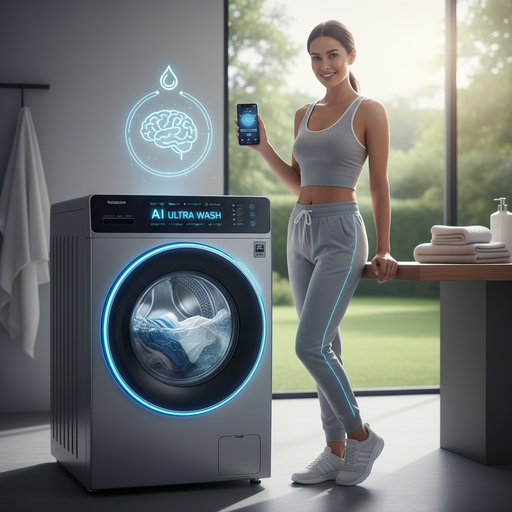
The 2026 Government Work Report proposes to expand and upgrade consumer spending on commodities. It will allocate 250 billion yuan in ultra-long-term special government bonds to support trade-in of consumer goods for replacement. It will also optimize the policy implementation mechanisms. A dedicated special fund of 100 billion yuan will be established for fiscal and financial coordination to boost domestic demand. By using a combination of measures such as loan interest subsidies, financing guarantees, and risk compensation, it will support efforts to expand domestic demand.
Consumption is the main engine that drives economic growth. In 2025, China deepened the implementation of special actions to boost consumption. The scale of the consumer market expanded steadily. For the first time, the total retail sales of consumer goods exceeded 50 trillion yuan, and consumption’s contribution rate to economic growth reached 52%.
Since 2026, the trade-in program for consumer goods has been fully rolled out and targeted precisely, covering key areas such as automobiles, home appliances, digital products, and smart products. It has effectively unleashed the potential of market consumption and helped the consumer market start off well. Localities have also introduced supporting measures one after another, further refining and implementing plans to help the trade-in policy achieve greater effects.
On February 14, Henan released the “Implementation Plan of Henan Province for Promoting Large-Scale Equipment Upgrades and Trade-in of Consumer Goods in 2026,” proposing that by the end of 2026 it strives to complete around 500k units of vehicle scrappage and replacement updates by individual consumers, and around 5 million units of home appliance trade-ins. Starting February 9, Beijing implemented a new subsidy plan for automobile trade-ins. The subsidy amount is up to 20k yuan.
With policies such as trade-ins helping, during the Spring Festival period, Guangdong’s consumer market saw growth in multiple areas. Consumer spending structures continued to improve, with supply and demand in service consumption both strong. Retail sales revenue of daily-use home appliances such as floor-cleaning robots increased by 137.9% year over year. Retail sales revenue of communication devices such as smart phones increased by 53.1% year over year. Retail sales of new energy vehicles increased by 46.8% year over year. The trend of residents upgrading their consumption has become evident.
According to data from the Ministry of Commerce, as of February 23, 2026’s trade-in program for consumer goods had benefited 500k people and driven sales of 207.03 billion yuan. Demand for smart and green products is strong. By February 5, 2026 automobile trade-in subsidies had reached 335k applications, driving new car sales of 53.77 billion yuan.
On March 2, 2026 China Nationwide Consumption Promotion Month and the Beijing-Tianjin-Hebei Consumption Season were launched in Tianjin. The Ministry of Commerce said that, as a key special activity under “Buy in China,” the 2026 China Nationwide Consumption Promotion Month and the Beijing-Tianjin-Hebei Consumption Season will further optimize the implementation of the trade-in policy for consumer goods. It will deepen new types, new models, and new scenarios for consumption, expand the supply of high-quality goods and services, and promote the integrated development of first-launch economy, health consumption, green consumption, and smart consumption. It will also help better meet diversified and quality-oriented consumption needs by integrating more scenarios across business, travel, culture, and sports events.
The trade-in policy for consumer goods is an important part of expanding domestic demand and boosting consumption. On March 4, Lou Qinjian, the spokesperson of the Fourth Session of the 14th National People’s Congress, said that this year, China will adhere to the strategic baseline of expanding domestic demand, vigorously boost consumption, and promote the development of a strong domestic market.
On the one hand, expand the supply of high-quality consumer goods and services. Implement actions to enhance the quality of service consumption and benefit the people. Accelerate the cultivation of new growth points in service consumption. Optimize the trade-in policy for consumer goods to drive the expansion and upgrading of commodity consumption. Create an internationalized consumption environment, enrich consumption scenarios, and hold a series of “Buy in China” activities.
On the other hand, insist on closely integrating benefiting people’s livelihoods with boosting consumption. Promote high-quality employment. Formulate and implement plans to increase the income of urban and rural residents to strengthen residents’ consumption capacity. Steadily advance equalization of basic public services. Improve the education, childcare, eldercare, and medical security systems, and reduce residents’ concerns about future consumption.
“This year, the Standing Committee of the National People’s Congress will conduct oversight on building a unified domestic market and advancing the comprehensive revitalization of rural areas, among other areas. It will formulate laws such as the Social Assistance Law, the Medical Security Law, and the Childcare Services Law, to help channel more resources into areas related to people’s livelihoods—so that the general public can afford to consume, dare to consume, and are willing to consume.”
(Editor: Wen Jing)
Keywords: