


Futures
Access hundreds of perpetual contracts
TradFi
Gold
One platform for global traditional assets
Options
Hot
Trade European-style vanilla options
Unified Account
Maximize your capital efficiency
Demo Trading
Introduction to Futures Trading
Learn the basics of futures trading
Futures Events
Join events to earn rewards
Demo Trading
Use virtual funds to practice risk-free trading
Launch
CandyDrop
Collect candies to earn airdrops
Launchpool
Quick staking, earn potential new tokens
HODLer Airdrop
Hold GT and get massive airdrops for free
Launchpad
Be early to the next big token project
Alpha Points
Trade on-chain assets and earn airdrops
Futures Points
Earn futures points and claim airdrop rewards


More





3 Months Over 30 Funding Rounds! Embodied AI's Valuation Skyrocketing and Trillion-Dollar Bet: No Consensus, Betting on Belief
Daily Economic News Reporter | Ke Yang Daily Economic News Editor | Bi Luming
Embodied intelligence financing is like a bus that’s about to depart. Once the doors close, there’s no chance to buy a ticket. Before the bus stops, funds are already competing, anxiety spreads, and valuations quickly rise.
According to preliminary statistics by Daily Economic News (hereafter “Daily News Reporter”), since the start of 2026, domestic embodied intelligence companies have disclosed over 30 funding rounds totaling about 20 billion yuan; the number of companies valued at over 10 billion yuan has increased to 13, with a batch of relatively young startups being rapidly pushed into the “unicorn” club.
While most industry practitioners still emphasize that the industry is in its very early stages, funds have already made a collective bet with real money.
Unlike large models, the embodied intelligence industry has yet to see a “ChatGPT moment”—no verified unified paradigm, no clear technological watershed. Model-oriented, manufacturing-oriented, and intermediate approaches coexist, with highly divided investment logic. In the absence of consensus, valuations have gradually evolved into a form of “faith voting.”
Everyone says “too early,” but the money is already abundant
“This industry is definitely still in a very early stage.” Over the past year, almost everyone talking about embodied intelligence starts with this judgment.
But funding is accelerating, valuations are rising, and multiple factors are stacking to push up the capital level.
“Fund supply far exceeds demand, so a large amount of capital is piling into more early-stage projects,” summarized an industry investor in an interview, explaining the misalignment.
Clear endgame, long path, and emotion-driven factors are more fundamental sources.
“This is an industry with extremely high potential,” said Liu Tianjie, Managing Director of Huaying Capital. “In theory, anything a robot can do in the physical world, it can do.” But at the same time, “autonomous driving has been 20 years without achieving L4, and embodied intelligence is even more complex.” That’s why current valuations are partly driven by emotion and partly by consensus on the ultimate outcome.
But consensus points only to the result, not the path.
Gu Shi-tao, who personally participated in the startup of Magic Atom, told Daily News Reporter that the primary market votes with their feet—not on certainty, but on industry Beta opportunities.
“Everyone knows there’s a bubble, but dare you not to follow? If you don’t follow now, you might never catch up,” Liu Tianjie’s view may also be the reason most funds are rushing in.
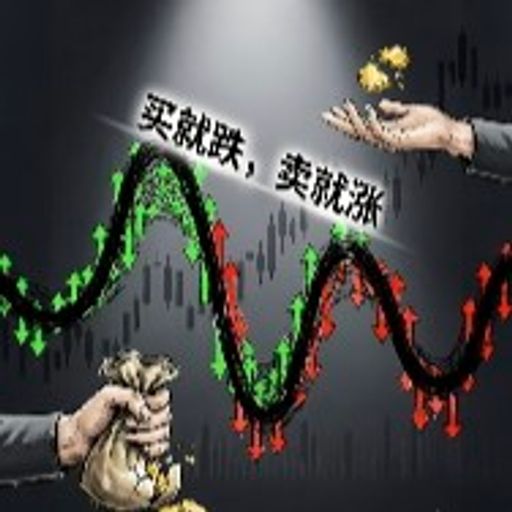
Many embodied intelligence projects’ valuations now can’t be calculated by traditional methods. “If others raised funding at a valuation of $3 billion, I might think my technology and potential are similar, and use market benchmarking to match,” said an anonymous investor. He believes that many financings now are driven by FOMO—fear of missing out—treating the funding window like a bus stopping midway to pick up passengers, with each investor squeezing onto a seat they think is “small,” observing from the bus. Without a clear lead investor, hundreds of millions or billions of yuan can be raised quickly.
This is no longer a traditional VC-led deal but a collective action with obvious FOMO sentiment. “Jokingly, investing and speculating are just like Mandarin and Cantonese,” said the investor.
A strange tension thus forms: the industry’s endgame is highly certain, but the path is very uncertain; the industry is still at the starting point, yet valuations are already at the halfway mark or higher.
No consensus, betting on faith
A key question is: what logic should embodied intelligence investments follow?
“Each institution has its own belief. We invest in Zhipu because we understand the logic of foundational models and believe they are the most important technological base for embodied intelligence; some succeed in electric vehicles and see robots as the next era of EVs and autonomous driving; others succeed in manufacturing and believe robots are inseparable from large-scale manufacturing,” said Ji Huaqian, Managing Director of Junlian Capital.
Without consensus, everyone is betting on their own belief.
For “model-oriented” investors, the essence of embodied intelligence remains an AI problem—a “large model of the physical world.” Under this logic, valuation is hard to base on revenue, and it’s more about betting on the future.
Liu Tianjie also mentioned that the core strategy at this level is to invest broadly because “the win rate isn’t high, the route isn’t converged, and no one knows which path will win. But if you bet right, the ceiling is high, and value can be released very quickly—think of OpenAI as a reference.”
Some investors are closer to an industrial perspective, viewing embodied intelligence as an extension of the robotics industry, emphasizing scenarios, efficiency, and ROI (return on investment).
Many prefer a “middle ground” approach, not choosing sides.
Gu Shi-tao believes that current business models are not converged, making it difficult to apply the logic of investing in hardware or software. “Humanoid robots in factories might be 80% general-purpose, 20% requiring specific hardware carriers, which increases software costs. Valuation systems will dynamically adjust based on technological routes and commercialization speed.”
Liu Tianjie divides his layout into three main areas: the brain, hardware, and core components, with Huaying investing in companies in each sector. “Whether starting from hardware or software, if only five companies make it to the final stage, at least one of those is one we invested in.”
“We invest on both sides because there’s a huge gap in the middle,” Liu Tianjie believes. “On one side is model innovation; on the other is industrial deployment. The former doesn’t generate revenue, the latter doesn’t reach the future. Eventually, as they approach each other, they will shake hands.”
With little consensus and abundant hot money, valuations have become a form of faith voting.
Orders, shipments, and “narrative commercialization”
Funding stories must materialize. To outsiders, orders, shipments, and leasing are signals that embodied intelligence is starting to land, but some investors see these metrics more as narrative tools.
“Today’s orders are meaningless; most are not accounted for in ROI, and entering households is emotional value, not standard automation in factories,” Liu Tianjie said directly.
Ji Huaqian believes that some B2C robots are essentially consumer goods—“like everyone raising lobsters, I also have to ‘raise’ one, no need for too much rationality.” This consumer impulse isn’t fully related to technological maturity.
For Liu Tianjie, the significance of piling up orders is twofold: to prove industry status and to prepare for listing.
Ji Huaqian also downplays revenue as a core metric. “We’re not looking at PE or PS ratios now,” he said. “At this stage, we focus on technological paradigm and maturity.” Under this mindset, valuation is more about risk preference—“I believe it can become a trillion-dollar company in the future, so I’m willing to go against consensus to witness the growth of a trillion-dollar market cap company.”
But who is qualified to tell this story?
The real value lies in the data flywheel—“bringing data back into scenarios, running through the entire process, and seeing what can and cannot be solved. This is what almost all embodied intelligence companies haven’t achieved yet,” Liu Tianjie said, comparing it to autonomous driving, where the data flywheel is natural—millions of cars collecting data on the road. In robotics, such a flywheel is hard to find. “If a company can quickly deploy many robots into scenarios, data becomes its core advantage, not revenue.”
Embodied intelligence won’t “win everything”
It’s believed that the “winner-takes-all” battle will happen with large models. Will embodied intelligence follow suit?
Liu Tianjie’s answer is no. He cites robot vacuum cleaners as an example: “Four listed companies can already handle the simplest 2D tasks. How many companies will there be when robots enter homes?”
Another reason is that embodied intelligence is highly diverse in form. “In the automotive final stage, there might be 5 to 10 companies, but all cars are basically the same—one box on four wheels. Robots, on the other hand, have many configurations, and the scenarios are too varied for one company to dominate.”
This diversity makes resource concentration on top players difficult.
Ji Huaqian believes that the US embodied logic leans more toward research, “Investors believe you can do big things, but the direction is unknown. They give you large sums to explore, similar to how OpenAI grew.” China, on the other hand, is more grounded, “because manufacturing is advanced enough for rapid deployment. Embodied doesn’t have to be humanoid; it can be wheels with arms or four-legged. It can serve households or logistics scenarios.”
This also explains why, in the Chinese market, no absolute monopoly has formed among top companies, and mid-tier firms still receive funding. One reason is that abundant hot money raises the entry barrier for top companies. “A lot of money can’t go into top firms, so it flows to mid-tier ones,” Liu Tianjie said.
More importantly, market expectations are not for a single winner. Even the ultimate outcome of embodied intelligence is not agreed upon.
“Some see it as work, others as companionship, and some as a new paradigm of the physical world,” Ji Huaqian said. “Everyone’s definition is different.”
The vastly different endgame visions for large models and embodied intelligence point to two paths: the large model funding boom occurred after a clear route was established, while embodied intelligence’s boom is happening when the answers are still uncertain.
“Some pseudo-consensus has formed to address this,” Liu Tianjie said. “Last year, it was about VLA (Vision-Language-Action); this year, it’s about world models. But these so-called consensus are false—both tech stacks have points that are currently impossible to land, with a visible ceiling, not at the level of ChatGPT’s innovative route.”
From the perspective of embodied intelligence companies, Gu Shi-tao is more open to this uncertainty: “Software development requires heavy upfront investment. Only by solidifying this foundation can technological leaps happen, and the ‘ChatGPT moment’ might then occur.”
Over half of billion-dollar valuation companies may disappear?
Everyone talks about bubbles, but what happens after?
Liu Tianjie’s straightforward judgment: more than half of today’s billion-dollar companies will eventually fail. “The current slight technological advantage is insignificant compared to ultimate technological dominance. Major players haven’t even entered yet, and their participation will greatly impact the market landscape.”
The turning point may first appear in the secondary market.
Hong Kong stocks will face a wave of unlockings in the second half of this year. An investor predicted to Daily News that when liquidity can’t support large-scale investor exits, it will impact the primary market, with effects showing from this year’s second half to the first half of next year.
Liu Tianjie also believes that current capital isn’t enough to sustain so many high-valuation, low-revenue companies long-term. But he also notes that the bubble may not burst immediately—“if the listed companies’ market caps can hold, this wave could last another year or two.”
In this process, whether embodied companies can go public and sustain continuous financing will be a key point.
Liu Tianjie expects that this year, some embodied intelligence companies will go public, but “whether they are suitable for listing is another matter.” Some investors are more cautious: “Truly excellent companies will be recognized by the capital market and achieve qualified IPOs, but that will be few; many companies claiming to go public may be gradually eliminated when capital dries up.”
The elimination race has already begun.
“From outside the industry, you think these companies are thriving. From inside, you clearly know which ones won’t get funding in the future—that’s their last round,” Liu Tianjie explained. “But embodied intelligence isn’t like large models that burn money. If you don’t do pretraining, it doesn’t cost much—computing power and personnel requirements are low.” This means that even if funding is blocked, many companies can survive a long time, and patient capital might step in during the downturn.
But how to survive, and in what form, is another question.
Everyone knows valuation is inflated, but no one can accurately predict when the bubble will burst.
When that moment comes, how many of today’s 13 billion-dollar companies will still be around? How many of those who jumped in out of FOMO will be able to wait for patient capital to take over?
No one knows the answer, but everyone is still on the bus.
Cover image source: Daily Economic News Media Library