


Futures
Access hundreds of perpetual contracts
TradFi
Gold
One platform for global traditional assets
Options
Hot
Trade European-style vanilla options
Unified Account
Maximize your capital efficiency
Demo Trading
Introduction to Futures Trading
Learn the basics of futures trading
Futures Events
Join events to earn rewards
Demo Trading
Use virtual funds to practice risk-free trading
Launch
CandyDrop
Collect candies to earn airdrops
Launchpool
Quick staking, earn potential new tokens
HODLer Airdrop
Hold GT and get massive airdrops for free
Launchpad
Be early to the next big token project
Alpha Points
Trade on-chain assets and earn airdrops
Futures Points
Earn futures points and claim airdrop rewards


More




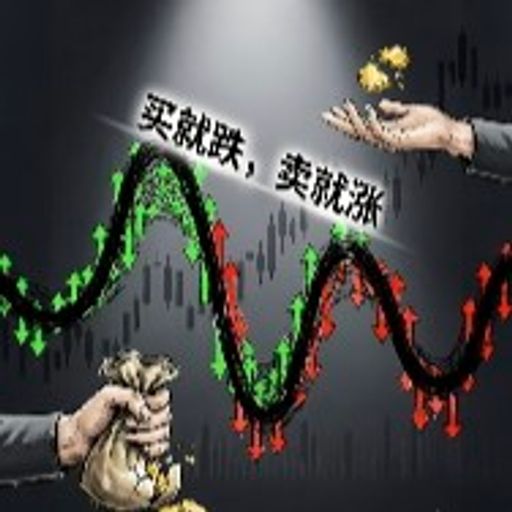

Collective dive! Asia-Pacific stock markets, "Black Monday"
Asian-Pacific stock markets encounter “Black Monday.”
On March 23, Asian-Pacific stock markets collectively plunged, with the Nikkei 225 down 3.48% and the Korea Composite Index down 6.49%.
Both A-shares and Hong Kong stocks declined, with the Shanghai Composite Index dropping over 4% intraday and briefly falling below 3,800 points, and the Sci-Tech Innovation Board Index falling over 5%. The Hang Seng Index and Hang Seng Tech Index both declined over 4% in the afternoon.
Specifically, major stock indices in both markets moved downward sharply during the day, accelerating in the afternoon. By the close, the Shanghai Composite fell 3.63% to 3,813.28 points, the Shenzhen Component Index dropped 3.76%, the ChiNext Index declined 3.49%, and the Sci-Tech Innovation Board Index fell 4.93%. The combined trading volume of the Shanghai and Shenzhen markets was approximately 2.45 trillion yuan, up about 145 billion yuan from the previous day.
Nearly 5,200 A-shares declined, with over 140 hitting the daily limit down. Semiconductors, pharmaceuticals, real estate, non-ferrous metals, insurance, brokerages, and banks all fell; however, the coal sector rose against the trend, with Yunmei Energy (600792) and Liaoning Energy hitting the daily limit. The power sector was relatively active, with Huadian Liaoning (600396) achieving six consecutive limit-ups. Some photovoltaic industry chain stocks performed strongly, including Zhejiang New Energy, Tori New Energy (002218), and Chint Power, all hitting the daily limit. Notably, BYD (002594) surged significantly during the day, rising over 8% at one point and closing up more than 4%.
Regarding the outlook, Guotai Haitong Strategy team believes that stability is scarce, and the Chinese market has a lower risk premium. The growth logic is a breakthrough in breaking the “stagflation” risk narrative, with China’s market becoming more diversified. The Russia-Ukraine conflict and US-China tariff disputes show that after emotional peaks, market direction depends on internal logic. The sinking of risk-free returns in China, financial market reforms, and economic structural transformation are the fundamental drivers and pillars of China’s “transformation bull” market.
Zheshang Strategy notes that China’s energy self-sufficiency rate has reached 85%, far higher than Japan and South Korea’s approximately 15%. This makes A-H shares more resilient under geopolitical spillover effects. China’s energy structure grants it stronger supply resilience, and building an industrial cost “safety cushion” gives China an advantage over highly dependent oil and gas importers like Japan, South Korea, and Germany. China’s relatively stable energy security and industrial system could become a “safe haven” for global capital. The upward shift in crude oil prices may amplify the vulnerability of high valuation in Japanese and Korean stock markets.
Additionally, international precious metal prices plunged sharply. As of the report, COMEX silver fell over 11%, COMEX gold dropped more than 10%, spot silver declined nearly 8%, and spot gold fell over 6%.
Financial Sector Declines
Insurance, banking, and brokerage sectors collectively declined during the day. By the close, China Life (601628) fell over 5%, and CITIC Securities (600030), CICC, Everbright Securities (601788), and Agricultural Bank of China (601288) all declined about 4%.
Recently affected by geopolitical conflicts, insurance and brokerage sectors continued their adjustment trend. On March 18, the central bank stated it would firmly maintain the stable operation of financial markets such as stocks, bonds, and foreign exchange. Open Source Securities pointed out that the medium-term logic for insurance and brokerages remains unchanged, with deposit migration and a slow bull market bringing long-term positive prospects for non-bank businesses and asset sides. Industry prosperity is improving, with valuation metrics for five A-share insurers falling to a low of 0.73 P/EV, and top brokerage firms’ PB and PE ratios at historic lows. In the short term, they may show resilience, with opportunities on the left side, especially with quarterly reports acting as catalysts.
For banks, Wanlian Securities states that domestic monetary and fiscal policies continue to promote steady growth, with a continued loose liquidity environment. External geopolitical risks cause market volatility, leading to a short-term decline in overall risk appetite, which benefits defensive assets. Policy reforms expected by 2026 may facilitate a smooth transition between new and old growth drivers, with high-dividend stocks still offering phased opportunities. Considering current dividend yields and valuation levels, the banking sector still holds investment value.
Coal Sector Rises Against the Trend
The coal sector reversed course during the day, with Yunmei Energy and Liaoning Energy hitting the daily limit-up by close. Shanxi Coking Coal rose over 9%, Zhengzhou Coal & Electricity (600121) increased nearly 7%, and Pingmei Shares (601666) rose close to 6%.
Industry-wise, influenced by overseas geopolitical conflicts, reduced Indonesian coal imports, and rising import costs, the market’s shipping outlook improved. International coastal coal freight rates continued to rise, and recent domestic coal prices have started to increase due to overseas developments. Data shows that as of March 20, the Qin港Q5500 thermal coal price settled at 735 yuan/ton, up 6 yuan from the previous period. Coking coal prices at JingTang Port were 1,620 yuan/ton, rebounding from a low of 1,230 yuan in early July 2025; coke futures also rebounded from 719 yuan in early June to 1,171 yuan, a nearly 63% increase.
CITIC Securities notes that since the Middle East conflict began three weeks ago, domestic coal prices have been lower than expected, but oil and gas prices overseas have continued to rise, outperforming the price trend during the Russia-Ukraine conflict. The impact of the Middle East conflict on global coal supply contraction is gradual, and sustained high oil and gas prices are expected to boost global high-calorie coal consumption, raising the coal price center in Asia-Pacific and benefiting domestic coal price expectations.
The agency believes three short-term factors will support steady increases in thermal coal prices: 1) improved chemical profits may boost coal demand for chemical production; 2) industry data in the first two months show improvement, suggesting better-than-expected fundamentals; 3) ongoing conflicts keep overseas coal prices at a premium. Additionally, coking coal prices are expected to remain stable or rise due to inventory replenishment and improved coking profitability.
Huadian Liaoning 6-Day Limit-Up Streak
Huadian Liaoning (600396) hit the daily limit-up again today, closing at 6.89 yuan per share, with over 260,000 buy orders at the limit. This marks six consecutive trading days of limit-up.
The company announced on the evening of the 20th that its stock experienced five consecutive limit-ups from March 16 to 20, with a cumulative deviation of 64.72% in closing prices, significantly diverging from the broader market and industry. Investors are advised to be cautious of trading risks, make prudent decisions, and invest rationally. The company confirmed that its production and operations are normal, mainly engaged in thermal power generation, with thermal power capacity accounting for 82.56%. No major changes have occurred in daily operations, market environment, or industry policies, and costs and sales have remained stable. Internal production and management are operating normally.
(End of report)
【Disclaimer】This article reflects only the author’s personal views and is not related to Hexun.com. Hexun.com maintains neutrality regarding the statements and opinions in this article and does not guarantee the accuracy, reliability, or completeness of the content. Readers should use it for reference only and bear all responsibilities themselves. Email: news_center@staff.hexun.com