


Futures
Access hundreds of perpetual contracts
TradFi
Gold
One platform for global traditional assets
Options
Hot
Trade European-style vanilla options
Unified Account
Maximize your capital efficiency
Demo Trading
Introduction to Futures Trading
Learn the basics of futures trading
Futures Events
Join events to earn rewards
Demo Trading
Use virtual funds to practice risk-free trading
Launch
CandyDrop
Collect candies to earn airdrops
Launchpool
Quick staking, earn potential new tokens
HODLer Airdrop
Hold GT and get massive airdrops for free
Launchpad
Be early to the next big token project
Alpha Points
Trade on-chain assets and earn airdrops
Futures Points
Earn futures points and claim airdrop rewards


More



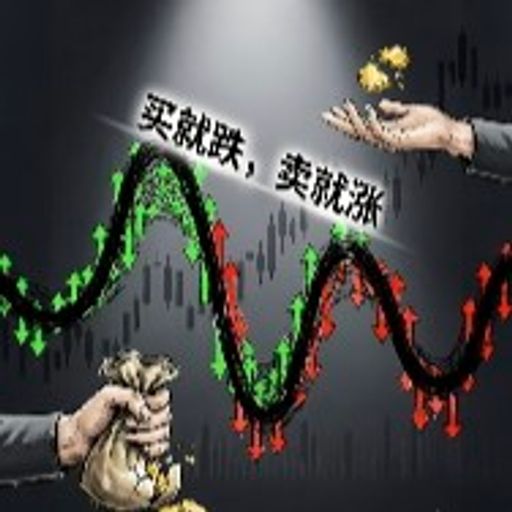

Global Assets "Battle Royale": Shanghai Composite Index Barely Holds 3800 Point Mark
Questioning AI · Why Are Global Assets Experiencing a Simultaneous Market Crash?
Reporter Cai Yuekun
“Close accounts, delete apps, never see again.”
“Not looking, not moving, does that mean no loss?”
“Waiting in line to refuel, the car is gone.”
On March 23, the A-shares market faced a “Black Monday,” with investors joking about their stock investments on social media and venting their emotions.
The three major indices opened sharply lower, with a collective drop of over 4% at one point during the session amid heavy trading volume. The Shanghai Composite Index barely held above 3,800 points at the close. In the most severe single-day correction this year, the gains of the Shanghai Index since the beginning of the year were completely wiped out.
Global Markets in the Red
By the close, the Shanghai Composite fell 2.5%, the Shenzhen Component declined 2.53%, and the ChiNext Index dropped 2.44%. Total trading volume across Shanghai and Shenzhen was 2.43 trillion yuan, an increase of 144.7 billion yuan from the previous trading day, with nearly 5,000 stocks declining.
Hong Kong markets also suffered heavy losses, with the Hang Seng Index down 3.54%, closing at 24,382.47 points, hitting an 8-month low; the Hang Seng Tech Index fell 3.28%, closing at 4,712.48 points.
Externally, global markets were hit by negative shocks, with widespread declines in stock markets. On March 23, most major Asia-Pacific indices closed lower. The Nikkei 225 index fell 3.48%, closing at 51,515.49 points; the Korea Composite Stock Price Index dropped 6.49%, closing at 5,405.75 points. As of 4:30 PM Beijing time on March 23, major European stock indices opened sharply lower. The Euro Stoxx 50 declined 1.63%, the FTSE 100 down 1.38%, France’s CAC 40 fell 1.55%, and Germany’s DAX 30 dropped 2.00%.
Additionally, on March 23, U.S. stock futures plunged collectively, with Dow Jones futures down 0.61%, S&P 500 futures down 0.73%, and Nasdaq 100 futures down 0.82%. Major tech and chip stocks in pre-market trading also declined. As of press time, Micron Technology was down over 3.5%, TSMC down over 2%. Microchip Technology pre-market fell over 5%, after last week’s close saw a drop of more than 33%.
The S&P 500 closed at 6,506.48 points on Friday (March 20), down 1.51% for the day and down 1.9% for the week, marking the fourth consecutive week of declines. The Dow fell 2.1% for the week, and the Nasdaq also declined 2.1%, setting a recent longest losing streak.
Goldman Sachs, in its latest strategy report, explicitly warned: the current market has not fully priced in the risk premium for the prolonged Middle East conflict. Friday’s decline is just the beginning of a “sentiment-driven sell-off,” and the market could shift from “technical correction” to “full correction,” with volatility potentially further amplifying and even triggering a stampede.
Under the influence of global capital market linkages, A-shares and Hong Kong stocks are unable to remain insulated.
A fund manager told Caijing Observer that the main reason for the sharp decline is the current turmoil in Iran combined with rising expectations of Federal Reserve rate hikes, which has triggered a global risk aversion. Asian markets like Korea also declined simultaneously, creating selling pressure.
The fund manager believes that the current sharp drop is more a release of investor sentiment rather than a fundamental change in listed companies’ fundamentals. In response, his team has started to buy on dips, with a simple logic: “Buy if you have money, hold if you don’t.” He sees short-term market fluctuations as unpredictable, and only long-term holding of quality assets can help investors ride out cycles and earn real returns from corporate growth.
Gold Stocks Plunge
On March 23, the precious metals sector in A-shares saw a major decline, with Chifeng Gold (600988.SH), Shengdax Resources (000603.SZ), Sichuan Gold (001337.SZ) hitting the limit down, and others like Shanjin International (000975.SZ), China Gold (600489.SH), and Hunan Silver (002716.SZ) also falling sharply.
On the news front, after last week’s international gold prices fell nearly 10% and silver prices dropped over 14%, gold and silver prices plunged again on March 23. During trading, April gold futures on NYMEX briefly fell to $4,100 per ounce; London spot gold prices repeatedly broke below $4,500, $4,400, $4,300, $4,200, and $4,100 per ounce.
As of 3:30 PM Beijing time on March 23, NYMEX April gold was at $4,106.30 per ounce, down 10.24%; NYMEX May silver was at $61.415 per ounce, down 11.84%.
UBS Wealth Management’s CIO office stated that geopolitical uncertainties, persistent central bank buying, the US’s low real interest rate environment post-inflation, and investor demand for safe-haven assets will continue to support gold prices. The recent pause in gold’s rally aligns with previous early-stage geopolitical crises—investors initially focus on liquidity and hedging, then return to gold markets with renewed optimism. As geopolitical risks persist and US real interest rates decline, reducing the opportunity cost of holding zero-yield assets, UBS expects gold to potentially hit new highs this year.
Yao Yuan, senior investment strategist at Orient Asset Management’s Asia Research Institute, believes that the short-term liquidity squeeze on gold does not change its long-term allocation logic. Over longer cycles, gold’s performance as a hedge against geopolitical, macroeconomic, and policy risks is well-documented. Evidence from the 1970s, 2000, and since 2018 supports this view.
Impact of High Oil Prices
Recent market turmoil is also related to soaring oil prices.
The US-Iran conflict pushed oil prices above $100, sharply increasing inflation fears. Market expectations for Fed rate cuts this year diminished, with some even anticipating rate hikes, leading to declines in global stock markets.
According to the fund manager, global capital markets remain focused on Middle East conflict, which is unlikely to end soon.
Huaxi Securities believes that last week’s global stock declines, especially in A-shares and European markets, reflect ongoing uncertainty. The unclear US-Iran situation means oil prices and inflation trends are highly uncertain, increasing the risk of stagflation. Meanwhile, the Fed’s March meeting kept interest rates steady but issued a hawkish statement, with no ruling out of rate hikes, fueling concerns about tightening monetary policy. Under suppressed risk appetite, A-shares retreated, trading volumes shrank, and market sentiment cooled amid rapid sector rotation. Defensive sectors like food and beverages, banking, and high-growth areas such as storage and AI computing power performed relatively better.
Regarding whether major central banks will hike rates, UBS notes that the current environment is complex. The key concern is whether the Middle East conflict will cause long-term disruptions to energy supplies and impact the global economy. While geopolitics is a focus, other risks also attract attention—such as whether AI investment booms can continue or if technological advances will disrupt software industries. Bond market volatility also reflects investor worries about inflation and government debt.
Nevertheless, UBS believes economic fundamentals still support the markets. Fiscal stimulus measures could help maintain resilience, provided energy prices do not stay high long-term. Currently, inflation remains below pre-energy crisis levels of 2022, so UBS does not expect central banks to be forced into rate hikes. If tensions ease and oil and gas flows resume, markets could rebound quickly.