Source: Xixiaoyao Technology Talk
On May 9th, North American time, the U.S. Senate Committee on Commerce, Science, and Transportation held an AI hearing, with the theme of this session being:
“Winning the AI Competition: Enhancing America’s Capabilities in Computing and Innovation”
The core issue is how the Americans are concerned about keeping the United States ahead in the field of artificial intelligence.
The representatives of the four major American tech giants attending the hearing are:
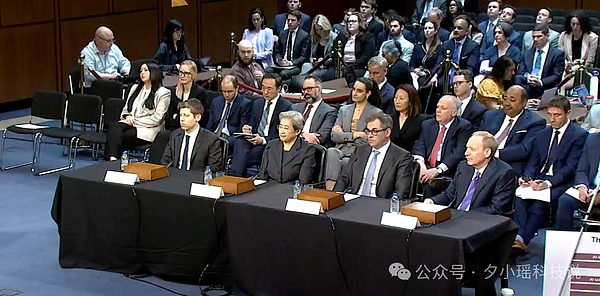 * OpenAI co-founder and CEO Sam Altman
- AMD CEO and Chairwoman Lisa Su
- CoreWeave co-founder and CEO Michael Intrator
- Brad Smith, Vice Chairman and President of Microsoft Corporation
CoreWeave, Inc. is a cloud computing company that leases GPU computing power. It completed its IPO in March of this year and is currently valued at approximately $23 billion.
The entire hearing lasted more than three hours, discussing various aspects including infrastructure, talent cultivation, energy demand, and the social impacts and risks of artificial intelligence.
I selected some “highlights” from the hearing, let’s take a look together.
2. AI Competition, Who Will Win Between China and the U.S.?
The core issue of this hearing is the following:
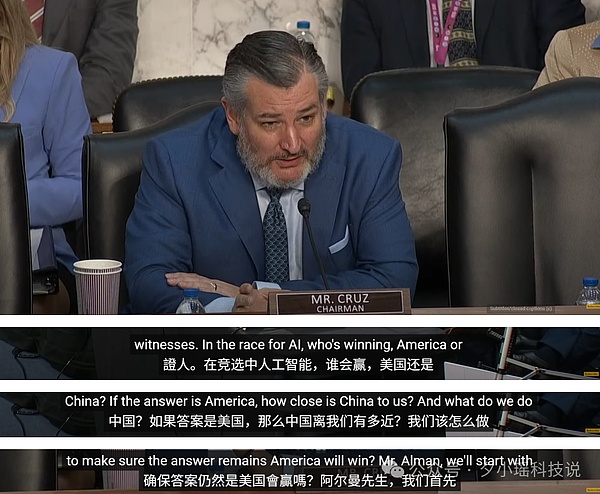 Let’s see how the CEOs responded.
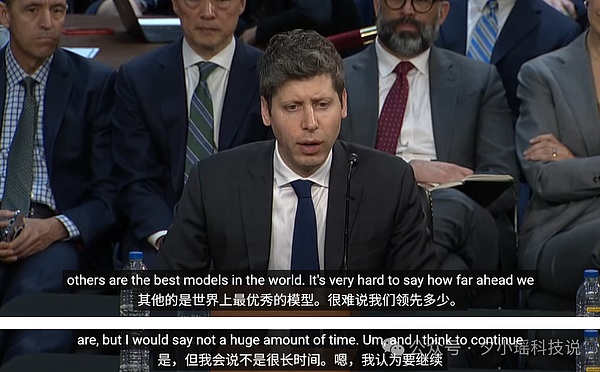
OpenAI CEO Sam Altman’s answer directly acknowledged that the United States is currently leading, but not for long.
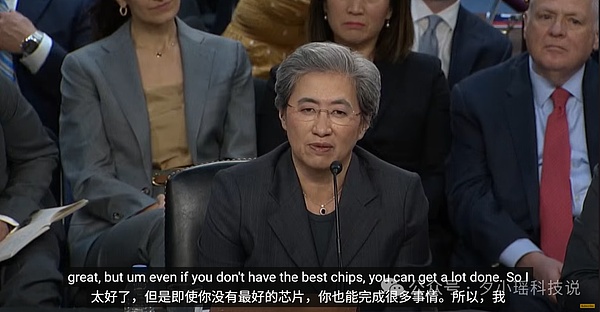
 AMD’s Su Zifeng is also similar -
The United States currently leads in chip technology, but chip performance is not the only decisive factor; many tasks can also be accomplished without using the most advanced chips.
 CoreWeave Michael Intrater pointed directly at the current predicament in the United States —
Although the United States currently leads in AI infrastructure and delivery infrastructure software stacks, U.S. companies are finding it difficult to obtain the necessary permits to continue building large projects and the required power in the current regulatory environment.
Brad Smith from Microsoft pointed out more directly from a business perspective —
The key to this competition lies in whose technology can be adopted most widely by other regions of the world. The global market is determined by network effects, and 78% of the world’s population lives outside of the United States and China. At the same time, the example of Huawei and 5G shows that companies that enter the market first will be difficult to replace. The United States needs to implement appropriate control measures for exports to gain the trust of other regions of the world.
 The responses from the big shots are relatively implicit, first stating that the United States is currently in a leading position, but then swiftly changing the subject to indicate the current difficulties and risks in their own industry.
3. Is DeepSeek a major threat?

This question hits the lung tube directly!
Let’s see how Sam Ultraman responds -
It still pretends as always, “DeepSeek is not a particularly significant matter, of course it does well in two areas: a great open-source model and a great APP. Although its download volume has exceeded ChatGPT in a short time, and they also have great engineers who have produced impressive results, OpenAI will also strive to create better models.”

Su Zifeng stated that considering DeepSeek was able to produce such a good open-source model under various computing power limitations is quite remarkable, but it cannot be regarded as a significant advancement.

CoreWeave CEO stated that DeepSeek makes people aware that China is a strong competitor in the AI field, reminding the United States to strengthen its competitiveness.
The Microsoft president’s view is close to that of Su Zifeng, stating that DeepSeek is in a middle state of “significant progress” and “not so important,” and specifically mentioned that “constraints have, to some extent, encouraged innovation” and “they hire college students who lack traditional experience.”

Overall, they have all directly or indirectly acknowledged DeepSeek’s capabilities in the field of innovation.
IV. Export Control of Chips
Regarding AI technology, there are already opposing voices within the U.S. concerning chip export controls, as the meeting chair himself stated:
Nvidia hopes to sell chips worldwide.
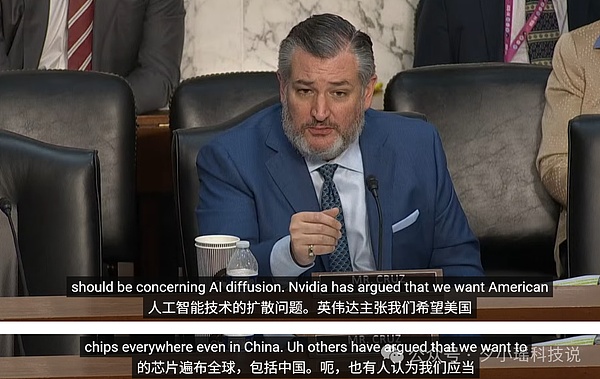 At the same time, we also asked the CEOs on-site for their opinions on this topic:

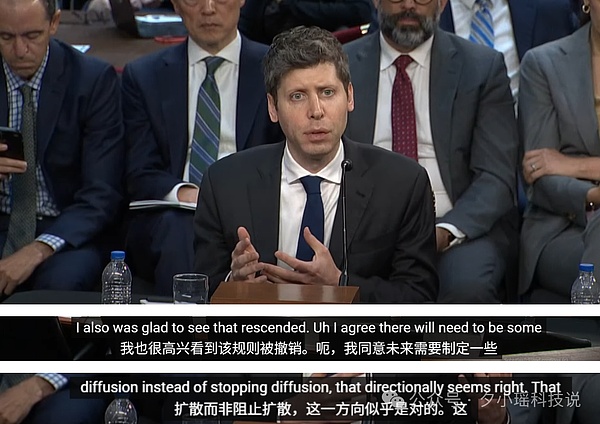
“AI diffusion” refers to: software, hardware, and services related to AI being exported from the United States to other parts of the world.
Altman’s response was quite direct, very pleased to see the restrictions (export controls) lifted, while pointing out that the mindset should shift from “preventing AI proliferation” to “winning AI proliferation.”
 AMD’s Su Zifeng subtly expressed such a concern:
Although AI technology in the United States is great, if foreign companies cannot use it due to export controls, they will opt for solutions that are immediately available, such as Chinese technology.
This is a very tactful opposition to excessive export controls.
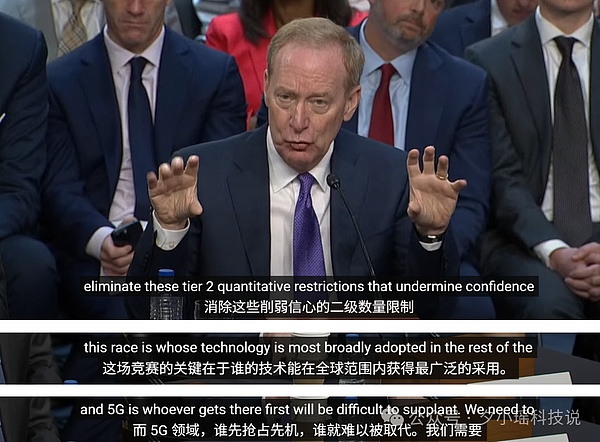
 The viewpoint of the Microsoft president is also very close to that of Su Zifeng, expressed in a more straightforward manner.
Eliminate the restrictions on the number of secondary countries/regions that undermine confidence.
According to the definition of the U.S. government, there are currently more than 140 secondary countries/regions. The quantity restriction refers to these countries and regions being able to obtain a maximum of 50,000 state-of-the-art GPUs between 2025 and 2027.
Moreover, he expressed the following views in other parts of the hearing:
The key to winning the China-US AI competition lies not in the quality of the technology, but in whose technology can achieve the widest global application.
He also cited the example of Huawei in the 5G competition:
Whoever seizes the initiative will be hard to replace.
The implication is that the current export controls are limiting the competitiveness of American companies in other parts of the world.
 And CoreWeave CEO this guy is even more direct:
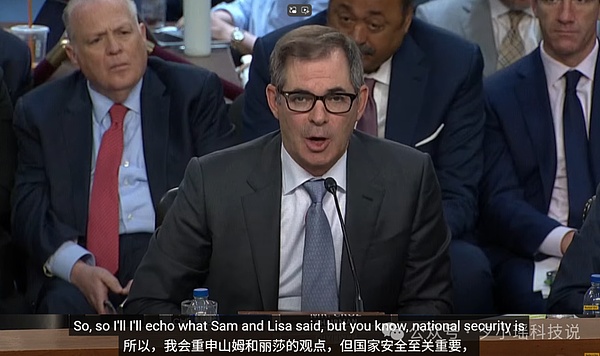
I agree with Sam and Su Zifeng’s opinions. Moreover, he also slightly complained that the previous export restriction policy did not take his opinions into account, resulting in harm to his company’s interests:
! ## 5. Easter egg: OpenAI wants to release an open-source model
A congressman asked whether the United States has a leadership position in open-source models:
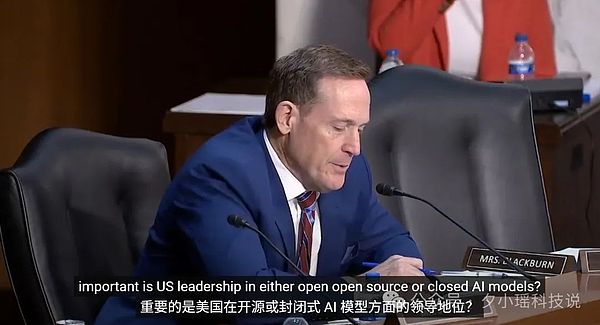 Regarding this point, Ultraman Sam gave a very direct answer:
 Ultraman stated that OpenAI will release a leading open-source model this summer. Since that’s the case, let’s wait and see.


