Tokenizing real-world assets (RWA) has emerged as a major trend in the blockchain industry. As DeFi's demand for stable return assets grows, traditional financial products—such as funds and credit assets—are entering on-chain markets via tokenization.
Within this context, KAIO serves as an institutional-grade RWA protocol, offering a comprehensive solution for asset tokenization and circulation. KAIO leverages Smart Contracts to automate fund issuance and distribution, while embedding compliance mechanisms to ensure traditional assets operate securely and legally in DeFi. This makes KAIO a key infrastructure bridging traditional capital markets and on-chain finance.
KAIO Asset Tokenization: How Funds Become Tokens
KAIO's process starts with asset issuance, mapping real-world fund assets to on-chain tokens.
Asset managers select appropriate financial products—such as money market funds or private credit—and use KAIO's tokenization engine for structural design. This includes asset custody, legal compliance structuring, and return distribution mechanism setup.
Next, KAIO generates corresponding on-chain tokens via Smart Contracts. These tokens represent fund shares and are pegged to the actual asset value.
The core objective here is to transform traditional assets into programmable, tradable on-chain assets while ensuring legal validity.
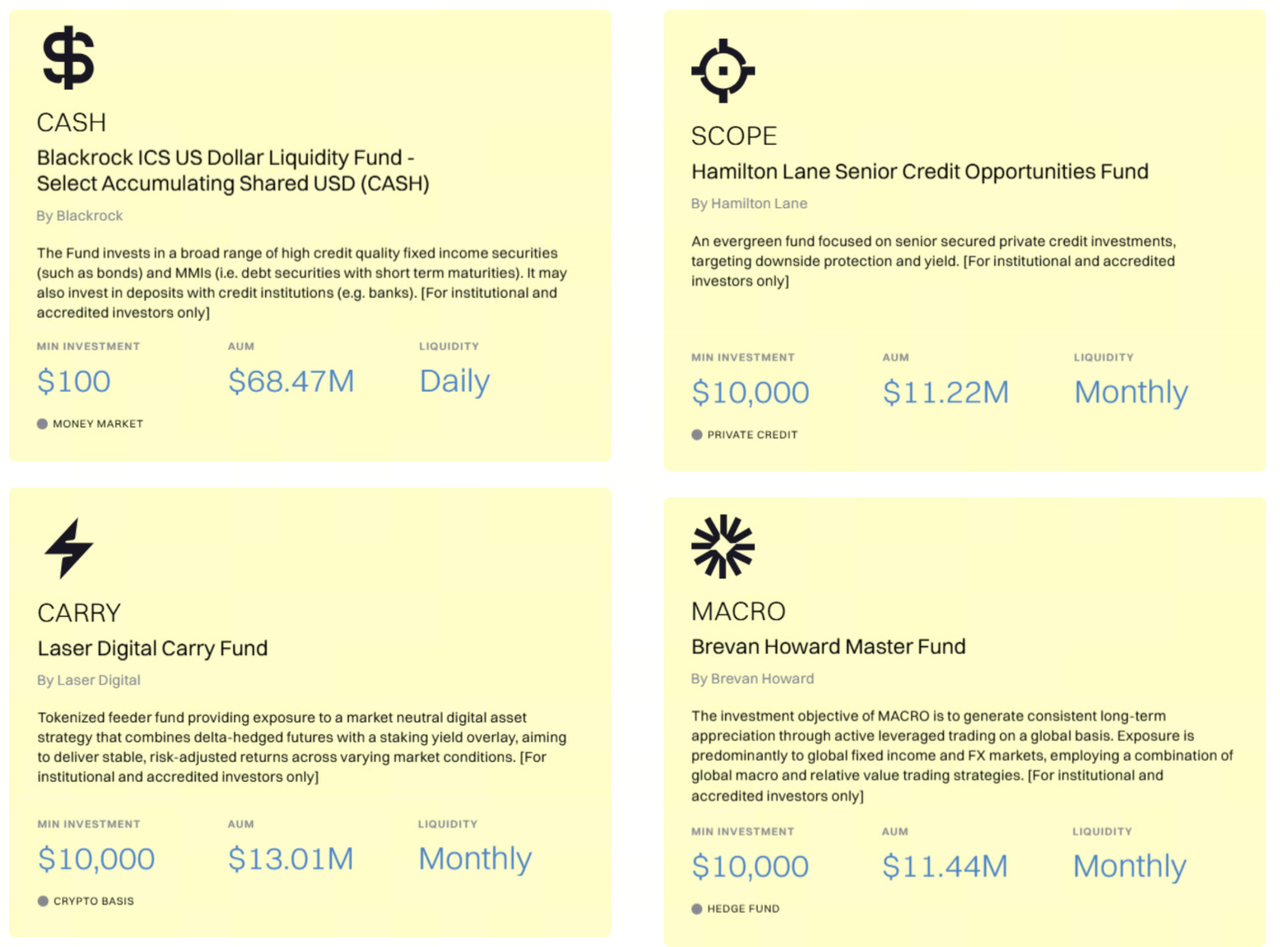 KAIO tokenized fund examples
KAIO Investor Access: Compliance and Identity Verification
Because KAIO targets institutional assets, strict compliance measures are essential.
Before investors participate, they must complete Identity Verification (KYC) and eligibility screening (such as confirming qualified investor status). Geographic restrictions and regulatory requirements may also apply.
KAIO's compliance module enforces these rules on-chain, ensuring only qualified users can hold or trade relevant assets.
This mechanism enables KAIO to strike a balance between openness and regulatory compliance.
KAIO Subscription Process: On-Chain Investment Workflow
Once investors meet access requirements, they can subscribe to assets.
The subscription process typically involves: investors depositing funds (usually Stablecoin) to a designated contract address; Smart Contracts calculate fund shares based on current Net Asset Value (NAV) and issue corresponding tokens.
This workflow is fully automated, eliminating manual settlement and intermediaries typical of traditional finance.
With this approach, KAIO delivers highly efficient and transparent on-chain asset issuance.
KAIO Redemption and Settlement: Withdrawing Assets
KAIO also supports an on-chain redemption process, complementing subscription.
When investors choose to redeem, they send their tokens to the Smart Contract. The system calculates the redemption amount based on the latest NAV and returns funds to the investor.
Throughout this process, KAIO synchronizes off-chain asset clearing and on-chain settlement to maintain consistency in asset value.
This mechanism allows traditional financial assets to exhibit liquidity characteristics similar to crypto assets.
KAIO NAV and Asset Valuation
Net Asset Value (NAV) is a critical parameter for KAIO operations.
KAIO regularly sources asset valuation data from off-chain and synchronizes it with the on-chain system. Smart Contracts use NAV for subscription and redemption calculations.
This design ensures on-chain tokens always reflect true asset value and maintain transparency.
KAIO DeFi Integration: RWA Utility
KAIO's value is amplified through integration with DeFi.
Once assets are tokenized, these tokens can be held or used in DeFi protocols as Collateral or return assets.
For example:
-
As Collateral in lending protocols
-
For yield generation strategies
-
For cross-chain circulation
This composability makes KAIO assets more than just “on-chain mappings”—they become an integral part of the DeFi ecosystem.
KAIO vs. Traditional Fund Workflows
KAIO differs substantially from traditional fund operations.
Traditional funds rely on banks, custodians, and clearing systems for transactions, while KAIO uses Smart Contracts for automation.
KAIO assets are tradable 24/7 and offer greater transparency. These advantages boost efficiency and liquidity, though they also introduce new technical and compliance challenges.
Summary
KAIO digitizes the entire lifecycle of traditional financial assets on-chain—from issuance and access to trading and DeFi application. Its core value lies in enhancing asset liquidity and lowering investment barriers while maintaining compliance, and introducing high-quality assets to DeFi.
As the RWA sector grows, this “off-chain asset + on-chain circulation” model may become a cornerstone of future financial systems.
FAQs
What are KAIO's core process steps?
KAIO's process includes asset tokenization, investor access, subscription, redemption, and DeFi application—five main stages.
How is KAIO's subscription calculated?
Subscription is based on Net Asset Value (NAV), with Smart Contracts automatically determining the number of tokens an investor receives.
Why does KAIO require compliance mechanisms?
KAIO deals with real financial assets and must adhere to regulatory requirements, including identity verification and investor eligibility restrictions.
What can KAIO assets do in DeFi?
They can serve as Collateral, participate in yield strategies, or circulate across chains.
What's the biggest difference between KAIO and traditional funds?
KAIO utilizes blockchain and Smart Contracts for automation and transparency, while traditional funds depend on centralized institutions.