Bitcoin, as the first decentralized digital currency network, made peer to peer value transfer possible without the involvement of a central institution. As its user base grew, however, the Bitcoin network gradually began facing transaction congestion and rising fees. Because block capacity is limited, each block can only hold a certain number of transactions, which reduces the efficiency of on-chain payments.
Different technical paths emerged within the community around how to solve the scaling problem. One view argued that block capacity should remain relatively small to keep the cost of running a node low and preserve network decentralization. Another view supported directly expanding block capacity to increase on-chain throughput and improve the payment experience. Bitcoin Cash was born out of this debate and chose the “large block scaling” path.
Introduction to Bitcoin and Bitcoin Cash and a Comparison of Their Core Differences
Bitcoin is a decentralized digital currency network built on blockchain technology. It uses a proof of work (PoW) mechanism to secure its ledger. The network allows users to transfer value without relying on a central institution and serves as an important foundation for blockchain based payment systems.
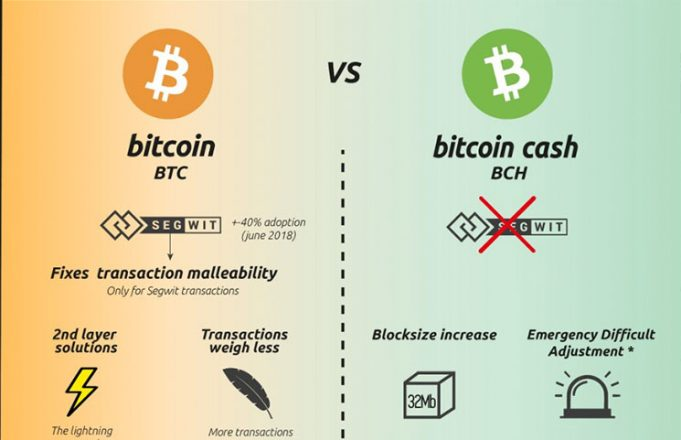
Source: Jonathan Willems
As a blockchain network forked from Bitcoin, Bitcoin Cash also uses the proof of work mechanism and the UTXO model, but its main goal is to improve the efficiency of on-chain payments. To achieve this, Bitcoin Cash adopts a larger block capacity design, allowing each block to hold more transactions. This helps lower fees and improve transfer efficiency. Its positioning is closer to that of a high throughput payment network.
| Comparison Dimension |
Bitcoin (BTC) |
Bitcoin Cash (BCH) |
| Main Goal |
Store of value |
on-chain payments |
| Scaling Method |
Controls block capacity |
Expands block capacity |
| Fee Level |
More volatile and often higher |
Lower |
| Payment Efficiency |
Relatively stable, but congested during peaks |
Higher |
| Node Barrier |
Lower |
Higher |
| Network Positioning |
Digital gold |
Payment focused cryptocurrency |
The Roles of Bitcoin and Bitcoin Cash in Blockchain Payment Systems
Although Bitcoin and Bitcoin Cash share the same technical origins, their development priorities differ. Bitcoin places greater emphasis on security and its function as a store of value. As a result, its network design tends to maintain a more stable threshold for node participation in order to protect decentralization.
By contrast, Bitcoin Cash focuses more on payment efficiency. It reduces transaction congestion and fees by expanding block capacity, thereby improving on-chain payment capability. This gives the two networks different roles within the cryptocurrency ecosystem: Bitcoin leans more toward a “digital store of value,” while Bitcoin Cash leans more toward an “on-chain payment tool.”
How Do the Scaling Mechanisms of Bitcoin and Bitcoin Cash Differ?
Bitcoin’s scaling design emphasizes controlling block capacity to reduce the hardware requirements for running a node, allowing more participants to help maintain the network. This approach supports network decentralization, but it can also lead to congestion during periods of high transaction activity.
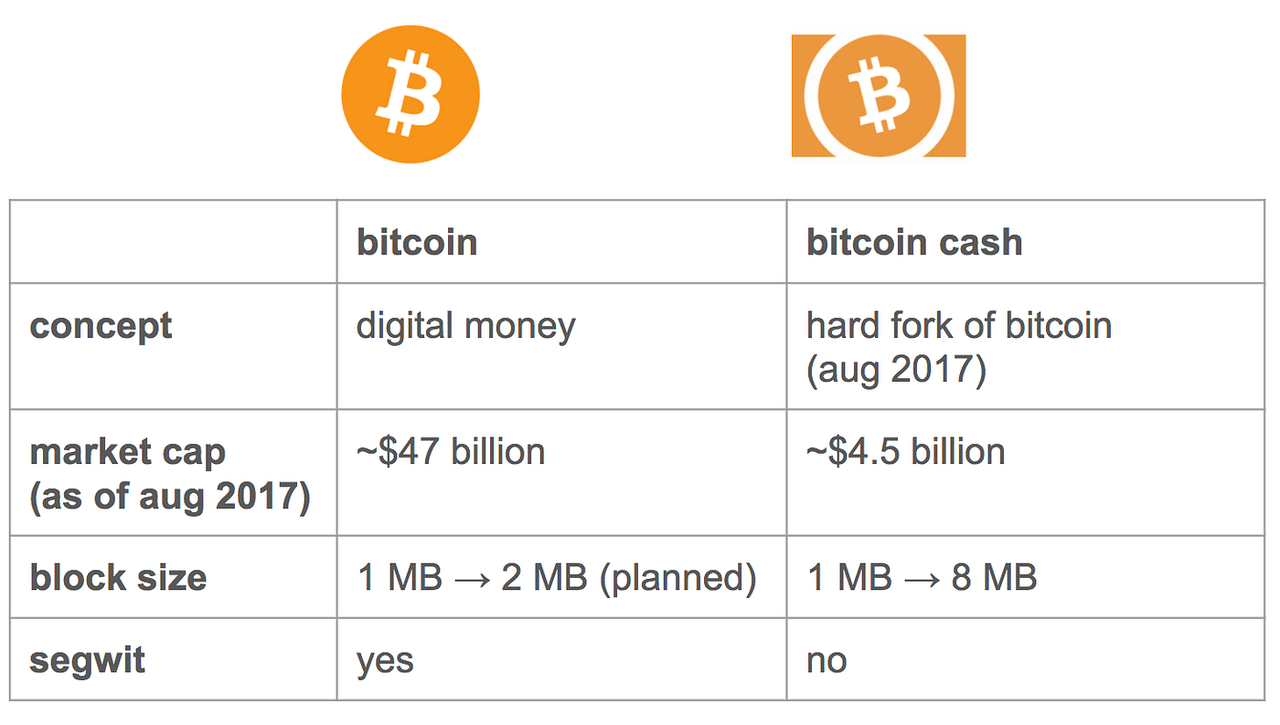
Source: Linda Xie
Bitcoin Cash increases on-chain throughput by expanding block capacity. Larger blocks mean more transactions can be processed at the same time, reducing waiting times and lowering fees. This design is better suited to payment use cases, although it also increases the resources required to run a node.
At their core, the difference between the two reflects a tradeoff between prioritizing decentralization and prioritizing payment efficiency.
Why Are Bitcoin Cash Fees Usually Lower?
Transaction fees are mainly determined by the supply and demand for block space. When the number of transactions a block can hold is limited, users need to pay higher fees to receive priority confirmation.
Because Bitcoin Cash has larger block capacity, block space is more abundant. As a result, competition among transactions is lower, and fees are usually lower as well. This makes BCH more suitable for small payments and frequent transfers.
Bitcoin has limited block space, so fees can rise when network activity is high. For that reason, it is generally more suitable for high value transfers and value storage.
How Do the Payment Logics of Bitcoin and Bitcoin Cash Differ?
Bitcoin’s payment logic places more emphasis on secure confirmation and network stability. Because block capacity is limited, transaction confirmation priority depends more heavily on fee competition, which means payment costs may increase during peak periods.
Bitcoin Cash reduces transaction congestion by expanding block capacity, making transactions easier to include in blocks quickly. This can reduce fee volatility and improve payment efficiency.
From the perspective of payment logic, Bitcoin is better suited to high value settlement, while Bitcoin Cash is better suited to everyday payments and small transfers.
Network Security Tradeoffs Between Bitcoin and Bitcoin Cash
Bitcoin’s network security is built on a large base of miner hash power and broad node participation. A lower barrier to running nodes helps improve network distribution, which strengthens decentralized security.
After increasing block capacity, Bitcoin Cash requires nodes to process more data, raising hardware and bandwidth requirements. This may increase the cost of running a node and affect the breadth of network participation.
Therefore, Bitcoin leans more toward “security first,” while Bitcoin Cash leans more toward “efficiency first.” The two represent different points of balance in network design.
Conclusion
Bitcoin and Bitcoin Cash are both based on the same underlying blockchain architecture, but they have made different choices in their scaling paths and payment logic. Bitcoin controls block capacity to maintain network security and decentralization, placing greater emphasis on its store of value attributes. Bitcoin Cash expands block capacity to increase on-chain throughput, focusing more on payment efficiency and a low fee experience.
These two design paths reflect the tradeoffs blockchain systems must make among efficiency, security, and decentralization. They also allow the two assets to play different roles within the broader crypto asset ecosystem.
FAQs
What is the biggest difference between Bitcoin Cash and Bitcoin?
The biggest difference is their approach to scaling. Bitcoin Cash improves payment efficiency by expanding block capacity, while Bitcoin places more emphasis on network security and decentralization.
Why are Bitcoin Cash fees lower?
Because BCH has larger block capacity and can hold more transactions, competition for block space is reduced, so fees are usually lower.
Which is better for payments, Bitcoin or Bitcoin Cash?
From the perspective of on-chain payment efficiency, Bitcoin Cash is better suited to frequent and small payments because it has lower fees and higher throughput.
Is Bitcoin Cash faster than Bitcoin?
In terms of on-chain transaction processing efficiency, Bitcoin Cash is usually faster because larger block capacity reduces transaction congestion.
Do Bitcoin and Bitcoin Cash use the same consensus mechanism?
Yes. Both use the proof of work (PoW) mechanism, where miners package transactions and help maintain network security.







