Tether Launches Mining OS to Redefine Open Bitcoin Mining Infrastructure

Beginner
Quick Reads
Last Updated 2026-03-25 12:29:39
Reading Time: 1m
Tether has launched Mining OS (MOS), an open-source Bitcoin mining operating system built on the Apache 2.0 license and peer-to-peer architecture. This system enables seamless integration of energy, hardware, and data, setting a new decentralized infrastructure standard for the mining sector.

Tether Enters the Mining Infrastructure Layer

(Source: mos.tether)

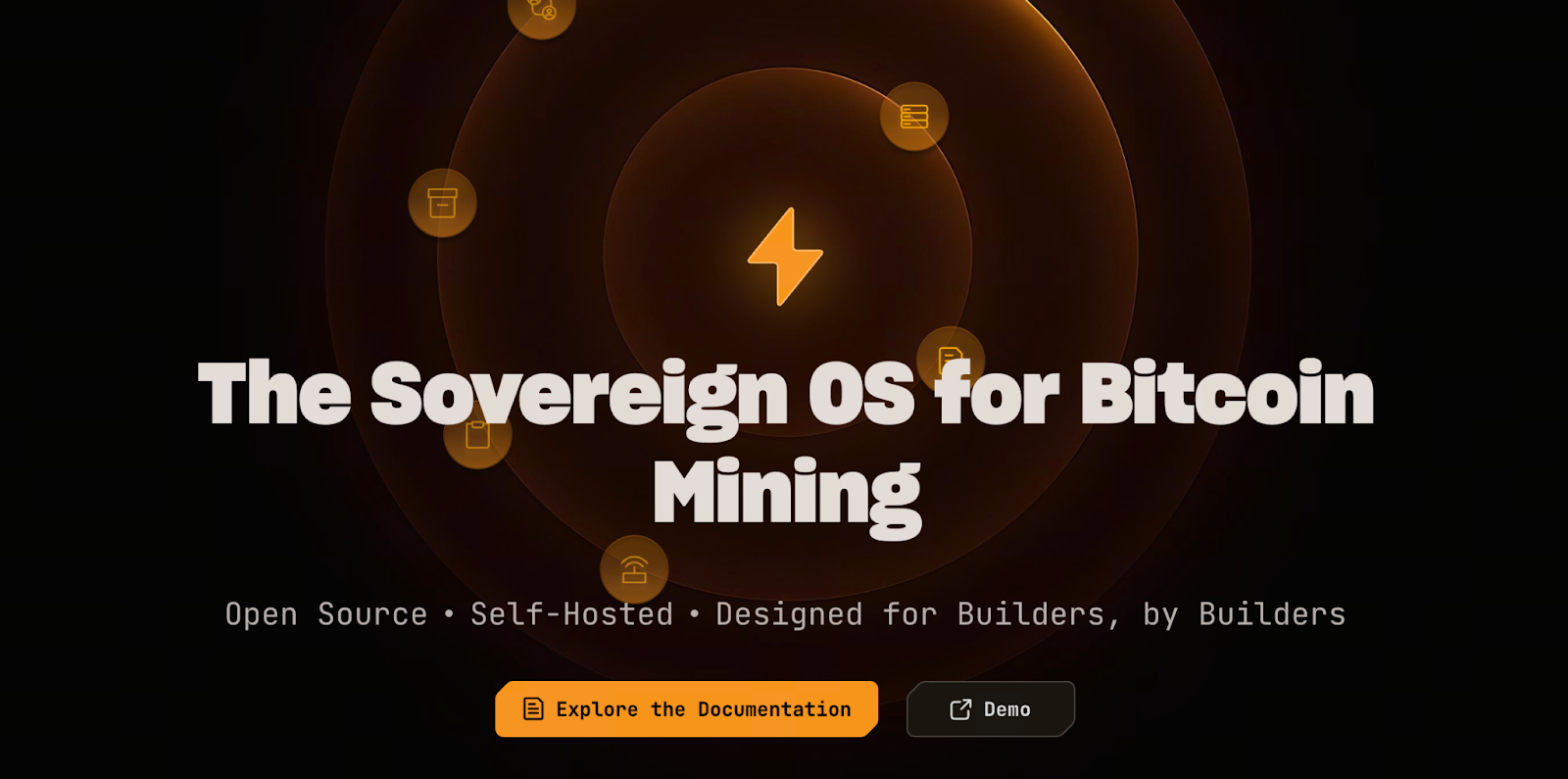
Tether has officially unveiled a new Bitcoin mining operating system—Mining OS (Mining OS by Tether, or MOS). This open-source, infrastructure-grade operating system is designed not only to manage mining hardware, but also to integrate energy, hardware, and data layers, redefining operational control in mining.

Unlike traditional mining management software, Mining OS is a scalable foundational platform. It enables miners to manage hash power, monitor device status, optimize energy usage, and reduce dependence on closed third-party tools—all within a unified architecture. Tether has released comprehensive technical documentation and opened its developer community, inviting engineers and miners worldwide to help build out the system.

A Universal Architecture for Individual Miners and Large-Scale Mining Farms

Mining OS isn’t just for massive mining farms. Its architecture is highly flexible, supporting mining operations of any scale—from solo miners running single machines to industrial-scale facilities with tens of thousands of devices across multiple locations—all operating under the same system framework.

The system’s modular design allows users to select features and expansion modules based on their actual needs. Mining farms can upgrade system capabilities as they grow, eliminating the need to repeatedly change solutions and reducing long-term operating costs and migration risks.

Challenging the Closed Software Status Quo in Mining

For years, the Bitcoin mining industry has been heavily dependent on closed software and proprietary management tools. Miners have lacked transparency into underlying operations, had limited control over performance tuning, data processing, and security risks, and often found themselves locked into single service providers.

Mining OS is designed to break this structural barrier. Tether aims to restore transparency, verifiability, and auditability to mining infrastructure through open protocols and community collaboration—empowering miners with true operational control instead of forcing them to rely on opaque, black-box tools.

Fully Open Source with No Licensing Barriers

Mining OS is released under the Apache 2.0 License, allowing anyone to freely use, modify, and further develop the system without licensing fees or commercial restrictions.

The system is built on Holepunch’s peer-to-peer (P2P) protocol, does not rely on centralized cloud services, and contains no hidden backdoors or third-party control modules. This design philosophy aligns the architecture with the core spirit of Bitcoin and decentralized infrastructure.

Mining Sovereignty as a Core Design Principle

Mining OS places mining sovereignty at the center of its design philosophy. The system supports fully localized deployment, requiring no connection to external cloud platforms and avoiding control by any single service provider. Even if external networks go down or centralized platforms fail, Mining OS can continue operating on local networks. Thanks to its P2P architecture, the system maintains basic mining and management functions even if some nodes fail—enhancing mining farm resilience and autonomy.

For Tether, Mining OS is more than a tool—it’s a foundational operating system purpose-built for Bitcoin mining, aiming to restore autonomy, transparency, and control to mining operations.

If you want to explore more Web3 content, click to register: https://www.gate.com/

Summary

Mining OS is more than a product launch by Tether in the Bitcoin mining sector—it redefines the future of mining infrastructure. With its open-source architecture, modular design, and decentralized network protocols, Mining OS empowers miners with true system sovereignty, shifting them from tool users to infrastructure participants and builders. As Bitcoin continues its path toward decentralization and autonomous operation, Mining OS represents not just improved efficiency, but a new, more open and transparent paradigm for mining.

Author: Allen
Disclaimer
* The information is not intended to be and does not constitute financial advice or any other recommendation of any sort offered or endorsed by Gate.
* This article may not be reproduced, transmitted or copied without referencing Gate. Contravention is an infringement of Copyright Act and may be subject to legal action.

Related Articles

What is Fartcoin? All You Need to Know About FARTCOIN
Intermediate

What is Fartcoin? All You Need to Know About FARTCOIN

Fartcoin (FARTCOIN) is a representative meme coin within the Solana ecosystem based on an AI-driven narrative. Its core concept originated from an experiment aimed at exploring the "boundaries between AI Agents and humor." More than just a digital asset with social attributes, the project deeply couples absurd humor culture with on-chain financial logic by integrating autonomous AI interaction models.
2026-04-04 22:01:19
Gold Price Forecast for the Next Five Years: 2026–2030 Trend Outlook and Investment Implications, Could It Reach $6,000?
Beginner

Gold Price Forecast for the Next Five Years: 2026–2030 Trend Outlook and Investment Implications, Could It Reach $6,000?

Analyze current gold price trends alongside authoritative five-year forecasts, integrating an evaluation of market risks and opportunities. This gives investors insight into the potential trajectory of gold prices and the main drivers expected to shape the market over the next five years.
2026-03-25 18:13:30
AI-Native Settlement Layers: How United Stables Is Building the Next Financial Rail
Beginner

AI-Native Settlement Layers: How United Stables Is Building the Next Financial Rail

Stablecoins were originally designed as dollar substitutes within exchanges, primarily used for asset pricing and trade settlement. As on-chain financial ecosystems have matured, their role has expanded beyond simple payments to include collateral assets, cross-chain liquidity mediums, and unified settlement units. In particular, as AI systems and automated agents begin to participate directly in economic activity, demand has risen sharply for programmable value units capable of instant settlement. This shift is pushing stablecoins toward the role of foundational financial infrastructure.
2026-03-25 03:16:17
Aster vs Hyperliquid: Which Perp DEX Will Prevail?
Beginner

Aster vs Hyperliquid: Which Perp DEX Will Prevail?

Aster and Hyperliquid are the two representative protocols of the "purpose-built L1 path" within the current decentralized perpetual exchange (Perp DEX) sector. As a pioneer in the field, Hyperliquid has built a deep liquidity moat through its highly mature order book architecture and strong community consensus. Conversely, Aster, as a rising challenger, seeks to leapfrog the competition in high-performance trading through more aggressive multi-chain aggregation logic, private transaction modules, and an underlying execution environment optimized for 2026 market demands.
2026-03-24 11:58:33
Aerodrome Tokenomics: How ve(3,3) Powers Base's Most Profitable DEX
Beginner

Aerodrome Tokenomics: How ve(3,3) Powers Base's Most Profitable DEX

AERO is the native token of Aerodrome Finance, a core decentralized exchange and liquidity protocol in the Base ecosystem. It is primarily used for liquidity incentives and ecosystem operations. veAERO is a governance NFT that users receive by locking AERO, representing both voting power and the right to share protocol revenue. Through a dual track structure of AERO as a utility token and veAERO as a governance credential, Aerodrome separates liquidity usage value from long term governance power, allowing participants to act as liquidity providers, governance decision makers, and revenue sharers within the same system.
2026-03-25 06:40:31
Hybrid Collateral Stablecoins: Inside United Stables' Stability and Yield Architecture
Beginner

Hybrid Collateral Stablecoins: Inside United Stables' Stability and Yield Architecture

In the early stages of the crypto market, traditional stablecoins mainly relied on single-reserve or single-collateral models. Their primary focus was price stability and payment convenience, which allowed them to become foundational tools for on-chain trading and capital flows. As the market has entered a more mature financial phase, however, this structure has begun to reveal limitations, including high concentration risk and the difficulty of balancing liquidity with yield. These constraints have driven the evolution toward multi-layer collateral and portfolio-based designs, such as the dual-layer hybrid collateral architecture proposed by United Stables, which seeks to redefine the underlying logic of stable assets.
2026-03-25 03:17:39





