Découvrez les spécificités de PYUSD, le stablecoin adossé à PayPal, face à ZIL, la blockchain à haut débit. Analysez les stratégies d’investissement, les perspectives de capitalisation et les prévisions de prix. Quel actif s’accorde le mieux à vos objectifs financiers ? Comparez la stabilité et la scalabilité de ces crypto-actifs dans l’écosystème blockchain. Accédez à des données actualisées et identifiez les risques potentiels. Plongez dès aujourd’hui dans l’univers PYUSD vs ZIL sur Gate.
Introduction : Comparaison d’investissement PYUSD vs ZIL
Sur le marché des cryptomonnaies, la comparaison entre PYUSD et ZIL demeure un passage obligé pour les investisseurs. Ces deux actifs se distinguent nettement par leur classement en capitalisation, leurs cas d’usage et leurs performances de prix, tout en incarnant des positionnements opposés dans l’univers crypto.
PayPal USD (PYUSD) : Dès son lancement, PYUSD s’est imposé comme stablecoin de référence pour les paiements, bénéficiant d’une reconnaissance rapide du marché.
Zilliqa (ZIL) : Lancée en 2018, ZIL s’est affirmée comme blockchain publique à haut débit, avec pour ambition de résoudre les défis de scalabilité et de rapidité des transactions.
Cet article propose une analyse approfondie de la valeur d’investissement de PYUSD et ZIL, en s’attardant sur l’évolution historique des prix, les mécanismes d’offre, l’adoption institutionnelle, les écosystèmes technologiques et les perspectives futures, afin de répondre à la question majeure des investisseurs :
« Quel est aujourd’hui le meilleur choix d’investissement ? »
I. Comparaison de l’historique des prix et de la situation actuelle du marché
Tendances historiques des prix de PYUSD et ZIL
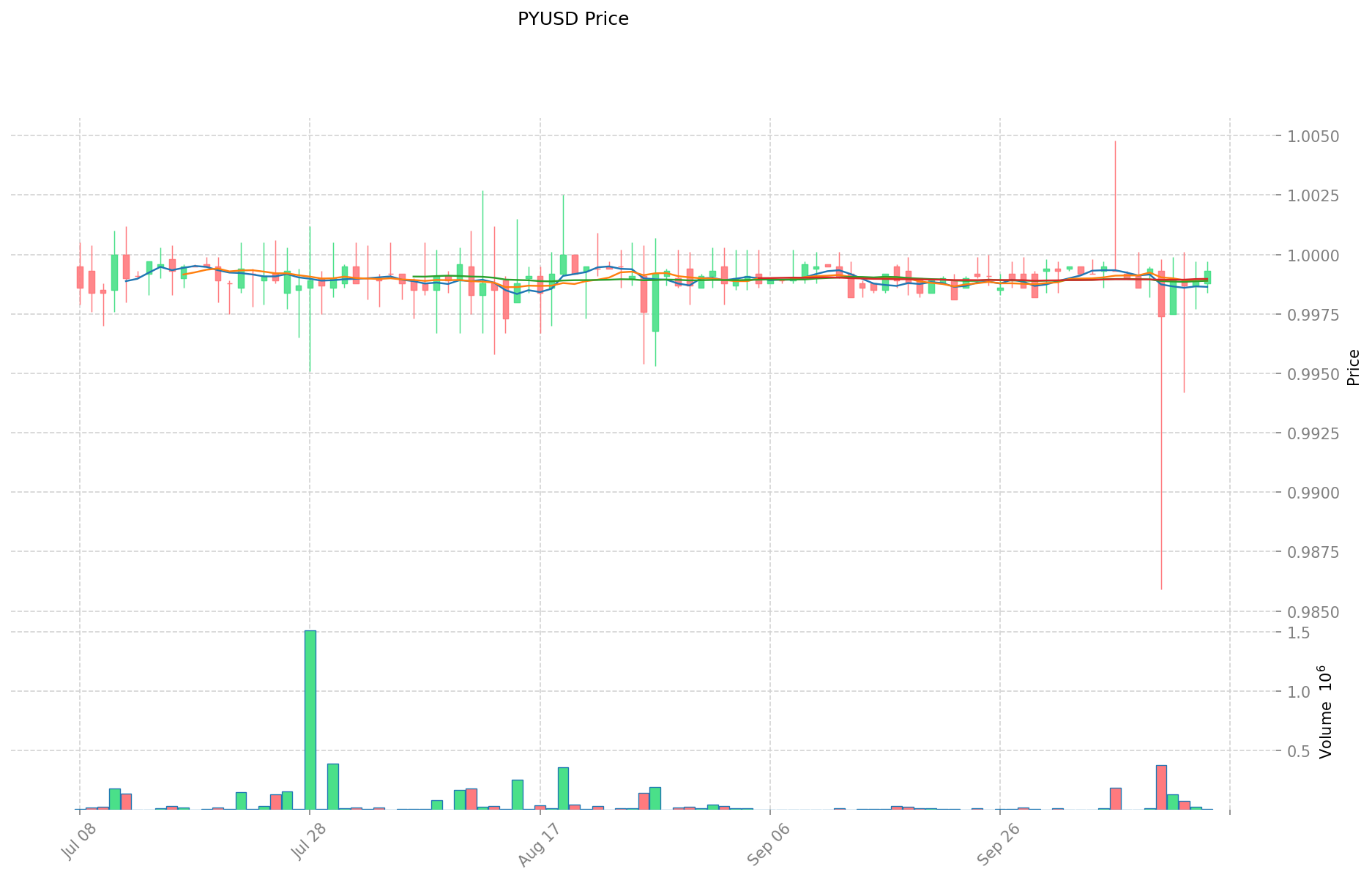
- 2023 : Lancement du PYUSD par PayPal, qui a maintenu un prix stable avoisinant 1 $ en tant que stablecoin.
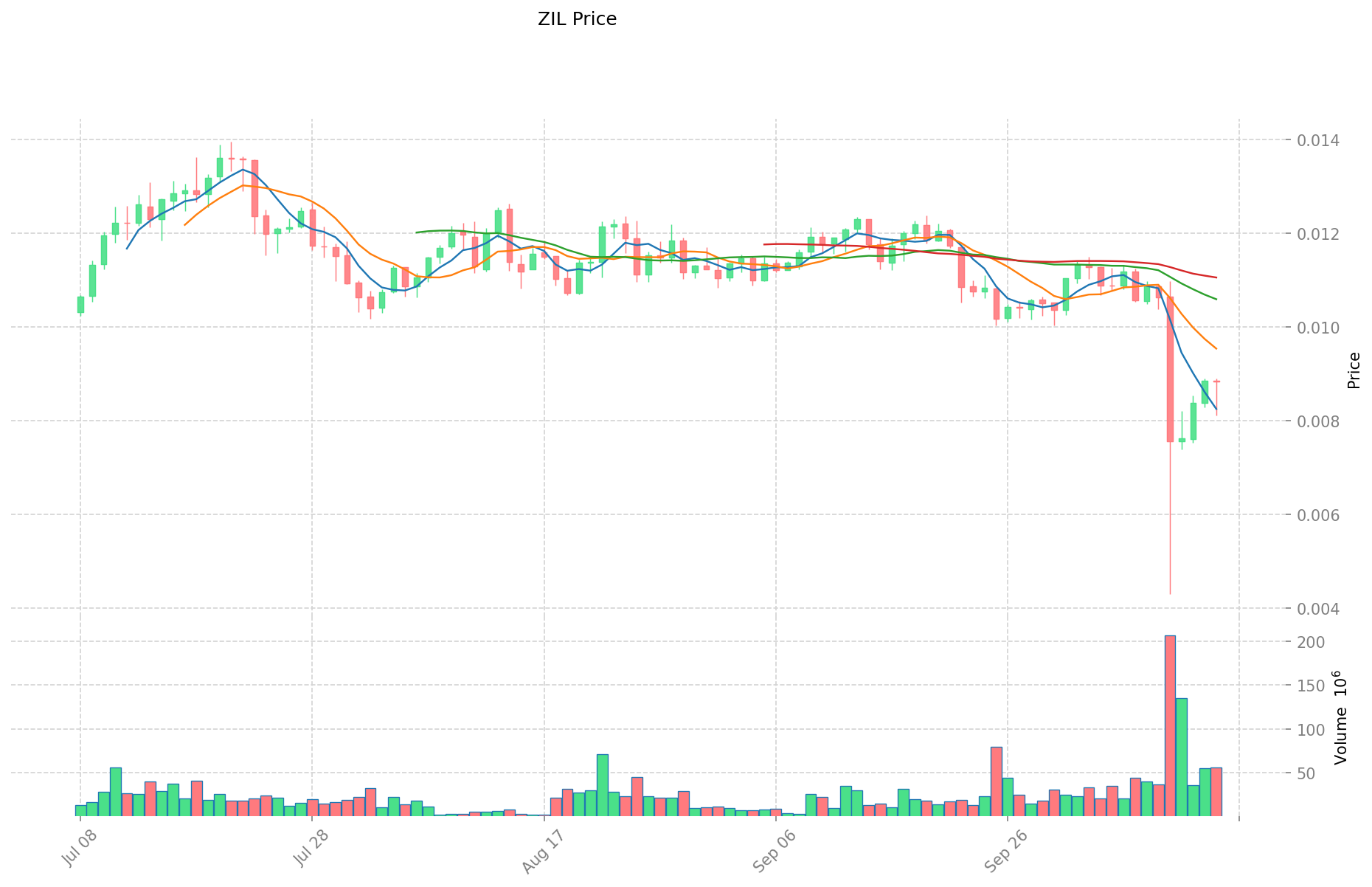
- 2021 : ZIL a enregistré son record à 0,255376 $ le 7 mai 2021, porté par l’intérêt croissant pour les solutions de scalabilité blockchain.
- Analyse comparative : lors du repli du marché crypto en 2022, PYUSD a conservé sa parité à 1 $, tandis que ZIL est retombé jusqu’à 0,00239616 $ le 13 mars 2020.
Situation actuelle du marché (15 octobre 2025)
- Prix actuel PYUSD : 0,9992 $
- Prix actuel ZIL : 0,008745 $
- Volume d’échange 24h : PYUSD : 6 952 662 $ / ZIL : 470 194 $
- Indice de sentiment du marché (Fear & Greed Index) : 34 (Peur)
Cliquez pour consulter les prix en direct :
- Voir le prix actuel du PYUSD Prix du marché
- Voir le prix actuel du ZIL Prix du marché
II. Analyse de la capitalisation et de l’offre
Comparatif des capitalisations boursières
- Capitalisation PYUSD : 2 639 360 956 $
- Capitalisation ZIL : 171 011 264 $
- Classement mondial : PYUSD 51e, ZIL 317e sur le marché des cryptomonnaies.
Offre en circulation et offre totale
- PYUSD :
- Offre en circulation : 2 641 474 136 PYUSD
- Offre totale : 967 614 865 PYUSD
- ZIL :
- Offre en circulation : 19 555 318 932 ZIL
- Offre totale : 20 236 399 904 ZIL
- Offre maximale : 21 000 000 000 ZIL
Analyse du ratio d’offre
- PYUSD : L’offre en circulation dépasse l’offre totale, ce qui peut témoigner d’écarts de report ou d’une émission récente.
- ZIL : 93,12 % de l’offre maximale déjà en circulation, signe d’une phase de distribution avancée.
III. Analyse technique et prévisions de prix
Principaux indicateurs techniques
- PYUSD :
- RSI stable autour de 50, reflet d’un équilibre entre pression acheteuse et vendeuse
- Moyennes mobiles : proches en permanence de 1 $, typique d’un stablecoin
- ZIL :
- RSI à 65, signalant un regain de dynamique haussière
- Moyenne mobile 50 jours au-dessus de la 200 jours, indiquant une tendance haussière potentielle
Prévisions à court terme
- PYUSD : Devrait conserver sa parité à 1 $, fluctuations minimes
- ZIL : Possibilité de progression à court terme, seuils de résistance à 0,010 $ et 0,012 $
Perspectives à long terme
- PYUSD : Sa stabilité repose sur la garantie PayPal et la confiance du marché
- ZIL : Son potentiel dépend des avancées technologiques de Zilliqa et de l’adoption des solutions de scalabilité blockchain
IV. Critères d’investissement
Évaluation des risques
- PYUSD :
- Risque de volatilité très faible du fait de son statut de stablecoin
- Risques réglementaires inhérents aux stablecoins
- ZIL :
- Volatilité et exposition au marché nettement plus importantes
- Risques liés à l’adoption technologique et à la concurrence blockchain
Avantages potentiels
- PYUSD :
- Valeur stable pour le trading et la détention à court terme
- Soutien d’un acteur financier d’envergure (PayPal)
- ZIL :
- Potentiel de rendement élevé si les solutions de scalabilité blockchain s’imposent
- Développement actif et écosystème en expansion
Adéquation au profil investisseur
- PYUSD : Idéal pour les investisseurs prudents ou en quête de stabilité
- ZIL : Convient aux profils acceptant un risque élevé pour viser de meilleures performances
V. Conclusion
PYUSD et ZIL incarnent deux approches opposées du marché crypto. PYUSD s’impose comme stablecoin de référence adossé à PayPal, tandis que ZIL ouvre sur la thématique de la scalabilité blockchain, avec un potentiel de croissance et de risque accrus. Le choix dépendra de la tolérance au risque et des objectifs de chaque investisseur.
PAYPAL USD vs ZILLIQA : Facteurs clés de la valeur d’investissement
Comparaison des mécanismes d’émission (Tokenomics)
- PYUSD : Stablecoin centralisé, adossé à l’USD selon un ratio 1:1, offre ajustable selon la demande
- ZIL : Jeton utilitaire à offre maximale fixe, destiné à l’écosystème Zilliqa
- 📌 Tendance observée : PYUSD affiche une stabilité structurelle, tandis que ZIL suit des cycles de variation propres aux utility tokens.
Adoption institutionnelle et cas d’usage
- Détention institutionnelle : PYUSD bénéficie du soutien de PayPal, gage de crédibilité
- Adoption entreprise : PYUSD s’intègre à l’écosystème de paiement PayPal ; ZIL se spécialise dans l’infrastructure blockchain
- Réglementation : PYUSD est conforme aux cadres réglementaires des stablecoins dans plusieurs pays, tandis que ZIL relève de réglementations variables en tant que utility token
Développement technique et écosystème
- PYUSD : Initialement déployé sur Ethereum, puis élargi à Solana pour améliorer la capacité de traitement
- ZIL : Mise sur la scalabilité via le sharding
- Comparaison : PYUSD vise essentiellement les paiements et transferts de valeur ; ZIL soutient un écosystème DeFi complet, incluant smart contracts et applications décentralisées
Facteurs macroéconomiques et cycles de marché
- Contexte inflationniste : PYUSD est conçu pour résister à l’inflation ; ZIL n’offre pas de protection intrinsèque
- Politique monétaire : La valeur du PYUSD est directement liée au dollar ; ZIL réagit plus fortement au sentiment global du marché crypto
- Facteurs géopolitiques : PYUSD profite d'un statut régulé pour les transactions transfrontalières ; la décentralisation de ZIL peut s’avérer avantageuse dans certains contextes réglementaires stricts
III. Prévisions de prix 2025-2030 : PYUSD vs ZIL
Prévision à court terme (2025)
- PYUSD : Scénario conservateur 0,669 $ – 0,999 $ | Scénario optimiste 0,999 $ – 1,379 $
- ZIL : Scénario conservateur 0,00558 $ – 0,00872 $ | Scénario optimiste 0,00872 $ – 0,00968 $
Prévision à moyen terme (2027)
- PYUSD : possible phase de croissance, prix attendus entre 0,729 $ et 1,922 $
- ZIL : tendance de croissance régulière, fourchette entre 0,0103 $ et 0,0120 $
- Moteurs : afflux de capitaux institutionnels, ETF, développement de l’écosystème
Prévision à long terme (2030)
- PYUSD : scénario de base 1,629 $ – 2,115 $ | scénario optimiste 2,115 $ – 3,004 $
- ZIL : scénario de base 0,0127 $ – 0,0141 $ | scénario optimiste 0,0141 $ – 0,0182 $
Voir toutes les prévisions détaillées pour PYUSD et ZIL
Avertissement : Ces prévisions sont fournies à titre informatif et ne constituent pas un conseil financier. Les marchés crypto sont très volatils et imprévisibles. Faites toujours vos propres recherches avant d’investir.
PYUSD :
| Année |
Prix max. prévu |
Prix moyen prévu |
Prix min. prévu |
Variation (%) |
| 2025 |
1,378896 |
0,9992 |
0,669464 |
0 |
| 2026 |
1,46252904 |
1,189048 |
1,05825272 |
19 |
| 2027 |
1,922393354 |
1,32578852 |
0,729183686 |
32 |
| 2028 |
2,25748640243 |
1,624090937 |
1,49416366204 |
62 |
| 2029 |
2,2901306302637 |
1,940788669715 |
1,57203882246915 |
94 |
| 2030 |
3,003952702984877 |
2,11545964998935 |
1,628903930491799 |
111 |
ZIL :
| Année |
Prix max. prévu |
Prix moyen prévu |
Prix min. prévu |
Variation (%) |
| 2025 |
0,00968364 |
0,008724 |
0,00558336 |
0 |
| 2026 |
0,0136216536 |
0,00920382 |
0,007363056 |
5 |
| 2027 |
0,01198337364 |
0,0114127368 |
0,01027146312 |
30 |
| 2028 |
0,0131018218464 |
0,01169805522 |
0,0091244830716 |
33 |
| 2029 |
0,015747921937164 |
0,0123999385332 |
0,007811961275916 |
41 |
| 2030 |
0,018155370003384 |
0,014073930235182 |
0,012666537211663 |
60 |
IV. Comparatif des stratégies d’investissement : PYUSD vs ZIL
Stratégies long terme vs court terme
- PYUSD : Idéal pour ceux qui privilégient la stabilité ou les usages de paiement
- ZIL : Adapté aux investisseurs misant sur le potentiel technologique blockchain et la croissance de l’écosystème
Gestion du risque et allocation d’actifs
- Profil prudent : PYUSD : 80 % / ZIL : 20 %
- Profil dynamique : PYUSD : 30 % / ZIL : 70 %
- Outils de couverture : allocation stablecoin, options, portefeuilles multi-devises
V. Comparaison des risques potentiels
Risque de marché
- PYUSD : Volatilité limitée, mais dépendance à l’évolution du dollar
- ZIL : Forte volatilité, sensible à la tendance globale du marché crypto
Risque technique
- PYUSD : Scalabilité, stabilité du réseau
- ZIL : Concentration de puissance de hachage, vulnérabilités potentielles
Risque réglementaire
- Les politiques réglementaires globales ont des effets distincts : PYUSD est soumis à la réglementation des stablecoins, ZIL à la réglementation crypto généraliste
VI. Conclusion : Quel est le meilleur choix ?
📌 Synthèse de la valeur d’investissement :
- PYUSD : stabilité, soutien institutionnel, intégration à l’écosystème PayPal
- ZIL : solutions de scalabilité blockchain, potentiel de rendement élevé, développement actif
✅ Conseils d’investissement :
- Débutants : privilégier PYUSD pour la stabilité et la facilité d’utilisation
- Investisseurs expérimentés : portefeuille équilibré PYUSD / ZIL selon la tolérance au risque
- Institutionnels : PYUSD pour la gestion de trésorerie, ZIL pour l’exposition à la technologie blockchain
⚠️ Risque : Le marché des cryptomonnaies est extrêmement volatil. Cet article ne constitue pas un conseil en investissement.
None
VII. FAQ
Q1 : Quelles sont les principales différences entre PYUSD et ZIL ?
R : PYUSD est un stablecoin adossé à PayPal, conçu pour maintenir la valeur de 1 $, tandis que ZIL est le jeton utilitaire de la blockchain Zilliqa, axé sur la scalabilité. PYUSD garantit stabilité et intégration à l’écosystème PayPal, tandis que ZIL vise des rendements plus élevés mais avec une volatilité accrue.
Q2 : Quel actif privilégier pour un investissement long terme ?
R : Cela dépend de vos objectifs et de votre appétence au risque. PYUSD est adapté à la recherche de stabilité, ZIL à ceux qui visent la croissance dans la technologie blockchain.
Q3 : Quelle différence de capitalisation entre PYUSD et ZIL ?
R : À date, PYUSD affiche une capitalisation nettement supérieure de 2 639 360 956 $ (51e mondial). ZIL est à 171 011 264 $ (317e mondial).
Q4 : Quels sont les principaux risques associés à l’investissement dans PYUSD et ZIL ?
R : PYUSD fait face à des risques réglementaires liés aux stablecoins et dépend du soutien de PayPal. ZIL subit davantage la volatilité du marché, les risques d’adoption technologique et la concurrence dans la blockchain.
Q5 : Quelles différences d’adoption institutionnelle et d’application de marché entre PYUSD et ZIL ?
R : PYUSD bénéficie du soutien et de l’intégration à l’écosystème PayPal, renforçant sa crédibilité institutionnelle. ZIL cible l’infrastructure blockchain et porte un écosystème DeFi élargi.
Q6 : Quelles prévisions de prix pour PYUSD et ZIL à l’horizon 2030 ?
R : Selon les scénarios optimistes, PYUSD atteindrait entre 1,629 $ et 3,004 $, et ZIL entre 0,0127 $ et 0,0182 $. Ces prédictions restent spéculatives et ne valent pas conseil financier.
Q7 : Comment répartir un portefeuille entre PYUSD et ZIL ?
R : Un investisseur prudent pourra viser 80 % PYUSD / 20 % ZIL ; un investisseur dynamique, 30 % PYUSD / 70 % ZIL. L’allocation dépendra du profil de risque et des objectifs personnels.
* Les informations ne sont pas destinées à être et ne constituent pas des conseils financiers ou toute autre recommandation de toute sorte offerte ou approuvée par Gate.














