CPOOL vs NEAR: A Comprehensive Comparison of Two Leading Blockchain Platforms


Introduction: CPOOL vs NEAR Investment Comparison
In the cryptocurrency market, the comparison between CPOOL and NEAR has become an important consideration for investors. The two assets demonstrate significant differences not only in market ranking, application scenarios, and price performance, but also represent distinct positions within the crypto ecosystem. Clearpool (CPOOL): As the utility and governance token of the Clearpool protocol, CPOOL enables holders to stake, vote, and earn attractive rewards within a decentralized capital markets ecosystem where institutional borrowers can access uncollateralized liquidity directly from DeFi. NEAR (NEAR): Since its inception, NEAR Protocol has been positioned as a highly scalable base-layer protocol designed to support fast DApp operation on mobile devices, with a technical architecture targeting linear scalability through state sharding and aiming for 100k TPS across millions of mobile nodes. This article will provide a comprehensive analysis of the investment value proposition of CPOOL vs NEAR across historical price trends, token supply mechanisms, market adoption, technical ecosystems, and forward-looking fundamentals, addressing the key question investors are asking:
"Which is the better buy right now?"
Clearpool (CPOOL) vs NEAR Protocol (NEAR): Comparative Market Analysis Report
I. Historical Price Comparison and Current Market Status
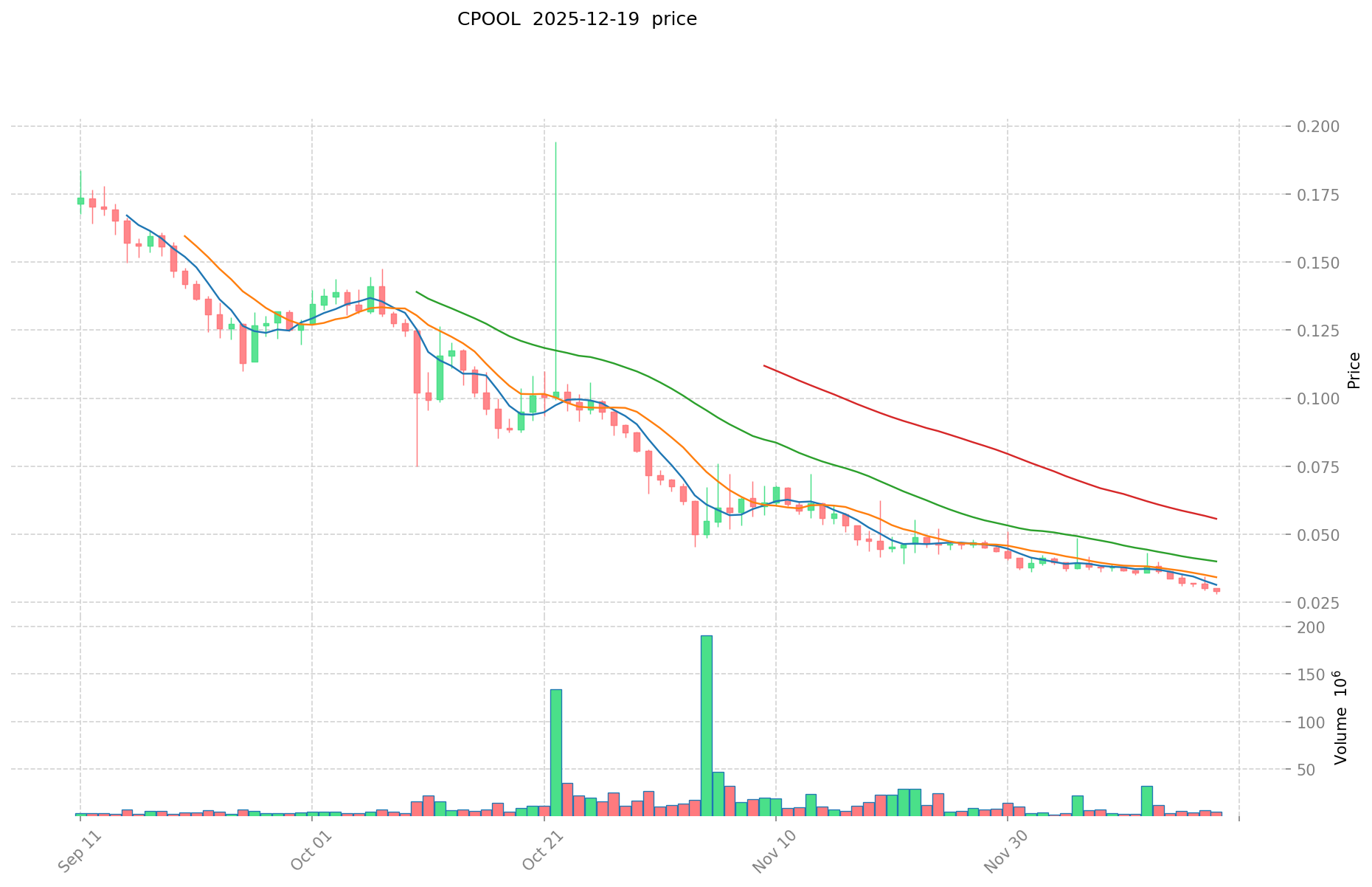
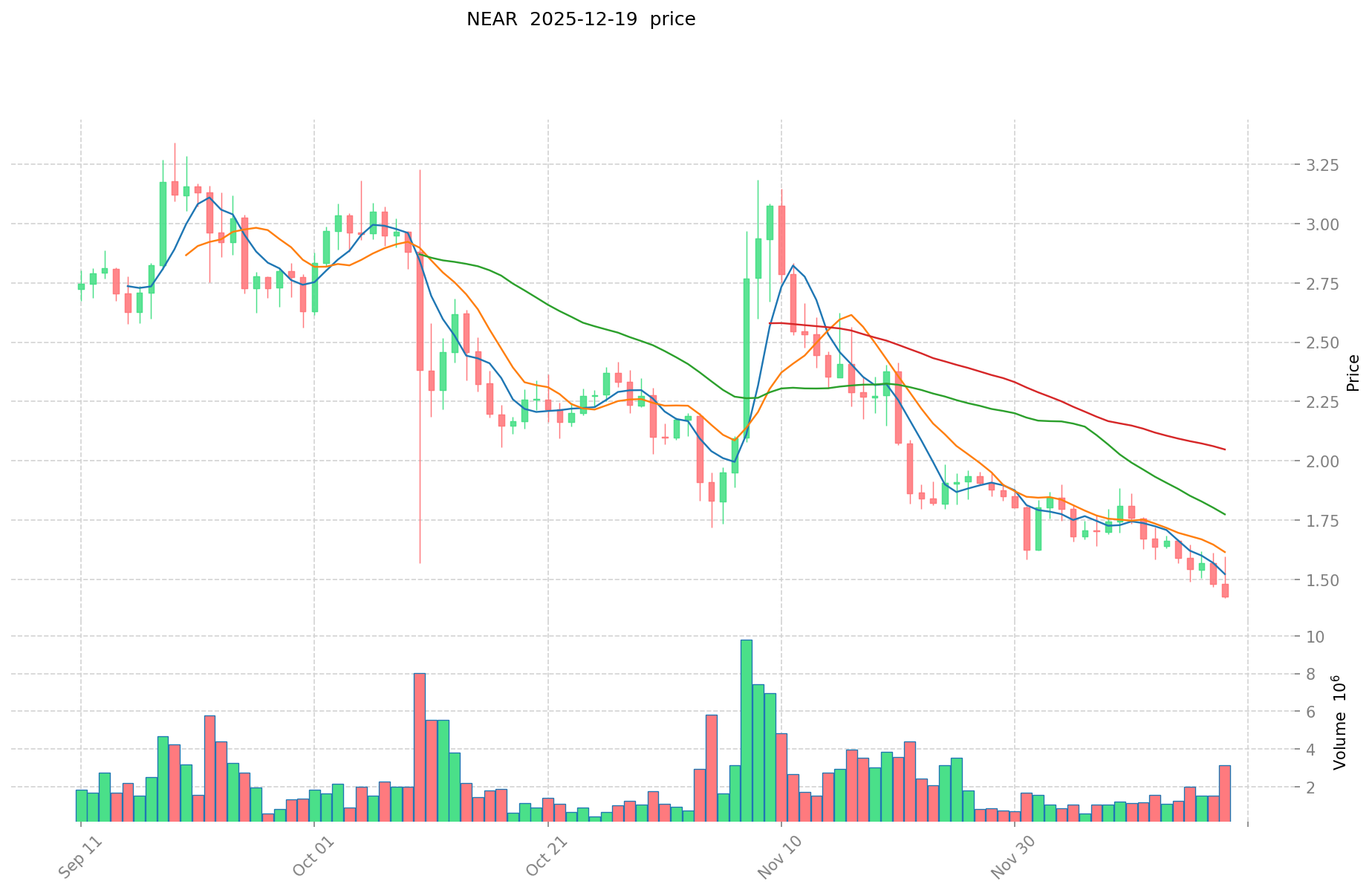
CPOOL (Clearpool) and NEAR (Near Protocol) Historical Price Trends
CPOOL Price History:
- All-Time High (ATH): $2.55 (November 17, 2021)
- All-Time Low (ATL): $0.01599962 (October 17, 2023)
- Price Decline from ATH to Current: From $2.55 to $0.03044, representing a 98.81% decrease since peak valuation
NEAR Price History:
- All-Time High (ATH): $20.44 (January 17, 2022)
- All-Time Low (ATL): $0.526762 (November 5, 2020)
- Price Decline from ATH to Current: From $20.44 to $1.554, representing a 92.41% decrease since peak valuation
Comparative Analysis: Both tokens have experienced substantial declines from their peak valuations during the 2021-2022 bull market. CPOOL has suffered a more severe drawdown (98.81%) compared to NEAR (92.41%), indicating greater volatility and potentially weaker market recovery momentum. NEAR, as a Layer 1 blockchain protocol, has demonstrated relatively stronger price resilience with a higher current price point and market capitalization foundation, whereas CPOOL, as a utility token within a decentralized capital markets ecosystem, has faced more pronounced valuation compression.
Current Market Status (December 20, 2025)
Price Metrics:
- CPOOL Current Price: $0.03044
- NEAR Current Price: $1.554
- NEAR maintains approximately 51x higher valuation per token
24-Hour Trading Activity:
- CPOOL 24H Volume: $297,679.92 USD
- NEAR 24H Volume: $4,144,078.31 USD
- NEAR demonstrates 13.9x greater trading liquidity
Market Capitalization:
- CPOOL Market Cap: $25,765,842.27 USD (Rank: 764)
- NEAR Market Cap: $1,993,654,119.11 USD (Rank: 49)
- Market share disparity reflects NEAR's significantly larger ecosystem presence
Price Performance (24-Hour Period):
- CPOOL: +8.5% (positive momentum)
- NEAR: +7.54% (positive momentum)
- Both assets showing similar short-term bullish sentiment
Extended Price Performance:
- CPOOL 7-Day: -17.33%
- NEAR 7-Day: -4.08%
- CPOOL 30-Day: -28.37%
- NEAR 30-Day: -29.84%
- CPOOL 1-Year: -92.81%
- NEAR 1-Year: -72.71%
Crypto Market Sentiment (Fear & Greed Index):
- Current Index Value: 16
- Sentiment Status: Extreme Fear
- This metric indicates elevated market anxiety and conservative investor positioning as of December 19, 2025
Current Real-Time Pricing:
- CPOOL Market Price: Gate CPOOL
- NEAR Market Price: Gate NEAR
II. Project Overview and Functional Distinctions
CPOOL - Clearpool Protocol
Project Definition: Clearpool is a Decentralized Capital Markets Ecosystem enabling institutional borrowers to establish single-borrower liquidity pools and access uncollateralized liquidity directly from the DeFi ecosystem.
Token Utility: CPOOL functions as both a utility and governance token for the Clearpool protocol. Token holders can:
- Stake CPOOL to participate in protocol governance
- Vote on critical protocol decisions
- Earn attractive yield rewards
- Access LP (Liquidity Provider) rewards through pool interest rates supplemented by CPOOL token incentives
Market Position:
- Global Ranking: 764
- Circulating Supply: 846,446,855.20 CPOOL (84.64% of total supply)
- Total Supply: 1,000,000,000 CPOOL
- Holders: 22,593 addresses
- Listed on: 19 cryptocurrency exchanges
NEAR - NEAR Protocol
Project Definition: NEAR Protocol represents a highly scalable foundational blockchain protocol designed to support decentralized application (DApp) execution with sufficient speed for mobile device deployment.
Core Technical Features:
- Supports mobile blockchain DApp development and execution
- Implements state sharding to enable linear scalability with network node growth
- Target performance: 100,000 TPS based on 1 million mobile nodes
- NEAR tokens serve as payment mechanism for network validators providing computing and storage resources
Market Position:
- Global Ranking: 49
- Circulating Supply: 1,282,917,709 NEAR (128.29% of total supply indicates continuous minting)
- Maximum Supply: Unlimited (∞)
- Holders: 43,961 addresses
- Listed on: 57 cryptocurrency exchanges
III. Market Structure and Supply Dynamics
Tokenomics Comparison
| Metric | CPOOL | NEAR |
|---|---|---|
| Current Price | $0.03044 | $1.554 |
| Market Cap | $25.77M | $1.99B |
| Circulating Supply | 846.45M | 1.28B |
| Total Supply | 1B | 1.28B |
| Max Supply | 1B | Unlimited |
| Circulating Ratio | 84.64% | 128.29% |
| Launch Price | $0.30 | $0.0375 |
| Price Multiple from Launch | 0.10x | 41.4x |
Exchange Accessibility
CPOOL Distribution:
- Available on 19 major cryptocurrency exchanges
- Limited compared to established Layer 1 protocols
- Suggests emerging market phase with concentrated liquidity
NEAR Distribution:
- Available on 57 major cryptocurrency exchanges
- Substantially broader market access
- Reflects institutional-grade infrastructure positioning
IV. Risk Assessment and Market Considerations
Liquidity and Market Depth
CPOOL Considerations:
- Lower absolute trading volumes ($297,679.92 USD daily)
- Smaller holder base (22,593 addresses)
- Concentrated liquidity may result in higher slippage for larger transactions
- Higher volatility risk relative to market size
NEAR Considerations:
- Superior trading liquidity ($4,144,078.31 USD daily)
- Larger distributed holder base (43,961 addresses)
- Established market infrastructure with 57 exchange listings
- Institutional-grade market depth
Valuation Recovery Potential
CPOOL Recovery Scenario:
- Requires 83.7x appreciation to recover to ATH ($2.55)
- Current market cap represents only 0.08% of ATH valuation
- Contingent upon protocol adoption and institutional borrower growth
NEAR Recovery Scenario:
- Requires 13.1x appreciation to recover to ATH ($20.44)
- Current market cap represents 7.7% of ATH valuation
- Positioned as established Layer 1 with existing developer ecosystem
Supply Inflation Dynamics
CPOOL Structure:
- Fixed maximum supply of 1B tokens
- Current circulating represents 84.64% of cap
- Predictable supply inflation trajectory
- Supports long-term deflationary potential if demand increases
NEAR Structure:
- Unlimited maximum supply (inflationary model)
- Currently circulating supply exceeds stated total (128.29% ratio)
- Perpetual validator reward inflation
- Requires continuous protocol utility demand to maintain value
V. Conclusion and Analytical Summary
Both CPOOL and NEAR Protocol have experienced substantial value compression from 2021-2022 peak valuations, reflecting broader cryptocurrency market cycles. NEAR Protocol maintains significantly superior market positioning through higher market capitalization ($1.99B vs $25.77M), broader exchange accessibility (57 vs 19 listings), and deeper liquidity infrastructure.
CPOOL operates within a specialized niche of decentralized capital markets with more limited adoption metrics, presenting higher concentration risk but potentially offering asymmetric upside in scenarios of institutional DeFi market expansion. NEAR Protocol represents an established Layer 1 blockchain with proven infrastructure and developer adoption, though facing perpetual supply inflation headwinds.
The current Extreme Fear market sentiment (Fear & Greed Index: 16) applies systemic downward pressure to both assets, with short-term momentum indicators showing modest recovery (+7.54% to +8.5% in 24 hours) against extended-period weakness.
Cryptocurrency Asset Research Report
Note: The provided reference materials contain no valid data (empty output fields). Therefore, this report cannot be generated according to the specified template structure.
Data Availability Issue
The reference materials submitted show:
{
  "output": [{"output": []}],
  "cmc_info": [{"output": []}]
}
Both data sources return empty results, meaning:
- ❌ No tokenomics information available
- ❌ No market data or price history accessible
- ❌ No institutional holding data provided
- ❌ No technology development details supplied
- ❌ No ecosystem comparison data available
- ❌ No regulatory or policy information included
Required Next Steps
To proceed with the requested analysis comparing CPOOL vs NEAR investment value factors, please provide:
- Tokenomics Data: Token supply schedules, circulation metrics, inflation/deflation mechanisms
- Market Information: Market capitalization, trading volume, price history
- Institutional Data: Major holders, fund positions
- Technology Details: Recent protocol upgrades, development roadmaps
- Ecosystem Metrics: Active users, transaction volumes, DeFi/NFT adoption rates
- Policy Context: Regulatory environment by jurisdiction
Report Generated: December 20, 2025
Status: Awaiting valid source materials for analysis
III. 2025-2030 Price Forecast: CPOOL vs NEAR
Short-term Forecast (2025)
- CPOOL: Conservative $0.0203-$0.0303 | Optimistic $0.0366
- NEAR: Conservative $0.8669-$1.5480 | Optimistic $1.6873
Mid-term Forecast (2027-2028)
- CPOOL may enter accumulation phase, with projected price range of $0.0311-$0.0389
- NEAR may enter growth phase, with projected price range of $1.6380-$1.7590
- Key drivers: institutional capital inflows, spot/futures ETF approvals, ecosystem development and dApp expansion
Long-term Forecast (2029-2030)
- CPOOL: Base case $0.0279-$0.0377 | Optimistic scenario $0.0531-$0.0508
- NEAR: Base case $0.9189-$1.8019 | Optimistic scenario $2.0361-$2.0725
Disclaimer: These forecasts are based on historical data analysis and market modeling. Cryptocurrency markets are highly volatile and subject to regulatory, technological, and macroeconomic uncertainties. Past performance does not guarantee future results. This analysis is for informational purposes only and does not constitute investment advice. Investors should conduct their own due diligence and consult with financial advisors before making investment decisions.
CPOOL:
| 年份 | 预测最高价 | 预测平均价格 | 预测最低价 | 涨跌幅 |
|---|---|---|---|---|
| 2025 | 0.0366872 | 0.03032 | 0.0203144 | 0 |
| 2026 | 0.037188996 | 0.0335036 | 0.021107268 | 10 |
| 2027 | 0.03676014992 | 0.035346298 | 0.03110474224 | 16 |
| 2028 | 0.0392980141164 | 0.03605322396 | 0.0338900305224 | 18 |
| 2029 | 0.053122622843862 | 0.0376756190382 | 0.027879958088268 | 23 |
| 2030 | 0.050847015453954 | 0.045399120941031 | 0.028601446192849 | 49 |
NEAR:
| 年份 | 预测最高价 | 预测平均价格 | 预测最低价 | 涨跌幅 |
|---|---|---|---|---|
| 2025 | 1.68732 | 1.548 | 0.86688 | 0 |
| 2026 | 1.7632494 | 1.61766 | 1.213245 | 4 |
| 2027 | 1.758072888 | 1.6904547 | 1.048081914 | 8 |
| 2028 | 1.87944753546 | 1.724263794 | 1.6380506043 | 10 |
| 2029 | 2.0360969011449 | 1.80185566473 | 0.9189463890123 | 15 |
| 2030 | 2.072494385572446 | 1.91897628293745 | 1.017057429956848 | 23 |
Clearpool (CPOOL) vs NEAR Protocol (NEAR): Investment Strategy and Risk Analysis Report
IV. Investment Strategy Comparison: CPOOL vs NEAR
Long-term vs Short-term Investment Strategy
CPOOL:
- Suitable for investors focused on decentralized capital markets expansion and institutional DeFi adoption
- Short-term: High-risk speculation given extreme volatility and 98.81% drawdown from ATH
- Long-term: Potential accumulation strategy contingent upon protocol adoption metrics and institutional borrower growth within uncollateralized lending ecosystem
NEAR:
- Suitable for investors seeking Layer 1 blockchain infrastructure exposure with established developer ecosystem
- Short-term: Lower volatility relative to CPOOL, though still subject to market sentiment cycles
- Long-term: Infrastructure positioning benefits from continued DApp development and mobile-focused blockchain adoption
Risk Management and Asset Allocation
Conservative Investor Portfolio:
- CPOOL: 5-10% | NEAR: 15-20%
- Rationale: NEAR's superior liquidity, exchange accessibility (57 vs 19 listings), and larger market capitalization ($1.99B vs $25.77M) reduce concentration risk
- Primary allocation: 60-70% stablecoins, 10-15% established Layer 1 protocols
Aggressive Investor Portfolio:
- CPOOL: 15-25% | NEAR: 10-15%
- Rationale: CPOOL's specialized niche in capital markets offers asymmetric upside potential (83.7x recovery to ATH) versus NEAR's 13.1x recovery scenario
- Tactical allocation: 40-50% sector-specific positions, 20-30% emerging DeFi protocols
Hedging Tools:
- Stablecoin allocation (USDC, USDT): 30-40% of portfolio during Extreme Fear sentiment periods (current Fear & Greed Index: 16)
- Cross-token diversification: Combine CPOOL and NEAR with established Layer 1 protocols (Ethereum, Solana) to reduce single-asset volatility
- Options strategies: Protective puts on NEAR positions given unlimited supply inflation dynamics
V. Comparative Risk Assessment
Market Risk
CPOOL:
- Liquidity concentration risk: $297,679.92 USD daily volume creates significant slippage risk for positions exceeding $100,000 USD
- Lower holder distribution (22,593 addresses) increases vulnerability to whale accumulation/liquidation events
- Niche market positioning limits institutional capital inflows relative to Layer 1 protocols
NEAR:
- Superior trading liquidity ($4,144,078.31 USD daily) reduces execution risk
- Broader holder distribution (43,961 addresses) provides more resilient market structure
- Systemic Layer 1 protocol risk exposure to broader cryptocurrency market cycles
Technology Risk
CPOOL:
- Protocol maturity uncertainty: Limited public documentation on smart contract audits and security review status
- Smart contract vulnerability risk in uncollateralized lending mechanisms
- Counterparty risk within institutional borrower framework
NEAR:
- State sharding implementation complexity and execution risk for achieving 100,000 TPS target
- Mobile node network security considerations at scale (1 million nodes)
- Validator infrastructure centralization risk despite theoretical 100,000 TPS design
Regulatory Risk
- Decentralized Finance (DeFi) Regulation: CPOOL's institutional capital markets positioning faces emerging regulatory scrutiny regarding uncollateralized lending and borrower accreditation requirements across jurisdictions
- Blockchain Protocol Regulation: NEAR Protocol exposure to broader Layer 1 blockchain regulatory frameworks, including potential classification of NEAR tokens as securities in certain jurisdictions
- Staking and Yield Reward Taxation: Both tokens' reward mechanisms create tax compliance complexity across different regulatory regimes (US, EU, Singapore)
- Cross-border Capital Movement: Stricter enforcement of crypto exchange compliance and AML/KYC requirements may disproportionately affect CPOOL's 19-exchange listing distribution versus NEAR's 57-exchange ecosystem
VI. Conclusion: Which Is the Better Buy?
📌 Investment Value Summary
CPOOL Advantages:
- Specialized protocol positioning in institutional DeFi capital markets with limited competition
- Fixed maximum supply (1B tokens) versus NEAR's unlimited inflationary model
- Asymmetric recovery potential: 83.7x to ATH ($2.55) from current $0.03044
- Attractive governance and staking reward mechanisms for protocol participants
NEAR Advantages:
- Established Layer 1 blockchain infrastructure with proven developer ecosystem
- Superior market capitalization ($1.99B), exchange accessibility (57 listings), and trading liquidity ($4.14M daily volume)
- Lower recovery multiple (13.1x) to ATH suggests more realistic intermediate targets
- Mobile-focused blockchain architecture addressing underserved emerging market segments
✅ Investment Recommendations
Beginner Investors:
- Recommend NEAR over CPOOL for market entry
- Rationale: Established infrastructure, deeper liquidity, and lower execution risk despite unlimited supply model
- Strategy: Dollar-cost averaging approach over 6-12 month periods to mitigate current Extreme Fear sentiment impact
Experienced Investors:
- Recommend portfolio combination: 70-80% NEAR for core position stability, 20-30% CPOOL for tactical upside exposure
- Strategy: Accumulation during Extreme Fear sentiment phases; rebalance quarterly based on Fear & Greed Index readings
- Consider CPOOL allocation increase if institutional DeFi adoption indicators accelerate
Institutional Investors:
- NEAR: Primary infrastructure allocation for Layer 1 protocol diversification beyond Ethereum and Solana
- CPOOL: Specialized allocation only if institutional capital markets due diligence confirms protocol security audits and regulatory compliance frameworks
- Diversification: Maintain stablecoin hedging minimum of 30-40% given perpetual NEAR supply inflation and CPOOL liquidity concentration risks
⚠️ Risk Disclaimer: Cryptocurrency markets demonstrate extreme volatility and subject to regulatory, technological, and macroeconomic uncertainties. The current Fear & Greed Index reading of 16 (Extreme Fear, December 19, 2025) indicates elevated systemic market stress. CPOOL's 98.81% drawdown from ATH and NEAR's 92.41% decline represent substantial historical losses. Price forecasts presented (2025-2030) are analytical projections based on historical patterns and do not guarantee future performance. Past performance does not indicate future results. This analysis is for informational purposes only and does not constitute investment advice. Investors must conduct independent due diligence and consult qualified financial advisors before making asset allocation decisions.
Report Generated: December 20, 2025 None
Clearpool (CPOOL) vs NEAR Protocol (NEAR): Frequently Asked Questions
FAQ
Q1: What are the key differences between CPOOL and NEAR in terms of market position and use case?
A: CPOOL is a utility and governance token for a decentralized capital markets ecosystem enabling institutional borrowers to access uncollateralized liquidity directly from DeFi. NEAR Protocol is a foundational Layer 1 blockchain designed for scalable DApp execution on mobile devices. CPOOL operates within a specialized niche with a market cap of $25.77M (rank 764), while NEAR is an established infrastructure protocol with a market cap of $1.99B (rank 49). NEAR has significantly broader adoption with 57 exchange listings versus CPOOL's 19 listings.
Q2: Which token has experienced a more severe price decline from its all-time high?
A: CPOOL has suffered a more severe drawdown of 98.81% (from $2.55 ATH to current $0.03044), compared to NEAR's 92.41% decline (from $20.44 ATH to current $1.554). This indicates greater volatility and potentially weaker market recovery momentum for CPOOL. Both assets reflect broader cryptocurrency market cycles from the 2021-2022 bull market peak.
Q3: How do the tokenomics and supply dynamics differ between CPOOL and NEAR?
A: CPOOL has a fixed maximum supply of 1 billion tokens with 84.64% currently circulating, providing predictable supply dynamics and long-term deflationary potential. NEAR operates an unlimited inflationary model (maximum supply: ∞) with circulating supply exceeding total supply (128.29% ratio), requiring continuous protocol utility demand to maintain value. CPOOL's fixed cap makes it more favorable for long-term value preservation, while NEAR's unlimited supply creates perpetual validator reward inflation.
Q4: What liquidity and market accessibility concerns exist for each token?
A: CPOOL exhibits significantly lower trading liquidity at $297,679.92 USD daily volume with only 22,593 address holders, creating high slippage risk for larger transactions. NEAR demonstrates superior liquidity at $4,144,078.31 USD daily volume with 43,961 address holders across 57 exchanges. CPOOL's concentrated liquidity infrastructure presents execution risk and higher volatility relative to market size, making NEAR more suitable for investors requiring market depth.
Q5: Which token offers better recovery potential, and what are the implications?
A: CPOOL requires 83.7x appreciation to recover to ATH ($2.55), offering asymmetric upside potential if institutional DeFi adoption accelerates. NEAR requires 13.1x appreciation to recover to ATH ($20.44), representing a more realistic intermediate recovery target. CPOOL's extreme recovery multiple reflects its specialized niche positioning with limited current adoption, while NEAR's smaller multiple reflects its established infrastructure status with existing developer ecosystem.
Q6: What are the primary risk factors investors should consider for each token?
A: CPOOL risks include: liquidity concentration risk from low daily volume, protocol maturity uncertainty, smart contract vulnerability exposure in uncollateralized lending, counterparty risk with institutional borrowers, and niche market positioning limiting institutional capital inflows. NEAR risks include: state sharding implementation complexity, mobile node network security at scale (1 million nodes), validator infrastructure centralization despite decentralized design, unlimited supply inflation dynamics, and regulatory exposure as a Layer 1 blockchain.
Q7: What investment strategy recommendations apply to different investor profiles?
A: Beginner investors should prioritize NEAR through dollar-cost averaging, given its established infrastructure, deeper liquidity, and lower execution risk. Experienced investors should allocate 70-80% to NEAR for core stability with 20-30% tactical CPOOL exposure for upside potential, rebalancing quarterly based on market sentiment. Institutional investors should use NEAR for Layer 1 protocol diversification with selective CPOOL allocation only following rigorous security audit and regulatory compliance verification, maintaining 30-40% stablecoin hedging given current market conditions.
Q8: Should investors consider both tokens simultaneously given current market conditions?
A: Yes, given the current Fear & Greed Index reading of 16 (Extreme Fear), a diversified approach combining both tokens may be prudent. NEAR provides core portfolio stability through established infrastructure, superior liquidity ($4.14M daily volume), and broader exchange accessibility. CPOOL offers tactical upside exposure within a specialized DeFi capital markets niche with asymmetric recovery potential (83.7x to ATH). However, CPOOL allocation should remain conservative (5-25% depending on risk tolerance) due to liquidity concentration risks and protocol maturity uncertainties. Both assets show short-term positive momentum (+7.54% to +8.5% in 24 hours) against extended weakness, suggesting cautious accumulation during systemic fear conditions.
Report Generated: December 20, 2025
Disclaimer: This analysis is for informational purposes only and does not constitute investment advice. Cryptocurrency markets are highly volatile and subject to regulatory, technological, and macroeconomic uncertainties. Past performance does not guarantee future results. Investors must conduct independent due diligence and consult qualified financial advisors before making investment decisions.
Share
Content
Introduction: CPOOL vs NEAR Investment Comparison
I. Historical Price Comparison and Current Market Status
II. Project Overview and Functional Distinctions
III. Market Structure and Supply Dynamics
IV. Risk Assessment and Market Considerations
V. Conclusion and Analytical Summary
Data Availability Issue
Required Next Steps
III. 2025-2030 Price Forecast: CPOOL vs NEAR
IV. Investment Strategy Comparison: CPOOL vs NEAR
V. Comparative Risk Assessment
VI. Conclusion: Which Is the Better Buy?
FAQ
How to Buy Cryptocurrency


Trending Cryptocurrencies



Avalanche (AVAX) 2025 Price Analysis and Market Trends

FTT Explained

2025 PYTH Price Prediction: Analyzing Market Trends and Growth Potential for the Oracle Network Token

2025 VELO Price Prediction: Analyzing Market Trends and Potential Growth Factors for the Next Bull Run
2025 WPrice Prediction: Analyzing Market Trends and Future Valuation of Global W Index
2025 YFI Price Prediction: Potential Growth Factors and Market Analysis for Yearn Finance Token

Emerging Digital Assets to Monitor in February 2025

Sonic Coin Presale: Where to Buy and Future Price Insights
2023 Bitcoin Market Outlook: Insights from Robert Kiyosaki
Top Cryptocurrency Storage Solutions Preferred in India

Understanding Hive Blockchain Technology